How to Save $300,000 in 4 Years Without a High Income
Do you want to know how somebody saves $300,000 in 4 years, and how you could too? Do not dismiss this and assume it is out of reach because you do not have a high-paying job. The number comes from a handful of decisions repeated for four years, and every one of them is available to you. Let us walk through exactly how the maths works.

What It Actually Takes To Save $300,000
Saving $300,000 in four years sounds like something only a high earner can pull off. It is not. It is arithmetic, and the arithmetic is worth walking through slowly, because once you see it laid out it stops feeling impossible and starts feeling like a plan.
Say you want a home in a market where prices are climbing, so you give yourself a year to pull a down payment together. On a $350,000 to $400,000 place, avoiding private mortgage insurance means roughly $70,000 to $80,000 down. That works out to about $6,000 a month, and almost nobody can do that out of one paycheck.
So the money has to come from two directions at once. On the income side, a second stream — contract work, project work, anything that pays in chunks — can carry the entire savings goal by itself. On the expense side, the biggest lever by far is housing. Moving somewhere cheaper for a year, or renting from family below market rate, frees up more cash than any amount of skipped coffee ever will.
Do both at the same time and it becomes realistic to live on the second income and bank most of the first. That is how a year ends with $70,000 in the bank on a salary that never looked like it could produce it.
The Part Most People Skip: Don’t Stop At The Goal
This is where most savings stories end and where the interesting part actually begins. Hitting the down-payment number and going straight back to the old spending is the single most common way people end up right back where they started.
Keep the same habits running for four years at roughly $70,000 a year and you are at about $280,000. Nothing clever happened. The habits simply never got switched off.
How $280,000 Becomes $300,000 Without Saving Another Dollar
The last stretch does not come from saving harder. It comes from the money that is already sitting there.
A sensible split looks like this: keep the first $100,000 in cash, because money you are going to need soon should never be exposed to a bad quarter, and invest the rest as it accumulates. Over three years, a realised gain of around $20,000 on the invested portion is an ordinary outcome rather than a lucky one. That is the whole difference between $280,000 and $300,000.
This is general education, not investment advice. What is right for you depends on your own timeline and on how much risk you can genuinely sleep through.
My 5-Step Formula To Save $300,000 FAST!
1. Make A Savings Plan
The first thing you need to do is take action and make a savings plan. You absolutely NEED a budget.
There is no way to save money on this scale without monitoring your spending and knowing exactly where it goes.
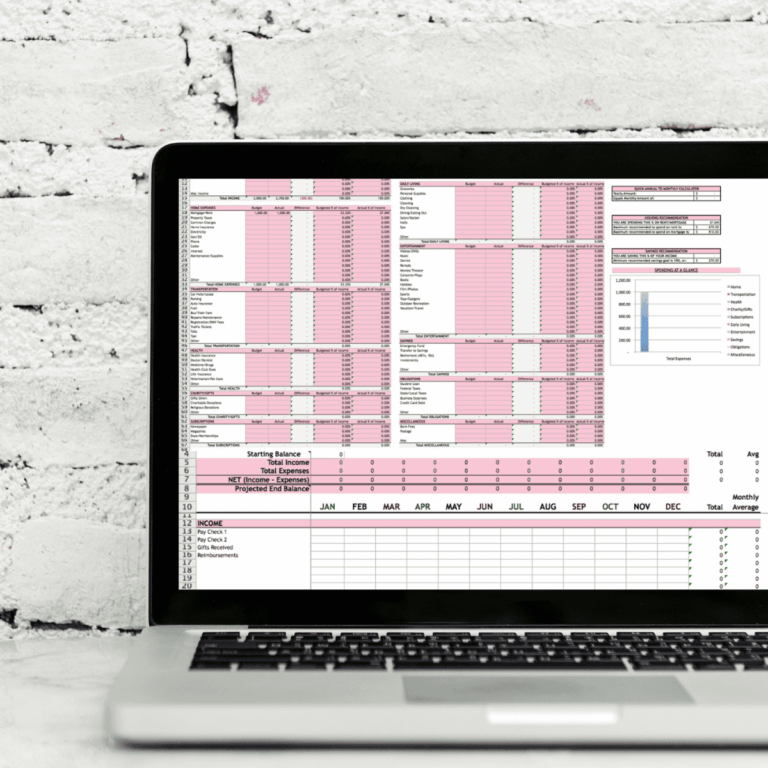
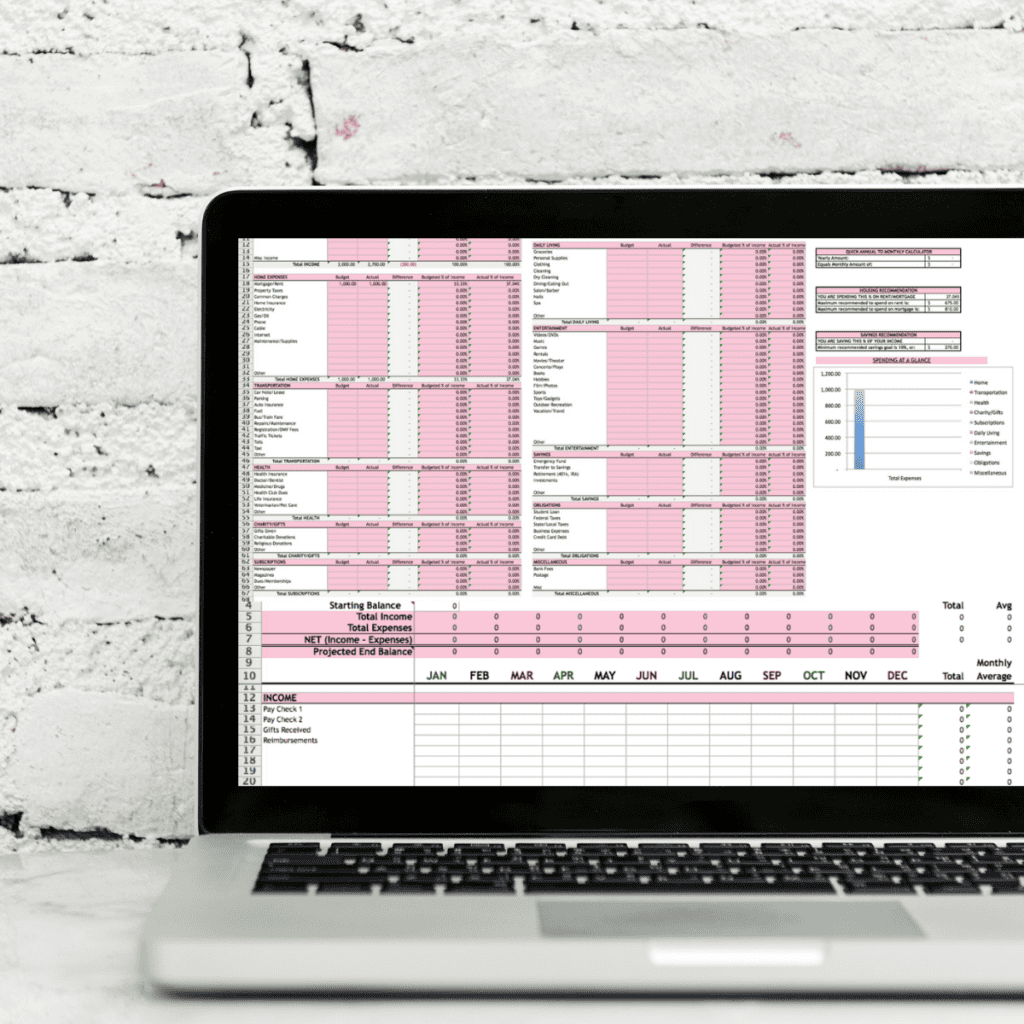
If you’re just starting out, you can download this FREE Monthly Budget Worksheet.
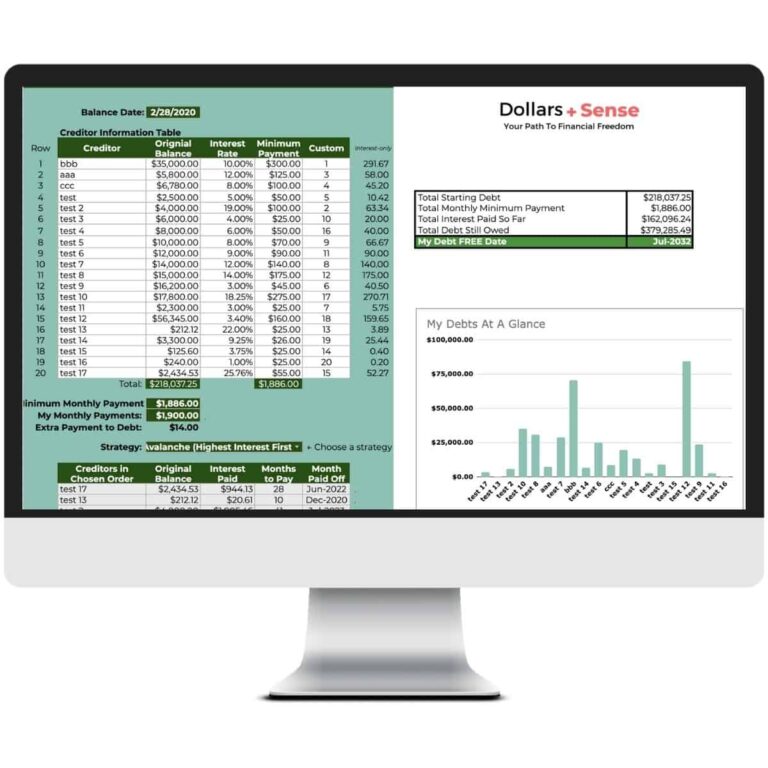
However, if you want to get serious with your savings and need something a little more sophisticated, you can get my Monthly Budget Template. It is built for exactly this kind of savings run.
Another option is you can try my Personal Finance Binder. These worksheets work well alongside a spreadsheet.
This option is great if you like to write things down and see them on paper (you can also write on a digital copy by using a note taking app). It’s over 55 pages worth of printables to help you manage your money.

You will love this Personal Finance Binder because it helps keep your money organized and you can see everything in one place. You can use the Personal Finance Binder instead of the budget spreadsheets, or run both together.
Plenty of people who make well over six figures still live paycheck-to-paycheck. And we all know of people who win the lottery or rich celebrities who go broke.
It does not matter how much money you earn if you’re not tracking your spending.
Related Article: How To Use The Monthly and Yearly Household Budget Spreadsheet
2. Increase Your Income
In order to save a significant amount of money in a short period of time, you need to make a decent salary. Therefore, if you’re not paid well, you need to increase your income.
The most dependable way to increase your income is to add a second one. However, there are so many other ways you can make more money. For example, you can increase your income by:
- Making more money in your current job;
- Moving to a company that may offer more room for advancement;
- Finding a part-time job;
- Starting a side hustle or part-time business; or
- Establishing passive income.
So, find a way you can increase your income today.
Related Article: How To Make Money With 500 Dollars: 90+ Proven Strategies
3. Reduce Your Expenses

It is vital for you to reduce your expenses if you want to save a lot of money in a short period of time.
By increasing your income and reducing your expenses at the same time, you turbocharge your savings rate. That combination is the entire engine behind a $300,000 run.
For most people the biggest expense to attack is housing — a cheaper place, a roommate, or renting from family below market rate. It is a genuine sacrifice, and it is the one that moves the number most.
Another easy way to cut your smaller expenses is to use online coupons and rebate sites any time you shop.
A popular option is Rakuten. If you don’t have an account, sign up right now! It is literally FREE money.
When you sign up right now and purchase something you will get a $30 bonus!
4. Save Aggressively
You have to save aggressively if you want to make major progress in a short period of time. You cannot save only 10% of your income and expect results on this scale.

Start by trying to save at least 30% of your income—but ideally, you want to save 50% or more. A four-year run to $300,000 takes a savings rate north of 60%, reached by cutting expenses and raising income together.
Once you are saving aggressively, you want to put your money where it is safe and earns a decent amount of interest. Open a high-interest savings account with CIT Bank.
A high-yield savings account is worth having for money like this. Look for competitive interest rates, no monthly maintenance fees, and a low minimum to open. Say goodbye to those low national average interest rates and earn more interest on your money!
5. Invest Your Money
This is crucial if you want to grow your money quickly. You cannot only save your money to create wealth, you HAVE to invest your money.
In fact, saving money alone is counterproductive to achieving financial freedom because of inflation. Inflation is the rate at which the general prices of goods and services rise, and as a result, the purchasing power of money falls.
In the United States, the historical average rate of inflation is approximately 3%.
If you are only saving your money, and not investing it, your money is actually eroding every year. This is because the cost of living is increasing faster than any rate of return offered to you by a bank.

There are so many ways you can invest your money. Some ways include investing in stocks, bonds, real estate, and/or a business. You want to invest in things that produce income and increase in value.
Many brokerages now let you buy and sell individual stocks commission-free. Others still charge per trade, and some have hidden fees, so it is worth comparing before you open an account.
Most major brokerages now offer commission-free trades and no minimum account balance, so you can start small. This is general education, not investment advice — pick the platform that fits your own situation.
If you are new to investing and have no idea which stocks to choose, a robo-advisor is a gentler place to start. A robo-advisor is an online automated advisor. They will invest your money for you based on your specific goals using computer algorithms.
Since robo-advisors are cheaper than what you would pay a human financial advisor, it is a great low-cost option for investing. A great option to use if you’re just getting started is Acorns.
Some robo-advisors are well suited to beginners because of a round-up feature. The way it works is you link your checking accounts and credit cards to Acorns and they will round every transaction up to the nearest dollar and invest it.
So let’s say you spent $9.17 at lunch. Acorns will round up that transaction to $10 and invest the $0.83. All your spare change starts to add up and before you know it you’re saving and investing. This is perfect for the person who also has trouble saving.
Investing is what turns a large pile of savings into a larger one. You can read my detailed article “Acorns vs. Robinhood: Which Is Best?” if you want to learn more about both investment platforms.
Summary
In summary, $300,000 in 4 years comes down to: 1) sticking to a budget, 2) increasing your income, 3) reducing your expenses, 4) saving aggressively, and 5) investing what you save. Start now and the results can be genuinely remarkable.
Related Articles:
- How to Save At Least 30 Percent of Your Income Every Month
- Cutting Your Monthly Expenses: Why It Is Absolutely Necessary
- Best Ways To Start Investing For Beginners: Investing 101
If you enjoyed the article, please Pin it and share it with your friends!
Want more help with this? The Save $1,000 In 30 Days picks up right where this post leaves off — or start smaller with the 31-Day Savings Challenge.