Peer Pressure Scripts: Staying True Without Isolation
More than 80 percent of American high school students say they feel pressured to fit in with friends or classmates. At this stage of life, trying to balance friendships and personal values can feel confusing and exhausting. Peer pressure hits hard when everyone around you seems to expect certain choices from you, even when those choices do not reflect who you really are. This guide breaks down what peer pressure really means and shows how you can keep your confidence while holding on to your real friends.
Key Takeaways
| Point | Details |
|---|---|
| Understanding Peer Pressure | Peer pressure is a complex social dynamic that can manifest in both positive and negative ways, impacting personal identity and group dynamics. |
| Types of Peer Pressure | Recognizing explicit and implicit peer pressure empowers students to make informed choices while maintaining personal boundaries. |
| Impact on Friendships | Healthy friendships require clear boundaries and respect for individual choices, helping students navigate social expectations effectively. |
| Risks of Giving In | Surrendering to negative peer pressure can compromise self-esteem and academic performance, while standing firm reinforces personal integrity and fosters genuine connections. |
Defining Peer Pressure in High School Life
Peer pressure isn’t just about someone telling you to do something you don’t want to do. It’s a complex social dynamic that shapes teenage experiences in ways most students don’t immediately recognize. Psychological research on adolescent social influences reveals that peer pressure represents a nuanced interaction between social expectations, personal identity, and group dynamics.
In high school, peer pressure manifests through multiple channels. Sometimes it’s direct – like classmates encouraging risky behaviors. Other times, it’s subtle – like feeling intense pressure to dress a certain way, achieve specific grades, or participate in activities that align with perceived social norms. The competitive school environments can amplify these pressures, creating emotional challenges that impact students’ mental well-being and self-perception.
Understanding peer pressure requires recognizing its dual nature. Not all peer influence is negative. Positive peer pressure can motivate students to join constructive activities, improve academic performance, or develop healthy social skills. The key is learning to differentiate between influences that support personal growth and those that compromise individual values. Some students experience pressure through unspoken social expectations, while others face more direct forms of persuasion that challenge their comfort zones.
Recognizing peer pressure isn’t about avoiding social interactions but developing strong personal boundaries and self-awareness. Learning to navigate these complex social dynamics takes practice, emotional intelligence, and a clear understanding of personal values and goals.
Pro tip: Keep a personal journal to track situations where you feel social pressure and reflect on how those experiences align with your core values and long-term objectives.
Types of Peer Pressure and Common Scenarios
Peer pressure isn’t a one-size-fits-all experience. Research reveals multiple complex forms of social influence that can profoundly impact students’ daily experiences and decision-making processes. Understanding these different types helps students recognize and navigate social challenges more effectively.
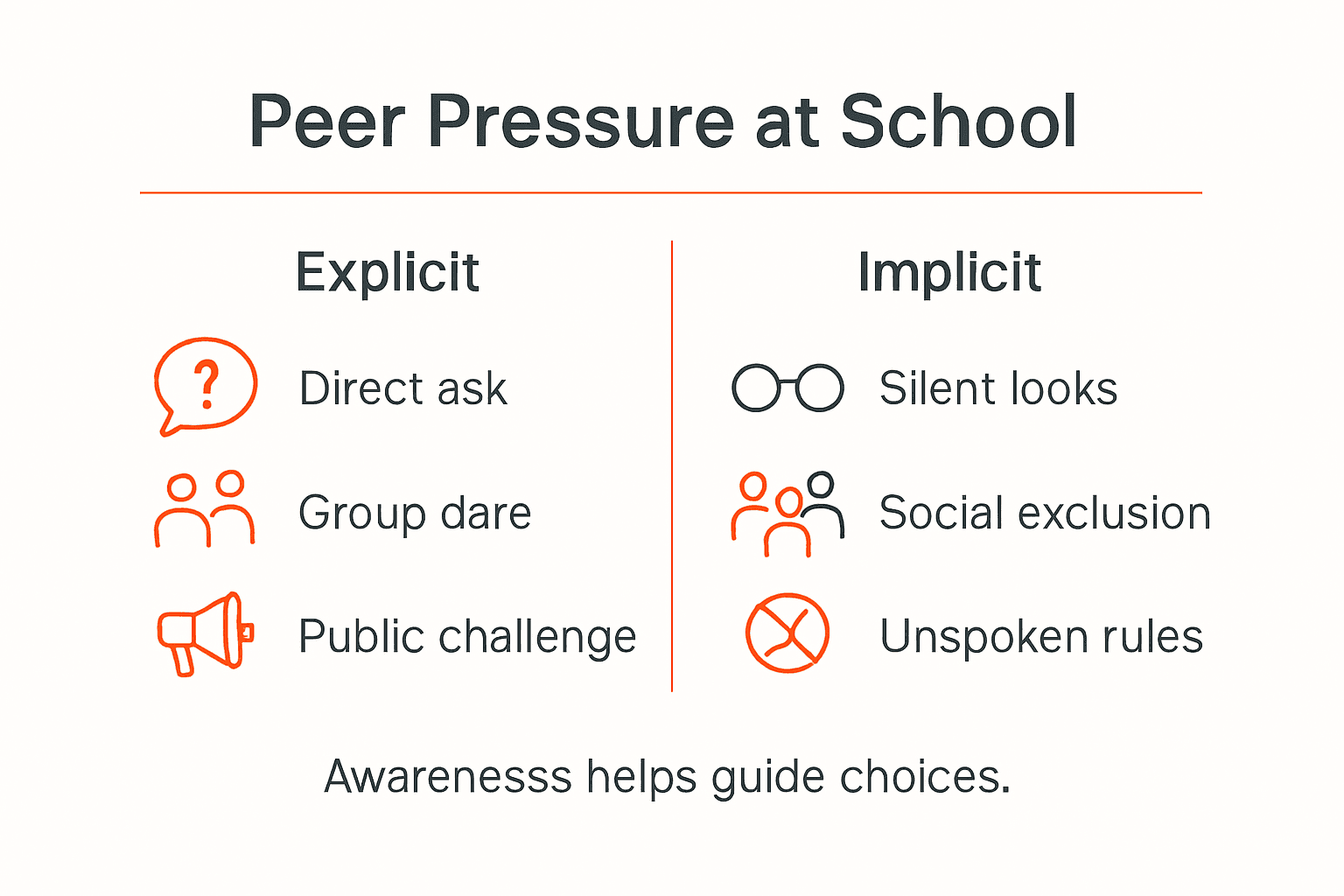
Four primary types of peer pressure dominate high school social dynamics. Behavioral pressure involves direct or indirect encouragement to engage in specific actions, ranging from minor social choices to potentially risky behaviors. Appearance pressure pushes students to conform to specific style, fashion, or body image standards. Academic pressure creates expectations around performance, study habits, and achievement levels. Social pressure compels students to participate in particular groups or activities to maintain social standing.
Social dynamics research indicates that peer pressure can be both explicit and implicit. Explicit pressure involves direct verbal suggestions or challenges, like someone directly saying “Everyone’s doing this.” Implicit pressure operates more subtly through nonverbal cues, social expectations, and unspoken group norms. For instance, feeling uncomfortable in a social setting because your clothing or interests differ from the group represents an implicit form of social pressure.
Here’s a comparison of explicit vs. implicit peer pressure to clarify their differences:
| Aspect | Explicit Peer Pressure | Implicit Peer Pressure |
|---|---|---|
| Influence Method | Direct statements or suggestions | Unspoken social cues or group expectations |
| Student Awareness | Usually easy to recognize | Often subtle and harder to identify |
| Example | “Everyone is doing it, you should too” | Feeling out of place due to dress style |
| Common Response | Verbal refusal or agreement | Behavior changed to fit in subconsciously |
Recognizing these pressure types empowers students to make intentional choices. Not all peer influence is negative – some forms can motivate personal growth, encourage positive behaviors, and help develop social skills. The critical factor is maintaining personal boundaries and understanding the difference between healthy social interaction and compromising personal values.
Pro tip: Create a personal “pressure assessment” checklist to quickly evaluate social situations and identify whether the influence supports or undermines your personal goals and values.
How Peer Pressure Impacts Friendships
Research demonstrates that adolescent friendships play a critical role in shaping social experiences, academic performance, and personal development. Friendships aren’t just about hanging out – they’re dynamic relationships that can significantly influence individual choices, behaviors, and emotional well-being.
Friendship groups create powerful social ecosystems where peer pressure operates most intensely. Some friends might encourage positive behaviors like studying together or joining constructive extracurricular activities. Others might push boundaries by suggesting risky actions that challenge personal values. Adolescent relationship dynamics reveal complex interactions where friends simultaneously serve as sources of support, validation, and potential social manipulation.
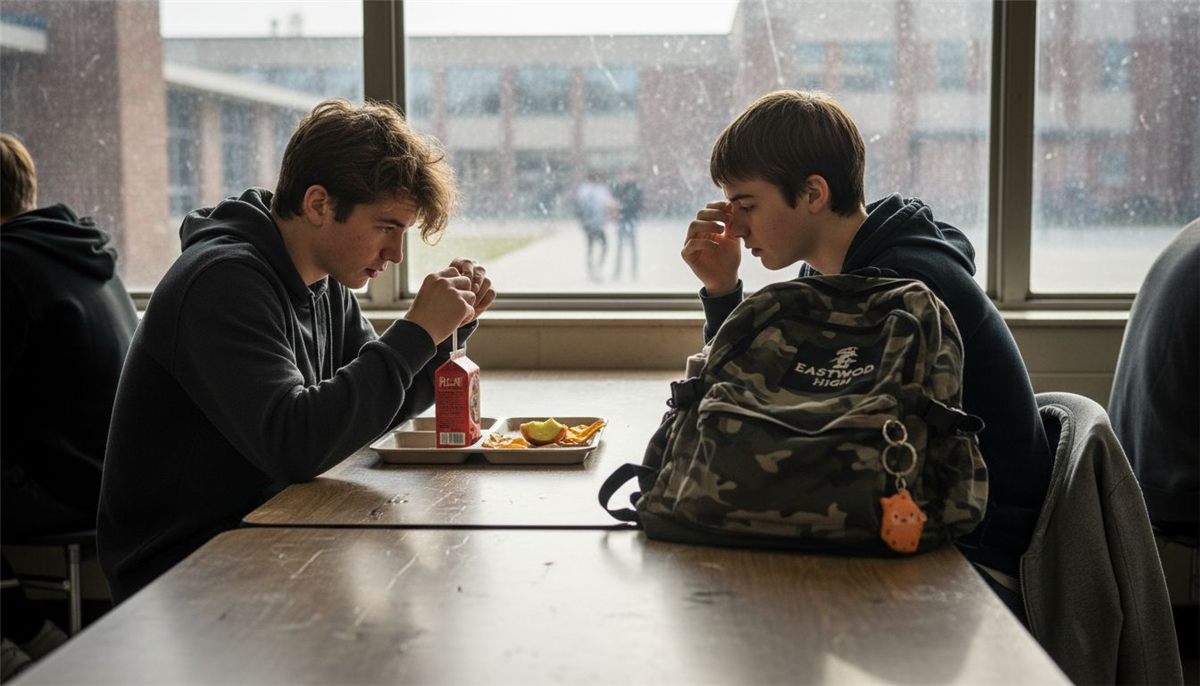
The impact of peer pressure on friendships can be transformative. Students might find themselves compromising personal boundaries to maintain group acceptance, changing their appearance, interests, or behaviors to fit in. This social adaptation can lead to internal conflicts, where individuals struggle between maintaining authentic self-expression and conforming to group expectations. Some friendships become transactional – maintained through mutual social compliance rather than genuine connection and mutual respect.
Healthy friendships require active negotiation and clear personal boundaries. Recognizing when peer influence becomes harmful involves understanding the difference between supportive encouragement and manipulative pressure. True friends respect individual choices, support personal growth, and don’t require constant conformity as a condition of friendship.
Pro tip: Regularly check in with yourself about whether your friendships feel empowering or restrictive, and be willing to have honest conversations about your boundaries and values.
Crafting Effective Scripts and Responses
Strategic preparation helps students develop confident responses to challenging social situations. Crafting effective scripts isn’t about memorizing perfect lines, but understanding how to communicate your boundaries clearly and respectfully. The goal is creating authentic responses that protect your personal values while maintaining social connections.
Effective peer pressure scripts typically follow several key strategies. Direct refusal involves clearly stating your position without apologizing or over-explaining. For example, saying “No, I’m not interested” with firm body language communicates confidence. Redirection techniques help change the conversation’s momentum by suggesting alternative activities or shifting focus. Explanatory scripts provide context for your choices, helping friends understand your perspective without creating defensiveness.
Research on managing social interactions highlights the importance of developing personalized response strategies. Some situations might require humor to defuse tension, while others demand straightforward communication. Practice different approaches to find what feels most authentic to your personality. Remember that effective scripts aren’t about winning an argument, but maintaining your integrity and demonstrating self-respect.
Consider developing a personal toolkit of responses tailored to different scenarios. Role-playing with trusted friends or family can help build confidence and refine your communication skills. The most powerful scripts come from a place of genuine self-understanding and clear personal boundaries.
Pro tip: Create a mental flowchart of potential peer pressure scenarios and practice your responses in advance, focusing on clear, confident communication that reflects your true self.
Risks of Giving In Versus Speaking Up
Research reveals significant consequences of consistently yielding to negative social pressures. Giving in might seem like the easiest path in the moment, but it can create long-term challenges that impact academic performance, personal integrity, and emotional well-being.
The risks of surrendering to peer pressure extend far beyond immediate social situations. Academic compromise can manifest through cheating, procrastination, or disengaging from genuine learning. Students who consistently give in might find themselves trapped in a cycle of poor choices that erode their self-respect and future opportunities. Understanding social dynamics highlights that speaking up, while challenging, builds critical life skills like self-confidence, assertiveness, and personal boundary setting.
Conversely, speaking up offers profound personal benefits. By respectfully communicating your perspective and maintaining your values, you demonstrate emotional intelligence and self-respect. This approach doesn’t mean confrontation, but rather a calm, clear articulation of your personal standards. Each time you resist negative pressure, you strengthen your internal resolve and send a powerful message about your character to both yourself and your peers.
Choosing to speak up doesn’t guarantee immediate social acceptance, but it ensures personal authenticity. True friendships are built on mutual respect, not conformity. By consistently demonstrating integrity, you attract connections that value your genuine self, not a performative version designed to please others.
This summary table highlights positive and negative outcomes of responding to peer pressure:
| Response to Peer Pressure | Long-Term Impact | Personal Benefit |
|---|---|---|
| Consistently giving in | Reduced self-confidence | Temporary acceptance |
| Respectful refusal/speaking up | Strengthened self-respect | Authentic friendships |
| Avoiding all interactions | Social isolation | Less peer influence |
Pro tip: Practice your speaking-up skills in low-stakes situations to build confidence for more challenging social scenarios, focusing on calm, clear communication.
Pitfalls to Avoid When Handling Peer Pressure
Understanding common mistakes is crucial when navigating social challenges. Students often fall into predictable traps that can compromise their personal values and emotional well-being, making it essential to recognize and proactively address potential pitfalls before they escalate.
Impulsive reactions represent one of the most significant risks when handling peer pressure. Responding defensively or emotionally can quickly transform a challenging situation into a confrontation. Research on social dynamics highlights that inconsistent boundary setting and failure to develop clear personal values can leave students vulnerable to manipulation. Key pitfalls include overreacting, complete social withdrawal, and making decisions based on fear of rejection rather than personal conviction.
Another critical mistake is underestimating subtle forms of social influence. Peer pressure isn’t always loud or dramatic – it can manifest through seemingly innocent comments, continuous micro-suggestions, or implied social expectations. Students who fail to recognize these nuanced pressures might gradually compromise their standards without realizing it. Maintaining awareness requires constant self-reflection, understanding personal boundaries, and developing a strong sense of individual identity that can withstand external influences.
Building resilience against peer pressure means creating a supportive personal ecosystem. This involves cultivating diverse friendships, maintaining open communication with trusted adults, and continuously reinforcing your personal values. Remember that standing firm doesn’t mean being confrontational – it means being confident in your choices and understanding that true friends will respect your boundaries.
Pro tip: Create a personal “pressure assessment” checklist that helps you quickly evaluate social situations and identify potential manipulation tactics before they impact your decisions.
Master Your Responses to Peer Pressure and Thrive Socially
Facing peer pressure can create moments of intense doubt and fear. Whether it is explicit challenges or subtle social cues, staying true without feeling isolated is a delicate balance. This article highlights the struggle of maintaining your personal values, crafting effective peer pressure scripts, and building confident communication skills. You do not have to compromise your integrity or withdraw from friendships to succeed.
Discover strategies beyond just saying no. At Learning With Angie, you can explore tools and guidance designed for students who want to excel academically while developing strong personal boundaries. From mastering time management to cultivating productivity and maintaining a healthy lifestyle, our resources empower you to respond to peer pressure with confidence and authenticity. Start building scripts and habits that honor your goals today and take the first step toward empowered, authentic living.
Frequently Asked Questions
What are effective ways to handle peer pressure in high school?
Effective ways to handle peer pressure include setting clear personal boundaries, practicing assertive communication, and developing personalized response scripts. Role-playing different scenarios can also help build confidence in navigating social dynamics.
How can I differentiate between positive and negative peer pressure?
To differentiate between positive and negative peer pressure, consider the impact on your values and goals. Positive peer pressure encourages personal growth and healthy behaviors, while negative peer pressure challenges your integrity and pushes you toward risky actions.
What should I do if I feel uncomfortable in a social setting due to peer pressure?
If you feel uncomfortable due to peer pressure, assess the situation using your personal values and boundaries. Communicate your feelings honestly with trusted friends. Seeking support from adults or mentors can also provide guidance and perspective.
How can I build resilience against peer pressure?
Building resilience against peer pressure involves cultivating a strong sense of self-identity, maintaining diverse friendships, and consistently reinforcing your personal values. Engage in self-reflection and practice responding to social pressures in low-stakes situations to build confidence.
Recommended
- 10 Unique College Essay Ideas to Stand Out in Applications
- 12 Apps That’ll Stop Social Media From Destroying Your GPA (From Someone Who Almost Failed Because of TikTok)
- How to Embrace Your Introversion—Powerful Benefits of Being an Introvert
- 7 Essential Writing Prompts for College Application Essays
- How to Create an Engaging Culture in a Remote-first Team
Want a head start? The Building Self-Confidence workbook in my shop was made for exactly this — it’ll save you a ton of time.