Cliques, Friend Groups, and Finding Your People
Walking through the crowded halls of an American high school can feel like entering a maze of shifting friend groups and exclusive cliques. Studies show that over half of students feel lonely or disconnected at some point during their teenage years. Figuring out where you truly belong matters because supportive friendships shape your confidence, happiness, and even your success in class. This guide breaks down the real differences between cliques and genuine friend groups, giving you tools to connect with people who will actually have your back.
Key Takeaways
| Point | Details |
|---|---|
| Understanding Cliques | Cliques are exclusive social groups with strict membership rules, often creating pressure to conform. They play a significant role in shaping identity and social dynamics among teenagers. |
| Social Dynamics and Mental Health | A positive social environment can enhance mental health and academic performance, while negative dynamics can lead to stress and lower academic success. |
| Connecting Authentically | Building meaningful friendships requires exploring interests, practicing genuine communication, and stepping outside comfort zones. |
| Avoiding Toxic Patterns | It’s vital to foster inclusive environments by breaking down social barriers and promoting respect for individual differences. |
Defining Cliques and Friend Groups
When you hear the word “clique,” what comes to mind? Maybe it’s that group of popular kids in the hallway or the tight-knit squad that seems to rule the school. But there’s way more complexity to these social circles than meets the eye. Research from the Office of Justice Programs reveals that cliques are actually small, intimate groups with their own unique set of social rules and strong internal connections.
At its core, a clique is a specific type of social group that forms during your teenage years. Unlike just hanging out with friends, cliques have their own unwritten rules, expectations, and sometimes even a hierarchical structure. The American Psychological Association defines cliques as status-based subgroups within larger social environments, typically emerging during adolescence as a way to establish belonging and reduce feelings of isolation.
Cliques aren’t inherently good or bad – they serve important social functions. They help teenagers:
- Develop a sense of identity
- Find people with similar interests
- Practice social skills
- Build emotional support networks
- Navigate the complex world of teenage social dynamics
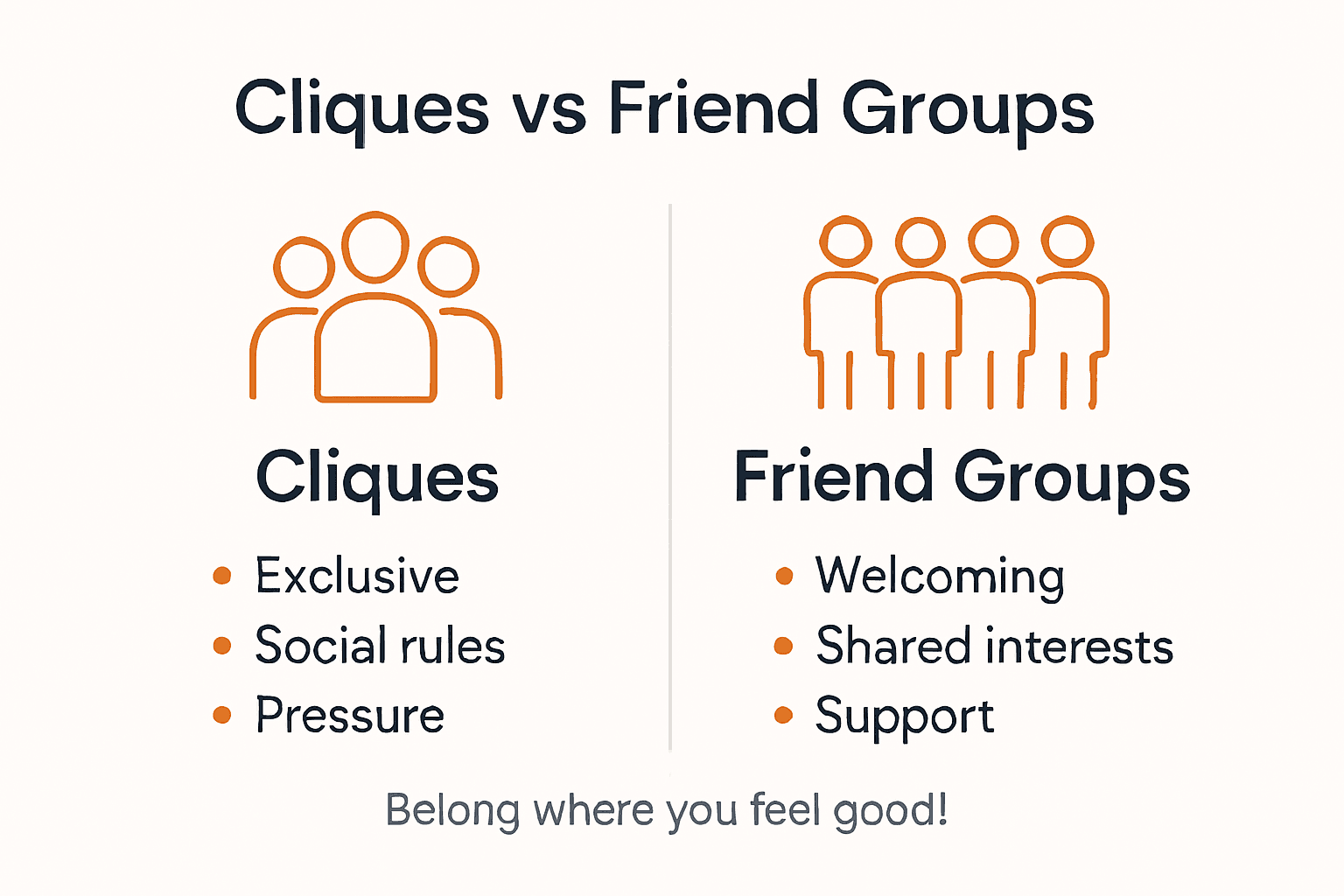
The key difference between a clique and a regular friend group is the level of social pressure and exclusivity. While friend groups are more relaxed and inclusive, cliques often have stricter membership requirements and can be more competitive about who gets to be “in” or “out” of the group.
Pro tip: Pay attention to how you feel in your social groups – a healthy friend circle should make you feel supported, not stressed or constantly judged.
Here’s a quick comparison between cliques and friend groups to clarify their core differences:
| Characteristic | Cliques | Friend Groups |
|---|---|---|
| Entry Requirements | Often exclusive, selective | Generally open to all |
| Social Pressure | High, with strong expectations | Low, accepting of differences |
| Membership Stability | Rigid, difficult to change | Flexible, fluid membership |
| Group Identity | Prioritizes group conformity | Values individual uniqueness |
Common Types of High School Friend Groups
High school is like a social ecosystem, where different friend groups form and evolve based on shared interests, personalities, and experiences. Research from the Pew Research Center reveals that teens create diverse social networks that go far beyond simple stereotypes.
Let’s break down some of the most common friend group archetypes you might encounter in the hallways:
- The Academic Squad
- High-achieving students
- Focused on studying and college prep
- Often found in advanced classes or study groups
- The Sports Team Crew
- Connected through athletic activities
- Strong physical and team-based bond
- Typically practice and compete together
- The Arts Collective
- Musicians, artists, theater kids
- Creative and expressive
- Support each other’s artistic endeavors
- The Gaming/Tech Group
- Bonded by shared digital interests
- Video game enthusiasts
- Often connected through online platforms
These groups aren’t rigid boxes. Peer group research shows that teenagers frequently move between social circles, picking up interests and friendships along the way. The key is understanding that every group has its unique dynamics and value.
What matters most isn’t which group you belong to, but finding people who genuinely support and understand you. Some teens fit perfectly into one group, while others float between multiple social circles.
Pro tip: Don’t stress about fitting into a specific friend group – authenticity always trumps trying to conform to a social stereotype.
How Cliques Shape Social Dynamics
Social dynamics are like invisible threads weaving through high school, connecting and sometimes separating students in complex patterns. Research from the Office of Justice Programs reveals that cliques are far more than just social groups – they’re intricate systems that fundamentally influence how teenagers interact, communicate, and understand their social world.
Cliques create powerful social hierarchies that impact nearly every aspect of teenage life. They establish:
- Unwritten social rules
- Perceived status levels
- Emotional support networks
- Behavioral expectations
- Patterns of inclusion and exclusion
These social groups aren’t just random collections of friends. They’re structured environments where teenagers learn critical social skills, negotiate complex interpersonal relationships, and develop their sense of identity. Some students find protection and belonging within these groups, while others might feel pressure to conform to the group’s specific norms and expectations.
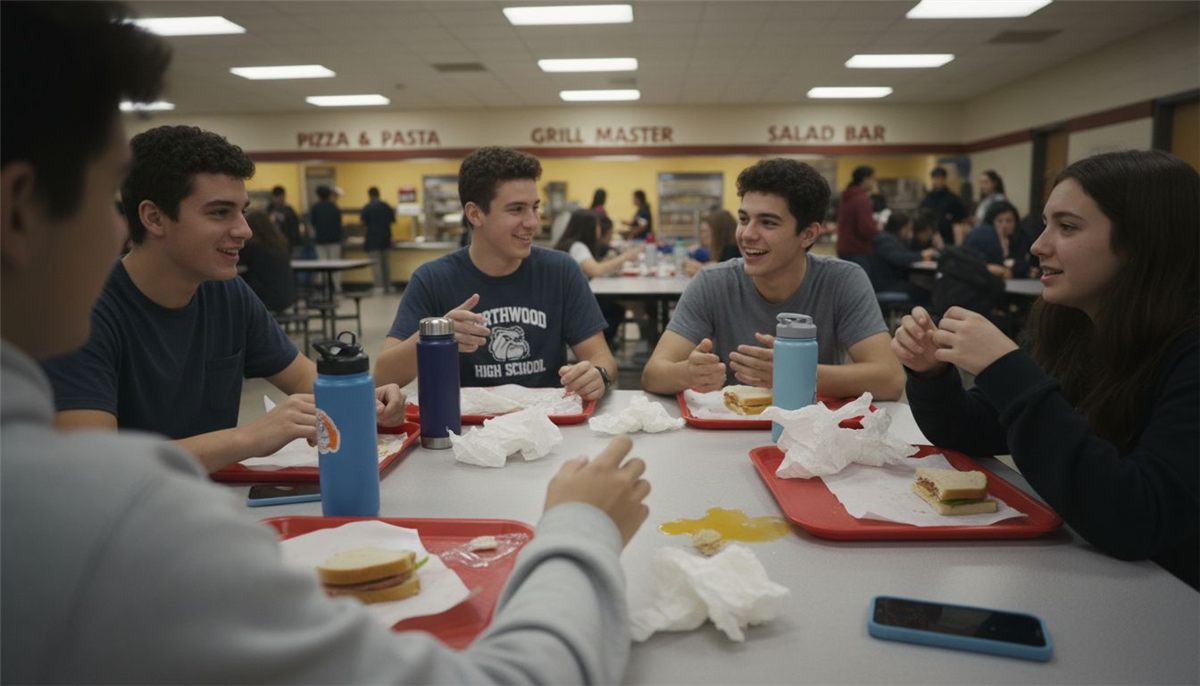
The influence of cliques extends beyond simple friend groups. They can significantly impact a student’s self-esteem, academic performance, and emotional well-being. A student’s position within these social networks can determine access to information, social opportunities, and even emotional support during challenging teenage years.
Interestingly, cliques are not permanent structures. Students frequently move between different social groups, adapting and evolving their social identities as they grow and change. Understanding these dynamics can help teenagers navigate their social worlds more effectively and compassionately.
Pro tip: Remember that your worth isn’t determined by your social group – focus on being authentic and kind to yourself and others.
Impacts on Mental Health and Academic Success
The relationship between mental health and academic performance is deeply interconnected, creating a complex web of psychological and educational challenges for high school students. Research from the National Association of School Psychologists reveals that mental health isn’t just a personal issue – it’s a critical factor in academic success.
Students experiencing mental health challenges often face significant academic obstacles:
- Reduced concentration and focus
- Increased absenteeism
- Lower motivation
- Difficulty processing and retaining information
- Higher levels of academic stress
The impact of social dynamics like cliques can amplify these mental health challenges. When students feel isolated or pressured to conform, their psychological well-being can suffer. Negative social experiences can trigger anxiety, depression, and a sense of disconnection that directly interferes with learning and academic performance.
Positive mental health, conversely, acts as a powerful academic catalyst. Students with strong emotional support systems and healthy social connections tend to demonstrate:
- Higher academic resilience
- Better stress management skills
- Increased classroom participation
- More consistent academic performance
- Greater overall educational engagement
Understanding these connections empowers students to prioritize their mental health as a crucial component of academic success. It’s not just about studying harder – it’s about creating supportive social environments and developing emotional coping strategies.
Pro tip: Prioritize your mental health by building genuine connections and seeking support when you need it – your academic success depends on your emotional well-being.
The table below summarizes the main effects of social group dynamics on students:
| Effect Area | Positive Group Influence | Negative Group Influence |
|---|---|---|
| Mental Health | Increased sense of belonging | Heightened stress, anxiety |
| Academic Success | Strong motivation, peer support | Distraction, lower performance |
| Social Skills | Enhanced communication skills | Reduced empathy toward outsiders |
| Emotional Support | Safe space for sharing feelings | Isolation when excluded |
Strategies for Finding Your People
Finding your social tribe isn’t about forcing connections, but creating genuine opportunities to meet people who truly understand you. Relationship-building research suggests that intentional interaction is key to developing meaningful friendships.
Here are powerful strategies for connecting with potential friends:
- Explore Your Interests
- Join school clubs related to your passions
- Attend workshops or events in areas you enjoy
- Participate in extracurricular activities
- Practice Authentic Communication
- Be genuinely curious about others
- Ask open-ended questions
- Share your own experiences honestly
- Listen more than you speak
- Expand Your Comfort Zone
- Sit with different people at lunch
- Volunteer for group projects
- Attend school events outside your usual social circle
- Try new activities where you don’t know anyone
Successful social connections aren’t about popularity – they’re about finding people who appreciate your authentic self. Some friendships will be temporary, while others might last years. The key is remaining open, kind, and true to yourself throughout the process.
Remember that building connections takes time and courage. Not every interaction will result in a deep friendship, and that’s okay. Each conversation is an opportunity to learn about yourself and others.
Pro tip: Focus on being interested, not interesting – genuine curiosity is the most powerful tool for creating meaningful connections.
Common Pitfalls and Healthy Alternatives
Social dynamics can quickly become complicated, especially when students fall into unhealthy relationship patterns. Research on school social environments reveals that cliques often emerge from students’ natural desires for belonging, but can quickly transform into toxic social structures.
Common pitfalls in friend group dynamics include:
-
Exclusionary Behavior
- Deliberately leaving out certain students
- Creating artificial social hierarchies
- Using social status as a weapon
-
Conformity Pressure
- Forcing members to dress or act a certain way
- Punishing individuality
- Shaming those who don’t fit the group’s standards
-
Identity Suppression
- Losing personal authenticity
- Changing core personality to fit in
- Sacrificing personal values for group acceptance
Healthy alternatives focus on creating inclusive, supportive social environments. This means actively working to break down social barriers and embrace diversity. Students can achieve this by:
- Welcoming new members genuinely
- Celebrating individual differences
- Creating flexible, open social spaces
- Practicing empathy and respect
Understanding that social connections are about mutual support, not control, is crucial. True friendships emerge from authentic connections, not from forcing conformity or maintaining strict social boundaries.
Every interaction is an opportunity to build meaningful relationships that respect individual uniqueness while creating a sense of community.
Pro tip: Challenge yourself to talk to someone outside your usual social circle each week – genuine connections often start with simple, brave moments of reaching out.
Find Your Tribe and Thrive with Confidence
Navigating cliques and friend groups can feel overwhelming when the pressure to fit in challenges your authenticity and mental health. This article highlights the importance of genuine connections and emotional support in building a positive social experience. If you struggle with social dynamics or want to strengthen your sense of belonging while boosting your academic success and well-being, you are not alone.
Unlock effective strategies for mastering your mindset, managing stress, and enhancing your daily routine at Learning with Angie. Discover tips on productivity, time management, and maintaining healthy friendships that empower you to find your people and excel. Start building healthier social circles and cultivate balance today by visiting our homepage and explore all the resources designed with students like you in mind.
Frequently Asked Questions
What is a clique, and how does it differ from a friend group?
A clique is a specific type of social group that typically forms during adolescence, characterized by exclusivity and a strong internal hierarchy. Unlike friend groups, which are generally more relaxed and inclusive, cliques often have strict membership requirements and higher social pressure.
What are some common types of friend groups in high school?
Common types of high school friend groups include the Academic Squad, Sports Team Crew, Arts Collective, and Gaming/Tech Group. Each group is formed based on shared interests and experiences, providing students with a sense of belonging.
How can cliques impact a student’s mental health and academic success?
Cliques can significantly influence mental health by creating social hierarchies that lead to pressure and exclusion, which can increase anxiety or depression. Conversely, positive social groups can enhance academic performance by providing emotional support and motivation.
What strategies can I use to find my social group in high school?
To find your social group, explore your interests by joining clubs or activities, practice authentic communication by being curious about others, and expand your comfort zone by meeting new people and trying different experiences.
Recommended
- How to Make Friends in College: Your Guide to Building Lasting Connections
- 12 Apps That’ll Stop Social Media From Destroying Your GPA (From Someone Who Almost Failed Because of TikTok)
- 10 Unique College Essay Ideas to Stand Out in Applications
- 7 Effective Tips on How to Make Friends in College or a New School
Want a head start? The Building Self-Confidence workbook in my shop was made for exactly this — it’ll save you a ton of time.