Understanding How to Build Confidence in College/High School
Confidence might seem like just another mindset buzzword in school. Stanford research shows students who believe in their learning potential are more likely to persist, participate, and even tackle tougher subjects. Not what most people expect, right? The real surprise is that confidence is not something you are born with but a skill you can actually build just like any other subject at school.
Quick Summary
| Takeaway | Explanation |
|---|---|
| Confidence is a learnable skill | Unlike a fixed trait, confidence can be developed through practice, self-awareness, and positive self-talk. |
| Peer and family support is crucial | Social interactions significantly influence confidence levels, as positive environments provide encouragement and validation. |
| Set micro-goals for growth | Establishing small, achievable goals helps foster confidence through incremental successes and measurable progress. |
| Emotional intelligence enhances confidence | Understanding and managing emotions builds resilience, which is foundational for maintaining belief in one’s abilities. |
| Confidence affects academic performance | Believing in one’s abilities leads to increased engagement and persistence in challenging subjects, enhancing overall academic success. |
What is Confidence and Why is it Important in School?
Confidence is a powerful mental state where you believe in your abilities, skills, and judgment. In school settings, confidence acts like an inner superpower that helps students navigate academic challenges, social interactions, and personal growth. Understanding confidence is crucial because it directly impacts how you perceive yourself and interact with the world around you.
To clarify the psychological aspects discussed, the following table outlines the core elements of confidence and how each contributes to self-belief and growth.
| Core Element | Description |
|---|---|
| Self-acceptance | Acknowledging strengths and weaknesses to foster self-trust |
| Positive self-image | Maintaining a healthy view of personal abilities and value |
| Willingness to take risks | Facing new or challenging tasks with openness |
| Resilience | Bouncing back from setbacks and learning from failures |
| Learning from mistakes | Using errors as opportunities for growth rather than discouragement |
The Psychological Foundation of Confidence
Confidence isn’t something you’re born with it’s a skill you can develop over time. Psychology Today explains that confidence stems from a combination of self-awareness, past experiences, and positive self-talk. When you start believing in your capabilities, you create a mental environment that supports learning and personal development.
Key elements of confidence include:
- Self-acceptance
- Positive self-image
- Willingness to take risks
- Resilience in facing challenges
- Ability to learn from mistakes
Why Confidence Matters in Academic Success
Confidence plays a critical role in academic performance. Stanford University research reveals that students who believe in their learning potential are more likely to:
- Engage actively in classroom discussions
- Pursue challenging academic opportunities
- Persist through difficult subjects
- Maintain motivation during setbacks
Without confidence, students might hesitate to ask questions, participate in group projects, or challenge themselves academically. This hesitation can create a cycle of self-doubt that limits their true potential. Building confidence isn’t about being perfect it’s about understanding that growth comes from trying, learning, and improving continuously.

The Psychological Foundations of Self-Confidence
Self-confidence is a complex psychological construct that emerges from multiple cognitive and emotional processes. It represents more than just feeling good about yourself it’s a fundamental psychological mechanism that shapes how you perceive challenges, interact with the world, and pursue personal growth.
The Cognitive Mechanisms Behind Confidence
Albert Bandura’s Social Cognitive Theory provides critical insights into how self-confidence develops. Our brain creates mental representations of our capabilities through repeated experiences, social interactions, and internal dialogues. These representations form self-efficacy beliefs – our core understanding of what we can accomplish.
Key cognitive processes that influence confidence include:
- Cognitive appraisal of past experiences
- Mental modeling of potential outcomes
- Internal narrative and self-talk
- Pattern recognition of personal strengths and limitations
- Emotional regulation skills
Emotional Intelligence and Confidence Building
Psychological research from Stanford University suggests that emotional intelligence plays a crucial role in developing robust self-confidence. Understanding and managing your emotions helps create a stable foundation for believing in your abilities.
Emotional components that contribute to confidence include:
- Self-awareness of emotional states
- Ability to process negative feedback constructively
- Resilience in facing emotional challenges
- Capacity to maintain a balanced perspective during stress
Confidence isn’t about never experiencing doubt or fear. Instead, it’s about developing psychological flexibility that allows you to acknowledge challenges while maintaining a belief in your capacity to grow and adapt. By understanding these psychological foundations, you can intentionally cultivate a more confident and resilient mindset.
How Social Factors Influence Confidence in Students
Social environments play a profound role in shaping student confidence. Your interactions, relationships, and social experiences create a complex network of influences that either boost or diminish your self-perception and belief in your abilities.
Peer Interactions and Social Dynamics
Harvard Social Psychology Research reveals that peer groups significantly impact individual confidence levels. Students absorb confidence cues from their social circles, learning how to perceive challenges, handle setbacks, and approach personal growth. Positive peer environments can dramatically enhance a student’s self-belief.
Key social dynamics affecting confidence include:
- Group validation and acceptance
- Comparative social learning
- Emotional support networks
- Shared experiences and challenges
- Modeling of behavior and attitudes
Family and Mentorship Impact
Beyond peer groups, family dynamics and mentorship fundamentally shape confidence development. Parents, teachers, and mentors serve as critical confidence architects who provide emotional scaffolding, constructive feedback, and encouraging perspectives.
Social support factors that build confidence include:
- Consistent emotional encouragement
- Constructive feedback mechanisms
- Recognition of individual strengths
- Creating safe spaces for vulnerability
- Teaching resilience through guidance
Interestingly, our guide on making friends with social anxiety offers additional insights into navigating complex social environments. Understanding these social dynamics helps students recognize how external relationships directly influence their internal confidence landscape. Confidence isn’t developed in isolation it emerges through meaningful social interactions, supportive relationships, and consistent positive reinforcement.

Understanding the Connection Between Confidence and Performance
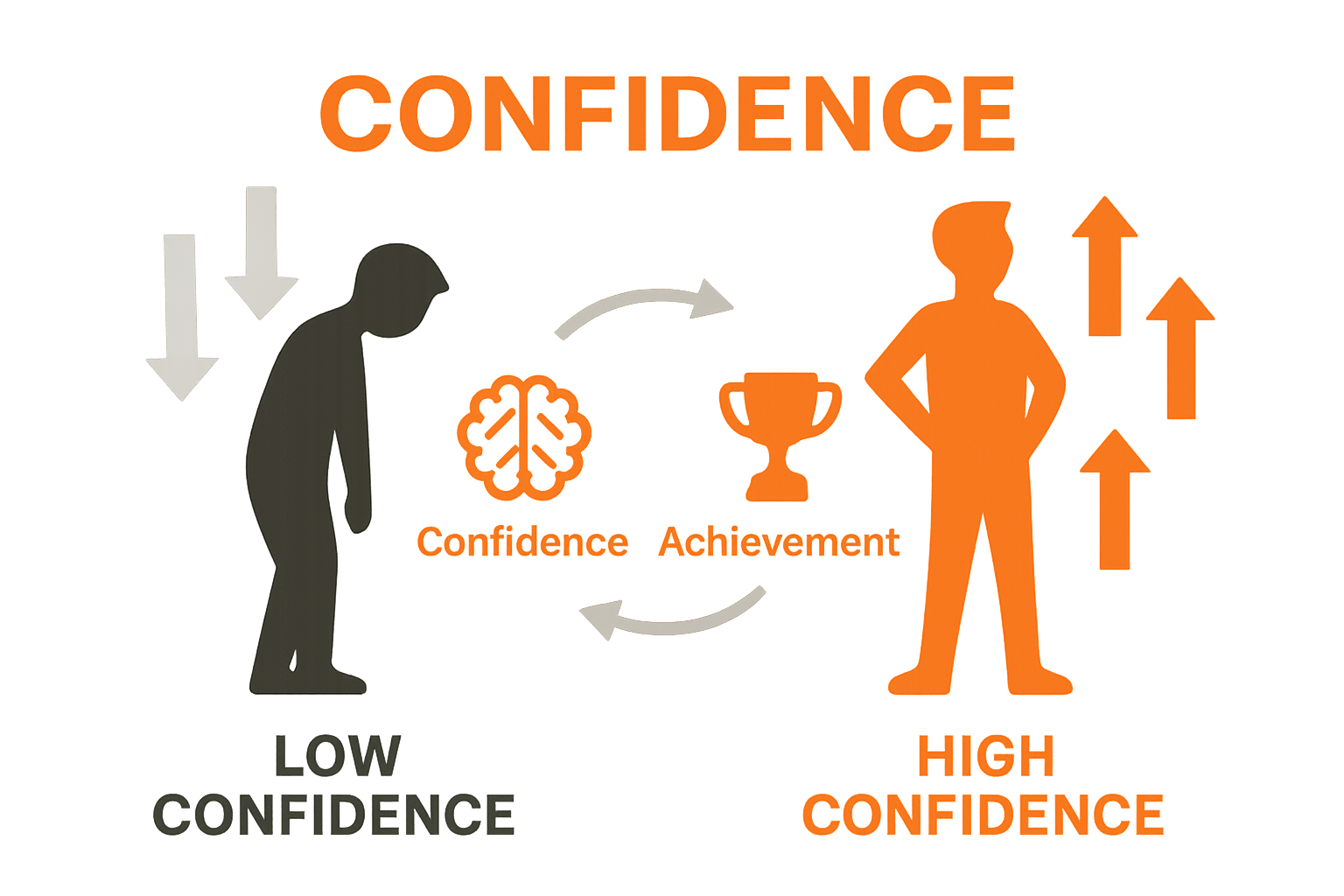
Confidence and performance share a powerful, interconnected relationship that goes far beyond simple motivation. They create a dynamic feedback loop where belief in your abilities directly influences your actual outcomes and achievements in academic and personal settings.
The Performance-Confidence Cycle
Stanford University’s Psychology Department explains that confidence acts as a cognitive catalyst that transforms potential into actual achievement. When you believe in your capabilities, your brain releases neurotransmitters that enhance focus, reduce anxiety, and improve problem solving skills.
Key performance elements influenced by confidence include:
- Mental resilience
- Cognitive flexibility
- Stress management capabilities
- Risk assessment skills
- Learning agility
Neurological Foundations of Confidence and Achievement
National Institutes of Health research reveals that students with higher academic self-confidence demonstrate measurably different neurological responses to challenges. These students exhibit:
- Enhanced neural plasticity
- Faster cognitive processing
- More effective emotional regulation
- Greater willingness to attempt difficult tasks
- Improved information retention
The ultimate guide to 21st-century skills development offers deeper insights into performance enhancement strategies. Confidence isn’t just a feel-good emotion it’s a strategic psychological tool that transforms how you approach learning, challenges, and personal growth. By understanding this connection, students can intentionally cultivate confidence as a powerful performance enhancement technique.
Real-World Applications of Confidence Boosting Strategies
Confidence boosting strategies aren’t theoretical concepts they’re practical tools that transform how students approach challenges, learning, and personal development.
This table summarizes key confidence-building strategies mentioned in the article, organizing them into personal development and academic/professional approaches for easy reference.
| Strategy Category | Confidence-Building Approach | Example or Focus |
|---|---|---|
| Personal Development | Setting achievable micro-goals | Break down tasks into small steps |
| Personal Development | Practicing positive self-talk | Challenge negative thoughts |
| Personal Development | Documenting personal progress | Track achievements in a journal |
| Personal Development | Celebrating small victories | Reward progress after milestones |
| Personal Development | Reframing failures as learning opportunities | View mistakes as chances to improve |
| Academic/Professional | Seeking constructive feedback | Ask teachers/peers for input |
| Academic/Professional | Engaging in deliberate practice | Practice skills purposefully |
| Academic/Professional | Participating in challenging projects | Join difficult or competitive groups |
| These strategies provide tangible methods for building resilience, improving performance, and creating sustainable psychological growth. |
Personal Development Techniques
PositivePsychology.com research highlights specific techniques that systematically enhance self-confidence. These approaches focus on creating incremental experiences of success that gradually expand a student’s belief in their capabilities.
Key personal development strategies include:
- Setting achievable micro-goals
- Practicing positive self-talk
- Documenting personal progress
- Celebrating small victories
- Reframing failures as learning opportunities
Academic and Professional Confidence Building
Confidence strategies extend beyond personal mindset into concrete academic and professional skill development. Strategic skill acquisition becomes a powerful mechanism for building genuine confidence through measurable competence.
Effective confidence building approaches include:
- Seeking constructive feedback
- Engaging in deliberate practice
- Developing specialized skills
- Participating in challenging academic projects
- Creating comprehensive personal development plans
Learn how to improve problem-solving skills for additional insights into building academic confidence. Confidence isn’t a static trait but a dynamic skill that can be systematically developed through intentional practice, reflection, and continuous learning. By understanding and applying these real-world strategies, students can transform their self-perception and unlock their true potential.
Build Your Confidence and Transform Your School Experience
Feeling unsure about your abilities can hold you back from enjoying school and reaching your true potential. If you struggle with self-doubt, fear of taking risks, or a lack of motivation, remember you are not alone. The journey to self-confidence involves understanding psychological foundations, developing emotional resilience, and using proven strategies that help you grow academically and personally. Our resources are designed to support you every step of the way.
Ready to put these ideas into practice? Whether you are in high school working through challenges or in college preparing for your next big step, we offer tailored tips and tools to boost your confidence. Explore our curated books for personal growth. Commit to building real confidence now and create the school experience you deserve.

Frequently Asked Questions
How can I build confidence as a student in high school or college?
Building confidence in high school or college can be achieved through setting achievable goals, practicing positive self-talk, and engaging in social activities. Surrounding yourself with supportive friends and mentors also plays a crucial role in enhancing your self-belief.
What are some strategies to enhance academic confidence?
To enhance academic confidence, consider seeking constructive feedback from teachers, participating in challenging projects, and developing specialized skills in your subjects. Consistent practice and documenting your progress can also help in reinforcing your belief in your abilities.
How do social interactions impact student confidence?
Social interactions significantly influence student confidence. Positive peer dynamics, emotional support, and shared experiences contribute to enhancing self-perception and belief in personal capabilities, while negative interactions can undermine confidence.
Why is emotional intelligence important for building confidence?
Emotional intelligence is vital for building confidence as it helps individuals understand and manage their emotions. Being self-aware, processing feedback constructively, and maintaining resilience during challenges all contribute to a stronger belief in one’s abilities.
Recommended
- How to Prepare for College as a High School Freshman
- 26 Essential Tips for Freshman Year of High School From a Graduate
- Extracurricular Activities for High School Planning Guide
- High School Four Year Plan Template for Success
Want a head start? The Building Self-Confidence workbook in my shop was made for exactly this — it’ll save you a ton of time.