Guide To Building Job Skills While in School
Did you know that nearly 70 percent of employers say students lack the job skills needed for the workplace? Building strong job skills early can open doors long before graduation. Students equipped with solid abilities stand out in hiring pools, earn more respect, and take on greater responsibility. Discover how mastering the right mix of technical knowledge and personal strengths now can make your future career path smoother and more rewarding.
Key Takeaways
| Point | Details |
|---|---|
| Diverse Skill Development | Focus on building a mix of technical, soft, transferable, and professional skills to unlock more career opportunities. |
| Proactive Learning | Engage in internships, volunteer work, and leadership roles to gain practical experiences that enhance your job readiness. |
| Reflective Practice | After each experience, reflect on what you learned and how you can improve your skills for future roles. |
| Avoid Common Pitfalls | Stay adaptable, continuously learn, and avoid over-specialization to broaden your career prospects. |
Defining Job Skills For Students
When you hear “job skills,” what comes to mind? More than just technical knowledge, job skills are the superpowers that help you shine in any workplace. Job skills are basically the abilities, knowledge, and behaviors that make you awesome at work – whether you’re flipping burgers or running a tech startup.
According to the Occupational Information Network, job skills fall into several key categories that employers really care about:
- Technical Skills: Specific knowledge related to your job (like coding, design, or accounting)
- Soft Skills: How you interact with people (communication, teamwork, problem-solving)
- Transferable Skills: Abilities that work across different jobs (critical thinking, leadership)
Research from Georgetown University’s Center on Education and the Workforce suggests that modern job skills are changing fast. Today’s employers want students who can adapt, learn quickly, and think creatively. It’s not just about what you know, but how flexible and curious you are.
The bottom line? Start building your skill toolkit now. Pay attention in classes, join clubs, volunteer, and always be learning. Your future self will thank you!
Types Of Job Skills To Develop
Building a killer set of job skills isn’t about magic – it’s about being strategic and intentional. Professional skills are like your personal career toolkit, and the more diverse your skills, the more opportunities you’ll unlock.
According to research from the University of Florida’s Career Services Center, students should focus on developing these key skill categories:
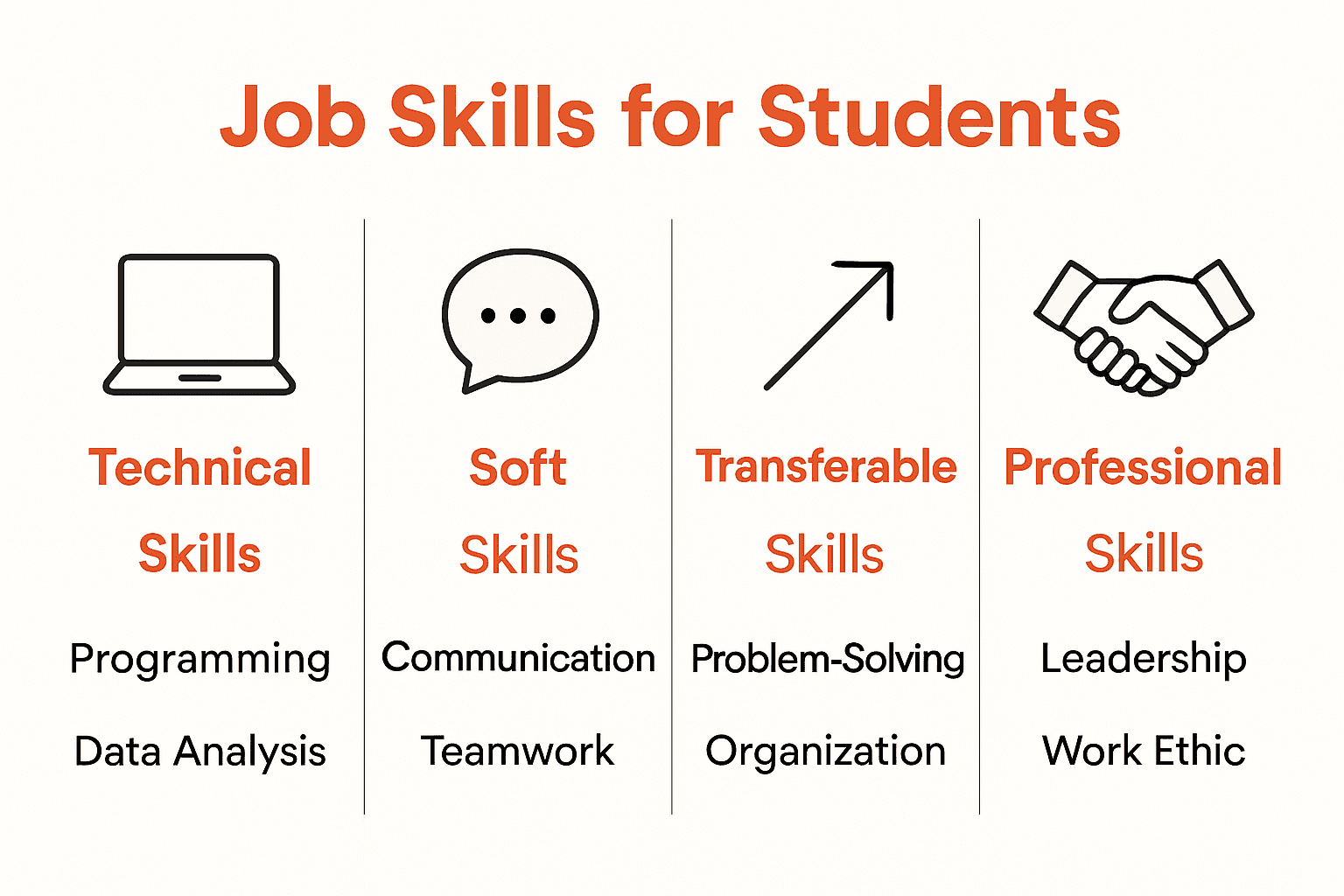
Here’s a comparison of key job skill categories and examples for students:
| Skill Category | Description | Examples |
|---|---|---|
| Technical Skills | Job-specific knowledge and abilities | Coding Design Accounting |
| Soft Skills | Interpersonal and behavioral strengths | Communication Teamwork Problem-solving |
| Transferable Skills | Useful in many different careers | Critical thinking Leadership |
| Professional Skills | Core workplace essentials | Adaptability Financial literacy Networking |
- Communication Skills: Learning to express yourself clearly, both in writing and speaking
- Critical Thinking: Analyzing problems and finding creative solutions
- Interpersonal Skills: Working well with different types of people
- Adaptability: Staying flexible and open to new challenges
- Financial Literacy: Understanding basic money management and professional budgeting
Networking skills are another crucial piece of your professional development puzzle. This means learning how to connect with people, build relationships, and create opportunities. Think of networking like building a web of professional contacts who can support your career journey.
The most successful students treat skill-building like a personal project. Start small – join a club, take an online course, volunteer, or seek mentorship. Every new skill you learn is like adding another tool to your career toolbox. Remember, employers aren’t just hiring your resume – they’re hiring your potential to grow, learn, and contribute.
Best Ways To Build Skills In School
Want to turn your school years into a skill-building bootcamp? Smart move! School experiences are your secret weapon for developing job-ready capabilities before you even graduate. It’s not just about sitting in classes – it’s about strategically creating opportunities to grow.
According to NMSU Global Campus, students have multiple powerful ways to build skills:
- Internships: Get real-world experience in your potential career field
- Volunteer Work: Develop teamwork and leadership skills while helping others
- Group Projects: Practice collaboration and communication
- Campus Leadership Roles: Take responsibility and manage teams
- Career Services: Use campus resources for resume and interview preparation
Work-based learning research suggests that integrating academic knowledge with practical workplace experiences is crucial. This means looking beyond textbooks and actively seeking opportunities that connect classroom learning with real-world skill application.
The key is being proactive. Don’t wait for skills to happen – create them. Join student organizations, seek mentorship, attend workshops, and challenge yourself to step outside your comfort zone. Every experience is a chance to learn something new about yourself and build the professional skills that will set you apart in your future career.

Applying Skills Through Real-World Experiences
Understanding job skills is great, but applying them is where the real magic happens. Real-world experiences transform theoretical knowledge into practical expertise that employers actually want. Think of these experiences like professional training grounds where you test and sharpen your skills.
Here are powerful ways to turn classroom learning into genuine career preparation:
- Part-Time Jobs: Build workplace communication and responsibility
- Freelance Projects: Practice independent work and time management
- Community Service: Develop empathy and collaborative skills
- Side Hustles: Learn entrepreneurship and problem-solving
- Student Organizations: Practice leadership and team dynamics
The most successful students treat every experience as a skill-building opportunity. Imagine you’re working a retail job – you’re not just selling products, you’re developing customer service skills, learning conflict resolution, practicing communication, and understanding professional expectations.
Your goal isn’t just collecting experiences, but reflecting on them. After each project or job, ask yourself: What did I learn? How can I improve? What skills did I develop? This reflective approach transforms ordinary experiences into extraordinary personal and professional growth. Remember, your career is a continuous journey of learning and adapting.
Common Mistakes And How To Avoid Them
Career preparation isn’t a straight line – it’s more like navigating a complex maze. Understanding common pitfalls can help you dodge career roadblocks before they slow you down. Think of this as your personal mistake-prevention guide.
According to recent academic research on labor data, students often make critical errors in skill development. A comprehensive study highlights that over-specialization is a major mistake. Instead of diving deep into one narrow skill, students should build a broad foundation of transferable skills that work across multiple career paths.
Here are the most common skill-building mistakes to avoid:
- Tunnel Vision: Focusing only on technical skills and ignoring soft skills
- Skill Stagnation: Not continuously learning and updating your abilities
- Networking Neglect: Failing to build professional connections
- Comfort Zone Trap: Avoiding challenges that could spark growth
- Resume Padding: Collecting experiences without genuine learning
Research from the University of Florida’s Career Services Center warns that neglecting adaptability and career readiness can severely limit workplace opportunities. The key is staying curious, remaining flexible, and treating every experience as a chance to learn something new. Your career is a journey of continuous improvement – not a destination.
Unlock Real-World Job Skills with Support That Fits Your Life
Are you feeling lost when it comes to building professional skills while juggling school, work, and daily life? The article explains how critical it is to develop technical abilities, soft skills, and transferable talents before graduation. Yet, it also warns against common mistakes like tunnel vision, skill stagnation, and lack of confidence in your learning strategy.
That is where Learning with Angie can help you turn your potential into real results. Discover research-backed routines, expert tips on time management and productivity, and easy-to-use guides for self-motivation and budgeting. Ready to take charge of your development and stay ahead of the curve? Visit our homepage right now for practical resources and join a community that believes in your growth. Your future starts with your next step.

Frequently Asked Questions
What are the main types of job skills students should focus on developing?
Job skills are categorized into four main types: technical skills (specific knowledge related to a job), soft skills (interpersonal and behavioral strengths), transferable skills (abilities that can apply to various jobs), and professional skills (core workplace essentials). Students should aim to build a balance of these skills to enhance their employability.
How can students effectively build their job skills while still in school?
Students can effectively build job skills by engaging in internships, volunteering, participating in group projects, taking on campus leadership roles, and utilizing career services for resume and interview preparation. Being proactive and seeking real-world experiences is key.
Why is networking important for students developing job skills?
Networking is crucial for students as it helps them build professional relationships and create opportunities for mentorship and career advancement. Developing networking skills allows students to connect with professionals who can support their job searches and career development.
What common mistakes should students avoid when building job skills?
Common mistakes include focusing too narrowly on technical skills while neglecting soft skills, failing to continuously learn and update abilities, neglecting networking opportunities, staying in their comfort zones, and padding their resumes without genuine learning. Students should aim for a broad foundation of transferable skills and stay adaptable.
Recommended
- Jobs You Can Have While You Are in School
- Understanding Side Hustles Perfect for Students
- Ultimate College Application Planner + 14 Must-Do Tasks
Want a head start? The Ultimate ‘To College & Beyond’ Bundle in my shop was made for exactly this — it’ll save you a ton of time.