
How Forgetting Makes You Remember What You Study Effectively
Did you know that students often forget as much as 70 percent of new information within just twenty four hours? Memory skills are the foundation for deep learning, yet many people struggle with forgetfulness and wasted study hours. By learning how to practice memory intentionally, you can hold on to knowledge much longer and study more efficiently. Simple changes in your study routine can turn scattered facts into strong, lasting recall that supports real academic success.
Quick Summary
| Key Point | Explanation |
|---|---|
| 1. Choose Active Learning Materials | Select resources that require deep engagement, like practice questions and case studies, to enhance memory retention. |
| 2. Implement Spaced Repetition | Create a review schedule with breaks to revisit material, aiding in long-term memory storage and retention. |
| 3. Use Forgetting Gaps Strategically | Space your study sessions to allow forgetting; this makes your brain work harder and strengthens memory. |
| 4. Test Recall with Active Retrieval | Quiz yourself frequently to identify knowledge gaps and reinforce memory through self-testing techniques. |
| 5. Adjust Review Based on Performance | Analyze your recall results to identify weak areas and adjust study methods for more effective learning. |
Step 1: Identify Study Material for Memory Practice
Preparing to study effectively starts with selecting the right materials that will supercharge your memory retention. According to University of Houston, the key is choosing resources that promote active learning and encourage deeper understanding.
When identifying study materials, focus on resources that require you to engage deeply with the content. Look for materials that challenge you to paraphrase information, create summaries, and draw connections between different concepts. As research from Los Alamos suggests, study resources that facilitate self testing and application of knowledge can significantly improve your memory recall.
Quick pro tip: Avoid passive study materials like long textbook paragraphs. Instead, seek out resources that include practice questions, interactive diagrams, case studies, or materials that require you to explain concepts in your own words. These approaches will help transform boring study sessions into active learning experiences that stick in your memory.
Ready to take your study strategy to the next level? The next step will help you design a memory practice routine that makes learning feel like second nature. Let’s go!
Step 2: Schedule Strategic Review and Spaced Repetition
Learning isn’t about cramming information into your brain all at once. It’s about smart, strategic review that helps your memory stick. According to Recall Academy, the secret is implementing a spaced repetition schedule that reviews material at gradually increasing intervals.
Here’s how to set up your strategic review plan. Start by creating a review schedule where you revisit your study material multiple times with breaks in between. As Notion for Teachers suggests, leave a day or two between reviews to help move information into your long-term memory. For example, if you learn something on Monday, review it again on Wednesday, then next week, and then two weeks later. This approach helps your brain encode information more deeply and prevents forgetting.
Pro tip: Use a digital calendar or study planner to track your review intervals. Set reminders for each review session so you don’t accidentally skip them. The goal is consistency make reviewing a habit, not a chore. Your brain will thank you by holding onto information much longer than traditional study methods.

Ready to turn your memory into a superpower? The next step will show you how to test and reinforce what you’ve learned using smart memory techniques.
Step 3: Embrace Short Forgetting Gaps Between Sessions
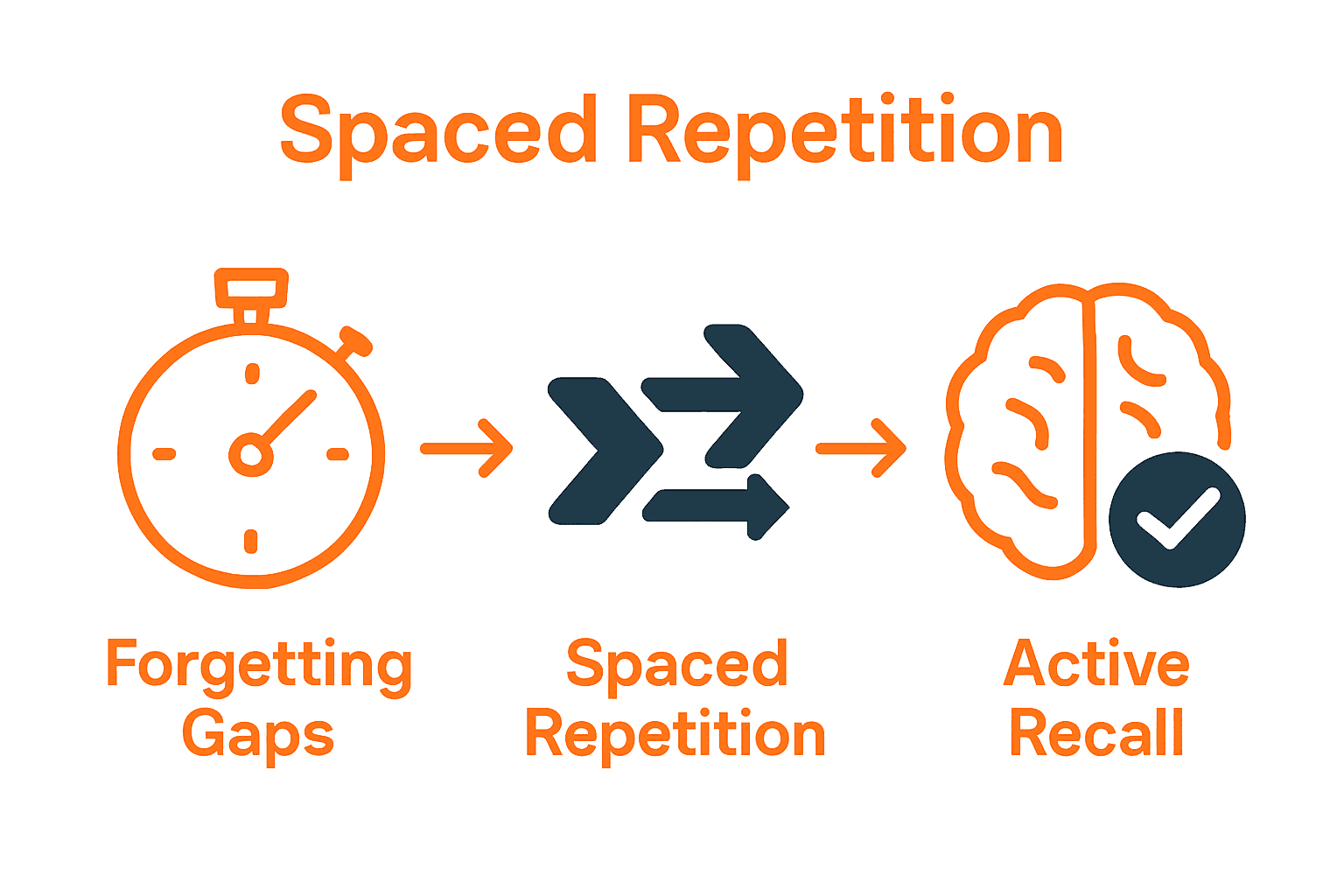
Learning is not about perfect memory but strategic memory. Recall Academy reveals a counterintuitive truth: short periods of forgetting actually help strengthen your memory. These intentional gaps create what researchers call ‘desirable difficulties’ that make your brain work harder to retrieve information.
To implement this strategy, intentionally space out your study sessions. As Notion for Teachers explains, your brain’s natural forgetting curve can be leveraged to enhance memory retention. This means waiting a few days between review sessions rather than cramming everything at once. When you revisit material after a short break, your brain must work to recall the information, which actually reinforces the memory more deeply than continuous repetition.
Quick pro tip: Think of these forgetting gaps like workout breaks for your brain. Just as muscles need rest between training sessions, your memory needs space to consolidate and strengthen connections. Don’t panic if you feel like you’re losing information during these gaps that’s exactly how the process works. Your brain is actually organizing and embedding the knowledge more permanently.
Feeling ready to transform your study approach? The next step will show you how to test and validate your newfound memory techniques.
Step 4: Test Recall with Active Retrieval Techniques
Testing yourself is the secret weapon of memory masters. According to Los Alamos, practicing active recall by quizzing yourself dramatically improves memory retention and helps you pinpoint exactly what you need to review more deeply.
To implement active retrieval, start by closing your study materials and challenging yourself to write or speak everything you remember about a topic. As Kings College suggests, this approach reveals the true gaps in your understanding. Create flashcards, record voice memos of your explanations, or grab a blank sheet of paper and dump out everything you know. The key is forcing your brain to reconstruct the information from memory rather than simply re scanning your notes.
Pro tip: Make your self testing fun and varied. Mix up your retrieval methods use quizzes, teach a concept to an imaginary friend, draw mind maps from memory, or create practice questions. The more ways you can challenge your brain to recall information, the stronger those memory connections become.
Ready to level up your learning game? The final step will show you how to turn these memory techniques into a consistent study superpower.
Step 5: Adjust Review Methods Based on Recall Performance
Learning is a dynamic process that requires constant fine-tuning. Los Alamos research shows that regular self-quizzing helps you identify knowledge gaps and adjust your study strategies in real time. Think of it like a personal memory navigation system that helps you stay on track.
After each active recall session, take time to analyze your performance. According to University of Houston, monitoring your recall enables you to adapt review strategies and focus on areas needing more attention. Create a simple tracking system where you mark topics you struggled with. Did you blank on specific concepts? Spend more time on those. Breezed through certain sections? You can reduce review time there and redistribute your study energy more efficiently.
Pro tip: Be honest with yourself during these performance reviews. Treating your study method like a living, breathing system means being willing to experiment and pivot. If flashcards aren’t working, try mind mapping. If teaching concepts out loud feels awkward, record audio explanations. The goal is progress not perfection.
You’ve now unlocked the ultimate memory learning strategy. Time to put these techniques into action and watch your recall skills transform.
Unlock the Power of Strategic Forgetting to Boost Your Memory
Struggling to retain what you study despite spending hours reviewing your notes This article highlights the surprising strength in forgetting through intentional memory gaps and spaced repetition. If you want to stop feeling overwhelmed by endless cramming and start mastering your learning journey with effective recall techniques you are not alone. Many students face the challenge of making study time truly stick in long-term memory.
At Learning with Angie we understand how critical it is to balance smart study habits with everyday life demands. Explore practical solutions designed to help you apply these memory strategies like active retrieval and adjusting your review plan based on your recall performance. Discover tools and tips that bring clarity and focus to your study routine while also supporting your overall productivity and lifestyle balance. Take control of your learning now and visit Learning with Angie to unlock customized strategies that make forgetting work in your favor. Make each study session count and transform your recall skills starting today.

Frequently Asked Questions
How can forgetting help me remember what I study effectively?
Forgetting gives your brain the chance to retrieve information, strengthening memory connections. To harness this, intentionally space out your study sessions and revisit material after short gaps to reinforce learning.
What is spaced repetition and how do I use it in my study routine?
Spaced repetition involves reviewing study material at gradually increasing intervals to improve retention. Create a schedule where you revisit topics repeatedly, for example, review a topic on Monday, again on Wednesday, then wait a week before reviewing it once more.
Why are short forgetting gaps important between study sessions?
Short forgetting gaps challenge your brain to recall information, which can enhance memory retention. Implement these gaps by taking a few days off between study sessions, making sure to revisit the material to strengthen your grasp of the concepts.
How do I test my recall to improve my memory?
Testing recall involves quizzing yourself on what you’ve learned without looking at your notes. Try writing down everything you remember about a topic, then check for gaps in your knowledge to identify areas that need more focus.
How should I adjust my study methods based on my recall performance?
Regularly assess your recall to determine which topics need more attention. After each self-quiz, note any concepts you struggled with and adjust your study focus accordingly by dedicating more time to those areas while reducing time spent on concepts you’ve mastered.
Can I make self-testing more engaging to maintain my motivation?
Yes, you can increase engagement by mixing up your self-testing methods. Use different techniques, such as flashcards, teaching the concept aloud, or creating mind maps to make your study sessions more interesting and effective.
Recommended
- 15 Reasons the Feynman Technique Is a Game-Changer for Students
- How to Make Flashcards Actually Work for You (The Leitner System Made Easy)
- How to Take Notes in APUSH—Improve Speed, Memory, and Grades
Want a head start? The Ultimate Student Planner in my shop was made for exactly this — it’ll save you a ton of time.