
Complete Guide to Self-Care Hacks for Holidays
Did you know that nearly 70 percent of students report feeling increased stress during the holiday season? Finding true balance can feel impossible when academic deadlines and family gatherings collide. Learning how to care for yourself over the holidays is vital for your health and peace of mind. This guide highlights strategies to help you prioritize self-care so you can recharge and handle the season’s demands with more confidence.
Key Takeaways
| Point | Details |
|---|---|
| Prioritize Self-Care | Self-care is essential for students during the holidays, addressing mental and physical well-being to reduce stress and enhance overall balance. |
| Types of Self-Care | Focus on emotional, physical, and social self-care to create a holistic approach that nurtures your mental health. |
| Effective Time Management | Establish a flexible schedule that incorporates self-care, academic tasks, and personal time to manage holiday stress effectively. |
| Avoid Common Mistakes | Be mindful of neglecting self-care by maintaining routines, connecting socially, and avoiding toxic productivity mindsets. |
Defining Holiday Self-Care for Students
Holidays can be a whirlwind of emotions, expectations, and stress for students. Self-care during this time isn’t just a luxury – it’s a necessity for maintaining your mental and physical well-being. According to Pennsylvania Government, self-care involves any action during the day that helps maintain a feeling of calm, balance, and wellness.
For students, holiday self-care goes beyond traditional relaxation techniques. It’s about creating intentional practices that help you navigate the unique challenges of this season.
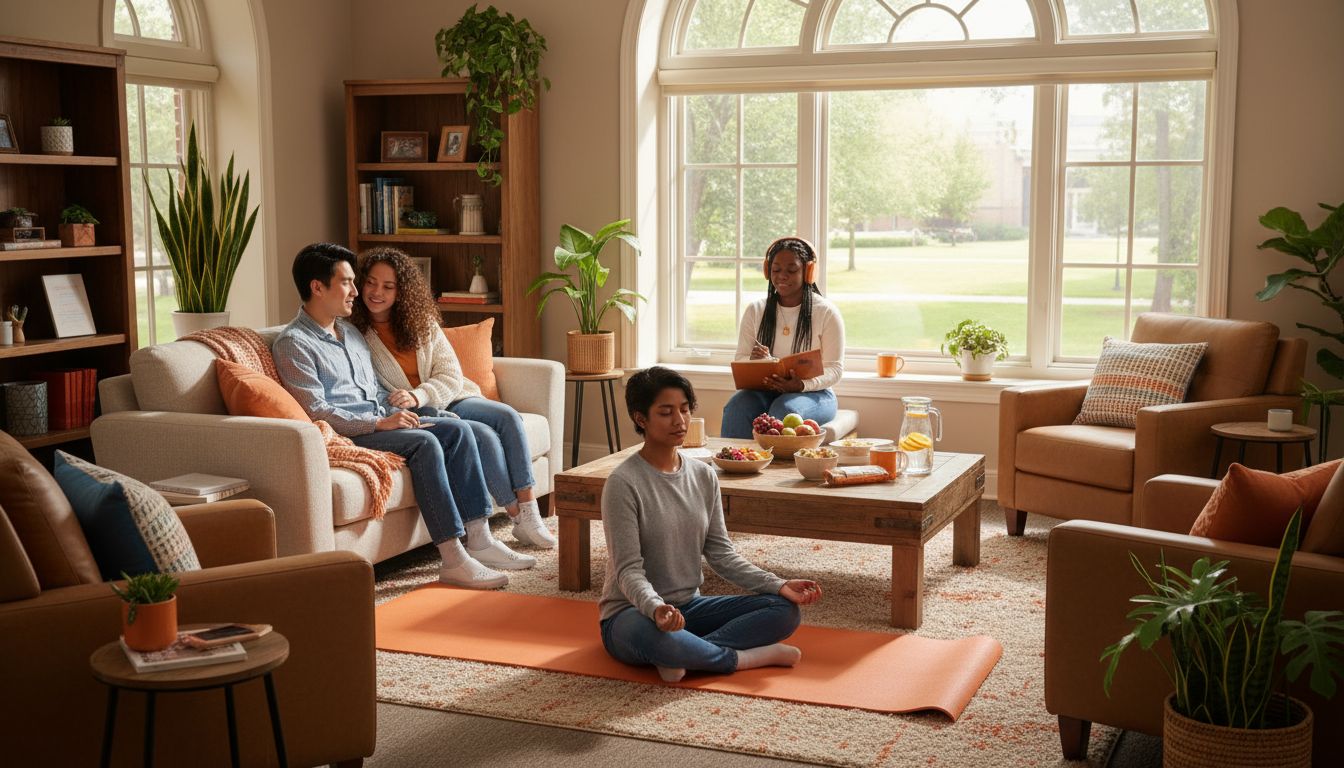 This might include setting clear boundaries with family, managing academic stress, and protecting your personal time and energy. Finding Work-Life Balance as a Student to Avoid Burnout can provide additional strategies for managing these pressures.
Effective holiday self-care involves a holistic approach that addresses multiple aspects of your well-being:
- Emotional Regulation: Acknowledging and processing your feelings
- Physical Health: Maintaining nutrition, sleep, and movement
- Mental Boundaries: Saying no to overwhelming commitments
- Social Connection: Balancing social interactions with personal space
Remember, self-care isn’t selfish – it’s essential. By prioritizing your well-being, you’re setting yourself up for a more balanced, enjoyable holiday experience.
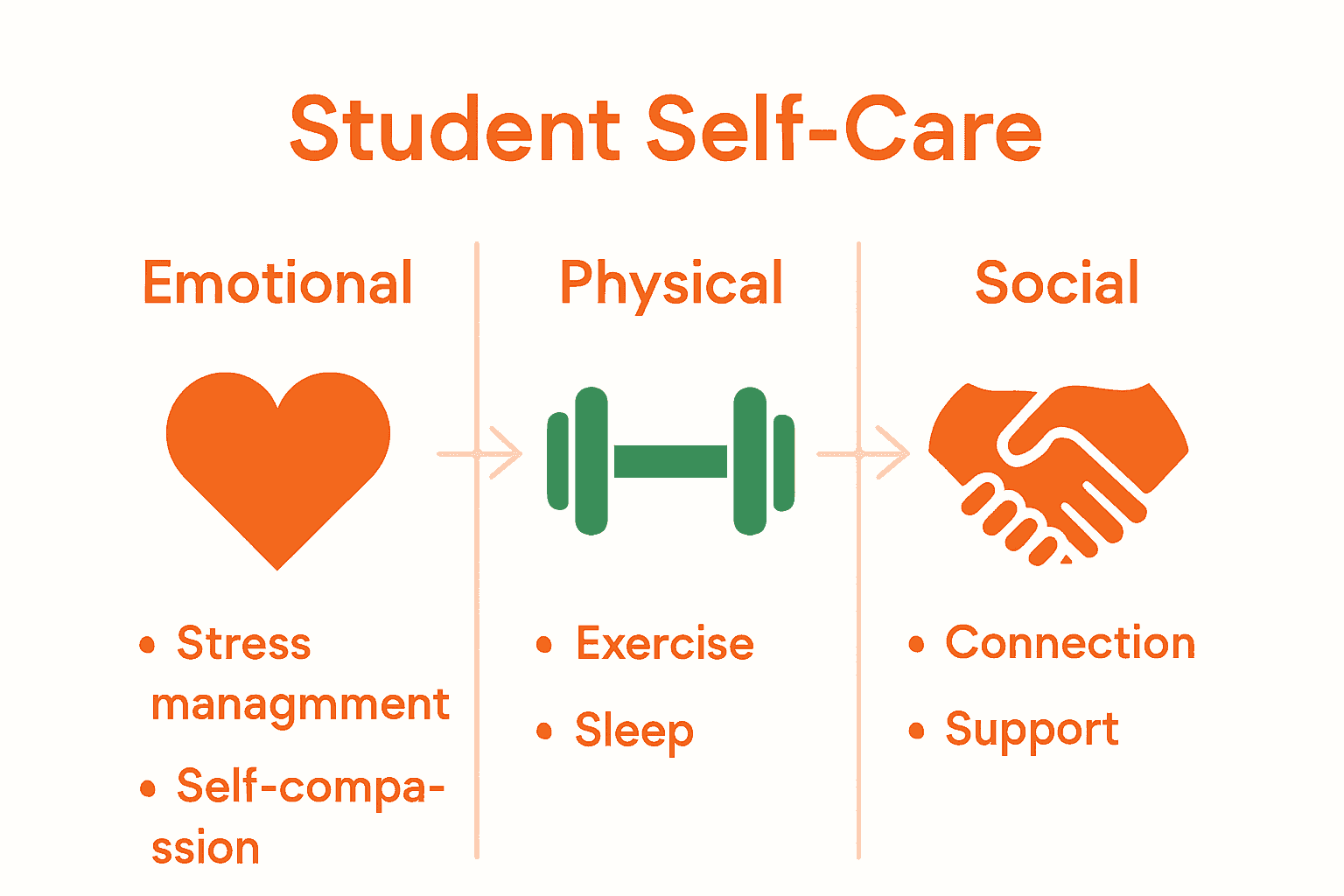
Types of Self-Care: Emotional, Physical, Social
Understanding the different dimensions of self-care is crucial for creating a holistic approach to your well-being.
Here’s a summary of the main types of self-care and examples for each:
| Self-Care Type | Focus Area | Common Examples |
|---|---|---|
| Emotional | Managing feelings | Journaling Meditation Talking with friends |
| Physical | Health habits | Regular sleep Balanced meals Exercise |
| Social | Relationships & boundaries | Setting limits Spending time with friends Community involvement |
Emotional self-care involves understanding and processing your feelings. This means giving yourself permission to experience emotions without judgment, practicing self-compassion, and finding healthy ways to express your inner experiences. Journaling, meditation, talking with a trusted friend, or seeking professional counseling are powerful emotional self-care strategies that help you stay mentally resilient. Prioritizing Self Care During Academic Challenges can provide additional insights into managing emotional well-being.
Physical self-care goes beyond just exercise. As New Jersey Government suggests, it includes maintaining good hygiene, eating nutritious foods, obtaining preventative healthcare, and establishing a consistent sleep routine. For students, this might look like:
- Creating a regular sleep schedule
- Eating balanced, nutritious meals
- Staying hydrated
- Incorporating regular movement or exercise
- Taking breaks and avoiding prolonged sitting
Social self-care is equally important. It’s about building and maintaining healthy relationships while also respecting your personal boundaries. This means learning to say no when necessary, surrounding yourself with supportive people, and creating meaningful connections that uplift and energize you. Your social self-care might involve setting limits on social interactions, scheduling quality time with friends, or engaging in community activities that bring you joy.
Managing Holiday Stress and Academic Pressure
The holiday season can be a minefield of stress for students, especially when academic pressures collide with family expectations and personal goals. Stress management is crucial during this time, and according to Wright State University, engaging in self-care practices like getting enough sleep, exercising, and paying attention to nourishment can help manage stress and improve overall well-being.
Academic pressure doesn’t take a holiday break. Many students find themselves juggling upcoming exams, project deadlines, and family commitments simultaneously. The Best Time Management Tools for Students in 2025: Stay Organized and Stress Less can help you create a strategic approach to managing your workload during this challenging period. As recommended by George Washington University, maintaining friendships, getting regular exercise, keeping a balanced diet, and asking for help when needed are key strategies to manage stress and promote well-being.
Effective stress management during the holidays requires a multi-pronged approach:
- Set Realistic Expectations: Be honest about what you can accomplish
- Create Boundaries: Learn to say no to overwhelming commitments
- Schedule Self-Care: Prioritize time for rest and relaxation
- Break Tasks into Smaller Steps: Make academic workload feel more manageable
- Communicate with Professors: Discuss potential deadline extensions or support
Remember, managing holiday stress isn’t about being perfect. It’s about finding balance, being kind to yourself, and recognizing that your mental health matters more than meeting every single expectation.
Time Management and Boundaries During Breaks
Holiday breaks can quickly become overwhelming without a strategic approach to time management. According to New Jersey State Resources, keeping a daily routine, setting attainable goals, and preparing for challenges while not dwelling on things beyond your control are key strategies for effective time management and setting boundaries.
Creating a structured yet flexible schedule during breaks is crucial for maintaining productivity and mental health. Productive Day Schedule For Students—Be Productive 12+ Hours a Day! can help you design a realistic approach to balancing relaxation and academic responsibilities. As Pennsylvania Government suggests, engaging in self-care by setting boundaries and practicing mindfulness helps maintain a feeling of calm, balance, and wellness.
Here are practical strategies for managing your time and setting boundaries during holiday breaks:
- Create a Flexible Schedule: Block out specific times for studying, relaxation, and family activities
- Use Time-Blocking Techniques: Allocate dedicated hours for different responsibilities
- Learn to Say No: Protect your personal time and energy
- Set Clear Expectations: Communicate your availability to family and friends
- Build in Buffer Time: Allow space for unexpected events or spontaneous moments
Remember, effective time management isn’t about filling every moment with productivity. It’s about creating a balanced approach that honors your academic goals while also allowing space for rest, connection, and personal growth.
Budget-Friendly Self-Care Tips for Students
Self-care doesn’t have to drain your wallet. Budget-friendly strategies can help you maintain your mental and physical well-being without spending a fortune. According to San Francisco State University Wellness Center, effective self-care can be as simple as writing in a journal, enjoying music, taking a break from your phone, doing activities that make you laugh, and enjoying a soothing cup of tea.
Creative and cost-effective self-care is all about finding joy in low-cost or free activities. 10 Creative Ways to Stretch Your Financial Aid (and Your Budget) for College! can help you maximize your resources while taking care of yourself. Drawing from UC Davis Mental Health Resources, students can engage in self-care through activities like listening to podcasts, reading books, developing career skills, creating art, and connecting with friends – most of which can be done without spending extra money.
Here are budget-friendly self-care strategies for students:
- Free Meditation Apps: Use free mindfulness and meditation resources
- Library Resources: Borrow books, audiobooks, and use free study spaces
- Community Events: Attend free campus or local community activities
- Online Learning: Take advantage of free online skill-development courses
- Nature Walks: Explore local parks and outdoor spaces at no cost
- Virtual Connections: Use free video chat to stay connected with friends
Remember, self-care is about nurturing yourself – not about spending money. The most valuable resources are often your creativity, time, and willingness to prioritize your well-being.

Common Self-Care Mistakes to Avoid
Self-care isn’t always as straightforward as it seems. Many students accidentally sabotage their well-being by making common self-care mistakes that can undermine their mental and physical health. According to Mental Health First Aid, neglecting physical self-care such as healthy eating, regular exercise, and sufficient sleep can significantly negatively impact mental health.
One of the most critical errors students make is treating self-care as an afterthought rather than a priority. Smart Budgeting Tips for College Students can help you create a holistic approach that integrates self-care into your daily routine. According to 3RC Resources, failing to engage in social self-care by not connecting with friends, family, and peers can lead to a lack of belonging and acceptance – a profound risk for students navigating complex academic and personal landscapes.
Here are the most common self-care mistakes to watch out for:
- Inconsistent Routines: Treating self-care as optional instead of essential
- Neglecting Physical Health: Skipping sleep, poor nutrition, minimal exercise
- Isolation: Avoiding social connections and support networks
- Toxic Productivity: Equating self-worth with constant achievement
- Comparison Trap: Measuring your progress against others
- Ignoring Emotional Needs: Suppressing feelings instead of processing them
Remember, self-care is a skill you develop. It’s not about perfection, but about consistent, compassionate efforts to support your overall well-being.
Take Control of Your Holiday Self-Care Journey Today
The holiday season often brings a mix of academic pressure, family demands, and the need to maintain your well-being. As the article highlights, setting boundaries, managing stress, and prioritizing emotional, physical, and social self-care are essential but can feel overwhelming. If you are striving to find that balance and build sustainable habits that support your mental health and productivity, you are not alone.
Explore tailored strategies and practical tips on Wellness that empower you to embrace self-care without guilt or burnout. Ready to transform your routine with actionable solutions that help you thrive academically and personally? Unlock resources designed specifically for students balancing school and life. Don’t wait to give yourself the care you deserve this holiday season.
Frequently Asked Questions
What are some effective self-care practices for students during the holidays?
Effective self-care practices for students during the holidays include creating clear boundaries with family, managing academic stress, and finding time for personal relaxation. Emotional regulation, physical health maintenance, and strengthening social connections are also key aspects to focus on.
How can students manage holiday stress while balancing academic responsibilities?
Students can manage holiday stress by setting realistic expectations, communicating with professors about deadlines, and breaking tasks into smaller, manageable steps. Scheduling time for rest and relaxation is equally important to maintain well-being.
What are budget-friendly self-care strategies for students during the holidays?
Budget-friendly self-care strategies for students include utilizing free resources such as public libraries, attending community events, engaging in nature walks, and using free meditation apps. Creative activities like art and virtual connections with friends can also be enjoyable without incurring costs.
What common mistakes should students avoid in their self-care routines during the holidays?
Common self-care mistakes to avoid include treating self-care as optional, neglecting physical health like sleep and nutrition, isolating oneself from social connections, and falling into the comparison trap. It’s important to prioritize self-care consistently and address emotional needs effectively.