Create Your Success: Ultimate Goal Setting Checklist
Setting goals sounds simple on paper. Most people scribble down wishes, but then nothing changes. Here is the real shock: studies show that only 8 percent of people actually achieve their goals. The real secret is not working harder but learning how to break goals into crystal clear steps and track your efforts with ruthless honesty.
Quick Summary
| Key Point | Explanation |
|---|---|
| 1. Clearly define your goals | Understand what you want to achieve, focusing on specific and measurable objectives to increase clarity and motivation. |
| 2. Break goals into actionable steps | Decompose larger goals into manageable tasks to create a clear roadmap for steady progress towards your objectives. |
| 3. Establish realistic timelines | Create a structured timeline for each goal, incorporating phases and buffer periods for flexibility and adaptability. |
| 4. Implement a progress tracking system | Develop a systematic method to monitor your progress, combining quantitative data and qualitative reflections for holistic insight. |
| 5. Conduct regular goal reviews | Schedule periodic evaluations to reassess and adjust goals, ensuring they remain relevant and aligned with personal growth. |
Step 1: Identify Your Goals Clearly
Clarity is the cornerstone of effective goal setting. Before diving into complex strategies or creating intricate plans, you need to understand precisely what you want to achieve. Many people stumble in their goal setting journey because they start with vague, nebulous ideas instead of concrete, well-defined objectives.
The process of identifying goals clearly begins with honest self-reflection. Ask yourself probing questions that cut through surface level desires and touch the core of what truly matters to you. What do you want to accomplish in the next six months? What skills do you want to develop? What achievements would make you feel genuinely satisfied?
Start by creating a personal vision map. This isn’t just a simple list but a comprehensive visualization of your aspirations. Divide your goals into different life categories: personal development, career, health, relationships, and financial growth. Each category should contain specific, measurable objectives that excite and motivate you. For instance, instead of saying “I want to get better at my job,” articulate a precise goal like “I will complete two professional certification courses and increase my project management skills by 40% within the next nine months.”
Writing down your goals transforms them from abstract thoughts to concrete commitments. Use precise language that creates a clear mental image of success. Avoid generic statements and focus on specific, quantifiable outcomes. The more detailed your goal description, the more likely you are to create an effective action plan.
Remember that goal identification is not a one-time event but an ongoing process. Be prepared to revisit and refine your goals as you gain more insight and experience. learn strategies for adaptive goal setting that allow flexibility while maintaining your core vision.
Verify your goal clarity by asking these key questions:
- Can I describe this goal in one clear, concise sentence?
- Do I have a specific metric to measure my progress?
- Am I genuinely passionate about achieving this goal?
By meticulously identifying your goals with precision and passion, you’re laying the strongest possible foundation for your success journey.
Below is a checklist table to help you verify your goal clarity as outlined in Step 1. Use this as a quick self-audit before moving forward.
| Verification Question | Why It Matters |
|---|---|
| Can I describe this goal in one clear, concise sentence? | Ensures focus and eliminates vagueness |
| Do I have a specific metric to measure my progress? | Provides a way to track achievement and stay accountable |
| Am I genuinely passionate about achieving this goal? | Increases motivation and likelihood of long-term commitment |
Step 2: Break Down Goals into Actionable Steps
Breaking down your goals into actionable steps transforms ambitious dreams into achievable realities. Large goals can feel overwhelming and paralyzing when viewed as a massive, monolithic challenge. By dissecting your objectives into smaller, manageable tasks, you create a roadmap that feels approachable and motivating.
Start by creating a systematic breakdown strategy. Imagine your goal as a complex puzzle where each small piece contributes to the complete picture. Begin with your primary goal and work backward, identifying the critical milestones and intermediate achievements required to reach your ultimate destination. Each milestone should be specific, measurable, and time-bound.
Consider developing a hierarchical action plan that cascades from broad objectives to granular tasks. For example, if your goal is to launch a freelance business, your first-tier steps might include market research, skill development, portfolio creation, and initial client acquisition. Then, drill down into each of these areas with precise, executable actions like “Complete online marketing course by month end” or “Create three sample projects for portfolio website.”
Time allocation is crucial in this breakdown process. Assign realistic timelines to each actionable step, understanding your personal bandwidth and potential constraints. discover productivity techniques that help you optimize task management and track progress effectively.
Technology can be an excellent ally in breaking down goals. Utilize digital tools and apps designed for project management and goal tracking. Platforms like Trello, Asana, or even a well-structured spreadsheet can help you visualize your goal’s progression and maintain accountability.
Be prepared to encounter and adapt to challenges. Your initial breakdown might not be perfect, and that’s okay. Flexibility is key. Regularly review and adjust your action steps based on progress, learning, and changing circumstances.
Verify your goal breakdown’s effectiveness by checking these critical points:
- Are your steps specific and clearly defined?
- Can each step be completed within a reasonable timeframe?
- Do the steps logically progress toward your ultimate goal?
By meticulously breaking down your goals into actionable steps, you transform overwhelming aspirations into a structured, achievable journey of consistent progress.

Step 3: Establish a Timeline for Each Goal
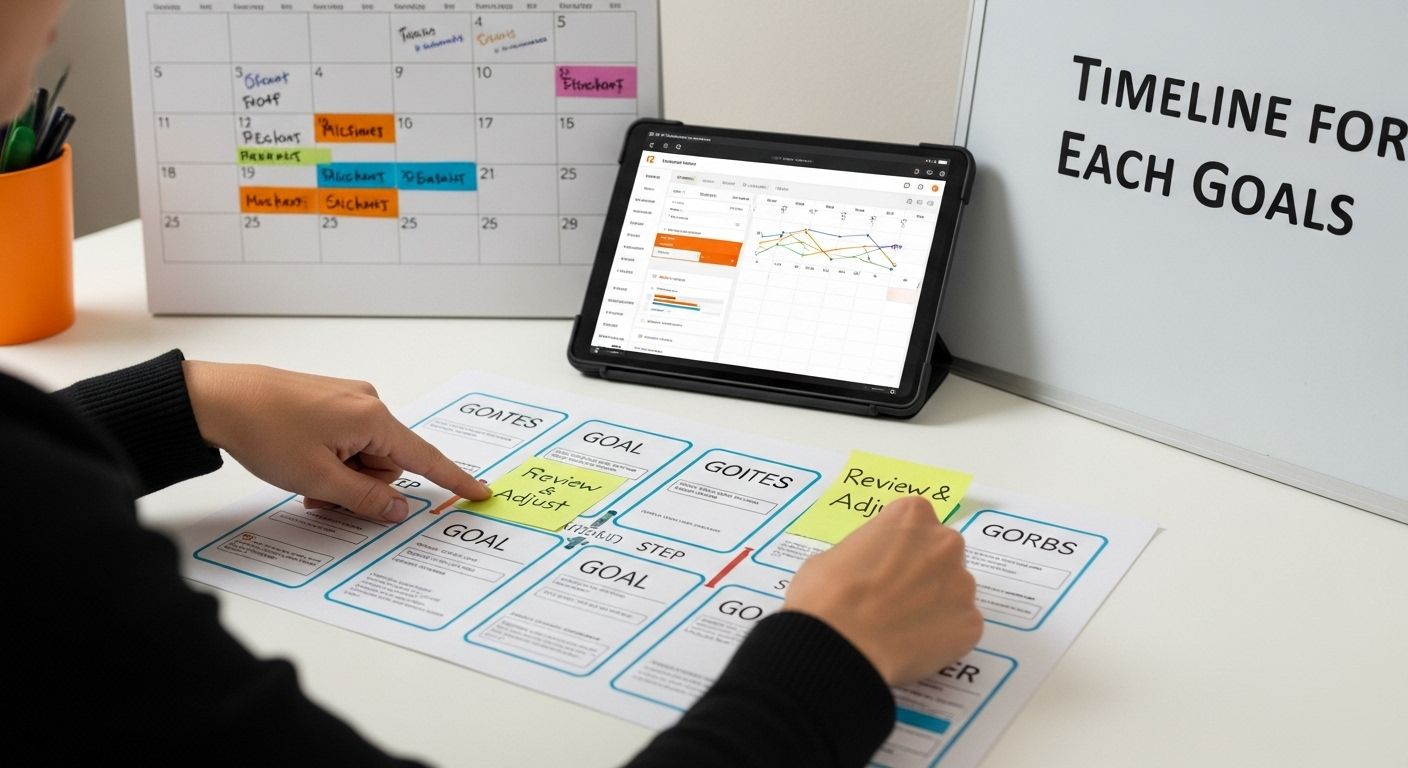
Timeline creation transforms abstract goals into concrete commitments with clear progression markers. Without a structured timeframe, goals can become endless pursuits that never materialize. Your timeline serves as a roadmap, providing direction, momentum, and crucial accountability checkpoints.
Begin by understanding the realistic time requirements for each goal. Not all objectives unfold at the same pace. Some goals demand weeks of concentrated effort, while others might require months or even years of consistent work. Evaluate each goal’s complexity, your current skills, available resources, and potential obstacles when designing your timeline.
Create a strategic progression framework that breaks your overall timeline into distinct phases. Start with a broad annual perspective, then subdivide into quarterly, monthly, and weekly milestones. This multi-layered approach allows you to maintain a comprehensive view while focusing on immediate, actionable steps. For example, if your goal involves learning a new language, your annual timeline might include phases like foundational learning, intermediate skill development, and advanced conversation practice.explore effective weekly planning strategies that complement your goal timeline. Integrating your goal timeline with your regular weekly planning ensures consistent progress and prevents goal pursuit from becoming an isolated activity.
Flexibility is crucial in timeline development. While structure is important, rigidity can lead to discouragement. Your timeline should include buffer periods that account for unexpected challenges, personal commitments, and potential setbacks. Think of these buffer zones as strategic breathing room that prevents complete derailment when life inevitably introduces complications.
Digital and analog tools can significantly enhance your timeline management. Consider using digital calendars with color-coded goal tracking, project management apps that allow milestone setting, or traditional planners with dedicated goal progression sections. The key is selecting a system that feels intuitive and motivating to you.
Verify your timeline’s effectiveness by checking these critical elements:
- Does each goal have clear start and end dates?
- Are your milestones specific and measurable?
- Have you built in realistic buffer periods?
Remember that a timeline is a living document. Regular review and adjustment are not signs of failure but indicators of your commitment to intelligent, adaptive goal pursuit. Your timeline should energize and guide you, not become a source of stress or rigid constraint.
Step 4: Create a Tracking System for Progress
A robust tracking system transforms goal pursuit from a nebulous journey into a measurable, motivating experience. Without systematic progress monitoring, even the most well-intentioned goals can silently drift into obscurity. Your tracking system serves as both a navigational tool and a motivational catalyst, providing real-time insights into your advancement.
Develop a comprehensive tracking methodology that combines quantitative measurements with qualitative reflection. Digital tools offer exceptional flexibility in this process. Spreadsheets, dedicated goal tracking apps, and project management platforms can help you create intricate progress dashboards. Choose a system that feels intuitive and aligns with your personal work style. Some individuals thrive with complex visual representations, while others prefer minimalist tracking approaches.
Consider implementing a multi-dimensional tracking framework that captures different aspects of goal progression. This means not just recording objective achievements but also documenting your emotional journey, learning experiences, and unexpected challenges. For instance, if your goal involves skill development, track not only completed courses or practice hours but also your confidence levels, skill application instances, and personal insights gained during the process.discover strategies for effective progress monitoring that can elevate your tracking approach. Regularly scheduled review sessions are critical. Set aside dedicated time weekly or monthly to comprehensively evaluate your progress, recalibrate strategies, and celebrate milestones.
Technology provides numerous tracking options, but don’t underestimate the power of analog methods. Physical journals, color-coded wall charts, or handwritten progress logs can offer a tactile, deeply personal tracking experience. The key is finding a method that keeps you consistently engaged and motivated.
Here is a comparison table of digital and analog tracking methods mentioned in Step 4. Use this table to decide which tracking style best fits your preferences.
| Tracking Method | Examples | Strengths | Best For |
|---|---|---|---|
| Digital Tools | Spreadsheets, goal-tracking apps, calendars | Flexible, easily updated, visual data | Tech-savvy, data-driven users |
| Analog Methods | Journals, wall charts, handwritten logs | Tactile, personal, encourages reflection | Those who prefer handwriting |
Psychological factors play a significant role in effective progress tracking. Your system should be designed to highlight achievements rather than expose shortcomings.
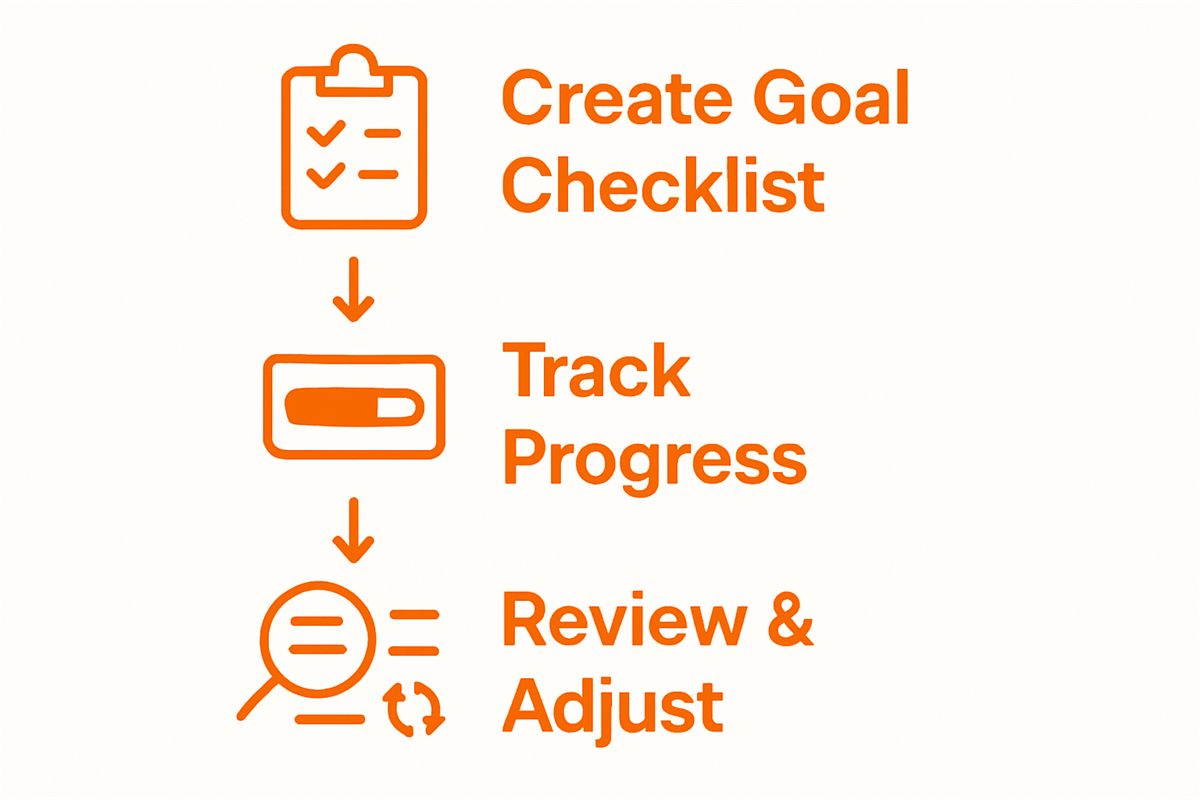 Use visual cues like color coding, progress bars, or milestone badges that transform tracking from a potentially discouraging task into an exciting journey of continuous improvement.
Verify your tracking system’s effectiveness by assessing these critical components:
- Does your tracking method capture both quantitative and qualitative progress?
- Are you consistently and honestly updating your progress?
- Does your system provide clear visibility into your goal advancement?
Remember, a tracking system is not about perfection but about maintaining momentum and gaining insights. Embrace imperfection, view each entry as a learning opportunity, and let your tracking method be a supportive companion in your goal achievement journey.
Step 5: Review and Adjust Your Goals Regularly
Regular goal review is the heartbeat of successful goal achievement. Without periodic evaluation, even the most meticulously crafted goals can become stagnant, disconnected from your current reality, or irrelevant to your personal growth trajectory. Think of goal review as a strategic recalibration process that keeps your aspirations dynamic and aligned with your ever-changing life circumstances.
Establish a systematic review framework that balances consistency with flexibility. Schedule dedicated review sessions at strategic intervals—monthly, quarterly, and annually. These sessions are not mere administrative tasks but profound moments of self-reflection and strategic realignment. During these reviews, examine each goal through multiple lenses: progress made, challenges encountered, personal growth experienced, and potential shifts in your broader life vision.
Approach goal adjustment with a growth-oriented mindset. Recognize that modifying goals is not a sign of failure but an intelligent adaptation strategy. Life is fluid, and your goals should reflect that dynamism. Sometimes this might mean accelerating a timeline, breaking a goal into smaller milestones, or completely reimagining an objective based on new insights or opportunities that have emerged.explore productivity strategies for consistent goal management that can support your review process. Develop a comprehensive evaluation protocol that goes beyond simple progress tracking. Consider not just the quantitative metrics but also the qualitative aspects of your goal pursuit—your emotional engagement, skill development, and overall satisfaction.
Utilize a combination of digital and analog tools for your review process. Digital calendars can help schedule review sessions, while physical journals can provide space for deep reflection. Create a review template that prompts you to explore critical questions: What worked well? What obstacles did you encounter? How have your priorities shifted? What new skills or resources do you need to acquire?
Psychological preparation is crucial during goal reviews. Approach these sessions with compassion and curiosity rather than harsh self-judgment. Celebrate the progress you’ve made, no matter how small, and view challenges as valuable learning opportunities that refine your goal-setting approach.
Verify the effectiveness of your goal review process by assessing these key elements:
- Are you consistently scheduling and conducting review sessions?
- Do you feel more aligned with your goals after each review?
- Have you made meaningful adjustments based on your reflections?
Remember, goal review is not about achieving perfection but about maintaining a dynamic, responsive relationship with your aspirations. Embrace the journey of continuous improvement, and let your goals be a living, breathing reflection of your personal growth and potential.
Turn Your Checklist Into Real Achievement With Expert Guidance
Are you struggling to move beyond goal-setting and actually see results? After reading the Ultimate Goal Setting Checklist, you know how crucial it is to have clear objectives, actionable steps, and a tracking system, yet putting these into practice can feel overwhelming. If keeping up with timelines and progress tracking feels impossible, you are not alone. Many students and lifelong learners find themselves stuck at the action stage, unsure how to manage their time or measure success effectively. Visit our Time Management resources to find focused tips and tools tailored to your needs.

Start transforming your goal-setting checklist into daily wins. Explore Learning With Angie for proven strategies and practical advice. Find out how digital tools like Notion can boost your progress in our Notion productivity guides. Do not wait for motivation to strike. Begin your journey to success now—unlock the support and structure you need today.
Frequently Asked Questions
How can I clarify my goals effectively?
To clarify your goals, start with self-reflection. Ask yourself specific questions about what you wish to achieve and why it matters to you. Create a personal vision map and write down your goals in precise language, ensuring they are specific, measurable, and inspiring.
What is the importance of breaking down goals into actionable steps?
Breaking down goals makes large objectives more manageable by dividing them into smaller, actionable tasks. This approach prevents overwhelm and provides a clear roadmap, making it easier to track progress and stay motivated.
How do I establish a realistic timeline for my goals?
Establish a realistic timeline by considering the complexity and requirements of each goal. Break your overall timeline into phases—annual, quarterly, monthly, and weekly—and incorporate buffer periods to accommodate unexpected challenges.
What are some effective methods for tracking progress toward my goals?
Effective methods for tracking progress include using digital tools like spreadsheets or goal-tracking apps, as well as maintaining a physical journal. Implement a multi-dimensional tracking framework to capture both quantitative achievements and qualitative reflections on your journey.
Recommended
- Life Reset Checklist to Regain Control Over Your Life
- Daily Healthy Habits Checklist That Will Transform Your Life
- Boost Your Productivity and Master Time Management
- College Application Timeline Checklist—Must-Do Tasks
Want a head start? The Goal Planner in my shop was made for exactly this — it’ll save you a ton of time.