Study skills are often seen as simple tricks students use to memorize facts before exams. But research shows that mastering study skills can do much more than improve grades. Students who develop strong study strategies can boost their GPA and reduce stress at the same time. Most people think these skills are just for high achievers, but the science says absolutely anyone can learn them and see dramatic results.
Quick Summary
| Takeaway | Explanation |
|---|---|
| Effective study skills boost academic performance. | Students who develop robust study skills show higher grades and better subject comprehension, leading to academic success. |
| Focus on strategic planning and goal setting. | Setting clear, measurable academic goals and creating realistic study schedules is crucial for effective learning. |
| Active retrieval practices strengthen memory. | Actively recalling information improves memory retention and understanding, creating strong connections in the brain. |
| Metacognition enhances learning adaptability. | Understanding your own thinking processes allows for personalized study methods and continuous improvement in your learning journey. |
| Study skills reduce academic stress and anxiety. | Mastering study techniques not only boosts confidence but also lowers performance anxiety, creating a positive learning environment. |
What are Study Skills and Their Importance?
Study skills are strategic learning techniques that help students effectively absorb, process, and retain academic information. These skills are not just about studying harder, but studying smarter.
To clarify the core elements that make up effective study skills, the following table summarizes and defines each component as discussed in the article.
| Core Component | Description |
|---|---|
| Time management | Planning study sessions and balancing academic responsibilities effectively |
| Active note-taking strategies | Engaging with content by summarizing, questioning, and organizing notes |
| Information organization | Categorizing and structuring information for better understanding and recall |
| Critical thinking and comprehension | Analyzing and interpreting information beyond surface-level memorization |
| Effective reading and research | Using methods to identify key points, analyze texts, and gather reliable sources |
Understanding the Core Components
Study skills encompass several key areas that work together to enhance learning. According to research from the Journal of Education and Health Promotion, these skills directly impact academic performance and personal well-being. The core components include:
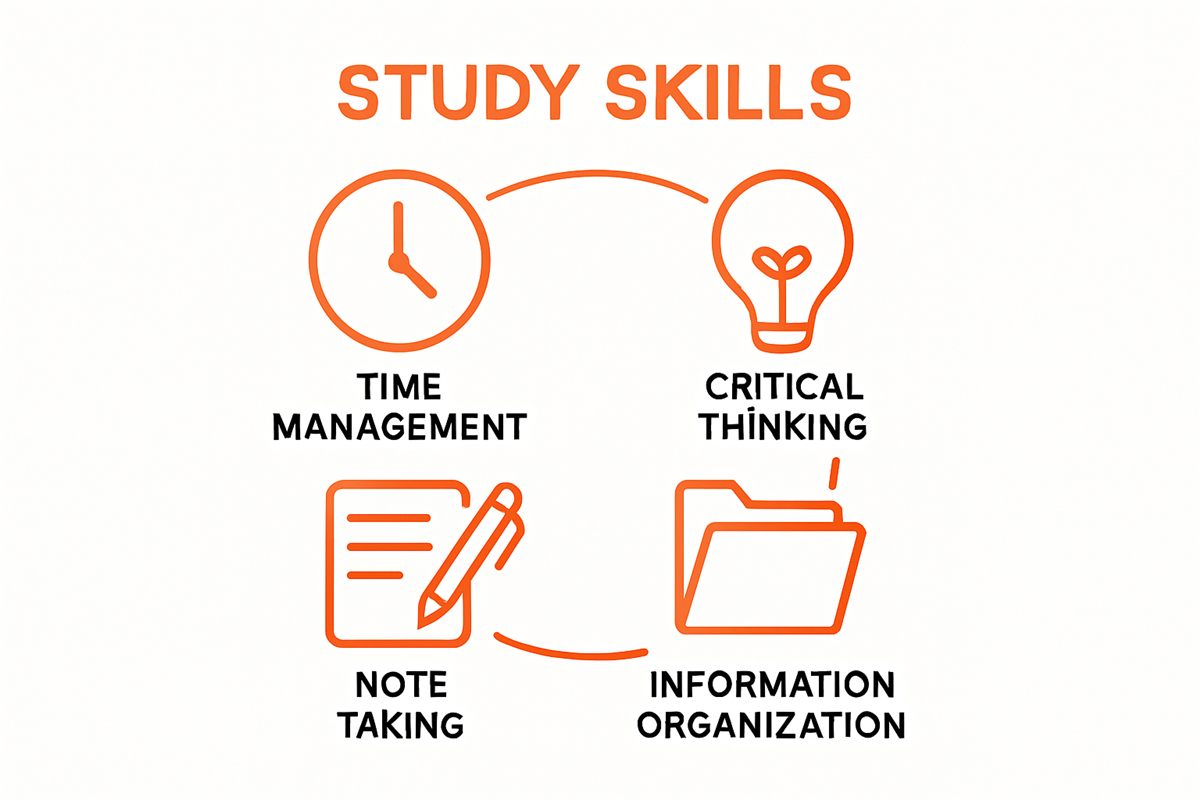
- Time management
- Active note-taking strategies
- Information organization techniques
- Critical thinking and comprehension skills
- Effective reading and research methods
Why Study Skills Matter
Developing strong study skills is more than an academic exercise. These techniques help students transform their learning experience by:
- Reducing academic stress and anxiety
- Improving information retention and understanding
- Building confidence in academic abilities
- Creating sustainable learning habits
- Preparing for long-term personal and professional success
Study skills are like tools in a learner’s toolkit. Just as a carpenter needs different tools for various tasks, students need diverse learning strategies to navigate complex academic challenges. These skills are not inherited but learned and refined through practice and self-awareness.
By investing time in developing solid study skills, students can turn learning from a potentially overwhelming experience into an engaging and rewarding journey of personal growth and intellectual discovery.

The Science Behind Effective Studying
Understanding how our brain processes and retains information is crucial to developing powerful study techniques. Cognitive science reveals that learning is not about memorization, but about creating meaningful connections and engaging with information strategically. Explore our simple study strategies guide.
Cognitive Processing and Memory Formation
Our brain does not store information like a computer file. Instead, it creates complex neural networks that connect new knowledge with existing understanding. According to research from the American Psychological Association, effective studying leverages several key cognitive principles:
- Retrieval Practice: Actively recalling information strengthens memory pathways
- Spaced Repetition: Reviewing material at increasing intervals improves long-term retention
- Elaborative Interrogation: Asking and answering “why” questions deepens comprehension
Neurological Foundations of Learning
Learning is a dynamic process involving multiple brain regions. When you study, your neurons form and strengthen connections through a process called synaptic plasticity. This means every time you engage with new information thoughtfully, you are physically rewiring your brain. Key neurological factors that enhance learning include:
- Focused attention
- Emotional engagement
- Multisensory input
- Adequate rest and nutrition
By understanding these scientific principles, students can design study approaches that work with their brain’s natural learning mechanisms, transforming study time from a passive experience into an active, engaging process of intellectual growth.
This table outlines the main cognitive and neurological principles from the article that support powerful studying, helping readers connect practical strategies to the science of learning.
| Principle | Explanation |
|---|---|
| Retrieval Practice | Actively recalling information to strengthen memory pathways |
| Spaced Repetition | Reviewing material over increasing intervals to aid long-term retention |
| Elaborative Interrogation | Asking yourself “why” to deepen comprehension |
| Synaptic Plasticity | Strengthening brain connections through active, thoughtful engagement |
| Focused Attention | Maintaining concentration to enhance neural processing |
| Emotional Engagement | Linking learning to emotions for better recall |
| Multisensory Input | Combining visual, auditory, and tactile inputs for robust memory |
| Adequate Rest and Nutrition | Supporting brain function to maximize learning |
Key Components of Effective Study Habits
Developing strong study habits is more than a collection of random techniques. It is a deliberate, systematic approach to learning that transforms academic performance. Discover how college students can improve their study strategies.
Strategic Planning and Goal Setting
Successful studying begins with clear, achievable objectives. According to research from the University of North Carolina Learning Center, effective students share common characteristics in their approach to learning:
- Setting specific, measurable academic goals
- Breaking large tasks into manageable chunks
- Creating realistic study schedules
- Regularly tracking progress and adjusting strategies
Metacognitive Approaches to Learning
Metacognition means thinking about your own thinking process. It involves self-reflection, understanding your learning style, and developing adaptive study techniques. Key metacognitive strategies include:
- Self-questioning and monitoring comprehension
- Identifying personal strengths and learning gaps
- Developing personalized study methods
- Practicing self-evaluation and continuous improvement
Effective study habits are not one-size-fits-all. They require ongoing experimentation, self-awareness, and a willingness to adapt. By understanding your unique learning profile and implementing strategic approaches, you can transform studying from a chore into an engaging, productive experience that supports long-term academic success.

How Study Skills Impact Academic Success
Study skills are not just academic tools but powerful mechanisms that transform learning potential into tangible achievements. Learn more about navigating academic challenges and unlock your true academic potential.
Measurable Academic Performance Outcomes
According to research published in the International Journal of Environmental Research and Public Health, students who develop robust study skills demonstrate significant improvements across multiple academic dimensions:
- Higher grade point averages
- Increased subject comprehension
- Reduced academic stress
- More efficient learning processes
- Enhanced long-term knowledge retention
Psychological and Cognitive Benefits
Beyond grades, effective study skills provide profound psychological advantages. Mastering learning techniques builds students’ confidence, reduces performance anxiety, and creates a positive feedback loop of academic self-efficacy. These skills help students:
- Develop a growth mindset
- Build intrinsic motivation
- Improve self-regulation
- Cultivate resilience in challenging academic environments
Study skills are more than mechanical techniques. They represent a holistic approach to learning that empowers students to understand their unique cognitive strengths, overcome learning obstacles, and transform academic challenges into opportunities for personal and intellectual growth.
Turn Your Study Struggles Into Real Success
If you are feeling overwhelmed by trying to build the right study habits or struggling to manage your time in high school, you are not alone. Many students want to move beyond memorization and develop real learning strategies but do not know where to start. Effective study skills like time management, goal-setting, and self-reflection can transform academic stress into confidence and achievement.
Take the next step and explore our High School Study Tips section for practical advice tailored to your journey. Find insightful resources and inspiring solutions designed for real student needs. Ready to elevate your learning approach and embrace a more productive routine?
Frequently Asked Questions
What are study skills?
Study skills are strategic learning techniques that help students effectively absorb, process, and retain academic information, focusing on studying smarter rather than harder.
Why are study skills important for students?
Study skills are important because they reduce academic stress, improve information retention, build confidence, create sustainable learning habits, and prepare students for long-term success.
How can I develop effective study habits?
You can develop effective study habits by setting clear goals, breaking tasks into manageable chunks, creating realistic study schedules, and regularly tracking your progress.
What cognitive principles enhance studying?
Key cognitive principles include retrieval practice, spaced repetition, and elaborative interrogation, which help strengthen memory pathways and improve comprehension.
Recommended
- Breaking Down Complex Concepts with Simple Study Strategies
- How Can College Students Improve Study Habits?
- What Are the Most Effective Study Strategies for High School Students?
- Understanding Study Advice for Students: A Complete Guide
- Making Learning Fun: Engaging Activities for Your Kids – The Zoofamily
Want a head start? The Ultimate Student Planner in my shop was made for exactly this — it’ll save you a ton of time.