
Time Management Tips for Work Success in School
Nearly 60 percent of American students say managing schoolwork alongside personal commitments leaves them feeling overwhelmed. Balancing assignments, social life, and family obligations is a daily struggle for many in North America who want better results but often run out of time. Discover how smarter time management can make academic responsibilities less stressful and free up space for the activities you actually enjoy.
Key Takeaways
| Point | Details |
|---|---|
| Effective Time Management | Helps balance academic tasks and personal responsibilities to enhance productivity and reduce stress. |
| Diverse Strategies | Utilizing both digital and physical tools allows students to find the best fit for their learning style and preferences. |
| Impact on Productivity | Prioritizing tasks and organizing workloads leads to improved performance and reduced feelings of overwhelm. |
| Common Pitfalls | Being aware of challenges like procrastination and overcommitting can help students implement effective strategies to stay on track. |
What Is Time Management for Students?
Time management is a strategic approach to organizing and prioritizing tasks, goals, and activities to maximize productivity and reduce stress during academic life. For students, it means creating a structured system that helps balance schoolwork, personal responsibilities, and personal time effectively. Effective time management transforms how you approach your academic journey, turning potential chaos into a well-orchestrated plan.
At its core, time management involves understanding how you currently spend your time and then making deliberate choices to optimize your daily schedule. This isn’t about cramming more activities into your day, but about working smarter, not harder. Students who master time management techniques can significantly improve their academic performance, reduce anxiety, and create space for both studying and personal enjoyment.
Successful time management typically involves several key strategies: setting clear goals, prioritizing tasks, breaking large projects into smaller steps, using planning tools, minimizing distractions, and creating realistic schedules. It’s about developing habits that help you track assignments, allocate study time, and maintain a healthy balance between academic work and personal life. These skills are not just helpful in school but become crucial life skills that benefit you in future professional environments.
Pro tip: Start by tracking how you currently spend your time for one week, then identify three specific areas where you can reduce time-wasting activities and redirect that energy toward more productive tasks.
Types of Time Management Strategies
Time management strategies are diverse tools and techniques that help students organize their academic and personal lives more effectively. Different time management approaches offer unique benefits, allowing students to choose methods that best suit their individual learning styles and personality types. These strategies range from digital tools to traditional analog methods, each designed to help track tasks, prioritize activities, and reduce academic stress.
One fundamental category of time management strategies includes physical planning tools. These encompass traditional methods like physical calendars, weekly assignment charts, and handwritten planners. Physical tools provide a tangible way to visualize your schedule, allowing you to see commitments at a glance and create a sense of accountability. Students who prefer hands-on approaches often find these methods more engaging and memorable compared to digital alternatives.
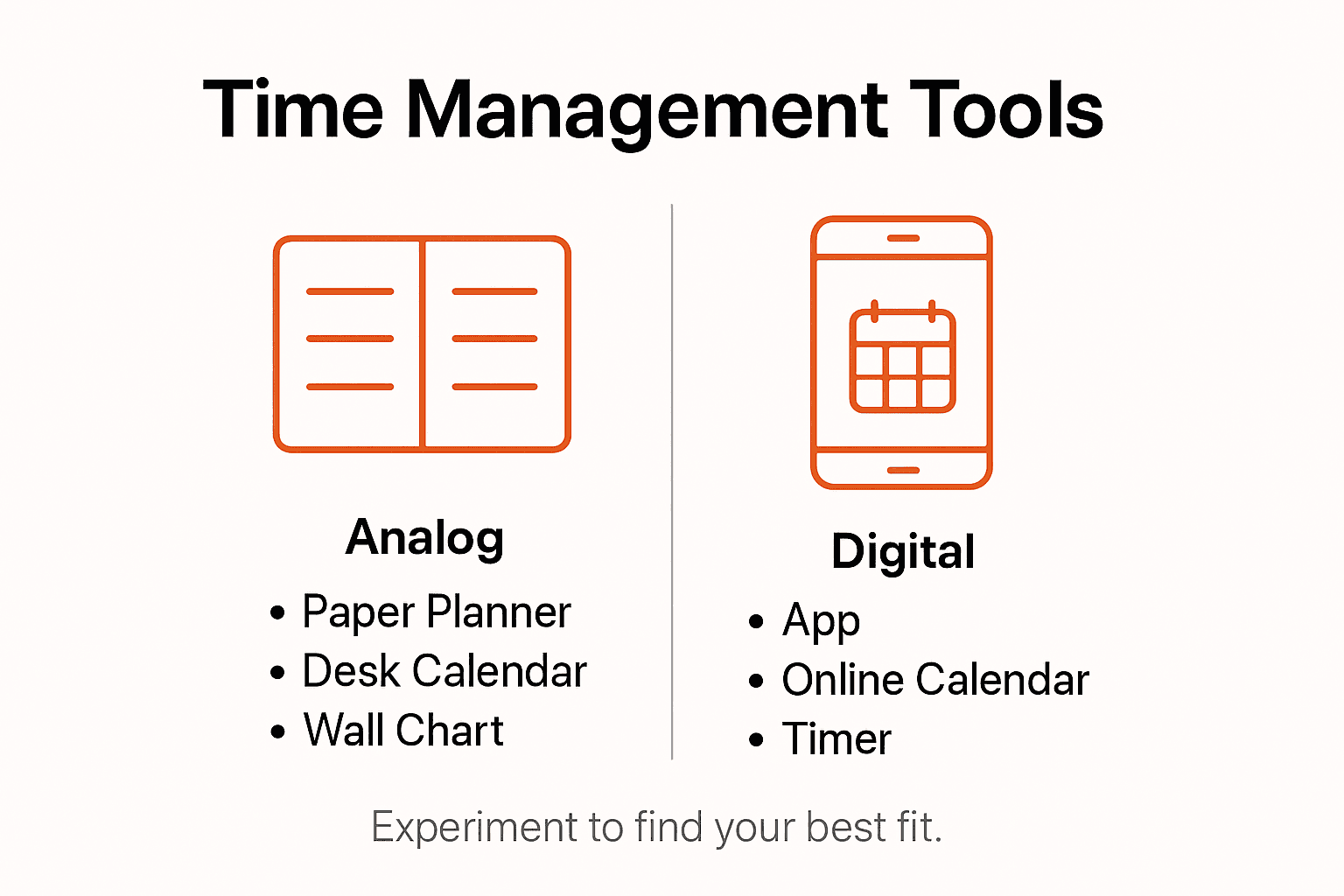
Digital time management strategies have gained significant popularity among modern students. These include smartphone apps, online calendars, task management software, and productivity tracking platforms. Digital tools offer advantages like automatic reminders, cloud synchronization across devices, and the ability to quickly reschedule or modify tasks. They also provide advanced features such as time tracking, goal setting, and performance analytics that can help students understand their productivity patterns and make data-driven improvements to their study habits.
Pro tip: Experiment with both digital and physical time management tools to discover the combination that works best for your personal learning style and keeps you most consistently organized.
Here’s a comparison of popular time management tool categories for students:
| Tool Type | Key Features | Best For | Notable Advantages |
|---|---|---|---|
| Physical Planners | Handwritten entries, monthly views | Visual learners | Encourages commitment |
| Digital Apps | Automated reminders, analytics | Tech-savvy students | Syncs across devices |
| Task Boards | Visual task progression | Project-based learning | Easy progress tracking |
| Calendar Systems | Time blocking, event alerts | Scheduling busy weeks | Clear overview of deadlines |
How Time Management Impacts Productivity
Time management has a profound impact on student productivity, transforming how effectively individuals approach their academic and personal responsibilities. Effective time management strategies directly correlate with improved academic performance, reduced stress, and increased overall efficiency. By implementing structured approaches to organizing tasks, students can dramatically enhance their ability to accomplish more in less time.

One of the most significant ways time management influences productivity is through strategic task prioritization. Students who learn to categorize assignments by importance and urgency can allocate their mental and physical energy more efficiently. This means focusing on high-impact tasks during peak personal productivity hours, breaking large projects into manageable segments, and creating a systematic approach to completing academic work. The result is a more focused and purposeful approach to studying that minimizes wasted time and maximizes learning potential.
Psychologically, effective time management also reduces the overwhelming feelings of stress and anxiety that often paralyze students. When tasks are organized and planned systematically, students experience a greater sense of control over their workload. This mental clarity allows for improved concentration, more creative problem-solving, and the ability to tackle complex assignments with confidence. By establishing consistent routines and developing predictable study patterns, students can create a more balanced and productive academic experience.
Pro tip: Create a weekly review system where you assess your time management performance, identifying what worked well and what needs improvement, then make small, incremental adjustments to continuously optimize your productivity.
Helpful Tools and Apps for Time Management
The digital age offers students an unprecedented array of time management tools and apps designed to streamline academic and personal productivity. Digital scheduling tools help students manage complex workloads by providing structured approaches to tracking assignments, setting reminders, and breaking down large projects into manageable segments. These technological solutions transform how students organize their time, making academic success more accessible and less stressful.
Specialized apps cater to different learning styles and needs, with some particularly beneficial for students who struggle with traditional time management methods. Productivity applications range from simple calendar and reminder systems to complex project management platforms that offer features like time tracking, goal setting, and progress monitoring. Some apps are specifically designed for students with attention challenges, providing visual scheduling, countdown timers, and customizable notification systems that help maintain focus and accountability.
Time management apps typically fall into several key categories: calendar and scheduling tools, task management platforms, focus and concentration apps, and integrated productivity systems. Each type offers unique features like cloud synchronization, cross-device compatibility, and personalized tracking mechanisms. The best apps provide flexibility, allowing students to customize their time management approach to match their individual academic demands and personal learning preferences.
Pro tip: Test three different time management apps for two weeks each, carefully tracking which features genuinely improve your productivity and which feel more like a distraction.
Common Pitfalls and Solutions for Students
Time management challenges can derail even the most motivated students, turning academic success into a frustrating struggle. The most common pitfalls include overcommitting to activities, chronic procrastination, ineffective prioritization, and attempting to multitask simultaneously. These behaviors create a cycle of stress, reduced productivity, and diminished academic performance that can feel overwhelming and impossible to escape.
Students often fall into predictable traps that compromise their time management effectiveness. Procrastination emerges as a primary challenge, where students delay important tasks, underestimate the time required for assignments, and create last-minute panic scenarios. This approach not only increases stress but also reduces the quality of academic work. Other critical pitfalls include poor planning, unrealistic schedule expectations, and a tendency to say yes to too many commitments without considering existing workload and personal capacity.
Successful time management requires developing strategic solutions that address these common challenges. Students can combat these issues by implementing structured approaches like the Eisenhower Matrix for task prioritization, creating detailed but flexible schedules, and learning to set realistic boundaries. Techniques such as time blocking, breaking large projects into smaller manageable tasks, and establishing dedicated study periods can transform chaotic academic experiences into structured, productive learning journeys.
Pro tip: Create a weekly accountability system where you review your time management performance, honestly assess what derailed your productivity, and make small, incremental adjustments to improve your approach.
Below is a summary of common student time management challenges and effective solutions:
| Pitfall | Description | Solution | Benefit |
|---|---|---|---|
| Procrastination | Delaying important assignments | Use time blocking | Reduces last-minute stress |
| Overcommitting | Taking on too many tasks | Set realistic boundaries | Maintains manageable schedule |
| Poor Prioritization | Struggling to rank tasks | Eisenhower Matrix | Focuses on high-impact work |
| Ineffective Planning | Vague or sporadic scheduling | Create detailed weekly plans | Promotes consistent progress |
Unlock Your Academic Potential with Proven Time Management Strategies
Balancing coursework, personal commitments, and long-term goals can feel overwhelming without the right tools and guidance. This article highlights common challenges like procrastination, poor prioritization, and ineffective planning that often prevent students from achieving their best. If you are ready to break free from stress and create a clear, manageable schedule, mastering these time management techniques is essential.
Explore practical solutions designed specifically for students at Learning With Angie where you will find resources that help turn these strategies into lasting habits. Whether you want to track your assignments better, reduce distractions, or build a more focused study routine, start your journey today by visiting our main site and discover how to transform your productivity and balance with confidence. Don’t wait to feel in control of your academic success—take the first step now and empower your learning experience.
Frequently Asked Questions
What are effective time management strategies for students?
Effective time management strategies for students include setting clear goals, prioritizing tasks, breaking projects into smaller steps, using planning tools, minimizing distractions, and creating realistic schedules.
How can I reduce procrastination in my studies?
To reduce procrastination, implement structured approaches like the Eisenhower Matrix for prioritization, create detailed schedules, break large tasks into smaller segments, and establish a dedicated study time.
Which tools can help improve my time management skills?
Both physical planners (like calendars and assignment charts) and digital tools (such as apps and online calendars) can effectively assist with time management. Experimenting with different tools can help find the best fit for your personal learning style.
How does good time management affect student productivity?
Good time management improves student productivity by enabling better task prioritization, reducing stress, and creating a sense of control. This leads to increased focus, efficient use of time, and ultimately better academic performance.
Recommended
- The Best Time Management Tools for Students in 2025: Stay Organized and Stress Less
- What Tools and Apps Can Improve Productivity for Students?
- Productive Day Schedule For Students—Be Productive 12+ Hours a Day!
- How Timer Aesthetic Study Techniques Can Transform Your Chaotic Life Into Something Actually Manageable