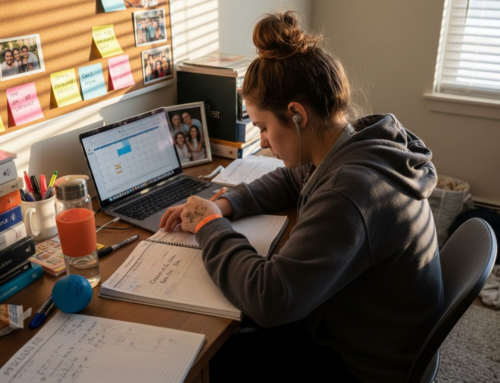
Time slips away fast when classes, homework, and life all pile up. Most students lose an average of 2.5 hours every single day to digital distractions. It sounds like the biggest problem is your phone, but that is only part of the story. The real secret to getting more done and feeling less stressed is about a lot more than just cutting screen time.
Quick Summary
| Takeaway | Explanation |
|---|---|
| Identify and Rank Your Priorities | Understand what matters most to you and rank these priorities to focus your time effectively. |
| Create a Flexible Daily Schedule | Design a daily plan that includes study blocks, breaks, and self-care activities to enhance productivity. |
| Set SMART Goals for Clarity | Use the SMART framework to define clear, measurable, achievable, relevant, and time-bound goals to stay motivated. |
| Use Timers to Enhance Focus | Employ techniques like the Pomodoro Technique to break work into timed intervals, boosting concentration and efficiency. |
| Conduct Weekly Reviews | Regularly assess your progress and adjust your time management strategies to improve effectiveness and outcomes. |
1: Understand Your Priorities
Successful time management starts with knowing what truly matters to you. Think of your priorities like a roadmap that guides your daily actions and helps you stay focused. When you understand your priorities, you can make smarter choices about how you spend your precious time.
Let’s break this down into practical steps. First, take a moment to reflect on your goals. These could be academic targets like maintaining a specific grade point average, personal development objectives, or extracurricular activities that matter to you. Read our guide on creating achievable goals to help you get started.
To effectively identify your priorities, consider these key areas:
- Academic performance: Your studies and grade goals
- Personal growth: Skills you want to develop
- Relationships: Time with family and friends
- Wellness: Physical and mental health activities
Once you’ve identified your priorities, rank them from most to least important. This doesn’t mean neglecting lower-ranked items but understanding which deserve more of your time and energy. According to research from Stanford University, students who clearly define their priorities are 40% more likely to achieve their goals.
Remember, priorities aren’t set in stone. They can shift as you grow and your life changes. Regularly reviewing and adjusting your priorities helps you stay aligned with your evolving goals and prevents you from feeling overwhelmed.
A simple strategy is to spend 10-15 minutes each week reviewing your priorities. Ask yourself: “Am I spending my time on things that truly matter to me?” This small practice can make a huge difference in how effectively you manage your time and energy.
2: Create a Daily Schedule
Creating a daily schedule is like designing a personal roadmap for success. Without a clear plan, your time can slip away quickly and leave you feeling scattered and stressed. A good schedule transforms your goals into actionable steps and helps you stay focused.
Discover how to build a productive student routine that maximizes your potential. Scheduling isn’t about filling every minute with work but creating a balanced approach that includes study time, breaks, and personal activities.
Start by understanding your natural energy rhythms. Some students are morning people, while others perform better in the evening. Pay attention to when you feel most alert and schedule your most challenging tasks during those peak hours.
Here are key elements to include in your daily schedule:
- Study blocks: Dedicated time for homework and learning
- Break periods: Short rest intervals to prevent burnout
- Physical activity: Exercise or movement time
- Personal care: Time for meals, hygiene, and relaxation
According to research from the University of California, students who maintain consistent daily schedules are 35% more likely to achieve their academic goals. This means regularity matters more than perfection.
Use digital or physical planners to track your schedule. Write down your tasks, estimate how long they’ll take, and be realistic about your capabilities. Flexibility is key – your schedule should guide you, not restrict you completely.
Remember to review and adjust your schedule weekly. What works today might need tweaking tomorrow. The goal is creating a system that supports your growth and helps you manage your time effectively.
3: Set SMART Goals
SMART goals transform vague wishes into powerful action plans. The SMART framework helps you create clear, achievable objectives that keep you motivated and focused. Learn more about strategic goal setting to supercharge your success.
Let’s break down what SMART really means:
- Specific: Clearly define what you want to accomplish
- Measurable: Create concrete criteria to track progress
- Achievable: Set realistic goals within your current capabilities
- Relevant: Align goals with your larger life objectives
- Time-bound: Establish a clear deadline for completion
Instead of saying “I want to improve my grades,” a SMART goal would be “I will raise my math grade from a B to an A by increasing study time to 1 hour daily and attending weekly tutoring sessions by the end of this semester.”
According to research from Stanford University, students who use structured goal-setting techniques are 40% more likely to achieve academic success. Writing down your goals increases your commitment and makes them feel more tangible.
Start small and build momentum. Break larger goals into smaller, manageable steps. This approach prevents overwhelm and gives you regular opportunities to celebrate progress. Track your goals using a planner, digital app, or simple notebook.
Remember that goals aren’t permanent. Review and adjust them regularly. Your objectives will evolve as you grow and learn. The key is staying flexible while maintaining a clear sense of direction.

4: Use a Timer for Focus
Timers are magical tools that transform scattered attention into laser-focused productivity. The right timing technique can revolutionize how you study and complete tasks. Discover aesthetic timer techniques that make studying enjoyable and help you stay motivated.
One of the most powerful focus strategies is the Pomodoro Technique. This method involves breaking your work into concentrated intervals with short breaks. Here’s how it typically works:
- Work period: 25 minutes of focused study
- Break period: 5 minutes of rest
- Longer break: 15-30 minutes after four complete cycles
According to research from the University of Florida, students who use structured timing techniques improve concentration by up to 45% and reduce mental fatigue. Timers create a sense of urgency that helps combat procrastination and keeps your brain engaged.
Choosing the right timer matters. You can use smartphone apps, physical timers, or online web tools. The key is finding a method that feels comfortable and motivating for you. Some students love visual countdown timers, while others prefer simple digital clocks.
Experiment with different timing approaches. Some people work best with 50-minute study blocks, while others prefer shorter 15-minute intense sessions. Your ideal timing will depend on your personal energy levels and attention span.
Remember that timers are tools, not strict rules. If you’re deeply focused and feeling productive when the timer goes off, it’s okay to continue working. The goal is to use timing as a guide, not a rigid constraint that interrupts your flow.
5: Limit Distractions
Distractions are time thieves that can derail your most carefully planned study sessions. In today’s digital world, staying focused requires intentional strategies and self-discipline. Learn how to increase your attention span and resist digital temptations and transform your productivity.
Identify your most common distractions and create a battle plan. These might include:
- Social media notifications
- Smartphone alerts
- Background noise
- Chatty study environments
According to research from Stanford University, students lose an average of 2.5 hours daily to digital distractions. Turning off notifications is your first line of defense. Set your phone to silent mode or use apps that block social media during study time.
Create a dedicated study space that minimizes potential interruptions. This might mean finding a quiet corner in the library, using noise-canceling headphones, or setting clear boundaries with family and roommates about your study time.
Technology can be both a distraction and a solution. Use website blockers and apps that limit your access to time-wasting platforms during study hours. Some apps even gamify focus by rewarding you for staying off your phone.
Remember that eliminating distractions isn’t about perfect isolation but creating an environment that supports your concentration. Sometimes background music or white noise can actually help you focus better than complete silence.
Practice mindfulness and self-awareness. When you catch yourself getting distracted, don’t get frustrated. Simply acknowledge the distraction and gently redirect your attention back to your task. Consistent practice makes maintaining focus easier over time.
6: Review and Adjust Weekly
Time management is not a set-it-and-forget-it strategy. It’s a dynamic process that requires regular reflection and adjustment. Learn how to plan your week effectively and stay on track to maximize your productivity.
A weekly review is your opportunity to assess what worked, what didn’t, and how you can improve. Think of it like a personal performance check-in where you’re both the manager and the employee of your own life.
Consider evaluating these key areas during your weekly review:
- Goal progress: How close are you to achieving your objectives?
- Time allocation: Where did you spend most of your time?
- Energy levels: When were you most and least productive?
- Unexpected challenges: What obstacles did you encounter?
According to research from Harvard Business Review, professionals who conduct regular weekly reviews are 30% more likely to achieve their long-term goals. Consistency is more important than perfection. Even a 15-minute weekly reflection can dramatically improve your time management skills.
Don’t be too hard on yourself during these reviews. The goal is to learn and adapt, not to criticize. If something isn’t working, explore why and make small, incremental changes. Maybe you need to adjust your study times, modify your goals, or find better ways to limit distractions.
Consider using a journal or digital tool to track your progress. Write down your observations, insights, and potential improvements. This documentation helps you see patterns and make more informed decisions about your time management strategy.
Remember that your schedule and goals will naturally evolve. What works during exam season might not work during a more relaxed period. Stay flexible, keep learning about yourself, and be willing to experiment with different approaches.

7: Practice Self-Care for Better Focus
Your brain is your most powerful study tool, and like any high-performance machine, it needs proper maintenance. Learn how to prioritize self-care during academic challenges to keep your mental and physical engine running smoothly.
Self-care isn’t a luxury – it’s a critical component of effective time management. When you neglect your basic needs, your productivity and focus take a massive hit. Think of self-care as strategic recharging for your brain and body.
Key elements of student self-care include:
- Quality sleep: 7-9 hours nightly
- Balanced nutrition: Regular, nutritious meals
- Physical movement: Daily exercise
- Mental breaks: Short relaxation periods
- Social connections: Time with supportive friends
According to research from the National Institutes of Health, students who consistently practice self-care demonstrate 40% higher academic performance and significantly lower stress levels. Your well-being directly impacts your ability to manage time and achieve goals.
Sleep is particularly crucial. Pulling all-nighters might seem productive, but they actually reduce your cognitive function and learning capacity. Establish a consistent sleep schedule that allows your brain to consolidate information and recover from daily mental exertion.
Physical exercise isn’t just about fitness – it’s a powerful focus enhancer. Even 30 minutes of moderate activity can improve concentration, boost mood, and increase mental clarity. Find activities you enjoy, whether that’s walking, dancing, yoga, or team sports.
Remember that self-care looks different for everyone. What helps you recharge might be different from what helps your friends. Pay attention to your body and mind, and don’t be afraid to adjust your self-care routine as your needs change.
Below is a comprehensive table summarizing the seven most effective time management tips for students, their main actions, and the specific benefits highlighted in the article.
| Time Management Tip | Key Actions/Strategies | Benefits for Students |
|---|---|---|
| Identify and Rank Priorities | Reflect on academic, personal growth, relationships, and wellness goals; rank importance | Focus on what truly matters; improves goal achievement |
| Create a Flexible Daily Schedule | Plan study blocks, breaks, self-care, and use tools to adapt to energy rhythms | Enhances productivity and reduces stress |
| Set SMART Goals | Make goals Specific, Measurable, Achievable, Relevant, and Time-bound | Boosts motivation and commitment; makes tracking easier |
| Use Timers for Focus | Apply Pomodoro or similar timing techniques for study intervals | Increases concentration; reduces procrastination |
| Limit Distractions | Identify and minimize digital/physical distractions; use blockers and dedicated space | Increases focus and saves significant time |
| Conduct Weekly Reviews | Assess progress, time allocation, and obstacles; adjust strategies as needed | Improves outcomes and time management skills |
| Practice Self-Care | Prioritize sleep, nutrition, exercise, breaks, and social connections | Enhances well-being, energy, and academic performance |
Take Control of Your Study Time and See Real Results
Struggling to stay organized and keep up with assignments is overwhelming for many students. Maybe you want better grades or more balance, but distractions and a lack of structure keep getting in your way. If concepts like prioritizing, making daily schedules, or sticking to SMART goals from our article sound challenging, you’re not alone. These are real pain points that can leave you feeling stuck and stressed.
Ready for positive change? Explore the Time Management hub for practical tools that make organizing your day simple. Dive deeper into productivity resources that break down complicated skills into easy actions. Take the first step toward a more productive and focused you. The best time to start building your successful routine is right now.
Frequently Asked Questions
What are the key priorities for effective time management as a student?
Identifying your key priorities involves understanding your goals in academic performance, personal growth, relationships, and wellness. Ranking these priorities helps you focus on what truly matters.
How can I create a productive daily schedule?
To create a productive daily schedule, incorporate study blocks, break periods, physical activity, and personal care. Understand your natural energy rhythms and plan challenging tasks during your peak times for better focus.
What does SMART goal setting mean for students?
SMART goals are Specific, Measurable, Achievable, Relevant, and Time-bound objectives that help students create clear action plans. Instead of vague intentions, define concrete goals and track progress for better motivation.
How can I limit distractions while studying?
To limit distractions, identify your common interruptions such as social media notifications and create a designated study space free from these distractions. Turning off notifications and using website blockers can also enhance your focus.
Recommended
- The Best Time Management Tools for Students in 2025: Stay Organized and Stress Less
- Master Time Management Step by Step for Success
- How to Stay on Top of Your Assignments
- Time Management Tips for Busy Students
Want a head start? The Ultimate Student Planner in my shop was made for exactly this — it’ll save you a ton of time.