
GED Study Book: Proven Strategies for Exam Success
Passing the GED opens doors for thousands of American teens each year, with over one million students taking the exam annually. For high school students aiming to earn this valuable credential, knowing how to choose and use the best study resources is crucial. This guide cuts through common myths and confusing advice, helping you find study formats, practice tests, and expert tips to make your exam preparation smarter, more affordable, and more effective.
Key Takeaways
| Point | Details |
|---|---|
| Understanding GED Study Books | GED study books serve as crucial resources for achieving high school equivalency, providing structured content, practice questions, and strategic test preparation. |
| Recognizing Subject Areas | The GED exam evaluates four main subjects: Reasoning Through Language Arts, Mathematical Reasoning, Science, and Social Studies. |
| Utilizing Practice Tests | Practice tests are essential tools that simulate the actual exam experience, helping identify knowledge gaps and build confidence. |
| Cost Management Strategies | Students should explore various resources, including free materials and local support programs, to effectively manage preparation costs. |
Defining a GED Study Book and Common Myths
A GED study book is more than just another textbook. It’s your personal roadmap to earning a high school equivalency credential that can transform your future. These comprehensive guides provide structured content review, practice questions, and strategic test preparation specifically designed to help you pass the General Educational Development exam.

Understanding the GED credential is crucial. Developed by the American Council on Education, the GED test evaluates academic knowledge across four critical subject areas: mathematics, science, social studies, and language arts. These tests measure skills equivalent to those of a high school graduate, offering a powerful alternative pathway for learners who didn’t complete traditional high school.
Common myths about GED study books can mislead students and undermine their preparation strategy. Let’s bust some of these misconceptions:
- Myth 1: All GED study books are identical
- Reality: Study materials vary widely in presentation, difficulty, and learning approach
- Myth 2: A GED isn’t as valuable as a traditional diploma
- Reality: Most colleges, employers, and government agencies recognize the GED as equivalent to a high school diploma
- Myth 3: You can’t adequately prepare using just a study book
- Reality: With the right book and dedicated study, you absolutely can succeed
Choosing the right study book means finding a resource that matches your learning style, provides comprehensive subject coverage, and includes robust practice tests with detailed explanations. Look for materials that offer diagnostic assessments, targeted review sections, and strategies for managing test anxiety.
Pro Study Tip: Develop a consistent study schedule and treat your GED preparation book like a personal coach guiding you toward academic success. Spend at least 1-2 hours daily working through practice questions and reviewing challenging subject areas.
GED Subject Areas and Study Formats Explained
The GED exam is your gateway to academic and professional opportunities, structured around four critical subject areas that comprehensively assess your high school level knowledge. Each subject test is designed with a unique computer-based format, challenging you to demonstrate your reasoning and problem-solving skills across different academic domains.
Let’s break down the four primary subject areas that will test your academic prowess:
- Reasoning Through Language Arts
- Focuses on reading comprehension
- Requires writing an extended response
- Tests grammar, sentence structure, and analytical reading skills
- Mathematical Reasoning
- Covers algebra, geometry, and quantitative problem solving
- Includes both multiple-choice and grid-in questions
- Requires calculator and no-calculator sections
- Science
- Evaluates scientific reasoning and interpretation
- Includes questions about life, physical, and earth sciences
- Tests ability to analyze graphs, charts, and scientific passages
- Social Studies
- Encompasses history, geography, economics, and civics
- Requires critical analysis of historical documents
- Tests understanding of complex social and historical concepts
Study formats for the GED are incredibly flexible, accommodating different learning styles and schedules. You can choose between traditional textbook study, online courses, practice test platforms, and interactive learning modules. Some resources even offer bilingual materials to support diverse learner backgrounds.
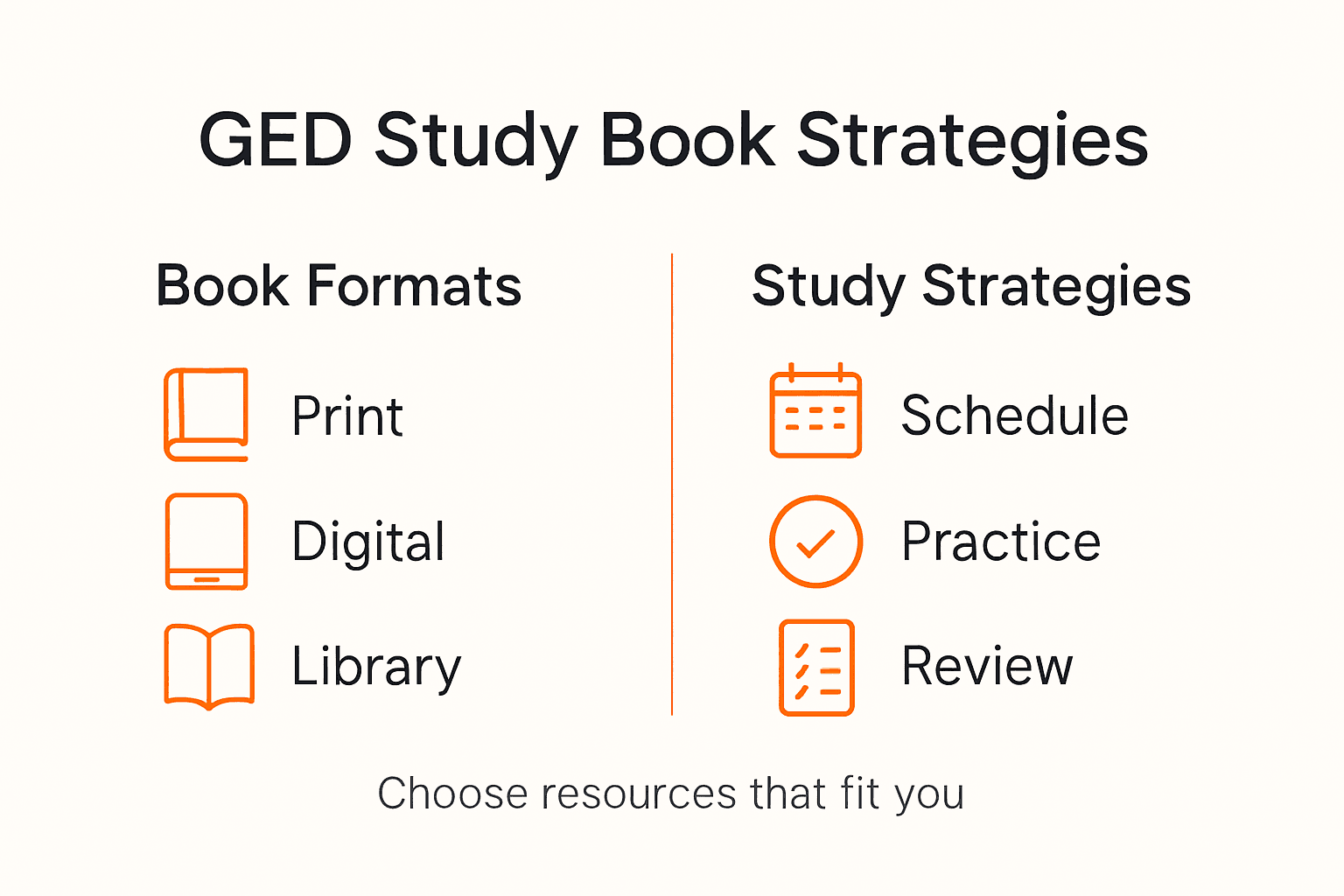
Pro Study Strategy: Create a personalized study plan that allocates specific time for each subject area, focusing more time on your weaker subjects while maintaining skills in your stronger academic domains. Aim to spend at least 2-3 hours weekly on subjects where you need the most improvement.
Practice Tests, Explanations, and Review Features
Practice tests are the secret weapon in your GED preparation arsenal, offering a realistic preview of the actual exam experience. These comprehensive assessment tools help you identify knowledge gaps and build test-taking confidence, simulating the exact conditions you’ll encounter on test day.
The key components of effective practice tests include:
- Detailed Answer Explanations
- Comprehensive breakdowns of why specific answers are correct or incorrect
- Step-by-step solutions for complex problems
- Targeted feedback on subject-specific weaknesses
- Adaptive Learning Features
- Customized practice paths based on your performance
- Progressive difficulty levels
- Personalized study recommendations
Online practice resources offer multiple ways to prepare, ranging from free diagnostic quizzes to full-length official practice exams. These tools typically provide immediate scoring, allowing you to track your progress in real-time and understand precisely where you need to focus your study efforts.
Most high-quality GED preparation materials include practice tests that mirror the actual exam’s format, covering:
- Multiple-choice questions
- Short answer responses
- Extended writing sections
- Technology-enhanced interactive questions
Pro Performance Strategy: Create a weekly practice test schedule, treating each test like a real exam by timing yourself, minimizing distractions, and reviewing your results thoroughly to systematically improve your weak areas.
Requirements and Tips for Maximizing Results
GED test eligibility requirements vary across different states, but some core guidelines remain consistent for all aspiring test-takers. Generally, you must be at least 16 years old, not currently enrolled in high school, and meet specific state-level age and educational background criteria.
The key requirements for taking the GED exam include:
- Minimum Age
- 16 years or older in most states
- Some states require parental consent for younger test-takers
- Age restrictions might differ based on local regulations
- Educational Status
- Not currently enrolled in a traditional high school
- Have not graduated from high school
- Meet residency requirements in your specific state
To maximize your chances of success, consider these strategic preparation approaches:
- Comprehensive Study Planning
- Create a structured study schedule
- Identify and focus on your weakest subject areas
- Use multiple study resources and practice tests
- Test Environment Preparation
- Familiarize yourself with computer-based testing
- Practice time management techniques
- Understand test formatting and question types
Successful GED candidates often combine multiple preparation strategies, including enrolling in prep courses, using official study guides, and taking multiple practice exams to build confidence and skill. The goal is not just passing but demonstrating comprehensive academic knowledge across all four subject areas.
Pro Success Strategy: Develop a personalized study plan that allocates more time to challenging subjects, uses diverse learning resources, and includes regular self-assessment through practice tests to track and improve your progress systematically.
Comparing GED Study Books and Alternative Resources
GED study books come in various formats and styles, designed to accommodate different learning preferences and academic needs. From comprehensive textbooks to digital resources, students have multiple options to prepare for their high school equivalency exam.
Key Comparison Categories:
Traditional Study Books
- Comprehensive print resources
- Detailed subject explanations
- Full-length practice tests
- Portable and self-paced learning
Online Learning Platforms
- Interactive digital content
- Immediate feedback
- Video tutorials
- Adaptive learning technologies
Alternative high school equivalency options provide additional flexibility for students. Some states offer alternative exams like HiSET and TASC, which might have different testing formats or cost structures:
Here’s a quick comparison of GED, HiSET, and TASC high school equivalency options:
| Exam Name | Test Format | Recognition | Typical Cost |
|---|---|---|---|
| GED | Computer-based only | Nationwide except some states | Up to $170 |
| HiSET | Paper & computer | Accepted in several states | Varies, often less than GED |
| TASC | Computer-based | Limited states | Similar to GED, may be less |
- HiSET Exam
- Available in paper and computer formats
- Often less expensive than GED
- Recognized in multiple states
- TASC Exam
- Computer-based testing
- Similar content to GED
- Alternative option in some regions
When selecting your study resources, consider factors like learning style, budget, time availability, and personal comfort with different study formats. Some learners prefer traditional books, while others thrive with interactive online platforms.
Pro Resource Strategy: Cross-reference multiple study materials, combining traditional books with online resources to create a comprehensive and adaptable preparation approach that addresses your unique learning needs.
Avoiding Mistakes and Managing Study Costs
GED exam preparation can quickly become expensive without strategic planning, but smart students know how to minimize financial strain while maximizing their study effectiveness. Understanding the typical costs and potential pitfalls is your first step toward a budget-friendly preparation journey.
Common Cost Breakdown:
Below is a summary of typical GED preparation costs and savings strategies:
| Expense Type | Estimated Range | Money-Saving Tip |
|---|---|---|
| Exam Fees | $26–$43 per subject | Check for fee waivers |
| Study Textbooks | $20–$50 each | Borrow from public libraries |
| Online Courses | Free to $100 | Use free online options |
| Practice Tests | $10–$30 per package | Use official free samples |
- Exam Fees
- Per subject test: $26 to $43
- Full test battery: Up to $170
- Study Materials
- Textbooks: $20 to $50
- Online courses: Free to $100
- Practice test packages: $10 to $30
Most students make critical mistakes that not only impact their exam performance but also increase their overall expenses:
- Preparation Mistakes to Avoid
- Skipping practice tests
- Neglecting computer-based test familiarization
- Failing to understand test format
- Not utilizing free study resources
- Cost Management Strategies
- Use public library study materials
- Take advantage of free online practice tests
- Look for fee waiver programs
- Plan your test attempts strategically
Smart preparation involves understanding available resources and accommodations that can reduce both financial and academic stress. Many states offer subsidized testing or preparation courses for motivated learners, so investigate local educational support programs.
Pro Budget Strategy: Create a comprehensive study plan that combines free online resources, library materials, and targeted paid resources to maximize your preparation while minimizing unnecessary expenses.
Unlock Your Full Potential with Proven GED Study Strategies
Facing the challenge of mastering the GED exam content and managing your study time can feel overwhelming. This article highlights key pain points such as balancing subject review, handling practice tests effectively, and avoiding costly preparation mistakes. If you want to conquer the GED with confidence and turn myths into milestones, understanding the right preparation tactics is essential.
Explore tailored strategies to build a consistent study routine and reduce test anxiety while maximizing your budget and energy. Start your journey now by visiting our main learning hub and discover how to elevate your preparation. Why wait to take control of your future? Equip yourself today with insights and support designed to help you pass the GED exam with ease.
Frequently Asked Questions
What is a GED study book?
A GED study book is a comprehensive guide designed to help individuals prepare for the General Educational Development exam, covering essential subject areas and including practice questions and test strategies.
How should I choose the right GED study book?
Look for a GED study book that matches your learning style, provides full coverage of the exam subjects, includes practice tests with detailed explanations, and offers strategies to manage test anxiety.
How can practice tests improve my chances of passing the GED exam?
Practice tests help identify knowledge gaps, build test-taking confidence, and familiarize you with the exam format, allowing for targeted study and improvement in weaker subject areas.
What are the main subject areas covered in the GED exam?
The GED exam tests four main subject areas: Reasoning Through Language Arts, Mathematical Reasoning, Science, and Social Studies, assessing skills equivalent to a high school graduate.
Recommended
- Understanding the Exam Preparation Guide for Success
- “Don’t Cram” Week: Free AI Study Plan Generator (High School & College Tool)
- 15 Reasons the Feynman Technique Is a Game-Changer for Students
- 7 Key Studying Don’ts for Student Success
Want a head start? The Ultimate Student Planner in my shop was made for exactly this — it’ll save you a ton of time.