
7 Money Management Mistakes You’re Making That Are Actually Stealing Your Study Time
You work hard for your grades, and you likely work just as hard for your money. But have you ever considered that the way you manage your bank account might be the very thing sabotaging your GPA?
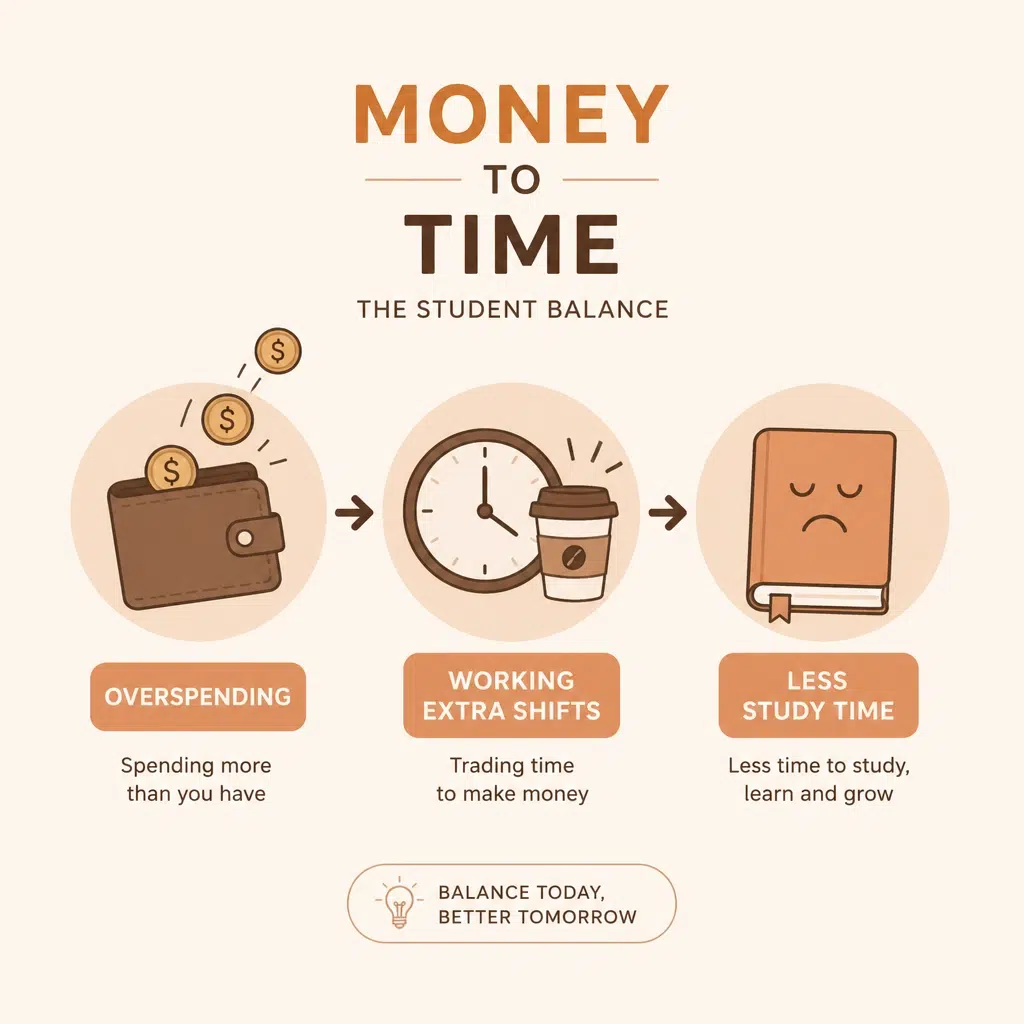
Most students view "finances" and "academics" as two separate worlds. In reality, they are deeply intertwined. Every financial mistake you make carries a hidden "Time Tax." Whether it’s the hours spent working extra shifts to cover an impulse buy or the mental energy drained by financial stress, poor money management is a direct thief of your study time.
Ready to reclaim your schedule and your peace of mind? Here are seven money mistakes you’re likely making: and how to fix them to boost your productivity.
1. Tracking Every Penny Manually Instead of Automating
You might think you’re being responsible by writing down every coffee purchase in a notebook, but manual tracking is a major time-sink. If you spend 15 minutes a day logging expenses, that’s nearly two hours a week gone.
- Streamline your workflow by using digital tools or apps that sync with your bank account.
- Use Notion templates to categorize your spending automatically so you can see your financial health at a glance.
- Redirect that energy back into your active recall or spaced repetition sessions.
If you love the organized look of a planner but hate the manual labor, check out our Notion templates for students to keep your life and your wallet in order without the extra work.
2. Falling Into the "Work-More" Trap
When you overspend on "wants," you often feel forced to pick up extra shifts at your part-time job. While earning money is great, every hour you spend at work is an hour you aren’t reviewing for your midterms.
- Identify your "Need" vs. "Want" threshold to prevent lifestyle creep.
- Calculate your "Study Value": Ask yourself if that new outfit is worth losing four hours of exam prep.
- Set a strict budget to ensure your income covers your essentials so you don't have to sacrifice your education for your expenses.
3. Ignoring the Hidden Time-Cost of Missing Deadlines
Late fees on credit cards, utility bills, or tuition payments aren't just expensive: they are incredibly time-consuming to fix. You’ll spend hours on hold with customer service or navigating complex portals to get penalties waived.
- Set up Autopay for every recurring bill to eliminate the need for manual intervention.
- Use a digital calendar or a dedicated section in your student planner to track due dates.
- Avoid the "Panic Mode" that comes with a frozen account or a late fee, which can derail an entire afternoon of focused work.
4. Managing "Subscription Bloat" Without a System
That free trial for a research tool you forgot to cancel? The three streaming services you barely watch? Managing these disputes and cancellations takes up valuable brain space.
- Audit your subscriptions once a month to ensure you’re only paying for what you actually use.
- Cancel immediately after signing up for a free trial so the service expires naturally without a surprise charge.
- Centralize your receipts in a dedicated folder (digital or physical) to make tracking effortless.
5. Letting Financial Anxiety Cause Cognitive Load
Research shows that financial stress can actually lower your effective IQ. When you’re worried about making rent or paying for textbooks, your brain isn't fully available for complex problem-solving or essay writing.
- Build a "Buffer Fund" of even $500 to act as a psychological safety net.
- Schedule a "Money Minute" once a week to check your accounts so surprises don't pop up during finals week.
- Focus on the benefit: A clear head leads to better grades, which leads to better career opportunities later.

6. Wasting Time on "Last-Minute" Grocery Runs
Convenience stores and fast food are the ultimate "Lazy Tax." Not only are they more expensive, but the cumulative time spent in drive-thrus or making five small trips to the store per week adds up.
- Meal prep simple snacks to keep in your bag so you aren't tempted by overpriced campus vending machines.
- Batch your shopping to once a week to save both fuel and time.
- Utilize student discounts on bulk items to keep your pantry stocked and your focus on your books.
7. Using Inefficient Tools for Big Life Decisions
Whether it’s choosing a college or planning your semester, using fragmented systems for your finances and your goals creates chaos. When your information is scattered, you waste time looking for it.
- Integrate your goals: Your financial plans should live right next to your academic plans.
- Maximize efficiency by using pre-built systems designed for the student lifestyle.
Our Notion College Search Template is a perfect example of how to keep your application timeline, tasks, and graduation countdown all in one place. When you organize your life, you free up your time.

Join The Community
Managing your money is an essential skill that will enhance every other area of your life. When you streamline your finances, you’re not just saving dollars: you’re buying back the hours you need to excel in your studies.
Ready to become the most organized version of yourself? We’re here to help you navigate the full student experience, from aesthetic note-taking to financial literacy.
Join the Learning With Angie community today to receive biweekly tips, resources, and tools designed to help you succeed in school and beyond. Let’s make this semester your most productive one yet!
Want a head start? The Ultimate Student Planner in my shop was made for exactly this — it’ll save you a ton of time.