How to Be a Good Friend (and What to Do When a Friendship Ends)
More than half of American teens say they have lost touch with friends after major life changes like switching schools or starting college. If you feel friendships slipping away or struggle to connect during these transitions, you are not alone. Friendship challenges can impact your mood, confidence, and even your grades. Here you will find practical ways to figure out what really matters to you, communicate better, and build friendships that last through even the biggest changes.
Quick Summary
| Key Insight | Explanation |
|---|---|
| 1. Identify Your Friendship Values | Reflect on what qualities matter most in friendships to guide your emotional investments. |
| 2. Communicate Effectively | Practice active listening and empathy to strengthen connections with friends. |
| 3. Set and Respect Boundaries | Discuss personal boundaries openly to maintain a healthy and respectful friendship. |
| 4. Handle Conflicts Constructively | Approach disagreements with curiosity, using “I” statements to foster understanding. |
| 5. Reflect on Friendship Experiences | Journal about relationships to identify strengths, challenges, and areas for growth. |
Step 1: Reflect on Your Friendship Values
Understanding your core friendship values helps you build meaningful connections that support your emotional well-being. Psychological research highlights that stable friendships are crucial for long-term happiness and health.
Start by asking yourself some key questions. What does true friendship mean to you? Consider the qualities you most appreciate in friends: loyalty, honesty, mutual respect, emotional support, or shared interests. Think about past friendships that worked well and those that didnt. Identify patterns in your relationships that made you feel valued and comfortable. Write down three to five core friendship values that matter most to you personal examples might include being a good listener, showing up during tough times, or maintaining open communication.

These values will become your personal friendship compass. They help you recognize healthy relationships and make intentional choices about who you invest your emotional energy in. The American Friendship Project suggests that quality matters more than quantity when it comes to social connections.
Pro Tip: Create a short list of your top friendship values and keep it somewhere you can review periodically to stay true to what matters most in your relationships.
Here is a summary of core friendship values and how they positively influence relationships:
| Friendship Value | Positive Impact on Relationships | Example Behavior |
|---|---|---|
| Loyalty | Builds trust and long-term reliability | Supporting friends in tough times |
| Honesty | Promotes open, authentic communication | Sharing truths respectfully |
| Mutual Respect | Establishes healthy boundaries | Valuing differences in opinions |
| Emotional Support | Enhances well-being and sense of security | Listening with empathy |
| Shared Interests | Encourages stronger social connection | Spending time doing hobbies |
Step 2: Communicate and Show Genuine Support
Effective communication skills are the foundation of building strong, meaningful friendships. Learning how to communicate authentically and provide genuine support can transform your relationships and help you connect more deeply with others.
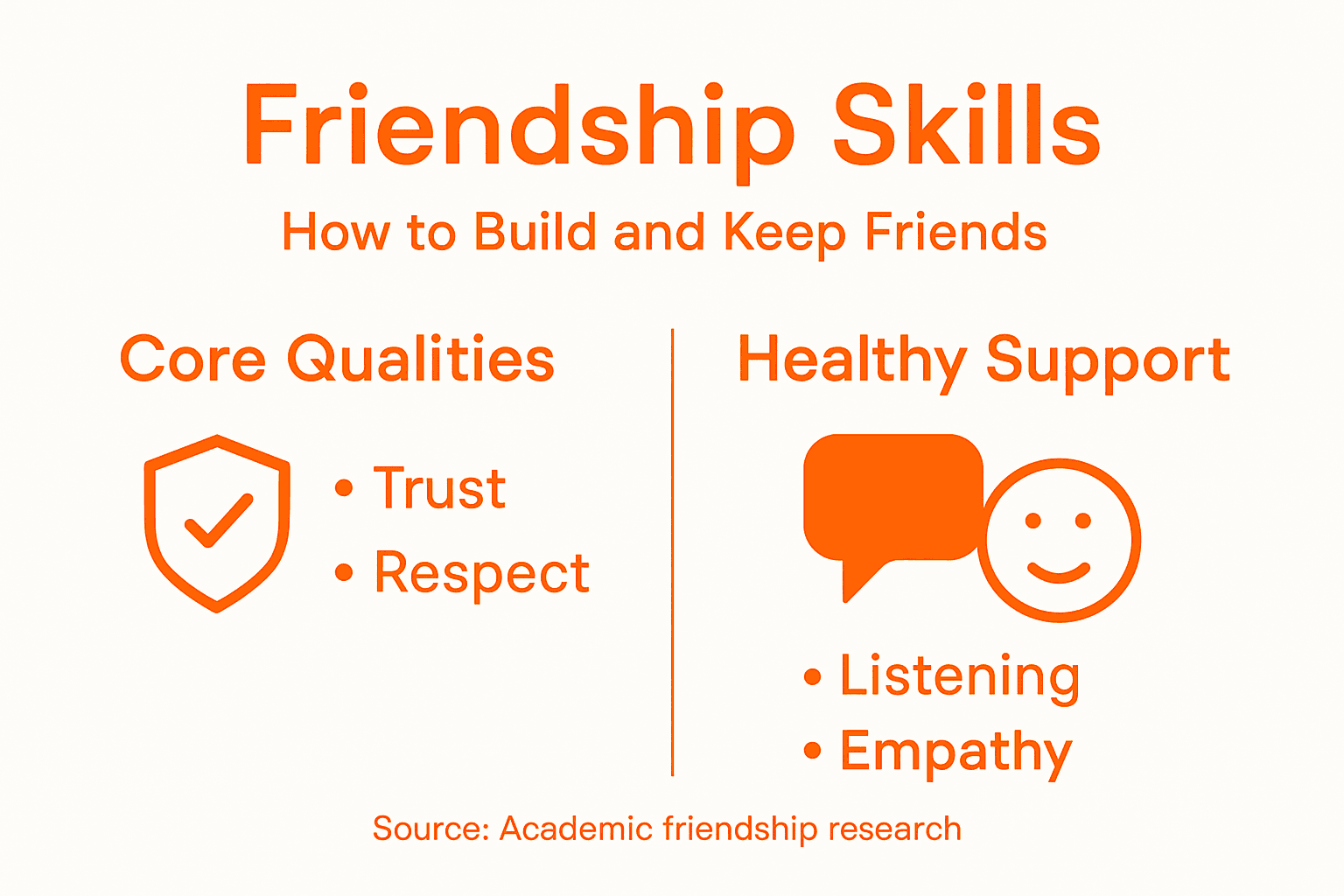
Start by practicing active listening. When your friend is talking, focus entirely on understanding their perspective without interrupting or planning your response. Put away your phone, make eye contact, and use nonverbal cues like nodding to show youre engaged. Ask thoughtful follow-up questions that demonstrate youre truly hearing them. Share your own experiences sparingly and only when they might help your friend feel less alone or provide meaningful insight.
Academic support research suggests that emotional support goes beyond just hearing words its about creating a safe space where your friend feels validated and understood. Offer empathy by acknowledging their feelings without judgment. Use phrases like “That sounds really tough” or “I can understand why youre feeling this way” to show youre emotionally present. Remember that support isnt about solving their problems but about walking alongside them during challenging times.
Pro Tip: Practice the art of listening without immediately offering advice be the friend who creates a judgment-free zone where people feel truly heard and supported.
Step 3: Set Healthy Boundaries Together
Establishing healthy boundaries is crucial for maintaining strong and respectful friendships. Boundaries are not about creating walls between you and your friends but about creating a mutual understanding of each others needs and limits.
Start by having an open and honest conversation about your personal boundaries. Choose a calm moment when both of you are relaxed and receptive. Share your comfort levels regarding time, personal space, emotional availability, and communication. Be specific about what works for you. For instance, explain if you need advance notice before hanging out, prefer texting over calling, or have limits on how much emotional support you can provide during challenging times.
Academic boundary research emphasizes the importance of collaborative boundary setting. Listen to your friends boundaries with the same respect you want for your own. Be willing to negotiate and find middle ground. Remember that boundaries are not permanent and can be adjusted as your friendship evolves. If a boundary feels uncomfortable or unrealistic, discuss it openly and find a solution that works for both of you.
Pro Tip: Practice boundary conversations like a team sport where youre both working together to create a winning friendship strategy.
Step 4: Address Changes and Handle Conflicts
Campus conflict management requires understanding that disagreements are normal in any friendship. Learning to navigate changes and resolve conflicts constructively can actually strengthen your relationship instead of destroying it.
When a conflict emerges, approach the conversation with curiosity instead of defensiveness. Schedule a time to talk privately where both of you can speak openly without distractions. Use “I” statements to express your feelings without blaming. For example, say “I felt hurt when” instead of “You always”. Listen to understand your friends perspective, not just to respond. Acknowledge their feelings even if you disagree with their viewpoint.
Effective conflict resolution involves emotional intelligence and mutual respect. Be willing to compromise and find solutions that work for both of you. If the conflict feels too intense, consider taking a short break to cool down and reflect. Remember that true friendship means being able to work through challenging moments together. Not every disagreement means the end of a friendship some conflicts can actually help you understand each other better.
Pro Tip: Treat conflicts like a puzzle youre solving together not a battle youre trying to win.
Step 5: Navigate Friendship Endings Respectfully
Friendship termination strategies require emotional intelligence and compassion. Recognizing when a friendship has run its course is a mature part of personal growth and maintaining your emotional well-being.
If youre feeling that the friendship is no longer serving you, approach the situation with honesty and kindness. Choose a private setting for an honest conversation. Clearly communicate your feelings without blaming or attacking. Focus on using statements that reflect your personal experience and needs. For example, you might say something like “I feel we have grown in different directions” or “I dont feel our connection is as supportive as it used to be”.
Research on friendship dissolution emphasizes the importance of understanding and respecting both parties emotions. Be prepared to listen to their perspective and allow space for their feelings. You dont need to justify your decision completely but offering some context can help provide closure. Remember that ending a friendship doesnt mean youre a bad person it means youre prioritizing your emotional health and personal growth.
Pro Tip: Think of friendship endings like closing a chapter in a book not burning the entire novel.

Step 6: Review and Grow from Your Experiences
Growth mindsets in academic environments emphasize the importance of reflecting on your friendship journey. Understanding your experiences helps you become a more emotionally intelligent and compassionate friend.
Take time to journal about your friendship experiences. What worked well? What challenges did you face? Be honest with yourself about your strengths and areas for improvement. Consider the patterns in your relationships. Did you consistently communicate effectively? Were you a good listener? Reflect on moments when you could have been more supportive or set clearer boundaries. This self reflection isnt about judging yourself harshly but about learning and growing.
Successful academic networking reveals that continuous learning is key to building strong relationships. Share your insights with a trusted mentor or friend who can provide objective feedback. Ask them what they observe about your friendship patterns. Be open to hearing perspectives that might challenge your current understanding. Remember that personal growth is a journey of constant learning and adaptation.
Pro Tip: Treat your friendship experiences like a research project where youre both the scientist and the subject of study.
Here is a comparison of common friendship challenges and growth opportunities:
| Challenge | Typical Response | Growth Opportunity |
|---|---|---|
| Conflict | Defensive or withdrawal | Collaborative problem solving |
| Changing boundaries | Avoidance or resistance | Open renegotiation |
| Friendship ending | Hurt or resentment | Respectful closure |
| Miscommunication | Frustration | Improved listening skills |
| Feeling disconnected | Isolation | Rekindling shared experiences |
Strengthen Your Friendships and Personal Growth Starting Today
Building and maintaining strong friendships takes understanding of values, communication, and healthy boundaries as highlighted in the article How to Be a Good Friend (and What to Do When a Friendship Ends). If you find yourself struggling with conflict resolution or navigating changes in your social circle, you are not alone. Many face the challenge of fostering meaningful connections while balancing emotional wellbeing and personal growth.
Take control of your emotional health and learning journey by mastering skills that support both your friendships and your academic life. Explore practical strategies on time management, productivity, and healthy living that complement your efforts to be a better friend. Don’t wait to improve yourself and your relationships—begin your transformation today by checking out our other articles.
Frequently Asked Questions
How can I identify my core friendship values?
Understanding your core friendship values involves reflecting on what qualities you value most in a friendship. Start by asking yourself questions about past friendships and write down three to five values that matter most to you, such as loyalty or honesty.
What are effective ways to communicate support in a friendship?
To communicate genuine support, practice active listening by focusing entirely on your friend’s words without interrupting. Make eye contact, use nodding to show engagement, and validate their feelings with empathetic phrases like “That sounds really tough.”
How do I set healthy boundaries in my friendships?
Setting healthy boundaries means having open conversations about your comfort levels regarding time, space, and emotional availability. Schedule a relaxed moment to discuss your boundaries and listen to your friend’s needs to find a mutual understanding.
What should I do if a conflict arises in a friendship?
If a conflict comes up, approach it with curiosity rather than defensiveness. Schedule a private time to talk, use “I” statements to express your feelings, and aim for a collaborative solution by being willing to compromise.
How can I handle the ending of a friendship respectfully?
To end a friendship respectfully, choose a private setting for an honest conversation where you can express your feelings without blame. Clearly communicate your reasons while giving space for your friend’s emotions, focusing on mutual respect and understanding.
How do I reflect and grow from my friendship experiences?
To reflect on your friendships, take time to journal about what worked well and what challenges you faced. Analyze your behavior and identify areas for improvement, treating each experience as a learning opportunity for personal growth.
Recommended
- How to Make Friends in College: Your Guide to Building Lasting Connections
- 12 Apps That’ll Stop Social Media From Destroying Your GPA (From Someone Who Almost Failed Because of TikTok)
- 7 Effective Tips on How to Make Friends in College or a New School
- 11 Genius Tips: How to Make Friends in College With Social Anxiety
Want a head start? The Building Self-Confidence workbook in my shop was made for exactly this — it’ll save you a ton of time.