The Unwritten Rules of Middle School Success
Every american parent wonders if their child is ready for the complicated middle school years. More than seventy percent of students find the unwritten social rules tougher to learn than academic subjects. These invisible guidelines shape friendships, classroom success, and self-confidence. Understanding how social circles, classroom expectations, and peer pressure work can help your child feel prepared, not overwhelmed. Discover effective strategies for guiding your child through these critical transitions with the right support and insight.
Key Takeaways
| Point | Details |
|---|---|
| Understand Unwritten Rules | Familiarize yourself with middle school social expectations to navigate interactions confidently. |
| Be Aware of Cliques | Recognize the dynamics of cliques to build a broader social network while maintaining individuality. |
| Master Academic Expectations | Develop strong organizational and time management skills to meet increasing academic demands. |
| Recognize and Handle Bullying | Cultivate self-awareness and communication skills to effectively respond to bullying and peer pressure situations. |
Defining Unwritten Rules in Middle School
Middle school is like entering a whole new social universe with its own complex set of invisible guidelines. These unwritten rules aren’t found in any student handbook but are absolutely critical for navigating the social landscape successfully. Understanding these hidden social expectations can mean the difference between feeling confident or completely lost.
These social codes cover everything from conversation etiquette to body language and personal interactions. They’re subtle signals that help students understand how to behave, communicate, and fit in with their peers. While some kids naturally pick up on these cues, others might need more explicit guidance. The hidden curriculum includes behavioral norms that aren’t formally taught but are crucial for academic and social success.
Some key unwritten rules in middle school include respecting personal space, learning turn-taking in conversations, reading nonverbal social cues, and understanding group dynamics. These skills help students build relationships, avoid social awkwardness, and create positive interactions with classmates. Learning these rules isn’t about changing who you are – it’s about understanding social expectations and communicating effectively.
Pro Tip: Practice observing how successful, well-liked students interact and subtly mirror their communication styles without losing your authentic self.
Navigating Social Circles and Cliques
Middle school social dynamics are like an intricate dance of belonging and connection. Cliques emerge as small, tight-knit groups that can feel both comforting and challenging. Understanding the complex nature of these social groups helps students develop healthier social strategies and emotional resilience.
These social groups often form around shared interests, activities, or perceived social status. Some cliques might revolve around sports teams, academic achievements, music preferences, or fashion styles. While they provide a sense of security and identity, they can also create significant social pressure. Tweens frequently worry about being excluded or losing friendships if they don’t conform to the group’s unwritten rules.
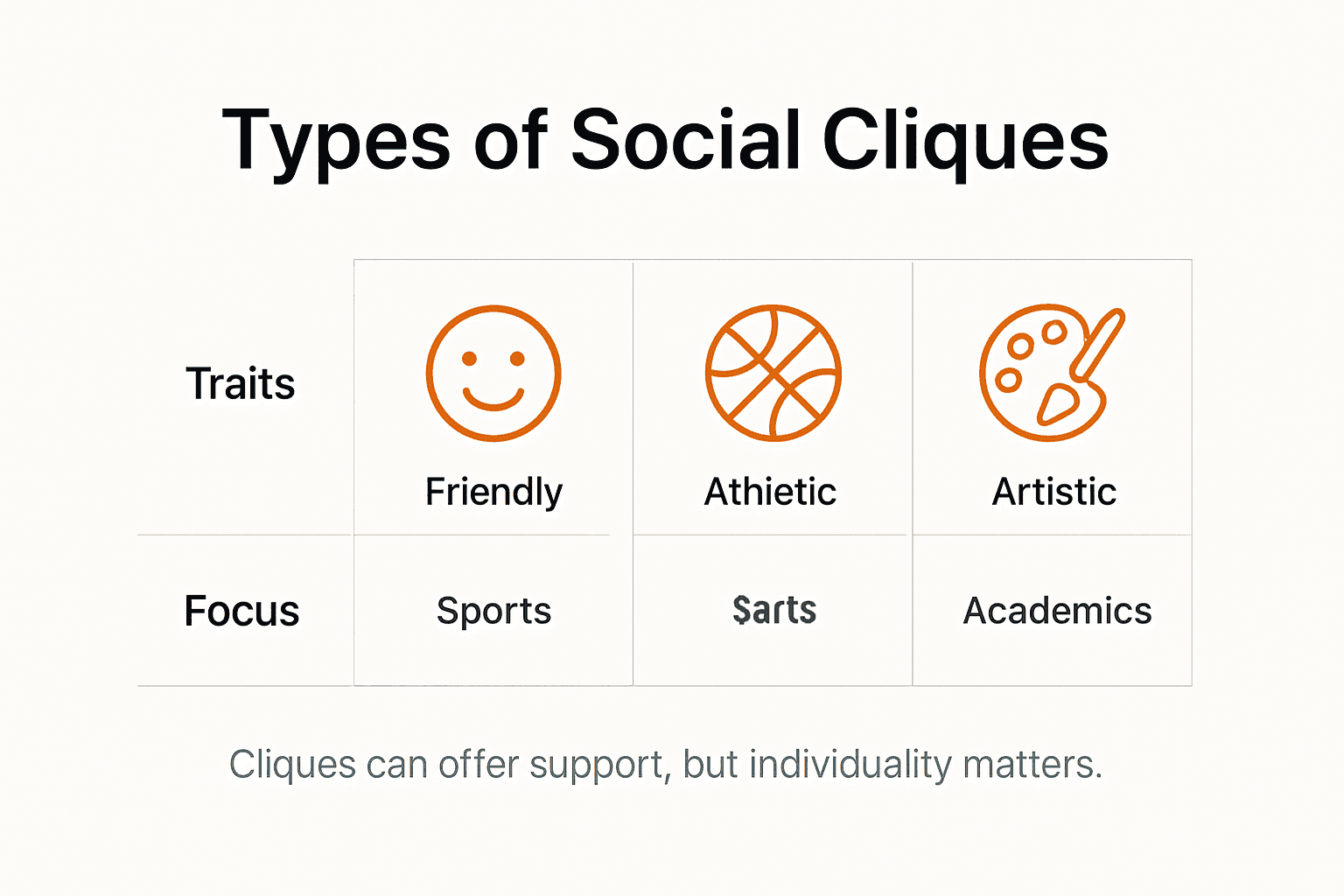
Here’s a summary of common middle school cliques and what typically defines them:
| Clique Type | Defining Traits | Potential Benefits | Possible Challenges |
|---|---|---|---|
| Sports Groups | Athletic focus, team spirit | Sense of belonging | Pressure to perform |
| Academic Circles | High achievement values | Motivation to excel | Competition and stress |
| Music/Fine Arts | Creative interests | Expression, creativity | Limited social overlap |
| Fashion/Social | Style, trends-driven | Social visibility | Conformity pressure |
Navigation is key. Students can maintain their individuality while respecting group dynamics by being authentic, showing genuine interest in others, and avoiding gossip or exclusionary behavior. Building connections across different groups, rather than getting trapped in a single clique, can provide more social flexibility and personal growth. This approach helps develop empathy, communication skills, and a broader social network.
Pro Tip: Practice being friendly with multiple groups and focus on shared interests rather than trying to fit into a specific social hierarchy.
Mastering Classroom and Homework Expectations
Middle school represents a critical transition where academic expectations become significantly more complex. Setting clear classroom expectations is crucial for creating an environment where students can thrive academically and personally. These expectations go beyond simple rules – they’re about establishing a framework for success that helps students develop critical learning and organizational skills.
Successful students understand that classroom expectations involve multiple dimensions. This includes being prepared with necessary materials, actively participating in discussions, submitting assignments on time, maintaining respectful behavior, and demonstrating a genuine commitment to learning. Homework becomes more challenging and frequent, requiring students to develop strong time management and study skills. Teachers expect increased independence, which means students must learn to track assignments, manage deadlines, and seek help when needed.
Developing a strategic approach to meeting classroom expectations involves creating personal systems. This might include using a planner, setting up a consistent homework routine, creating a dedicated study space, and breaking larger assignments into manageable steps. Communication with teachers becomes increasingly important – asking questions, clarifying instructions, and proactively addressing potential challenges can make a significant difference in academic performance. Understanding that classroom expectations are designed to help students grow, not to punish them, can transform how middle schoolers approach their academic journey.
Pro Tip: Create a color-coded assignment tracking system in your planner to visually manage homework deadlines and prioritize tasks effectively.
Recognizing Hazards: Bullying and Peer Pressure
Middle school introduces complex social challenges that can significantly impact a student’s emotional wellbeing. Bullying prevention requires understanding complex behavioral dynamics that go far beyond simple confrontations. Bullying isn’t just physical aggression – it includes emotional manipulation, social exclusion, cyberbullying, and repeated harmful behaviors designed to create power imbalances.
Peer pressure presents another significant challenge during these formative years. Understanding the nuanced ways peers can influence behavior helps students recognize and resist negative influences. Pressure can be direct (someone explicitly telling you to do something) or subtle (feeling uncomfortable if you don’t conform to group expectations). Not all peer pressure is negative – positive peer pressure can encourage academic achievement, healthy habits, and personal growth.
Recognizing and responding to these challenges requires developing strong self-awareness and communication skills. Students need to understand their personal boundaries, build self-confidence, and learn strategies for speaking up when they feel uncomfortable. This includes knowing when to seek help from trusted adults, how to communicate effectively about difficult situations, and developing the courage to stand up for themselves and others. Emotional intelligence becomes a critical tool in navigating these complex social landscapes.
Use this table as a quick reference for distinguishing between bullying and peer pressure in middle school:
| Issue Type | Typical Behaviors | Signs to Watch For | Best Response |
|---|---|---|---|
| Bullying | Repeated teasing, exclusion | Withdrawn or anxious behavior | Report to trusted adult |
| Peer Pressure | Urging to conform, persuasion | Sudden changes in interests | Assert boundaries, seek support |
Pro Tip: Create a trusted support network of friends and adults who can help you navigate difficult social situations and provide honest, constructive feedback.
Parent Roles in Supporting Transitions
Transitioning to middle school represents a critical moment for both students and parents. Supporting children through this significant life change requires intentional, compassionate strategies that address emotional and practical challenges. Parents become crucial navigators, helping their children develop resilience and confidence during this transformative period.
Middle school transitions involve multiple complex adjustments that extend beyond academic expectations. Parental involvement means more than just monitoring grades – it’s about creating a supportive environment that helps children develop organizational skills, emotional intelligence, and self-advocacy. This involves active listening, providing practical guidance, and maintaining open communication about school experiences, social dynamics, and potential challenges.
Effective parent support requires a balanced approach of guidance and independence. Parents should help children develop practical skills like time management, study techniques, and personal organization while simultaneously allowing room for personal growth and problem-solving. This means being available as a resource and confidant without micromanaging every aspect of their school life. Creating a safe space for honest conversations about school experiences, social pressures, and personal concerns helps children feel supported and understood.
Pro Tip: Schedule weekly check-ins with your child to discuss school experiences, using open-ended questions that encourage genuine dialogue rather than yes or no responses.
Unlock Middle School Success with Proven Strategies
Navigating the unwritten rules of middle school can feel overwhelming when you face social challenges like cliques, bullying, and increased academic demands. This article highlights the need for strong time management, effective communication, and emotional resilience to thrive during this transition. If you are ready to conquer these hurdles and build confidence in your study habits and daily routine, discover tailored solutions designed to help you master productivity and maintain balance.
Start transforming your middle school experience today by exploring practical learning strategies that empower you to stay organized and focused. With resources that support time management and healthy habits, you can take control of your academic journey. Don’t wait to develop the skills that will make middle school and beyond a success. Visit our homepage and take your first step toward mastering these crucial years.
Frequently Asked Questions
What are some common unwritten rules in middle school?
Unwritten rules in middle school often include respecting personal space, learning to take turns in conversations, reading nonverbal cues, and understanding group dynamics for effective peer interactions.
How can I navigate cliques in middle school?
To navigate cliques, focus on being authentic and show genuine interest in others. Build connections by engaging with multiple groups without getting too entrenched in a single social circle.
What should I expect in terms of classroom and homework expectations?
Students should be prepared for increased complexity in classroom expectations, including being organized, submitting assignments on time, and actively participating in discussions. Developing strong study habits and time management skills is essential.
How can I support my child during their transition to middle school?
Support your child by creating an open dialogue about their experiences, helping them develop organizational and emotional skills, and encouraging independence while being available as a resource for guidance.
Recommended
- Ultimate College Application Planner + 14 Must-Do Tasks
- 10 Unique College Essay Ideas to Stand Out in Applications
- 26 Essential Tips for Freshman Year of High School From a Graduate
- 12 Apps That’ll Stop Social Media From Destroying Your GPA (From Someone Who Almost Failed Because of TikTok)
Want a head start? The Ultimate Student Planner in my shop was made for exactly this — it’ll save you a ton of time.