From Procrastinator to Producer: Practical Tools for Middle School Time Management
Every parent faces the challenge of helping their child balance homework, extracurriculars, and downtime once middle school begins. This period brings new demands as students juggle complex schedules and increased responsibilities. Time management skills are key to supporting academic growth and relieving homework-related stress. American researchers from Harvard emphasize that intentional strategies, such as planning and prioritizing, empower middle schoolers to control their routines and set the foundation for lasting organizational habits.
Key Takeaways
| Point | Details |
|---|---|
| Time Management is Essential | Middle schoolers need to develop effective time management skills to handle increased academic and personal responsibilities. |
| Procrastination Types | Understanding active and passive procrastination helps students improve productivity and academic performance. |
| Use of Tools | Students should utilize both digital and analog tools to organize tasks and manage time effectively. |
| Parental Guidance is Critical | Parents should encourage independence in their children while providing support without micromanaging. |
What Is Time Management for Middle Schoolers?
Middle school marks a critical transition where students suddenly face more academic responsibilities and complex schedules. Time management becomes a crucial skill that helps young learners balance schoolwork, extracurricular activities, social life, and personal time. Unlike elementary school, middle schoolers experience increased academic demands that require more sophisticated organizational strategies.
Research from Harvard’s Graduate School of Education reveals that middle school students need intentional time management strategies to navigate their increasingly complex schedules. Understanding time management isn’t just about completing homework – it’s about learning how to prioritize tasks, set realistic goals, and develop lifelong organizational habits.
Time management for middle schoolers typically involves several key components:
- Planning assignments and projects in advance
- Breaking larger tasks into smaller, manageable steps
- Using calendars or planners to track deadlines
- Learning to estimate how long different tasks will take
- Prioritizing academic and personal commitments
According to academic research on time management assessment, two primary factors determine effective time management for this age group: meeting deadlines and systematic planning. Students who develop these skills early tend to experience better academic performance and reduced stress levels.
Pro tip: Start by creating a simple weekly schedule that includes homework time, extracurricular activities, and personal relaxation to build foundational time management skills.
Procrastination vs Productivity: Understanding Key Drivers
Middle school students frequently struggle with balancing academic responsibilities and personal interests, often experiencing what researchers call procrastination. This complex behavioral pattern goes beyond simple laziness and involves intricate psychological mechanisms that impact academic performance and personal development.

Academic research on procrastination patterns reveals two distinct types of procrastination that critically affect student outcomes. Active procrastination occurs when students deliberately delay tasks but remain confident in their ability to complete work effectively under pressure. Passive procrastination, conversely, represents a more problematic pattern characterized by anxiety, indecision, and genuine difficulty managing tasks.
Key drivers of procrastination among middle schoolers include:
- Fear of failure or perfectionism
- Lack of clear task understanding
- Insufficient motivation
- Poor time management skills
- Overwhelming academic expectations
- Difficulty prioritizing assignments
Research demonstrates that student performance correlates strongly with procrastination behaviors, indicating that how students approach task management significantly impacts their academic success. Students who develop strategies to transform passive procrastination into active, purposeful work can dramatically improve their productivity and reduce stress.
Here’s a comparison of active vs passive procrastination and their effects on middle school students:
| Attribute | Active Procrastination | Passive Procrastination |
|---|---|---|
| Motivation | High confidence under pressure | Low motivation and indecision |
| Emotional Impact | Often positive, less stress | Increased anxiety and stress |
| Academic Performance | Generally stable or improved | Often worsened, missed deadlines |
| Intervention Focus | Enhance strategic planning | Build self-confidence, reduce anxiety |
Procrastination is less about laziness and more about complex emotional and cognitive challenges that require targeted interventions.
Pro tip: Break large assignments into smaller, manageable tasks and set realistic mini-deadlines to combat procrastination and build consistent productivity habits.
Essential Tools: Planners, Lists, and Scheduling Apps
Middle school students need practical tools to transform their time management challenges into opportunities for success. Digital and analog tools can help young learners organize their academic and personal lives more effectively, providing structure and reducing the overwhelming feelings associated with multiple responsibilities.
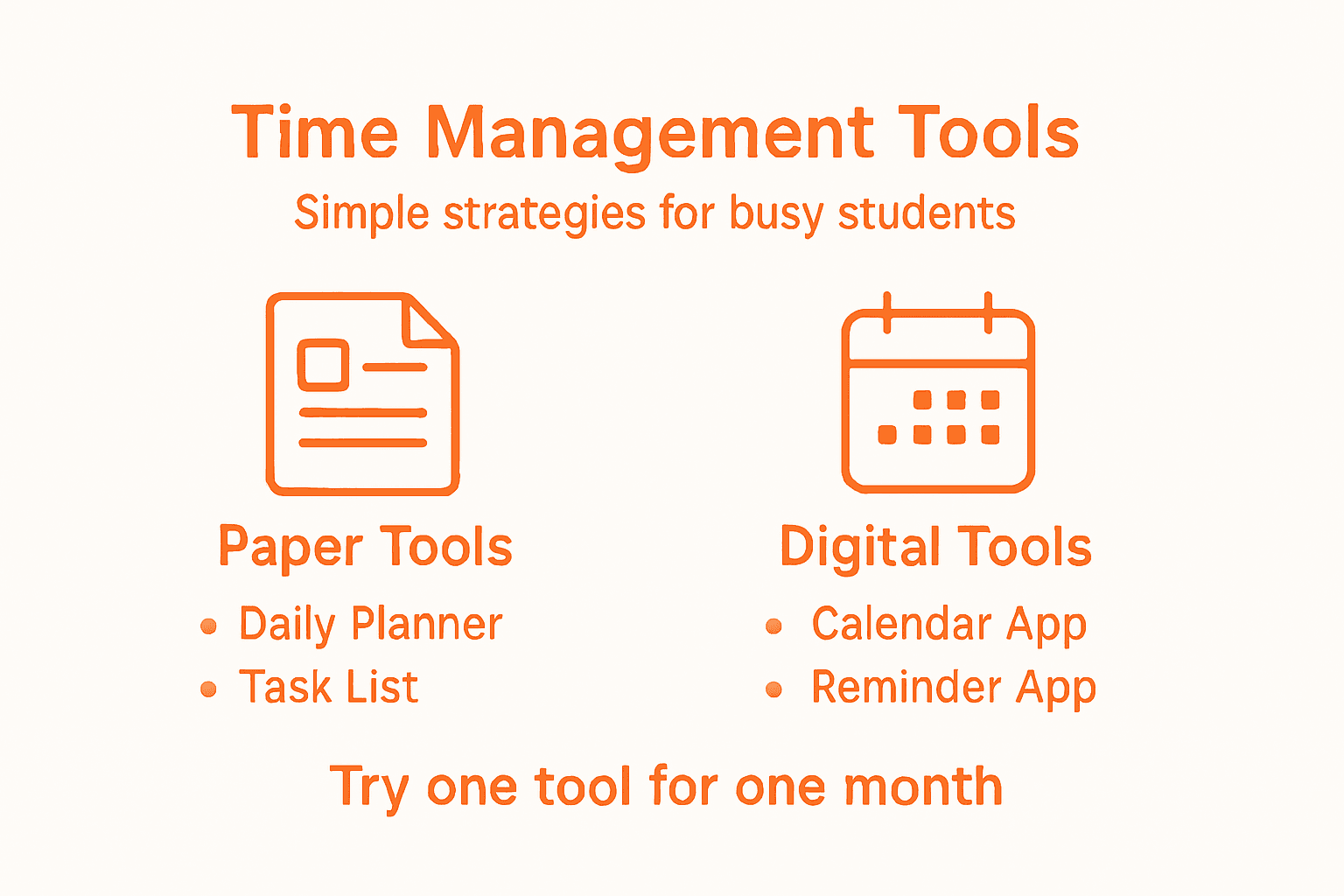
Modern technology offers several powerful options for productivity tools that help students manage time, ranging from traditional paper planners to sophisticated smartphone applications. These tools share a common goal: helping students break down complex tasks, track deadlines, and develop consistent organizational habits.
Essential time management tools for middle schoolers include:
- Paper Planners
- Weekly layout with assignment sections
- Space for goal tracking
- Color-coding options
- Digital Scheduling Apps
- Automatic deadline reminders
- Syncing across multiple devices
- Task categorization features
- To-Do List Applications
- Customizable task prioritization
- Progress tracking
- Subtask breakdown capabilities
Effective time management tools are less about the specific technology and more about developing consistent organizational habits.
Each tool offers unique advantages, allowing students to find a system that matches their personal learning style and technological comfort level. The key is experimenting with different approaches and finding a method that feels natural and sustainable.
Pro tip: Choose one primary organization tool and commit to using it consistently for at least one month to develop a reliable time management habit.
Breaking Down Assignments Into Manageable Steps
Middle school students often feel overwhelmed by complex assignments that seem impossible to tackle. Breaking down large projects into smaller, more manageable steps transforms intimidating tasks into achievable goals, helping students build confidence and reduce academic stress.
Academic research on task scaffolding demonstrates that segmenting assignments into incremental steps promotes student autonomy and steady progress. By understanding how to deconstruct complex tasks, students can develop powerful organizational skills that extend far beyond their academic careers.
Effective assignment breakdown typically involves these critical strategies:
- Initial Planning Stage
- Read entire assignment instructions carefully
- Identify major components and requirements
- Estimate total time needed for completion
- Task Segmentation
- Divide project into 3-5 smaller subtasks
- Create intermediate deadlines for each subtask
- Assign estimated time for each segment
- Progress Tracking
- Use checklists to monitor advancement
- Mark completed subtasks visually
- Celebrate small victories along the way
Breaking large assignments into smaller steps transforms overwhelming challenges into manageable achievements.
By approaching assignments systematically, middle school students can reduce anxiety, improve time management, and develop crucial organizational skills that will serve them throughout their academic journey.
Pro tip: Create a visual roadmap for each assignment, using color-coded sections to track progress and maintain motivation.
Building Routines and Managing Distractions
Middle school students face unprecedented challenges in maintaining focus and developing consistent academic habits. Routine building becomes a critical skill that helps young learners navigate the increasing complexity of their educational environment, transforming scattered efforts into systematic success.
Research on classroom structure and student engagement demonstrates that consistent daily procedures dramatically improve students’ ability to manage time and minimize distractions. Creating predictable patterns helps students feel more secure and reduces the mental energy required to transition between tasks.
Key strategies for building effective routines and managing distractions include:
- Morning Preparation
- Layout clothes and school materials the night before
- Create a consistent wake-up time
- Establish a brief morning planning session
- Study Environment Management
- Designate a specific homework space
- Remove digital devices during study time
- Use noise-canceling headphones if needed
- Distraction Mitigation Techniques
- Practice 5-minute focus intervals
- Use website blockers during study time
- Learn short meditation techniques
Effective routines transform chaotic student experiences into structured, productive learning journeys.
Executive function skills play a crucial role in developing sustainable habits. By practicing consistent techniques and creating structured environments, middle school students can significantly improve their ability to concentrate and manage competing priorities.
Pro tip: Create a visual routine chart with color-coded sections to help track daily activities and build consistent habits.
Common Mistakes Parents Should Avoid
Parenting middle school students requires a delicate balance between guidance and independence, with many well-intentioned approaches potentially hindering a child’s time management skill development. Parental involvement plays a crucial role in supporting students, but excessive intervention can actually undermine their ability to learn self-management techniques.
Navigating middle school parental support strategies reveal critical pitfalls that parents must carefully avoid. Understanding these common mistakes helps create an environment that empowers students to develop essential organizational skills independently.
Common parental mistakes in supporting middle school time management include:
- Micromanagement Traps
- Doing homework for the student
- Constantly reminding about assignments
- Solving problems before students attempt solutions
- Communication Missteps
- Avoiding conversations with teachers
- Not understanding school expectations
- Ignoring student’s individual learning style
- Technology and Distraction Errors
- Permitting unlimited screen time
- Not establishing digital boundaries
- Failing to model healthy technology habits
Effective parental support transforms guidance into student empowerment, not control.
Successful parents recognize that time management is a skill learned through practice, patience, and gradual responsibility transfer. By understanding these common mistakes, parents can create a supportive environment that encourages independence and self-organization.
Below is a summary of key parental strategies to encourage strong time management without micromanaging:
| Approach | Benefits | Pitfalls to Avoid | Guiding Principle |
|---|---|---|---|
| Weekly check-ins | Promotes student accountability | Taking over assignments | Empower student independence |
| Modeling routines | Builds organizational habits | Not setting boundaries | Consistent structure and limits |
| Open communication | Clarifies goals and expectations | Ignoring feedback from student | Listen and adapt to student needs |
Pro tip: Create a weekly check-in routine where your student leads the conversation about their assignments and goals, allowing them to develop accountability.
Transform Procrastination Into Productive Success Today
Struggling with procrastination and managing time during middle school is a common challenge many students face. This article highlights how breaking down tasks, using effective tools, and creating routines are key to evolving from a procrastinator to a producer. If your student faces anxiety, indecision, or motivation hurdles, understanding active versus passive procrastination and building solid habits can make all the difference in their academic progress and well-being.
Discover practical resources and strategies specifically designed to support students in mastering time management, productivity, and organizational skills at Learning With Angie. Whether you want to explore study aesthetics or develop a balanced lifestyle, you will find tools to help empower your student now. Don’t wait until stress builds up; find actionable tips and products that can improve focus and turn overwhelming assignments into manageable successes.
Frequently Asked Questions
What are some effective time management tools for middle school students?
Effective time management tools for middle school students include paper planners, digital scheduling apps, and to-do list applications that help track assignments, categorize tasks, and set reminders.
How can I help my middle schooler break down large assignments?
Encourage your middle schooler to break down large assignments into smaller tasks by identifying major components, creating intermediate deadlines, and using checklists to track progress.
What strategies can help my child manage distractions during study time?
To help manage distractions, create a designated homework space, remove digital devices, set specific focus intervals, and consider using noise-canceling headphones to improve concentration.
How can parents support their middle schooler’s time management without micromanaging?
Parents can support their child’s time management by conducting weekly check-ins, modeling effective routines, maintaining open communication, and allowing the child to take the lead in discussing their assignments and goals.
Recommended
- Create Your Success: Ultimate Goal Setting Checklist
- The Best Time Management Tools for Students in 2025: Stay Organized and Stress Less
- 9 Guaranteed Ways to Overcome Procrastination for Students
- What Tools and Apps Can Improve Productivity for Students?
Want a head start? The Ultimate Student Planner in my shop was made for exactly this — it’ll save you a ton of time.