How to Talk So Your Teen Will Listen: Parent Communication Guide
Every parent faces times when connecting with a teenager feels more complicated than ever. Teens in North America crave independence, but they also want to feel truly understood by those closest to them. Building trust and opening up meaningful conversations begins with intentional listening, empathy, and curiosity. This guide highlights strategies like creating a judgment-free zone and practicing active listening, so you can support your teen with respect and genuine engagement.
Quick Summary
| Essential Insight | Explanation |
|---|---|
| 1. Create a Judgment-Free Zone | Encourage open dialogue by ensuring your teen feels comfortable discussing their thoughts without fear of judgment. |
| 2. Practice Active Listening | Show genuine interest by maintaining eye contact and summarizing their feelings, helping them feel understood. |
| 3. Use Open-Ended Questions | Foster deeper conversations by asking questions that require more than a simple yes or no answer, allowing for expansive dialogue. |
| 4. Validate Their Emotions | Acknowledge your teen’s feelings as legitimate, regardless of your agreement, to build trust and connection. |
| 5. Adjust Communication Based on Feedback | Stay flexible in your approach, adapting your communication style as needed to better meet your teen’s emotional needs. |
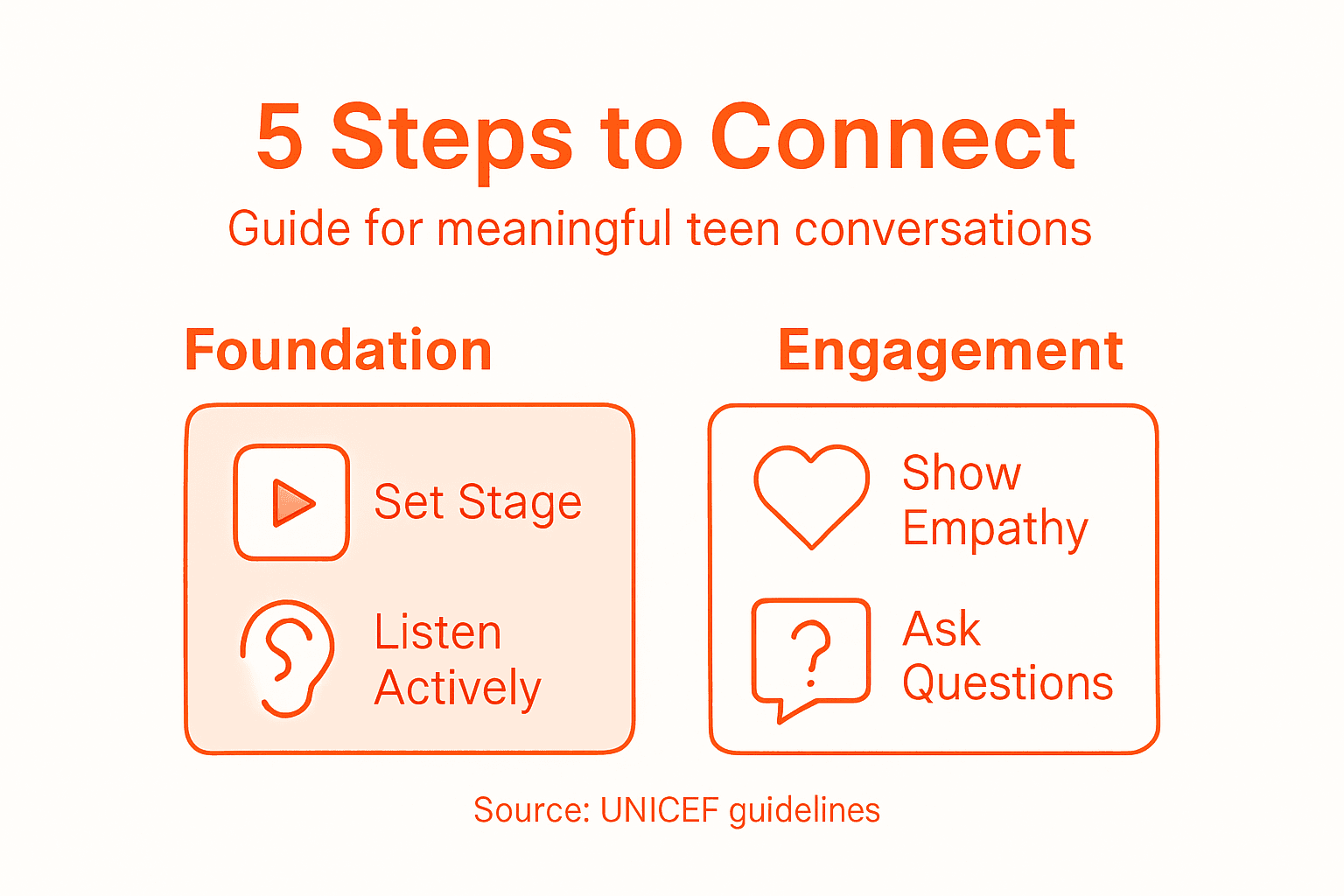
Step 1: Set the Stage for Meaningful Conversations
Talking with your teen isn’t about interrogation – it’s about building a connection that makes them feel heard and respected. Creating an environment where your teenager wants to open up requires some strategic groundwork and genuine interest.
To start, focus on creating a judgment-free zone where conversations can flow naturally. According to research on parent-child communication, the quality of interaction matters more than quantity. This means being intentional about how you approach discussions:
- Choose calm, neutral settings for conversations
- Avoid interrupting or immediately offering solutions
- Show genuine curiosity about their experiences
- Use open body language that signals you’re listening
The most powerful communication happens when teens feel their perspective is genuinely valued.
One powerful technique is sharing a bit about your own day or experiences first. This signals that communication is a two-way street and helps your teen feel more comfortable reciprocating. UNICEF recommends showing interest in what matters to them, which means actively asking about their opinions and experiences without judgment.
Practice active listening by maintaining eye contact, nodding, and reflecting back what you’ve heard. This demonstrates that you’re fully present and invested in understanding their world.

Pro tip: Set a regular, low-pressure time each week where you can chat casually, like during a shared meal or car ride, to help normalize open communication.
Step 2: Practice Active Listening Without Judging
Active listening is more than just hearing words – it’s about creating a safe space where your teen feels completely understood and respected. Your goal is to become a supportive listener who validates their feelings without immediately jumping to conclusions or offering advice.
Coursera highlights the importance of active listening as a way to build psychological safety for teens. This means developing skills that go beyond casual conversation:
- Maintain consistent eye contact
- Use open body language
- Avoid interrupting or immediate problem-solving
- Pay attention to emotional undertones
- Reflect back what you’ve heard accurately
The most powerful connection happens when teens feel genuinely heard, not judged.
Practice reflective listening by summarizing what your teen has shared. For instance, if they describe a difficult social situation, you might say: “It sounds like you’re feeling frustrated because your friends didn’t include you in their plans.”
UNICEF recommends understanding communication techniques that demonstrate empathy without criticism. This means asking clarifying questions that show you’re truly trying to understand their perspective, not correct their experience.
Pro tip: Practice your poker face – listen without visibly reacting, which helps your teen feel safe sharing more vulnerable thoughts and feelings.
Step 3: Use Empathy to Validate Your Teen’s Feelings
Validating your teen’s emotions isn’t about agreeing with everything they say – it’s about creating a compassionate space where they feel truly understood and respected. Your goal is to demonstrate that their feelings are legitimate, even when their perspective might differ from yours.
Harvard Health explains validation techniques that help reduce emotional intensity and build trust. This means approaching their experiences with genuine curiosity and care:
- Listen without immediately offering solutions
- Acknowledge their emotional experience
- Reflect back what you’re hearing
- Avoid minimizing or dismissing their feelings
- Show you understand their perspective
True connection happens when feelings are heard, not judged.
Practice emotional mirroring by using phrases that demonstrate you’re truly listening. For example, “It sounds like you’re feeling frustrated and hurt by what happened with your friends” shows you’re tuning into their emotional landscape.
UNICEF recommends non-judgmental communication strategies that help teens feel safe sharing their inner world. This means asking open-ended questions that invite deeper exploration, such as “Can you tell me more about how that made you feel?”
Pro tip: Pause and breathe before responding to ensure your body language and tone communicate genuine understanding, not just automatic agreement.
Step 4: Ask Open-Ended Questions to Encourage Dialogue
Mastering the art of conversation with your teen isn’t about interrogation – it’s about creating a space where they feel genuinely heard and motivated to share. Open-ended questions are your secret weapon for unlocking deeper, more meaningful communication.
ActForYouth research highlights conversation strategies that encourage teens to express themselves more authentically. This means moving beyond simple yes or no questions and inviting thoughtful reflection:
- Avoid questions that can be answered with one word
- Start questions with “how” or “what”
- Show genuine curiosity about their experiences
- Listen more than you speak
- Allow comfortable silences for processing
The most powerful conversations happen when you create space for genuine exploration.
Craft questions that invite storytelling by using phrases like “What was that like for you?” or “How did you feel when that happened?” These prompts encourage your teen to dive deeper into their emotional landscape.
UNICEF recommends communication techniques that help teenagers feel safe sharing their inner world. Ask follow-up questions that demonstrate you’re truly listening, such as “Can you help me understand more about what you mean?”
Pro tip: Practice your poker face and resist the urge to jump in with advice – sometimes the most powerful response is simply waiting and listening.
Step 5: Verify Understanding and Adjust Approaches
Communicating with your teen isn’t a one-size-fits-all strategy – it’s a dynamic dance of listening, understanding, and adapting. Your goal is to create a flexible communication style that responds to their changing emotional landscape and helps them feel genuinely heard.
Child Mind Institute recommends checking your understanding by reflecting back what you’ve heard in your own words. This verification process helps prevent misunderstandings and shows your teen you’re truly listening:
- Paraphrase their key points
- Ask clarifying questions
- Watch their body language
- Notice emotional undertones
- Be willing to adjust your approach
True connection requires ongoing adjustment and genuine curiosity.
Practice reflective listening by summarizing what you’ve heard. For example, “So if I’m understanding correctly, you’re feeling frustrated because…” This technique invites your teen to confirm or clarify their perspective.
UNICEF highlights communication strategies that help parents remain responsive and adaptive. Pay attention to non-verbal cues that might indicate your teen needs a different communication approach, such as shifting the conversation’s timing or location.
Pro tip: Think of your communication style like a GPS – constantly recalculating and finding the best route based on real-time feedback.
Compare traditional and adaptive approaches to teen communication:
| Approach | Flexibility | Outcome |
|---|---|---|
| Traditional | Fixed, rarely adapts | Leads to misunderstandings |
| Adaptive | Responsive, adjusts | Supports ongoing connection |
Here’s a summary of communication styles and their effects on teen relationships:
| Communication Style | Impact on Teens | Best Use Scenario |
|---|---|---|
| Active Listening | Builds trust and safety | When discussing sensitive topics |
| Reflective Listening | Helps teens feel understood | During emotional conversations |
| Open-Ended Questions | Encourages deeper sharing | Exploring feelings and experiences |
| Empathy & Validation | Reduces defensiveness, fosters connection | When emotions run high |
Strengthen Communication and Support Your Teen’s Growth Today
Navigating the challenges of effectively talking so your teen will listen can feel overwhelming. This article highlights crucial pain points such as creating a judgment-free zone, practicing active listening, and using empathy to validate feelings — all essential steps parents can take to build trust and deeper connection with their teens. If you want to elevate these conversations and support your teen’s success both emotionally and academically, pairing communication skills with practical life tools is the key.
At Learning With Angie, we understand the importance of fostering a balanced environment where teens thrive. Our resources empower students to master time management, productivity, budgeting, and healthy habits while helping parents engage meaningfully with their teens’ learning journeys. Discover actionable strategies and supportive tools designed to complement your communication efforts. Take the first step now to improve your family’s connection and your teen’s overall growth.
Frequently Asked Questions
How can I create a judgment-free zone for conversations with my teen?
Creating a judgment-free zone involves setting a calm and neutral environment for discussions. Focus on showing genuine curiosity about their experiences and practice active listening to encourage openness.
What are some effective open-ended questions I can ask my teen?
Effective open-ended questions start with “how” or “what” and encourage your teen to share more about their feelings and experiences. For example, ask, “What was that like for you?” to inspire deeper dialogue.
How can I practice active listening when my teen talks?
To practice active listening, maintain eye contact, use open body language, and avoid interrupting. Reflect back what you’ve heard to show you’re fully engaged and understanding their perspective.
What does validating my teen’s feelings look like in conversation?
Validating your teen’s feelings means acknowledging their emotional experience without demanding agreement. Use phrases like, “It sounds like you’re feeling frustrated,” to show understanding and compassion.
How often should I set aside time to talk with my teen?
Aim to set aside a regular, low-pressure time each week for casual conversation, such as during dinner or a car ride. This consistent practice helps normalize open communication and strengthens your connection.
What should I do if my teen seems reluctant to talk?
If your teen seems reluctant to talk, be patient and create a comfortable space for sharing. Try using open-ended questions and allowing for pauses, which may encourage them to speak when they’re ready.
Recommended
- Create Your Success: Ultimate Goal Setting Checklist
- 12 Communication Skills Every Student Should Master
- 12 Apps That’ll Stop Social Media From Destroying Your GPA (From Someone Who Almost Failed Because of TikTok)
- 15 Reasons the Feynman Technique Is a Game-Changer for Students
Want a head start? The All-in-One College Application Organizer in my shop was made for exactly this — it’ll save you a ton of time.