
College Recruiting for Athletes: What Parents Need
Every parent faces that moment when the world of college athletic recruiting feels overwhelming and full of uncertainty. The path to athletic scholarships is rarely straightforward, and common myths or misunderstandings can make it even more confusing for North American families. By focusing on the basics and clearing up misconceptions, you will gain clarity on what truly matters in supporting your child’s journey toward academic standing and proactive self-promotion in college sports.
Key Takeaways
| Point | Details |
|---|---|
| Comprehensive Evaluation | College recruiting assesses athletes based on academic performance, character, and team fit, not just talent. |
| Myth Busting | Many misconceptions about guaranteed scholarships and recruiter discovery can hinder athlete opportunities. |
| Proactive Communication | Athletes must take the initiative in showcasing their skills and maintaining contact with coaches. |
| Eligibility Awareness | Understanding NCAA eligibility requirements is crucial for student athletes to secure recruitment opportunities. |
College recruiting basics and misconceptions
The world of college athletic recruiting can seem like a complicated maze for student athletes and their families. Many believe getting recruited is simply about being the best player on the team, but the reality is far more nuanced. Understanding the key fundamentals and dispelling common myths will help you navigate this complex process more effectively.
College recruiting involves multiple critical components that go well beyond athletic performance. Schools evaluate potential recruits using a comprehensive approach that considers academic performance, character, athletic potential, and how an athlete might fit into their specific team culture. Sports agent recruitment details from the Federal Trade Commission highlight several important considerations:
- Academic standing matters as much as athletic ability
- Coaches look for well-rounded student athletes
- Character and team compatibility are significant factors
- Recruitment is a strategic matching process, not just talent selection
Some of the most persistent misconceptions about college recruiting can actually derail an athlete’s opportunities. Here are the top myths students and parents should understand:
- Myth: The best athletes automatically get scholarships
- Myth: Recruiters will find you if you’re talented enough
- Myth: Athletic scholarships are guaranteed for four years
- Myth: Only Division I schools offer meaningful athletic opportunities
Proactive communication is perhaps the most critical yet overlooked aspect of successful recruiting. EducationUSA recruitment guidance emphasizes that athletes must take initiative in showcasing their abilities, maintaining academic performance, and reaching out to potential programs.
The recruitment process is a two-way street where athletes must market themselves as much as coaches evaluate talent.
Understanding these basics requires careful research, strategic planning, and realistic expectations. Athletes and parents should approach recruiting as a comprehensive journey involving athletic skill, academic merit, personal development, and effective self-promotion.
Pro tip: Create a comprehensive athletic and academic portfolio early in high school that highlights your achievements, academic records, and athletic statistics to stand out during the recruitment process.
Athletic divisions and scholarship types explained
Navigating the landscape of college athletic divisions can feel like decoding a complex puzzle for student athletes and their families. Understanding the differences between NCAA divisions is crucial for setting realistic expectations and developing an effective recruiting strategy. NCAA scholarship guide provides critical insights into how these divisions impact athletic opportunities.
The National Collegiate Athletic Association (NCAA) organizes collegiate sports into three primary divisions, each with unique characteristics and scholarship opportunities:
- Division I: Highest level of competition, typically largest schools
- Division II: Moderate competition level, balanced athletic and academic focus
- Division III: Emphasizes academic achievement over athletic performance
Each division offers distinct scholarship possibilities that can dramatically impact a student athlete’s college experience. EducationUSA recruitment insights help clarify these nuanced differences:
Here is a comparative overview of NCAA divisions and their scholarship opportunities:
| NCAA Division | Athletic Competition Level | Athletic Scholarship Availability | Academic Emphasis |
|---|---|---|---|
| Division I | Highest, national focus | Full scholarships possible | High, but secondary |
| Division II | Moderate, regional focus | Partial scholarships common | Balanced with athletics |
| Division III | Competitive, regional | No athletic scholarships | Primary focus |
- Division I offers full athletic scholarships in many sports
- Division II provides partial athletic scholarships
- Division III does not offer athletic scholarships but may provide other financial aid
Scholarship types vary significantly across these divisions. Some scholarships cover full tuition, while others might only provide partial support. Academic scholarships can also complement or sometimes replace athletic awards, creating multiple funding pathways for student athletes.
Not all athletic talent translates to a full scholarship – strategic planning and understanding division-specific opportunities are key.
It’s essential to recognize that scholarship availability depends on multiple factors including the specific sport, school budget, team needs, and individual athlete’s academic and athletic achievements. Some sports are considered “equivalency” sports, where coaches can divide scholarship money among multiple athletes, while others are “head count” sports with full scholarships for a limited number of athletes.
Pro tip: Research each division’s specific scholarship rules for your sport and maintain strong academic performance to maximize your financial aid opportunities.
Eligibility requirements and academic standards
Not all student athletes will qualify for collegiate sports, and understanding the intricate academic standards can make or break your athletic recruitment journey. NCAA eligibility guidelines provide crucial insights into the complex requirements that govern student athlete participation.
The NCAA establishes specific academic benchmarks that student athletes must meet across different divisions. These standards are designed to ensure athletes maintain a balance between academic achievement and athletic performance:
- Core course requirements for high school graduation
- Minimum grade point average (GPA)
- Standardized test score minimums
- Amateur status certification
- Continued academic progress during college
Eligibility criteria vary significantly between NCAA divisions, creating unique challenges for prospective student athletes. College-Bound Student-Athlete Guide outlines these critical distinctions:
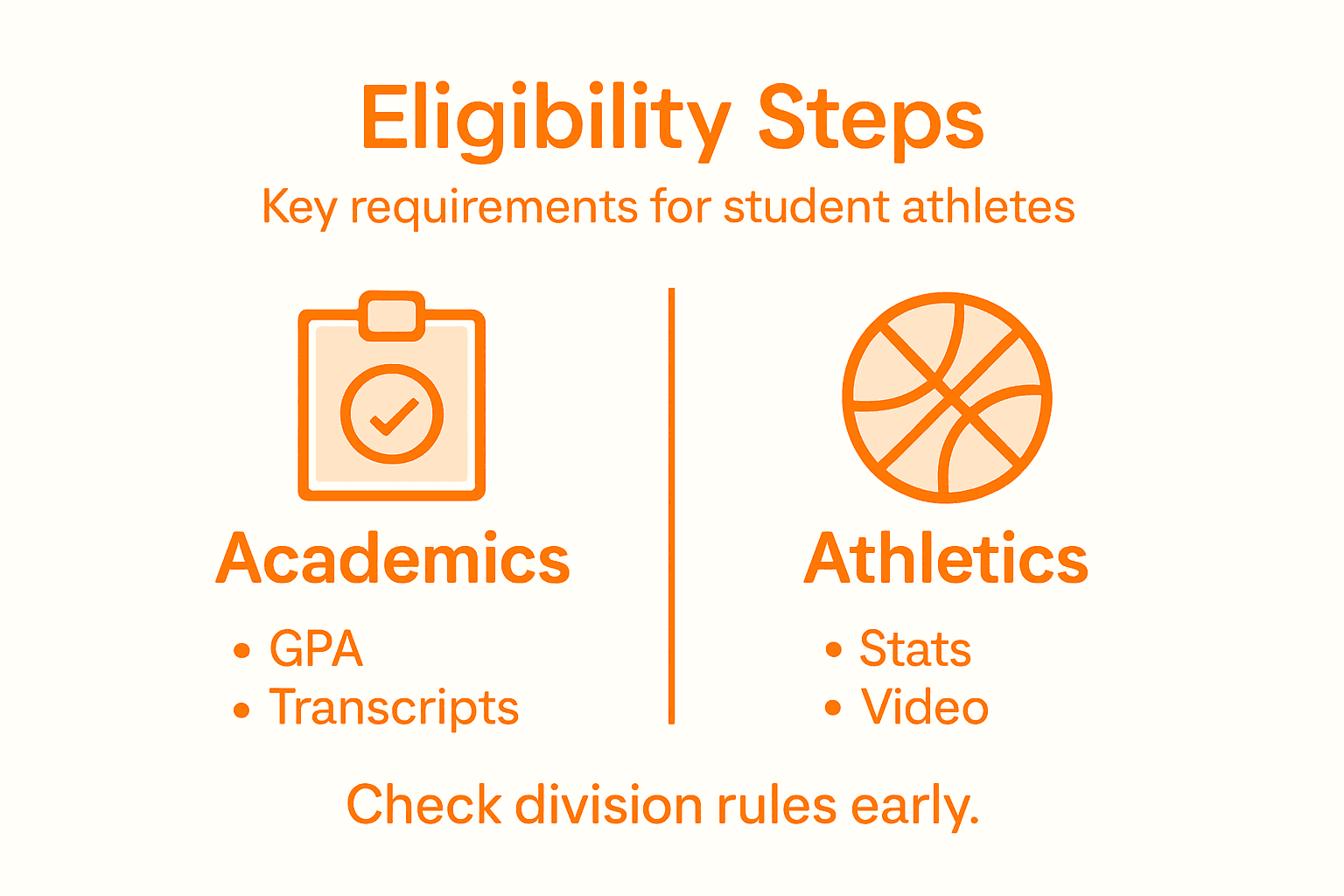
Below is a summary of critical eligibility criteria for student athletes considering college sports:
| Requirement | Purpose | Affects Which Divisions? |
|---|---|---|
| Core course completion | Ensures academic foundation | All NCAA divisions |
| Minimum GPA | Confirms academic consistency | I, II (specific values) |
| Standardized test scores | Assesses college readiness | I, II (required) |
| Amateur status | Maintains athlete eligibility | All divisions |
| Ongoing progress | Ensures continued academic focus | All divisions |
- Division I has the most stringent academic requirements
- Division II offers slightly more flexible standards
- Division III prioritizes academic performance over athletic metrics
Standardized testing plays a crucial role in determining eligibility. The NCAA Eligibility Center reviews SAT or ACT scores, core course GPAs, and overall academic performance to determine whether a student athlete qualifies to compete at the collegiate level.
Academic excellence is not just a requirement – it’s your ticket to athletic opportunity.
International student athletes face additional complexity, with extra documentation and translation requirements to verify academic credentials. Maintaining academic eligibility is an ongoing process that continues throughout a student’s collegiate athletic career, not just during initial recruitment.
Pro tip: Start tracking your academic progress early, maintain a strong GPA, and consult with your school counselor about NCAA eligibility requirements to maximize your athletic recruitment potential.
Building a standout recruiting profile
Creating an exceptional recruiting profile is like crafting a personal brand that showcases your athletic potential and academic strengths. EducationUSA recruiting strategies emphasize the importance of presenting a comprehensive and compelling narrative that goes beyond just athletic statistics.
A standout recruiting profile should highlight your unique combination of athletic prowess, academic achievements, and personal character. Key components include:
- Athletic performance statistics and highlight videos
- Academic transcripts and standardized test scores
- Leadership experiences and extracurricular activities
- Personal achievements and community involvement
- Detailed sport-specific skills and accomplishments
Recruiting profile research suggests several strategic approaches to maximize your visibility to college coaches:
- Create a professional, well-organized digital portfolio
- Develop a compelling athletic highlight reel
- Maintain active communication with potential college programs
- Showcase academic and athletic achievements consistently
Video presentation is particularly crucial in modern recruiting. A high-quality highlight video should showcase your best performances, technical skills, and potential for growth. Keep the video concise, professionally edited, and focused on demonstrating your unique athletic capabilities.
Your recruiting profile is your personal marketing tool – make every element count.
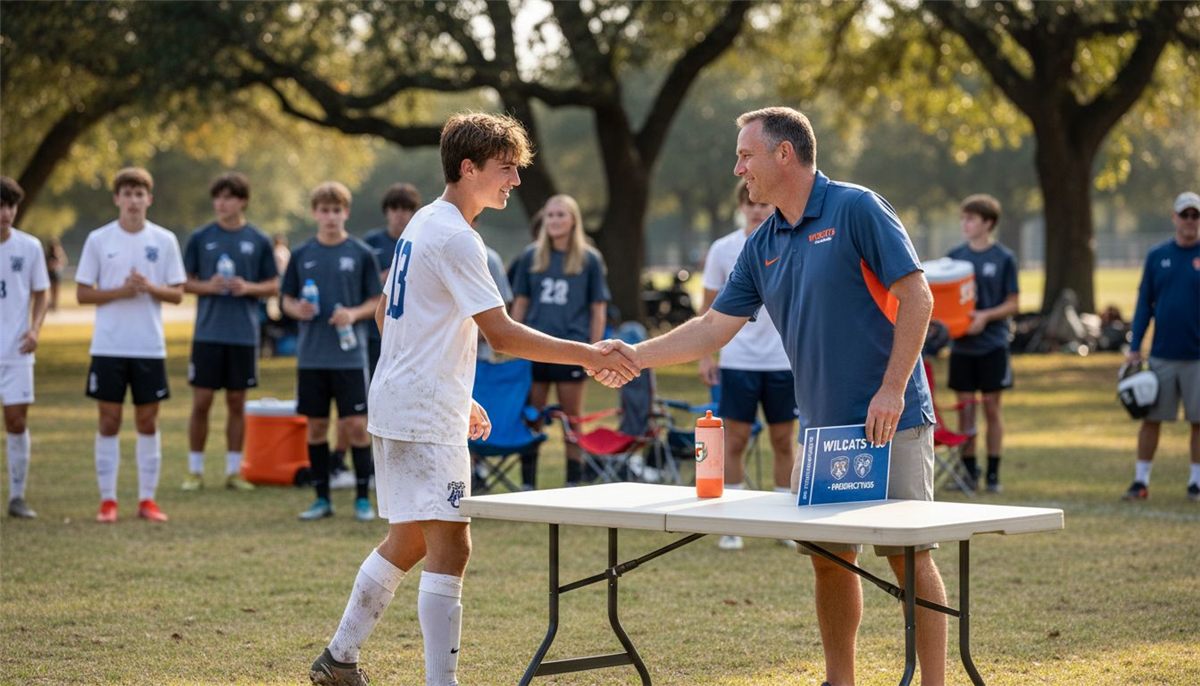
Networking plays a critical role in recruitment. Attend showcases, camps, and tournaments where college coaches might be present. Develop relationships with your high school coaches who can provide recommendations and help connect you with potential collegiate programs.
Pro tip: Treat your recruiting profile like a professional resume, regularly updating achievements and maintaining a clean, professional presentation that highlights your potential as both an athlete and a student.
Effective communication with college coaches
Mastering the art of communication with college coaches can make or break your athletic recruitment journey. EducationUSA communication strategies provide crucial insights into building meaningful connections with potential collegiate programs.
Successful communication with college coaches requires a strategic and professional approach. Key elements of effective outreach include:
- Crafting personalized email communications
- Demonstrating genuine interest in the specific program
- Providing clear and concise athletic and academic information
- Maintaining consistent and respectful follow-up
- Showing maturity and professionalism in all interactions
Sports recruitment communication guidelines suggest several critical communication strategies:
- Research the program thoroughly before initial contact
- Prepare a comprehensive athletic and academic resume
- Create a professional email template
- Be prompt and courteous in all responses
Initial contact is your first impression. Your initial email should be carefully crafted, highlighting your unique athletic abilities, academic achievements, and specific reasons for interest in their program. Include your key performance statistics, academic credentials, and a link to your highlight video.
Communication is a two-way street – listen as much as you speak.
Timing and frequency of communication are crucial. Most coaches prefer initial contact during your junior year of high school, but avoid being overly aggressive. Space out your communications, and always add value to each interaction by sharing new achievements or updates.
Pro tip: Create a dedicated email address and communication strategy for recruiting, maintaining a professional tone and documenting all coach interactions to demonstrate your organizational skills and commitment.
Parent roles, risks, and common mistakes
The college recruiting process can be a minefield of potential missteps for well-intentioned parents. FTC sports recruitment guidelines highlight critical considerations that can make or break an athlete’s opportunities.
Parents play a nuanced and delicate role in the recruiting process, balancing support with necessary boundaries. Key responsibilities include:
- Providing emotional support and guidance
- Understanding NCAA recruitment rules
- Helping manage communication with coaches
- Supporting academic performance
- Preventing undue pressure on the athlete
Recruiting process legal considerations reveal several common parental mistakes that can derail recruitment:
- Overstepping boundaries with coaches
- Speaking for the athlete during communications
- Applying excessive competitive pressure
- Misunderstanding scholarship possibilities
- Neglecting academic requirements
Parental involvement should be strategic and supportive. This means understanding when to step back and let the student athlete take the lead, while remaining available for guidance and logistical support.
Your role is to support, not to manage – let your athlete drive their recruiting journey.
Financial expectations can create significant tension. Many parents mistakenly believe that athletic performance guarantees full scholarships, which is rarely the case. Understanding the complex landscape of partial scholarships, academic awards, and athletic funding is crucial for realistic planning.
Pro tip: Create a collaborative plan with your athlete that clearly defines roles, expectations, and communication strategies throughout the recruiting process.
Support Your Student Athlete’s College Recruiting Journey with Confidence
Navigating the college recruiting maze as a parent can be overwhelming. From understanding eligibility requirements to managing communication with coaches and balancing academics with athletics, the challenges are real. This article highlights the importance of proactive support, clear communication, and realistic expectations—all vital for helping your student athlete shine both on and off the field.
Empower yourself and your student with practical strategies for managing time, maintaining academic excellence, and staying organized throughout recruitment. At Learning With Angie, discover tools designed to improve study habits, enhance productivity, and promote a healthy lifestyle that complements athletic training. Don’t wait until the pressure mounts—take control now by exploring our resources to help both parents and athletes succeed in this competitive process. Boost your family’s chances by creating a balanced routine and mastering the skills that matter.
Frequently Asked Questions
What are the key components of college athletic recruiting?
College athletic recruiting involves evaluating not only athletic performance but also academic standing, character, and fit within the team culture. Schools take a comprehensive approach in assessing potential recruits.
How important is academic performance in the recruiting process?
Academic performance is crucial in the recruiting process. Coaches look for well-rounded student-athletes who can maintain a balance between academics and athletics since eligibility requirements are tied to academic standards.
What are the common misconceptions about athletic scholarships?
Common misconceptions include the belief that only the best athletes receive scholarships, that scholarships are guaranteed for four years, and that only Division I schools provide valuable opportunities. Realistically, many factors influence scholarship availability and type.
How can parents support their athlete during the recruiting process?
Parents can support their athlete by providing emotional guidance, understanding NCAA recruitment rules, assisting in communication with coaches, and supporting the athlete’s academic performance while allowing them to take the lead in their recruiting journey.
Recommended
- Ultimate College Application Planner + 14 Must-Do Tasks
- Create Your Success: Ultimate Goal Setting Checklist
- What Do Colleges Look for? A Step-by-Step Guide to Getting Into Your Dream College
- Scholarships for Single Mothers in Florida
Want a head start? The All-in-One College Application Organizer in my shop was made for exactly this — it’ll save you a ton of time.