5 Brutal Study Habits Truths That Most Students Refuse to Face
You’ve probably spent hours "studying" today, but if I asked you to explain what you learned without looking at your notes, could you do it?
Most students treat studying like a chore to be checked off rather than a skill to be mastered. We sit at our desks, open a textbook, and scroll through TikTok in 15-minute intervals, wondering why the grades aren't matching the effort.
At Learning With Angie, we’re all about that honest, unfiltered advice. If you want to actually see results, you have to stop lying to yourself about your habits. Ready to become the student who works less but learns more? Let’s face these five brutal truths together.
1. Your “Study Time” Isn’t Productive Time
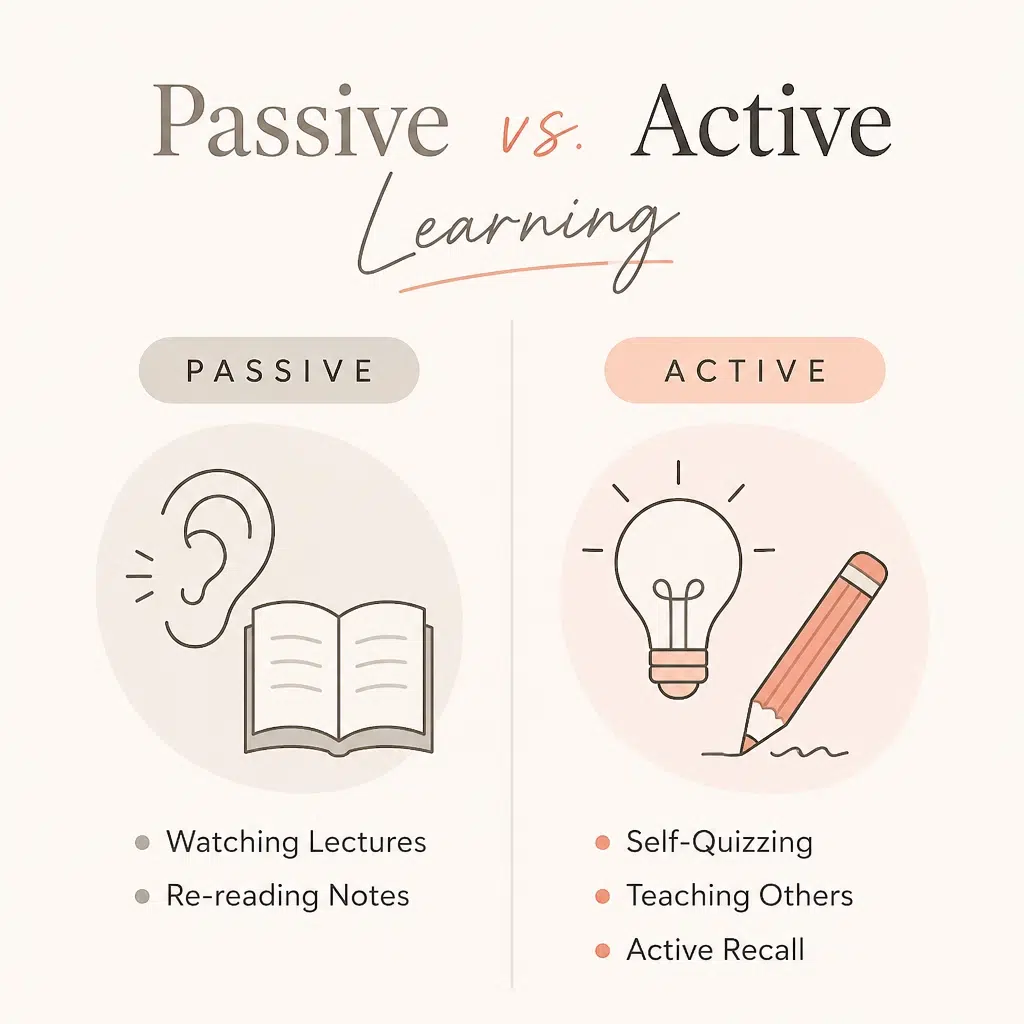
Spending four hours at a desk doesn’t mean you did four hours of work. Most students fall into the trap of passive learning, which is essentially "the illusion of competence." You read the chapter, highlight the pretty parts, and re-read your notes. It feels like work, but your brain is basically on autopilot.
To actually retain information, you must switch to active learning. This means forcing your brain to retrieve information rather than just letting it wash over you.
How to make your study time count:
- Use Active Recall: Instead of re-reading, close the book and write down everything you remember about a topic.
- Practice Self-Quizzing: Use flashcards or our self-assessments to test your knowledge in real-time.
- The Feynman Technique: Try to explain a complex concept to a friend (or even your cat) as if they were five years old. If you can’t explain it simply, you don’t understand it yet.
- Incorporate Aesthetic Note-Taking: Don't just make them look good; make them work for you. Use charts and summaries that require you to synthesize the info.
2. Cramming Isn’t Strategy: It’s Desperation
It’s 2 AM, the exam is at 8 AM, and you’re trying to shove three weeks of biology into your brain. While cramming might help you pass a multiple-choice test tomorrow morning, that information will be gone by lunch.
Research shows that spaced repetition dramatically outperforms cramming. Students who use spacing retain up to 82% of material weeks later, compared to just 27% for those who cram.
How to streamline your schedule:
- Implement Spaced Repetition: Review your notes 24 hours after a lecture, then 3 days later, then a week later.
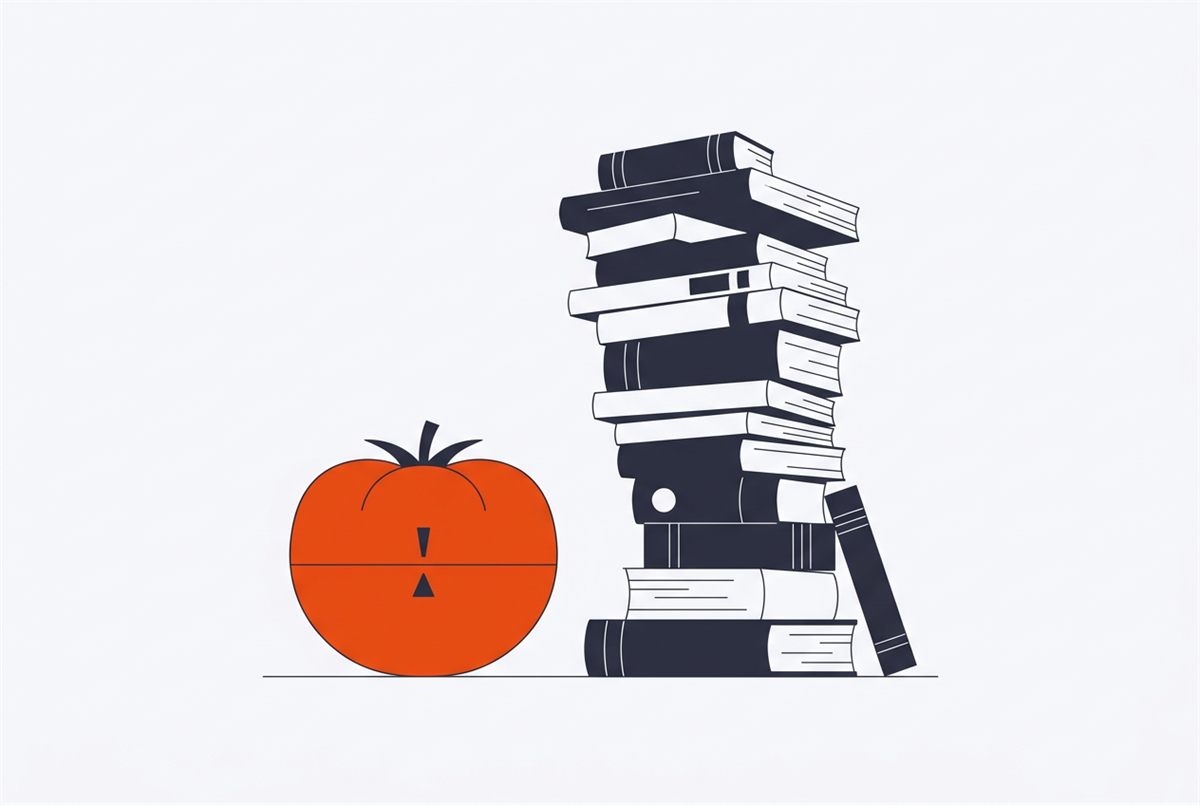
- Use a Study Timer: Break your work into focused blocks. The Pomodoro Technique (25 minutes of focus, 5 minutes of rest) prevents burnout and keeps your brain sharp.
- Plan Ahead: Stop guessing what to study. Use our Essential College Application Timeline or a dedicated planner to map out your semester.
3. Multitasking Is Killing Your Focus
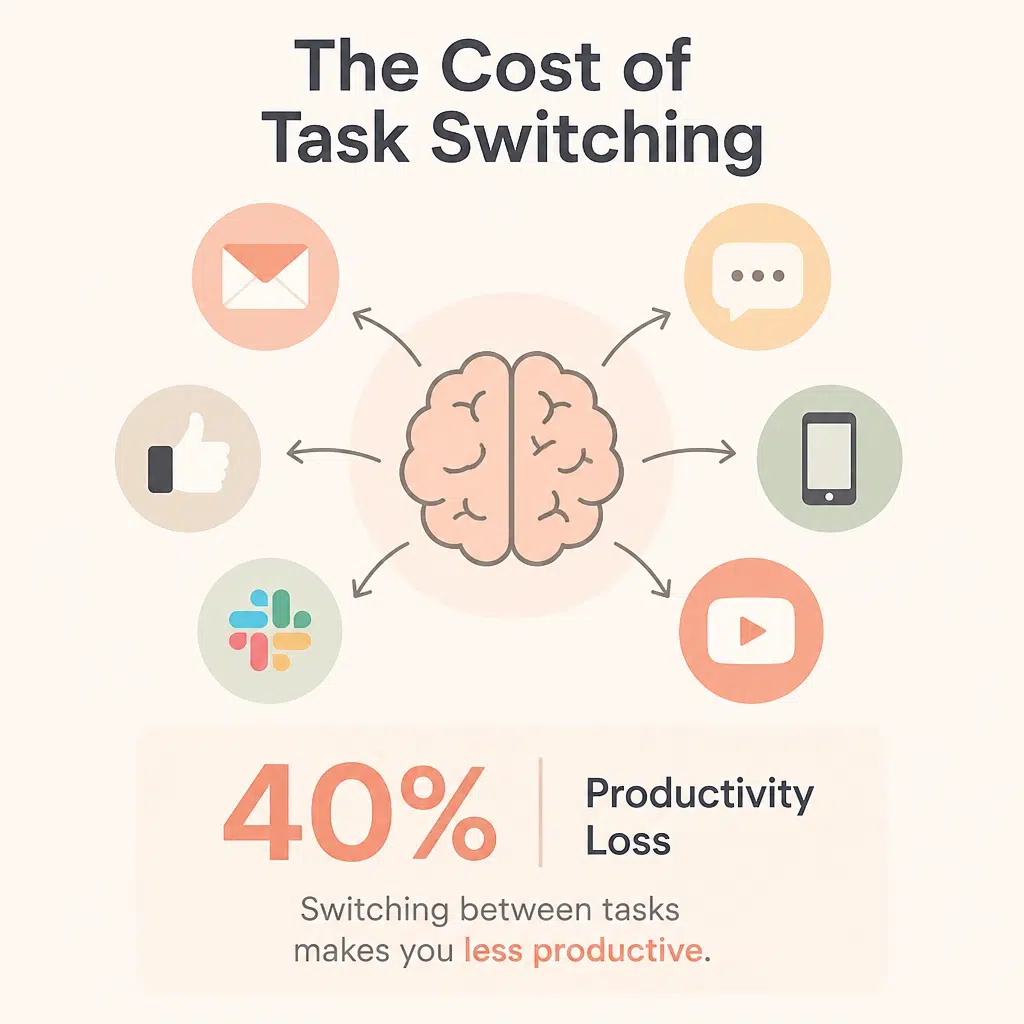
You think you’re being efficient by answering texts while watching a lecture. You’re not. You’re actually suffering from Task Switching Cost. Every time you switch from your essay to a notification, your brain takes an average of 23 minutes to fully return to that original "deep work" state.
Multitasking can lead to a 40% loss in productivity. You aren't doing two things at once; you're just doing two things poorly.
How to enhance your focus:
- Monotask Only: Choose one specific task and do it until it’s finished or the timer goes off.
- Physical Separation: Leave your phone in a different room. If it's next to you, your brain is already using energy just to ignore it.
- Deep Work Zones: Find a space that is for work only. Whether it’s a corner of the library or a dedicated cozy study nook, your environment dictates your mindset.
4. You’re Not Tired: You’re Distracted
"I'm too tired to study" is often code for "My brain is fried from a 3-hour dopamine loop." If you spent your afternoon scrolling through Reels or gaming, you aren't physically exhausted; you've just depleted your cognitive resources on low-value stimulation.
The constant drip of notifications creates a dopamine loop that makes actual learning feel boring and difficult. Your phone isn't a tool in this scenario; it's a thief.
How to reclaim your energy:
- Audit Your Screen Time: Check your phone settings. How much of your "tiredness" comes after two hours of social media?
- Digital Detox Blocks: Schedule periods where all devices are off. Use this time for high-value tasks or actual rest, like a daily reflection journal.
- Prioritize Real Rest: If you are actually tired, sleep. If you're just bored, put the phone down and start a five-minute study session.

5. “I’ll Start Tomorrow” Means Never
Procrastination is rarely about laziness; it’s usually about fear. Fear that the task is too big, fear that you won’t do it perfectly, or fear that you’re not smart enough to handle it. By pushing it to "tomorrow," you’re just giving your future self more stress.
The truth? The best time to start was yesterday. The second best time is right now.
How to overcome procrastination immediately:
- The 5-Minute Rule: Tell yourself you will work for only five minutes. Usually, the hardest part is starting. Once you’ve begun, it’s easier to keep going.
- Organize Your Life: Confusion leads to delay. If you don't know what to do next, you won't do anything. Use a high school four-year plan template or a Notion template to keep everything in order.
- Break It Down: Don't write "Study for Finals" on your to-do list. Write "Read pages 10-15 and summarize." Specificity is the enemy of procrastination.

Ready to stop making excuses and start seeing results?
Facing these truths is the first step toward becoming a more effective, less stressed student. You have the potential to excel: you just need to stop letting bad habits hold you back.
If you’re looking for more actionable resources to help you stay organized, check out our Life Reset Checklist or sign up for our biweekly newsletter for student success tips delivered straight to your inbox.
Join The Community and let's get to work. What’s one "brutal truth" you’re going to tackle today?
Join Our Newsletter for More Student Success Tips!
Want a head start? The Accountability Workbook in my shop was made for exactly this — it’ll save you a ton of time.