Syllabus Tracking 101: A Beginner’s Guide to Mastering Your Deadlines

Are you tired of that sinking feeling when you realize a 10-page paper is due tomorrow? You’re not alone. The transition to college or advanced high school courses brings a mountain of paperwork: most importantly, the syllabus. For many, it’s a document that gets buried in a backpack or lost in a "Downloads" folder, but for the most successful students, it’s a secret weapon.
If you want to eliminate academic stress and boost your productivity, you need to stop viewing the syllabus as a static list of rules and start seeing it as your master project plan. Ready to become the most organized version of yourself? Let's break down how to master your deadlines from day one.
Transform Your Syllabus From A Document Into A Roadmap
A syllabus is essentially a contract between you and your instructor. It outlines every expectation, reading, and deadline for the entire semester. Instead of checking it week by week, you should front-load your organization. By mapping out the entire term in one sitting, you gain a high-level view of your "stress peaks": those weeks where three projects and two exams happen at once.
The Master Deadline Migration: Get It All Out Of Your Head
The first step to mastery is visibility. You cannot manage what you cannot see. At the start of every semester, dedicate two hours to what we call the "Master Migration."
- Gather every syllabus from all your courses. Don't leave any out!
- Highlight every "hard" deadline, including exams, project due dates, major quizzes, and lab reports.
- Transfer these dates immediately into a central calendar. Whether you use a digital tool or a printable monthly planner, seeing everything in one place prevents "deadline collisions."
- Color-code by course to quickly identify which subject is demanding the most of your time in any given week.
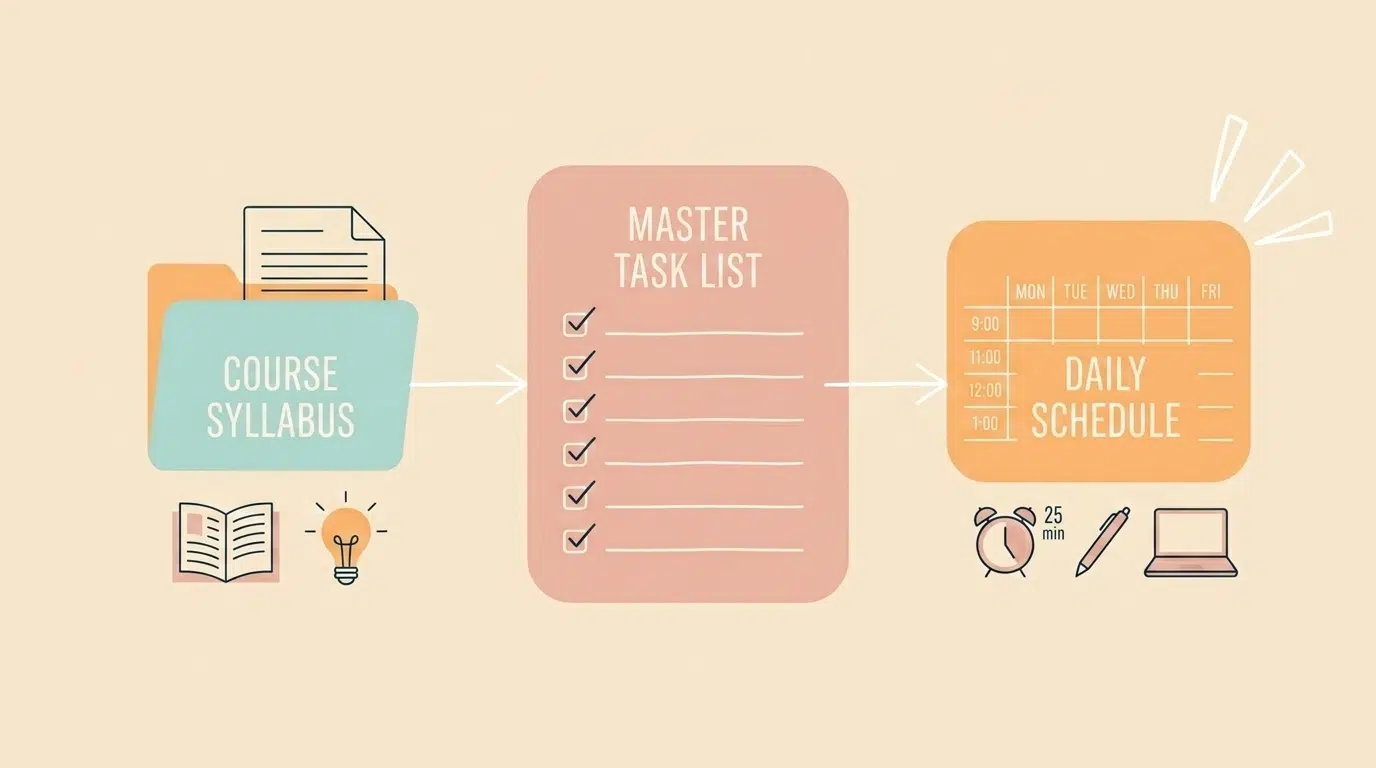
Break It Down: Turning Big Goals Into Actionable Tasks
A "Midterm Paper" due in four weeks is overwhelming and easy to procrastinate. A task like "Find three primary sources for the midterm paper" is actionable and simple to start.
- Deconstruct assignments by looking at the grading rubric or syllabus descriptions. What are the smaller steps required to finish the big goal?
- Create sub-tasks for each major milestone. If a chapter is assigned for Tuesday, your task list should include "Read Chapter 4" and "Complete Chapter 4 Review Questions."
- Use checkboxes to provide yourself with a psychological win. Every checkmark releases a tiny bit of dopamine that keeps you moving toward the finish line.
- Identify "hidden" tasks, such as printing out materials, buying specific supplies from your college school supplies list, or scheduling a meeting with a tutor.
Choose Your Tracking Weapon: Digital vs. Analog
The best system is the one you will actually use. You need a setup that fits your lifestyle and keeps you motivated.
- Digital Systems (Notion & Apps): Perfect for students who want everything synced across their phone and laptop. If you love a tech-forward approach, explore our Notion templates to streamline your organization.
- Analog Systems (Paper Planners): Ideal for those who find focus through the tactile act of writing. Using an undated planner allows you to start whenever you're ready without wasting pages or feeling guilty about missed weeks.
- The Hybrid Approach: Many students use digital calendars for time-sensitive reminders and paper planners for deep-work focus and daily to-do lists.

Build Your Weekly Study Roadmap
Instead of waking up and asking "What should I do today?", your roadmap should tell you exactly where to go. This prevents "choice paralysis" and keeps you moving.
- Review your tracker every Sunday night. Spend 10 minutes looking at the week ahead to ensure no surprises are waiting for you on Monday morning.
- Assign specific tasks to specific days. Be realistic about your energy levels. If you have a five-hour lab on Wednesday, don't schedule your heaviest reading load for that night.
- Factor in life skills and self-care. Student life isn't just about grades. Use your tracker to balance study sessions with hobbies, social time, and even daily healthy habits.
- Adjust as you go. A syllabus can change! If a professor moves a deadline, update your master tracker immediately so your roadmap stays accurate.
Join The Community For Better Grades And Less Stress
Syllabus tracking is just the beginning of your student success journey. Our mission at Learning With Angie is to provide you with the practical, tested advice you need to navigate the full student experience.
- Download our free resources to help you stay organized from day one.
- Sign up for our biweekly newsletter for unfiltered advice on productivity, financial literacy, and personal growth.
- Take a self-assessment to identify which areas of your student life need a "reset" this semester. Check out our self-assessments here.

Success doesn't happen by accident: it happens by design. By mastering your syllabus today, you're setting yourself up for a semester of confidence and clarity. You have the tools, you have the plan, and now you have the momentum. Ready to become the most effective version of yourself? Grab your syllabi and start your Master Migration today!
Want a head start? The Ultimate Student Planner in my shop was made for exactly this — it’ll save you a ton of time.