Adulting 101: A Beginner’s Guide to Mastering Time Management and Personal Responsibility

Does it ever feel like your to-do list is a living, breathing monster that grows every time you look away? Are you tired of that Sunday-night panic when you realize you’ve forgotten a major assignment or a personal commitment?
Welcome to "Adulting 101." We’ve all been there, staring at a messy desk, wondering how everyone else seems to have their life together while we’re just trying to find a clean pair of socks. The truth is, "having it all together" isn't a secret talent you're born with; it's a set of skills you build. Specifically, it’s about mastering time management and taking personal responsibility for your day-to-day life.
Ready to become the CEO of your own life? Let’s break down how you can streamline your schedule and enhance your productivity without losing your mind.
Ownership Starts with Your Mindset
Before we talk about calendars or apps, we have to talk about personal responsibility. It sounds heavy, but it’s actually the most empowering thing you can learn. Personal responsibility means recognizing that while you can't control everything that happens to you, you can control how you respond and how you prepare.
Instead of saying, "I didn't have time to study," try saying, "I didn't make time to study." See the difference? One makes you a victim of your schedule; the other puts you in the driver’s seat. When you take ownership, you stop making excuses and start finding solutions.
- Stop the Blame Game: Whether it’s a professor, a parent, or a slow Wi-Fi connection, blaming external factors keeps you stuck.
- Acknowledge Your Choices: Every "yes" to a Netflix marathon is a "no" to something else. Be intentional about those choices.
- Practice Self-Reflection: Use a Printable Daily Reflection Journal Template to track where your time actually goes and how you can improve tomorrow.
Mastering Your Calendar
Mastering your time isn't about working more; it's about working effectively. The most successful students don't just "find" time: they create it through a process called Time Blocking.

Instead of a vague list of tasks, you assign every hour of your day a specific job. Here is how you can start today:
- Input Mandatory Commitments First: Start with the non-negotiables: classes, work shifts, and pre-scheduled meetings.
- Schedule Your Health: Treat your sleep, meals, and exercise as mandatory appointments. If you don't schedule a break, your body will eventually take one for you (usually in the form of a burnout or a cold).
- Use Your Syllabi: At the start of the semester, sit down and enter every single deadline into your digital or physical planner. Don't wait for the week of the exam to "remember" it's happening.
- Fill the Gaps: Look at those 1-hour windows between classes. Instead of scrolling on your phone, use that "found time" to knock out a quick reading assignment or reply to emails.
To get a head start on your organization, grab our Undated Monthly Planner to start mapping out your month without the pressure of a fixed date.
The Eisenhower Matrix: Work Smarter, Not Harder
One of the biggest hurdles in adulting is knowing what to do first. When everything feels important, nothing is. This is where the Eisenhower Matrix comes in. It’s a simple framework to help you prioritize your tasks based on urgency and importance.
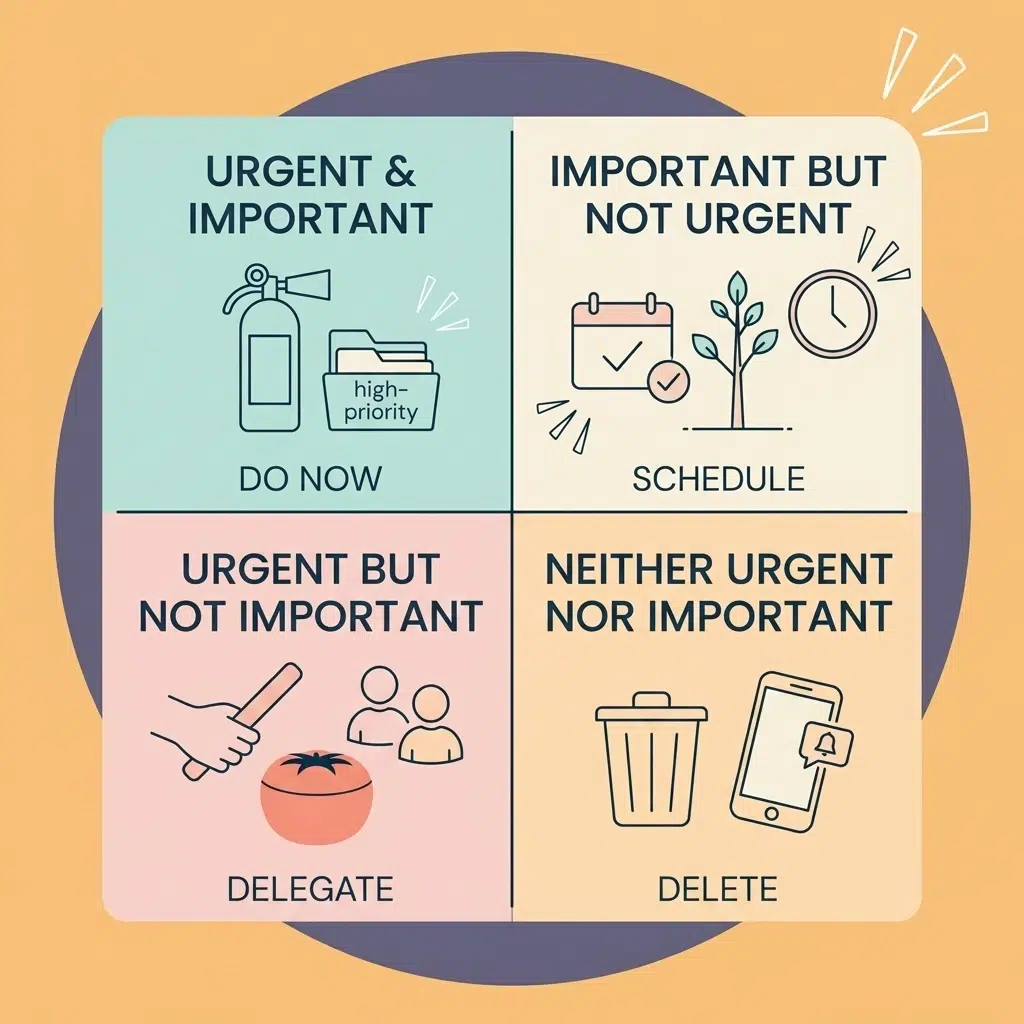
- Urgent & Important (Do it now): These are deadlines, crises, or pressing problems.
- Important but Not Urgent (Schedule it): This is where the magic happens. Exercise, long-term project planning, and relationship building. If you spend more time here, you’ll have fewer "Urgent" crises later.
- Urgent but Not Important (Delegate it): These are interruptions, some emails, or some meetings. Can someone else do this? Or can it wait?
- Neither (Delete it): Time-wasters like mindless scrolling or excessive TV.
By categorizing your tasks, you ensure that you aren't just "busy," but actually productive. Are you spending your day putting out fires, or are you building the life you want?
Tools of the Trade: Planners and Checklists
You don't have to do this alone. There are amazing resources designed to help you stay on track. Whether you prefer digital systems or the tactile feel of pen and paper, the key is consistency.

At Learning With Angie, we believe in practical tools you can implement immediately. If you're a fan of digital organization, our Notion Templates can help you organize everything from high school planning to college applications.
If you’re feeling overwhelmed by life in general, a Life Reset might be exactly what you need. Check out our Life Reset Checklist to clear the mental clutter and start fresh. Using a checklist ensures you don't miss the small details that contribute to a big sense of overwhelm.
Protecting Your Energy and Boundaries
Time management is also about energy management. You are not a machine; you can't be at 100% productivity for 16 hours a day. Mastering adulting means knowing your limits and setting boundaries.

- Use the Pomodoro Technique: Work for 25 minutes, then take a 5-minute break. This keeps your brain fresh and prevents the dreaded "study fog."
- Learn to Say No: You don't have to attend every social event. If an invitation interferes with your sleep or a major deadline, it’s okay to pass.
- Identify Your Peak Hours: Are you a morning lark or a night owl? Do your hardest, most "Important" tasks when your brain is naturally most alert.
- Maintain Daily Habits: Small, consistent actions lead to big results. Use our Daily Healthy Habits Checklist to make sure you're taking care of the basics like hydration and movement.
Build Your Support System
Personal responsibility doesn't mean you have to do everything by yourself. It means being responsible enough to know when you need help. Building a community of like-minded students can provide the accountability you need to stay on track.

Whether it’s a study group for your hardest class or a friend who checks in on your progress, having a support system makes the journey of "adulting" much less lonely. If you’re not sure where to start, taking one of our Self-Assessments can help you identify where you currently stand and where you might need a little extra support.
Mastering these skills takes time. You’re going to have days where you fall off the wagon, and that’s okay. The important part is that you pick yourself up, check your planner, and keep moving forward.
Ready to streamline your student life and finally feel in control?
[Join The Community] and sign up for our biweekly newsletter. You’ll get honest, unfiltered advice and actionable resources delivered straight to your inbox to help you master the art of being a student and a human. Let’s do this together!
Want a head start? The Ultimate Student Planner in my shop was made for exactly this — it’ll save you a ton of time.