
The Scholarship Hunt: A Parent’s Guide to Winning Aid
Every American parent knows the college price tag can feel daunting as graduation approaches. The search for scholarships often begins with uncertainty, but a well-organized plan can turn anxiety into action. From gathering a strong set of application materials to searching broadly for both local and national opportunities, this guide reveals a strategic approach designed to increase your student’s chances of winning meaningful aid. With the right system, every scholarship search step becomes manageable and motivating.
Quick Summary
| Key Point | Explanation |
|---|---|
| 1. Create a Scholarship Search Plan | Organize essential documents and develop a strategic approach for finding scholarships to reduce stress and maximize opportunities. |
| 2. Research Varied Scholarship Sources | Explore local organizations, community associations, and professional groups for lesser-known scholarship opportunities to increase funding options. |
| 3. Prepare Strong Application Materials | Assemble all necessary documents and craft tailored essays to clearly highlight your student’s strengths and align with scholarship missions. |
| 4. Be Vigilant Against Scholarship Scams | Learn to identify red flags of scams to protect your student from financial predators and ensure legitimacy of scholarship offers. |
| 5. Track Progress and Celebrate Wins | Maintain an organized tracking system for applications, track deadlines, and celebrate every scholarship award to keep motivation high. |
Step 1: Organize Your Student’s Scholarship Search Plan
Your scholarship hunt starts with creating a strategic and organized search plan that will maximize opportunities and minimize stress. Think of this like mapping out a treasure hunt where every detail matters.
Begin by gathering essential documents your student will need for most scholarship applications. This core preparation kit should include:
- Official high school transcripts
- Standardized test scores (SAT/ACT)
- List of academic achievements and extracurricular activities
- Letters of recommendation from teachers or counselors
- Financial information for FAFSA
Next, develop a systematic approach to finding scholarships. The key is casting a wide net while staying organized. Start searching early through multiple channels:
- Contact your high school guidance counselor
- Check college financial aid websites
- Research local community organization scholarships
- Ask your employer about potential scholarship programs
- Explore state and federal scholarship databases
Create a detailed tracking spreadsheet to monitor application deadlines, requirements, and submission status. This will help prevent missed opportunities and reduce last-minute panic.
Pro tip: Treat scholarship applications like a part-time job. Dedicate consistent time each week to researching and applying.
Pro tip: Develop a standardized application template with pre-written essays that can be quickly customized for different scholarship requirements.

Step 2: Research Local and National Scholarship Opportunities
Unlocking scholarship opportunities requires a strategic and comprehensive search approach that goes beyond traditional resources. Your mission is to discover funding sources that might be hiding in plain sight.
Start by exploring diverse scholarship resources that many families overlook. These hidden gems can significantly reduce college expenses:
- Local community organizations
- Professional associations related to your student’s interests
- Religious institutions and charities
- Civic groups and service clubs
- Parent’s workplace and professional networks
Break down your scholarship search into strategic categories:
- High School Specific Scholarships
- Community-Based Awards
- State and Regional Opportunities
- National Competitive Scholarships
- Field of Study Specific Awards
Utilize free online scholarship matching platforms that can help streamline your search. These platforms use your student’s unique profile to match potential scholarship opportunities, saving time and increasing chances of success.
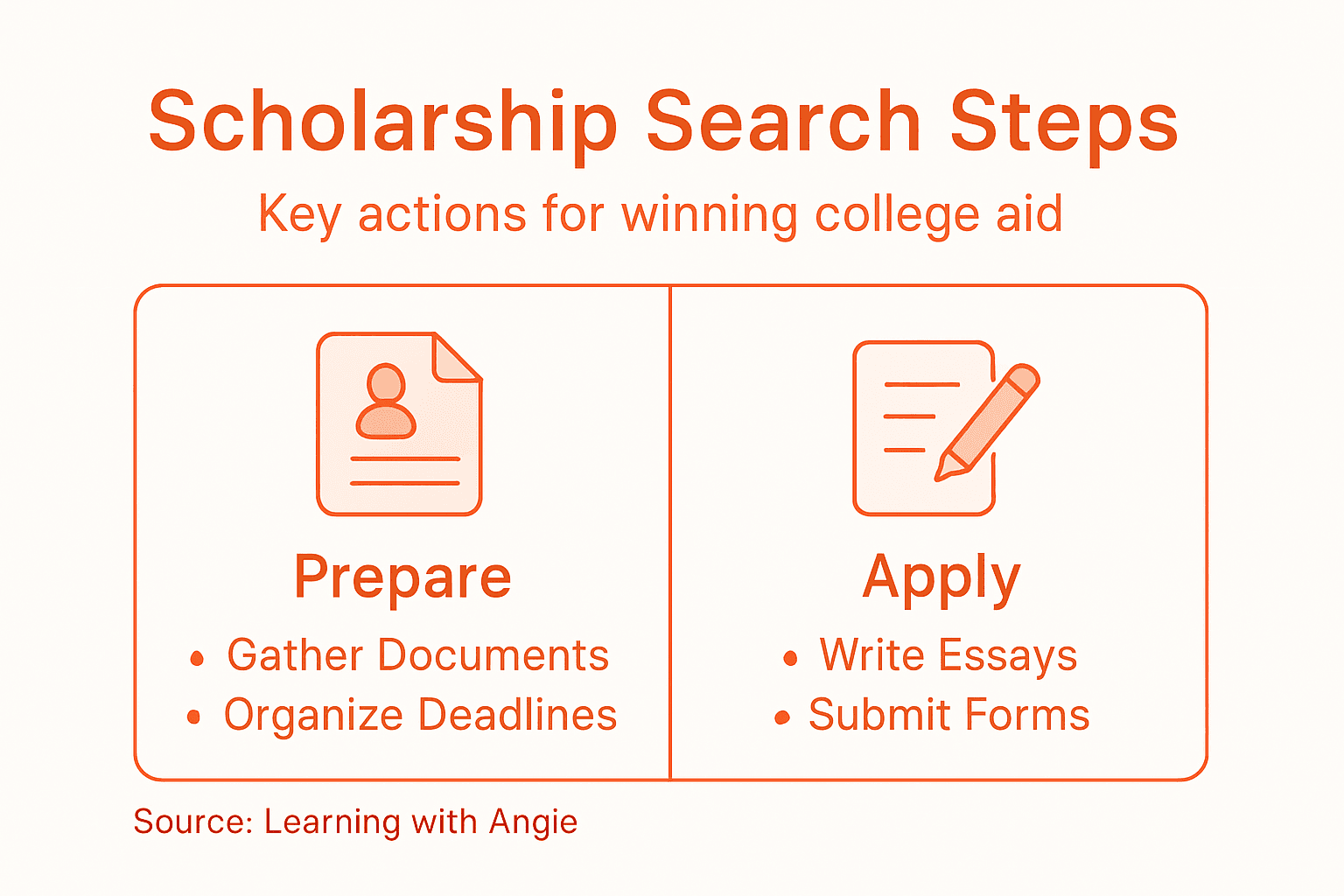
Here’s a quick overview of scholarship search sources and their unique benefits:
| Scholarship Source | Typical Awards | Unique Benefit |
|---|---|---|
| Local Organizations | $500–$2,500 | Less competition, personalized relevance |
| State & Regional | $1,000–$5,000 | Designed for residents, increased odds |
| National Platforms | $1,000–$10,000+ | Large funding, strict eligibility |
| Professional Associations | $500–$3,000 | Tailored to career fields, networking opportunities |
| Employer Programs | $1,000–$5,000 | Exclusive access, frequent renewals |
Strategic scholarship hunting means exploring every possible avenue, no matter how small the award might seem.
Pro tip: Create a dedicated email address for scholarship communications to keep all scholarship-related correspondence organized and prevent important emails from getting lost in personal inbox clutter.
Step 3: Gather Materials and Complete Application Requirements
Preparing scholarship application materials is like assembling a puzzle where every piece must fit perfectly. Your student’s goal is to create a comprehensive application package that showcases their unique strengths and potential.
Collect application materials strategically by organizing them into a dedicated scholarship folder. Essential documents include:
- Official high school transcripts
- Standardized test score reports
- Updated academic resume
- Letters of recommendation
- Personal statement or essay drafts
- Proof of extracurricular activities
- Financial information documents
Create a comprehensive checklist for each scholarship application that tracks:
- Specific eligibility requirements
- Application deadlines
- Required documentation
- Submission method (online/mail)
- Follow-up confirmation steps
Each scholarship may have unique requirements, so read instructions carefully and customize your approach for each opportunity. Some applications might need additional materials like community service logs, specific essay prompts, or professional recommendations.
Attention to detail can make the difference between a winning application and an automatic rejection.
Pro tip: Create digital and physical backup copies of all scholarship application materials to prevent last-minute panic if an original document goes missing.
Step 4: Craft Strong Essays and Recommendation Requests
Writing scholarship essays and securing powerful recommendation letters can make the difference between blending in and standing out in a competitive applicant pool. This step is your student’s opportunity to transform their academic journey into a compelling narrative.
Develop compelling scholarship essays that showcase your student’s unique qualities and align with each scholarship’s mission. Your approach should include:
- Understanding the specific scholarship’s goals
- Highlighting personal achievements
- Demonstrating community impact
- Sharing unique life experiences
- Connecting personal stories to scholarship values
When requesting recommendation letters, follow these strategic steps:
- Choose recommenders who know your student well
- Provide recommenders with detailed background information
- Give at least 3-4 weeks notice before deadlines
- Share a copy of the scholarship requirements
- Follow up with a thank you note
Each essay should be meticulously tailored to the specific scholarship, avoiding generic responses that could apply to any application. Proofread multiple times and consider getting feedback from teachers or trusted mentors.
A truly outstanding essay transforms numbers and achievements into a memorable personal story.
Pro tip: Create a “brag sheet” for recommenders that outlines your student’s key achievements, making it easier for them to write powerful, specific letters.
Step 5: Identify and Avoid Scholarship Scams
Navigating the scholarship landscape means staying alert and protecting your student from potential financial predators. Your goal is to distinguish between legitimate opportunities and crafty scams designed to exploit hopeful students.
Recognize scholarship scam warning signs by understanding the red flags that signal potential fraud:
- Requests for payment to apply
- Guarantees of winning scholarship money
- Unsolicited scholarship offers
- Demands for sensitive financial information
- Pressure tactics and urgent deadlines
Protect your student by following these defensive strategies:
- Never pay money to get a scholarship
- Verify scholarship sources independently
- Use free scholarship search platforms
- Consult school financial aid offices
- Trust your instincts if something seems suspicious
Legitimate scholarships never require upfront fees. If an offer sounds too good to be true, it probably is. Always cross-reference scholarship information with official sources and school counselors.
Scholarship scams prey on students’ hopes and financial vulnerabilities. Staying informed is your best defense.
Pro tip: Create a dedicated email address for scholarship communications to easily track legitimate opportunities and filter out potential scam messages.
Step 6: Track Progress and Celebrate Scholarship Wins
The scholarship hunt is a journey of persistence, strategy, and celebration. Keeping your student motivated requires systematic tracking and recognizing every milestone along the way.
Create a comprehensive scholarship tracking system that transforms the application process from overwhelming to manageable:
Comparing tracking methods can help you stay organized:
| Tracking Method | Ease of Use | Customization | Best For |
|---|---|---|---|
| Digital Spreadsheet | High | Flexible columns, color codes | Managing many applications |
| Deadline Calendar | Medium | Visual reminders | Keeping up with important dates |
| Status Logs | Medium | Simple progress tracking | Monitoring submission status |
| Communication Record | Low | Structured note-taking | Organizing follow-ups |
- Digital spreadsheet with application details
- Deadline calendar with color-coded milestones
- Status column for each scholarship application
- Submission confirmation records
- Follow-up notes and communication logs
Track your scholarship progress systematically:
- Update tracking document weekly
- Note application dates and responses
- Highlight completed submissions
- Record interview invitations
- Document awarded scholarships
Celebrate every scholarship win, no matter the size. Each award represents recognition of your student’s hard work and potential. Small scholarships can quickly add up to significant financial support.
Success is not just about the final amount, but the journey of perseverance and personal growth.
Pro tip: Create a visual victory board where you display scholarship acceptance letters to continuously motivate and remind your student of their achievements.
Empower Your Scholarship Journey with Proven Student Success Skills
The scholarship hunt is an intense challenge filled with deadlines, detailed requirements, and stiff competition. This guide highlights important pain points like organizing documents, crafting strong essays, and avoiding scams that can overwhelm both parents and students. Your goal is to turn this complex process into a manageable, confidence-building experience where each application step feels achievable.
At Learning with Angie, we understand these struggles and offer practical solutions designed to boost your student’s productivity, time management, and study skills. Our resources help students develop the habits and strategies needed to stay organized and focused throughout the scholarship search. Parents gain insight into how to support their student without added stress. Explore tools and tips to enhance budgeting for college and maintain a healthy lifestyle during this demanding period.
Start mastering the skills that will make your student’s scholarship applications stand out. Discover effective strategies and empowering content tailored for families navigating the scholarship process. Don’t wait for opportunities to pass by. Take control today and make the scholarship journey a success story to celebrate.
Frequently Asked Questions
What is the first step in my student’s scholarship search plan?
Begin by organizing a core preparation kit that includes essential documents like official high school transcripts, standardized test scores, and letters of recommendation. This foundation will help streamline the application process and ensure you’re ready for upcoming opportunities.
How can I help my student find scholarship opportunities?
Encourage your student to explore multiple channels, including local community organizations and college financial aid websites. Dedicate time each week to research, as consistently seeking out new scholarships can uncover valuable aid.
What materials does my student need to prepare for scholarship applications?
Your student should gather necessary documents, including their academic resume, personal statement drafts, and proof of extracurricular activities. Create a dedicated folder to keep everything organized and easily accessible for each application.
How can my student write a standout scholarship essay?
To craft an impressive essay, your student should highlight personal achievements and life experiences relevant to the scholarship’s mission. Tailor each essay to meet specific prompts and ensure they connect their story to the scholarship’s values, aiming for clarity and impact.
What red flags should I watch for to avoid scholarship scams?
Be cautious of scholarships that require payment to apply or guarantee award money without proper vetting. Always verify the legitimacy of a scholarship by conducting independent research to ensure it aligns with reputable organizations.
How can we track progress in the scholarship application process?
Implement a tracking system, such as a digital spreadsheet, to monitor application deadlines and submission statuses. Regularly update this document, noting any responses or awarded scholarships, to maintain organization and motivation through the process.
Recommended
- 12 Tips for Using Social Media to Find Scholarships and Financial Aid
- Scholarships for Single Mothers in Florida
- Scholarships for Women of Color – School or College
- 10 Financial Aid Hacks Every Student Needs to Know Right Now
- blog | siift | Top Business Grants for Startups (2025): A Simple Guide
- Financial Planning | Thrive Benefits
Want a head start? The Ultimate ‘To College & Beyond’ Bundle in my shop was made for exactly this — it’ll save you a ton of time.