
Step-by-step guide to creating an effective study schedule
Creating a study schedule sounds simple until you sit down to actually do it. Many students struggle with managing their time effectively, leading to last-minute cramming, stress, and grades that don’t reflect their true potential. A well-structured study schedule transforms chaos into clarity, helping you optimize learning while maintaining balance. This guide provides a clear, actionable process to design a personalized study schedule that fits your unique needs and goals. With the right approach and parental support, you can build sustainable habits that boost both performance and confidence.
Key Takeaways
| Point | Details |
|---|---|
| Parent collaboration | Parents should help create and support the schedule without micromanaging. |
| Prioritize hard subjects | Place your most challenging subjects in your peak time slots. |
| Peak energy windows | Identify when you have the most energy and schedule demanding tasks during those times. |
| Block fixed commitments | Lay out classes, work, and obligations first to prevent scheduling conflicts. |
| Study in blocks with breaks | Schedule sessions in 50 to 90 minute blocks with breaks to maintain focus and motivation. |
Understand why a study schedule matters and prepare to create yours
Poor time management creates a domino effect. Students who lack structured study routines experience higher stress levels, lower grades, and reduced engagement with their coursework. When assignments pile up and deadlines collide, panic replaces productive learning. Research shows that time management links to better student success, with correlations of 0.38 for academic performance and 0.29 for engagement. These numbers might seem modest, but they represent real differences between struggling and thriving.
Effective study schedules flip this script entirely. They create predictable routines that reduce decision fatigue, improve focus, and help you allocate effort where it matters most. Instead of wondering what to study next, you follow a plan that accounts for your energy levels, subject difficulty, and personal commitments. The result is better grades with less stress.
Before building your schedule, complete these essential preparation tasks:
- Audit your current time use for 3 to 7 days, tracking every hour to identify free blocks and energy patterns
- Set SMART goals for each subject using goal setting steps achieving success to create specific, measurable targets
- List all fixed commitments including classes, extracurriculars, work, and family obligations
- Identify your peak performance windows when concentration and energy are highest
This groundwork reveals where time actually goes versus where you think it goes. Most students discover hidden pockets of 30 to 60 minutes they previously wasted scrolling or switching between tasks. You also learn whether you’re a morning person who tackles calculus best at 7 AM or a night owl who writes essays after dinner. These insights become the foundation for realistic, personalized scheduling.
Step-by-step process to build your personalized study schedule
Creating an effective schedule requires more than blocking random hours for studying. Follow this systematic approach to design a plan that actually works.
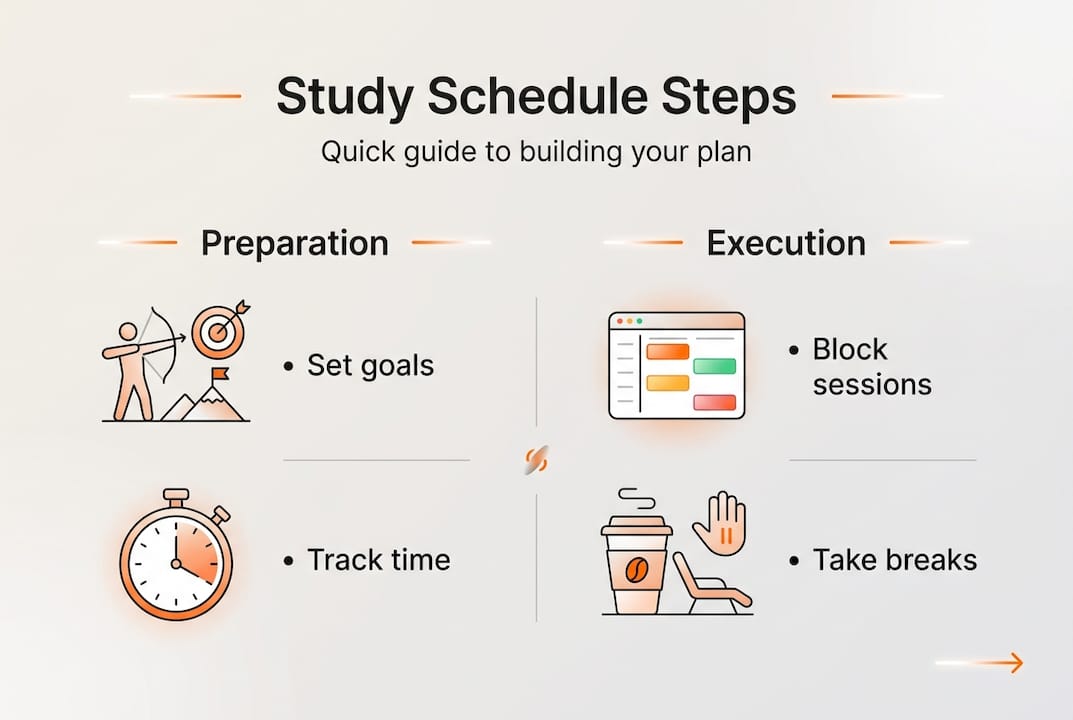
First, calculate your required study time. The general rule suggests 2 to 3 hours per class hour depending on subject difficulty. A challenging STEM course might need three hours of study for every lecture hour, while an elective could require two. Multiply your weekly class hours by this ratio, then add buffer time for projects and exam prep. A typical college student carrying 15 credit hours needs approximately 30 to 45 hours of study time weekly.
Next, design your weekly template by following these steps:
- Block out all fixed commitments on a calendar grid showing every day from 6 AM to midnight
- Identify your three to four peak energy windows when focus is strongest
- Assign your most challenging subjects to these prime time slots
- Fill remaining blocks with moderate and easier coursework
- Schedule study sessions in 50 to 90 minute blocks with breaks between
- Build in 20 percent buffer time for unexpected interruptions or extra review
Breaks are non-negotiable for sustained performance. The Pomodoro technique uses 25 minute focus sessions followed by 5 minute breaks, while longer blocks might follow a 50/10 pattern. During breaks, move your body, hydrate, or step outside. Avoid scrolling social media, which drains mental energy instead of restoring it.
Pro Tip: Use the Eisenhower matrix to prioritize tasks by plotting them on urgent versus important axes. Focus study time on important but not yet urgent material to avoid last-minute cramming.
Implement proven learning techniques within your schedule blocks. Spacing spreads study sessions over days or weeks rather than cramming everything into one marathon session. Interleaving mixes different subjects or problem types within a single study block. Active recall tests your memory by retrieving information without looking at notes. These methods dramatically improve retention compared to passive re-reading.
Here’s how different study techniques compare:
| Technique | Method | Retention Benefit |
|---|---|---|
| Spacing | Spread study over multiple days | 4x better than cramming |
| Interleaving | Mix subjects within sessions | Improves problem-solving |
| Active recall | Test yourself without notes | Strengthens memory retrieval |
| Elaboration | Explain concepts in your own words | Deepens understanding |
Visit how to create study schedule for templates and detailed examples. The study planner checklist effective resource helps you track implementation and identify gaps in your initial plan.
Adjusting your study schedule for balance and student-parent collaboration
Rigid schedules often backfire. Life throws curveballs through illness, social events, or unexpected assignments. A schedule that can’t bend will break, leaving you frustrated and abandoning the system entirely. Build flexibility into your plan by treating it as a living document that evolves with your needs.

Parental involvement makes or breaks schedule sustainability. Research indicates that parent support via co-creation and check-ins improves schedule adherence and reduces stress. However, support differs from surveillance. Parents should collaborate during schedule creation, offer accountability through weekly conversations, and model balanced habits themselves. Micromanaging homework completion or obsessing over grades creates pressure that undermines intrinsic motivation.
Effective parent support strategies include:
- Co-creating the schedule together so students feel ownership rather than imposed rules
- Holding brief weekly check-ins focused on effort and process, not just grades
- Modeling healthy work-life balance by respecting their own boundaries
- Providing practical support like quiet study spaces or transportation to study groups
- Celebrating progress and adjusting expectations when circumstances change
Avoid over-scheduling every waking minute. Your brain needs downtime to consolidate learning and recharge. Match your hardest subjects to peak energy periods, but leave evenings or weekends partially open for spontaneity. The 20 percent buffer time mentioned earlier absorbs small disruptions without derailing your entire week.
Tracking tools help maintain flexibility while preserving structure. Digital apps sync across devices and send reminders, while paper planners offer tactile satisfaction and fewer distractions. Choose whatever system you’ll actually use consistently. The how to build study routine guide explores different tracking methods and their trade-offs.
Pro Tip: Conduct a 15 minute weekly review every Sunday evening. Assess what worked, what didn’t, and adjust next week’s schedule accordingly. This habit prevents small problems from becoming major obstacles.
Troubleshooting common challenges and maximizing schedule effectiveness
Even well-designed schedules encounter obstacles. Procrastination, fatigue, and rigid thinking derail progress for many students. Recognizing these patterns early allows you to course-correct before falling behind.
Procrastination often signals that tasks feel overwhelming or unclear. Break large assignments into smaller chunks with specific deliverables. Instead of “study biology,” schedule “complete practice problems 1 through 15” or “create flashcards for chapter 7 vocabulary.” Concrete tasks are easier to start than vague intentions.
Fatigue might indicate you’re pushing too hard without adequate breaks or sleep. Studies show that spacing study beats cramming with 4x retention, but only if you’re mentally fresh during those spaced sessions. Cutting sleep to study more is counterproductive since exhausted brains can’t encode or retrieve information effectively.
Compare these two scheduling approaches:
| Approach | Structure | Flexibility | Best For |
|---|---|---|---|
| Rigid time blocking | Fixed hours for each subject | Low | Students with consistent routines |
| Flexible task-based | Complete specific tasks when energy allows | High | Students with variable schedules |
| Hybrid personalized | Core blocks with adaptable tasks | Medium | Most students seeking balance |
The hybrid approach works best for most students. It provides enough structure to prevent procrastination while allowing adjustment when life interferes. You might block 7 to 9 PM for studying but decide whether to tackle math or history based on your energy level that evening.
Spacing and interleaving require tracking what you’ve studied when. Create a simple log noting subjects covered each session. Review this log weekly to ensure you’re revisiting material at increasing intervals rather than cramming right before exams. The how to manage study time better grades resource explains interval scheduling in detail.
Maintaining motivation over months requires realistic expectations and visible progress. Set achievable weekly goals rather than fixating on semester-end outcomes. Celebrate small wins like completing all scheduled study blocks or improving quiz scores. Share progress with parents during check-ins to reinforce positive patterns.
Additional troubleshooting strategies include:
- Switching study locations when focus wanes to reset your mental state
- Using accountability partners or study groups for challenging subjects
- Adjusting break frequency if you’re consistently losing focus before scheduled breaks
- Consulting the 7 effective time management tips for advanced optimization techniques
Remember that perfection is the enemy of progress. Missing a scheduled study block doesn’t mean your entire system failed. Simply resume the schedule at your next available slot without guilt or over-compensation.
Build your study skills with learningwithangie.com resources
You’ve learned how to create a personalized study schedule, but implementation is where theory meets reality. LearningWithAngie.com offers comprehensive guides that deepen your understanding of effective learning strategies and practical techniques for sustained academic success. These resources complement your schedule by teaching you how to study smarter, not just longer.
Explore the test taking strategies guide to maximize your exam performance using the knowledge you’ve systematically built through your study schedule. The time management step by step resource provides additional frameworks for balancing academics with extracurriculars and personal time. Together, these tools create a complete system for academic excellence and lifelong learning habits that extend far beyond your current courses.
Frequently asked questions
How long should I study each day when following a step-by-step schedule?
Recommended study time varies by academic level and course load. High school students typically need 2 to 3 hours daily, while college students carrying a full load require 4 to 5 hours. Calculate your specific needs by multiplying credit hours by 2 to 3, then dividing by days you study each week. Break this total into focused sessions aligned with your peak energy periods and subject difficulty rather than studying for hours straight.
How can parents support their child’s study schedule without causing stress?
Parents should co-create schedules collaboratively rather than imposing rules from above. This builds ownership and intrinsic motivation in students. Model balanced habits yourself by respecting work-life boundaries and avoiding your own over-scheduling. Hold weekly check-ins that focus on effort, strategies, and problem-solving rather than grades or outcomes. Provide practical support like quiet study spaces while trusting your student to follow through on commitments.
What are the best techniques to use during study sessions?
Spacing spreads study over multiple days or weeks, which improves long-term retention compared to cramming everything into one session. Interleaving mixes different subjects or problem types within a single study block to strengthen your ability to distinguish between concepts. Active recall tests your memory by retrieving information without looking at notes, which builds stronger neural pathways than passive re-reading. Combine these techniques within your scheduled study blocks for maximum effectiveness.
What should I do if my schedule isn’t working as planned?
Review your schedule weekly to identify patterns in what’s working and what isn’t. Be flexible by adjusting study block lengths, switching time slots, or redistributing subjects based on your actual energy levels and performance. Build in 20 percent buffer time to absorb unexpected interruptions without derailing your entire week. Seek input from parents during check-ins or use planning tools to optimize your approach based on real data rather than assumptions.