Most American students face intense exam pressure, with research showing over 60 percent report high stress before finals. This constant tension makes it tougher to focus and hurts academic results. If you want to balance your grades and your sanity, learning smart, time-saving strategies could change your approach to studying. Discover practical exam prep methods that help American high school and college students take control, reduce anxiety, and reach their academic goals efficiently.
Quick Summary
| Major Insight | Explanation |
|---|---|
| 1. Set SMART Goals for Success | Use the SMART method to establish specific, measurable study targets for your exams, enhancing focus and performance. |
| 2. Organize Study Materials Efficiently | Create a master organization system to track physical and digital study resources, making retrieval quick and efficient. |
| 3. Develop a Flexible Study Plan | Map out deadlines and break tasks into manageable goals, allowing for adaptability to unexpected academic challenges. |
| 4. Practice Consistently with Spaced Repetition | Use spaced repetition for reviews, reinforcing long-term retention of information instead of relying on last-minute cramming. |
| 5. Implement Self-Testing Techniques | Regularly test your knowledge through practice exams and error analysis to identify weaknesses and improve understanding. |
Step 1: Set Clear Exam Goals
Setting crystal clear goals is your roadmap to exam success. By defining precise targets, you’ll transform scattered study efforts into a strategic plan that dramatically improves your performance.
Start by breaking down your exam objectives into specific, measurable targets. The University of Cincinnati recommends using the SMART method for creating powerful academic goals that actually work. This means making your goals Specific, Measurable, Achievable, Relevant, and Time-bound. Instead of saying “I want to do well,” get precise: “I’ll score an 85% or higher on my biology midterm by studying 2 hours daily for the next 3 weeks.”
Divide your main exam goal into smaller milestones. Maybe that means mastering one chapter per week, completing practice tests every weekend, or reviewing challenging concepts for 30 minutes each evening. Track your progress visually using a goal chart or study planner to stay motivated and see how each small step brings you closer to your ultimate exam performance target.
Pro tip: Keep your goals written somewhere visible where you’ll see them every day, like your study space or phone background, to maintain constant motivation and focus.
Here’s how the SMART method compares to generic goal-setting strategies:
| Aspect | SMART Method | Generic Goal-Setting |
|---|---|---|
| Clarity | Highly specific and measurable | Often vague and broad |
| Accountability | Tracks progress with deadlines | Rarely includes timers or tracking |
| Motivation | Increases by visualized steps | May decrease due to uncertainty |
| Success Likelihood | Boosted by structure | Lower due to lack of structure |
Step 2: Organize Study Materials
Organizing your study materials is like creating a personal roadmap to academic success. A well-structured system helps you track resources, reduce stress, and maximize your learning efficiency.

Start by creating a master organization system that works for you. Developing a comprehensive study binder can transform how you manage academic content. Separate your materials by subject, using color coded folders or digital folders for each class. For digital files, create a clear naming convention like “Biology 101 Midterm Notes” or “Chemistry Chapter 3 Review” to help you quickly locate what you need.
Consider both physical and digital organization strategies. Use physical binders with dividers for printed materials and create matching digital folders on your computer or cloud storage. Sync your physical and digital systems so you always know where to find your resources. Group related materials together such as lecture notes, practice exams, textbook chapters, and supplementary study guides. This approach prevents scattered information and helps you build a comprehensive study ecosystem.
Pro tip: Schedule a monthly organization review where you clean up your study materials digital and physical files to keep your system fresh and manageable.
Step 3: Create an Efficient Study Plan
Crafting a strategic study plan transforms your academic approach from random effort to targeted success. Your goal is to design a personalized roadmap that maximizes learning while preventing burnout.
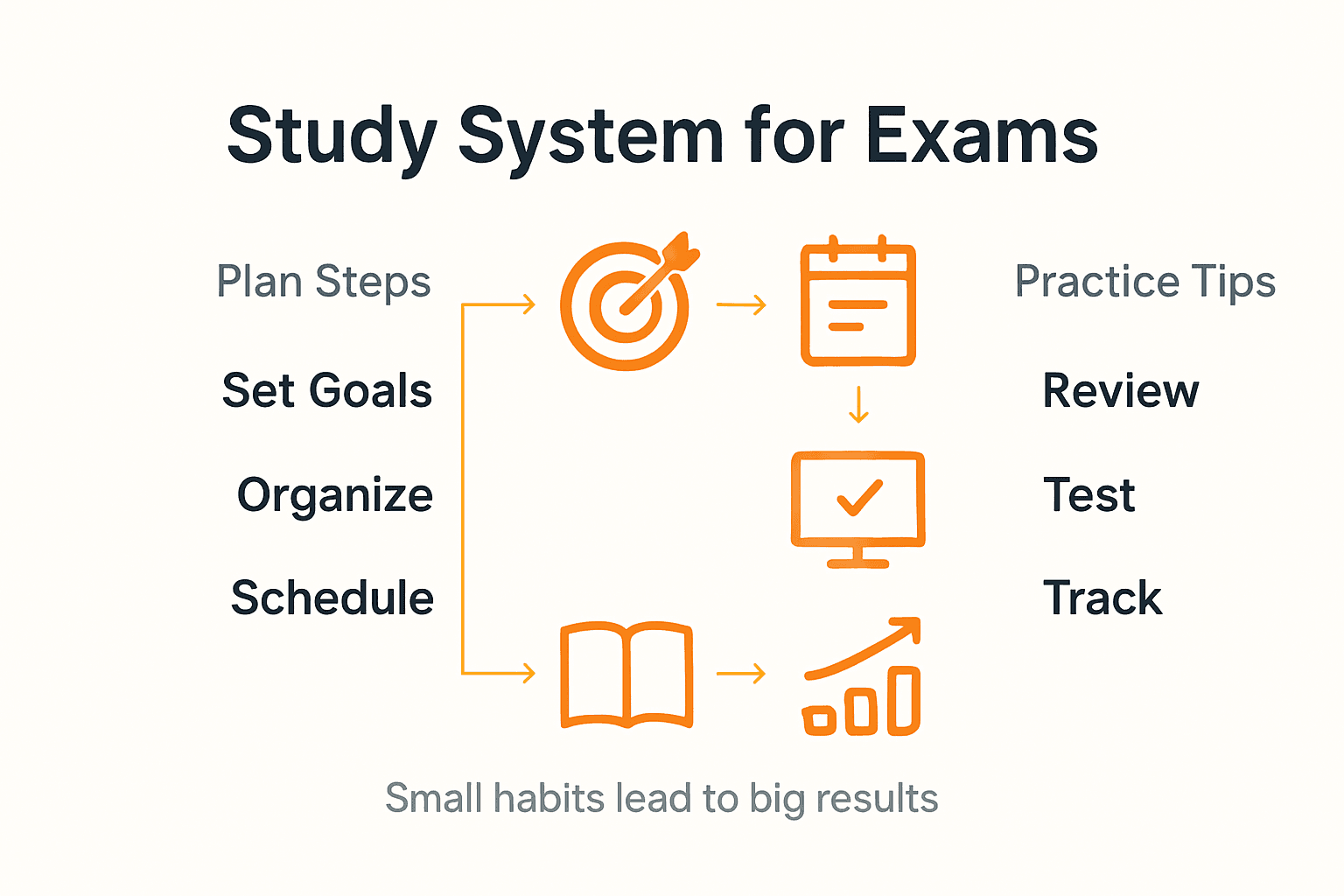
Mapping out your academic deadlines and commitments is the foundation of an effective study strategy. Start by gathering all your syllabi and recording every assignment deadline, exam date, and major project milestone into a single master calendar. Break these larger commitments into smaller weekly and daily goals. For instance, if you have a major research paper due in eight weeks, create incremental targets like research gathering, outline development, draft completion, and final editing phases.
Prioritize flexibility in your study plan. Academic life is unpredictable, so build buffer time into your schedule for unexpected challenges or opportunities. Allocate specific time blocks for different subjects, ensuring you’re giving appropriate attention to more challenging courses while maintaining consistent review for others. Remember to include short breaks and self care activities to prevent mental fatigue. Your study plan should feel like a supportive framework that guides you, not a restrictive schedule that creates additional stress.
Pro tip: Review and adjust your study plan weekly to stay responsive to changing academic demands and personal energy levels.
Step 4: Practice and Review Consistently
Consistent practice is the secret weapon that transforms basic studying into true learning. Your goal is to create a review system that turns information into long lasting knowledge you can confidently recall during exams.
Understanding the cognitive science behind consistent review reveals why sporadic cramming fails compared to steady, strategic studying. Implement a spaced repetition approach where you review material at increasing intervals. Start by reviewing new information within 24 hours of first learning it, then again after three days, then a week later. This method helps move knowledge from short term to long term memory. Create practice tests for yourself or use flashcards that target your weak spots. Focus on actively recalling information rather than passively reading notes.
Develop a review routine that fits naturally into your schedule. Dedicate specific time slots for each subject where you not only review past material but also practice applying that knowledge through sample problems, mock exams, or explaining concepts out loud. Track your progress by noting areas where you consistently struggle and adjust your study strategy accordingly. The key is making review feel like a normal part of your learning process rather than a dreaded extra task.
Pro tip: Use digital or physical tracking sheets to log your review sessions and monitor your progress across different subjects.
Step 5: Test Your Knowledge Effectively
Testing your knowledge is more than just a pre-exam ritual it is a powerful learning strategy that transforms passive studying into active understanding. Your mission is to become your own best study coach by developing smart self assessment techniques.
Implementing evidence-based self-testing strategies can dramatically improve your exam performance. Create practice tests that mirror actual exam formats using textbook questions, online resources, and past exams. Focus on active recall methods like flashcards where you attempt to remember information without looking at your notes. Challenge yourself by explaining complex concepts out loud as if teaching someone else. This approach helps identify knowledge gaps and reinforces your understanding more effectively than simply rereading textbooks.
Develop a systematic approach to self-testing that goes beyond memorization. After completing a practice test, carefully review your incorrect answers and understand why you missed them. Categorize your mistakes into themes like misunderstood concepts, calculation errors, or time management issues. Use these insights to create targeted study plans that address your specific weaknesses. Remember that mistakes are not failures they are valuable learning opportunities that will ultimately strengthen your academic performance.
Here is a summary of effective self-testing techniques and their unique benefits:
| Technique | Description | Key Benefit |
|---|---|---|
| Practice Tests | Answer sample exam questions | Identifies weak areas quickly |
| Flashcards | Recall facts from memory | Reinforces fast recall skills |
| Teaching Out Loud | Explain concepts verbally | Deepens overall understanding |
| Error Analysis | Review and categorize mistakes | Targets specific knowledge gaps |
Pro tip: Record your practice test performance in a tracking journal to visually map your progress and motivate continuous improvement.
Unlock Exam Success with a Proven Study System
Struggling to turn your exam goals into reality? This article highlights key challenges such as setting clear targets, organizing study materials, and creating effective study plans. If you find yourself overwhelmed by complicated schedules or inconsistent review habits, you are not alone. Many learners face the pain points of staying motivated, managing time efficiently, and transforming passive reading into active learning.
Take control of your academic journey today by exploring resources that focus on mastering study aesthetics, improving productivity, and balancing your lifestyle. Ready to boost your study game and build a system that adapts to you? Start now by visiting our homepage and embracing the proven methods amplified through clear goals and consistent review. Don’t wait until exam time stress peaks take the first step at Learning With Angie and set yourself up for lasting success.
Frequently Asked Questions
How do I set clear exam goals?
Setting clear exam goals requires you to define what success looks like for you. Break your main goal into specific, measurable targets, such as aiming for a certain score or completing study milestones within a specific timeframe.
What is the best way to organize my study materials?
Organize your study materials by creating a master system that works for you. Use physical binders or digital folders to separate content by subject, ensuring everything is easily accessible to minimize stress and maximize efficiency.
How can I create an effective study plan?
To create an effective study plan, gather all your academic deadlines and break them into manageable tasks. Schedule specific time blocks for studying different subjects, making sure to include breaks and adjust your plan weekly as needed.
Why is consistent practice important for exam preparation?
Consistent practice helps solidify knowledge and transforms studying into long-lasting learning. Implement a review routine using spaced repetition methods to enhance retention, reviewing material at increasing intervals for the best results.
How can I test my knowledge effectively?
Testing your knowledge involves creating practice tests and using active recall strategies like flashcards. After self-testing, analyze your mistakes to identify knowledge gaps and adjust your study plans to focus on areas needing improvement.
Recommended
- Understanding the Exam Preparation Guide for Success
- “Don’t Cram” Week: Free AI Study Plan Generator (High School & College Tool)
- How to Apply Atomic Habits to Studying to Get Better Grades
- 7 Key Studying Don’ts for Student Success
Want a head start? The Ultimate Student Planner in my shop was made for exactly this — it’ll save you a ton of time.