
Group Study Sessions: Boosting Learning and Productivity
Most American students believe group study sessions just mean gathering with friends, but the reality is far more powerful. These collaborative learning experiences can reshape how you understand complex material and truly improve retention. In fact, students who study in different environments score an impressive 21 percent higher on vocabulary tests compared to those who always stay in one spot. Get insights on busting myths and turning group study into a tool for academic success.
Key Takeaways
| Point | Details |
|---|---|
| Effective Group Study Characteristics | Successful group study sessions involve structured interaction, clear learning objectives, and commitment from all members to stay focused. |
| Types of Study Groups | Students can benefit from various group types, including subject-specific groups, exam preparation teams, and interdisciplinary learning circles, each catering to different academic needs. |
| Creating a Productive Environment | An optimal study environment combines tangible factors like minimal distractions and comfortable seating with a supportive atmosphere that encourages engagement. |
| Common Mistakes to Avoid | Key pitfalls include poor communication, lack of preparation, unequal participation, and ineffective time management; addressing these can enhance group effectiveness. |
Defining Group Study Sessions and Myths
Group study sessions are collaborative learning experiences where students come together to learn, review material, and support each other academically. Unlike solo studying, these sessions create an interactive environment that can transform how you absorb and retain information. But let’s be real – not everything you’ve heard about group studying is true.
Contrary to popular belief, group study isn’t just about hanging out with friends and occasionally glancing at textbooks. Research from the University of Michigan revealed that students who varied their study environments actually scored 21% higher on vocabulary tests compared to those who studied in the same location repeatedly. This surprising finding challenges the traditional notion that consistent study spaces are always best.
So what makes a truly effective group study session? Here are some key characteristics:
- Structured interaction: Everyone participates and contributes
- Clear learning objectives for each session
- Balanced mix of discussion, practice, and review
- Commitment from all members to stay focused
Students often fall into several misconceptions about group studying. According to education experts, common myths include thinking that cramming the night before an exam or multitasking during study time will improve learning. In reality, these strategies can significantly hinder academic performance. Effective group study requires intentional planning, active engagement, and a genuine commitment to mutual learning.
The secret sauce of successful group study isn’t about how many people are in the room – it’s about creating an environment of collaborative learning where everyone feels comfortable asking questions, sharing knowledge, and supporting each other’s academic growth. When done right, group study can be a powerful tool that transforms studying from a solo chore into an exciting, interactive learning experience.
Types of Study Groups and Their Purposes
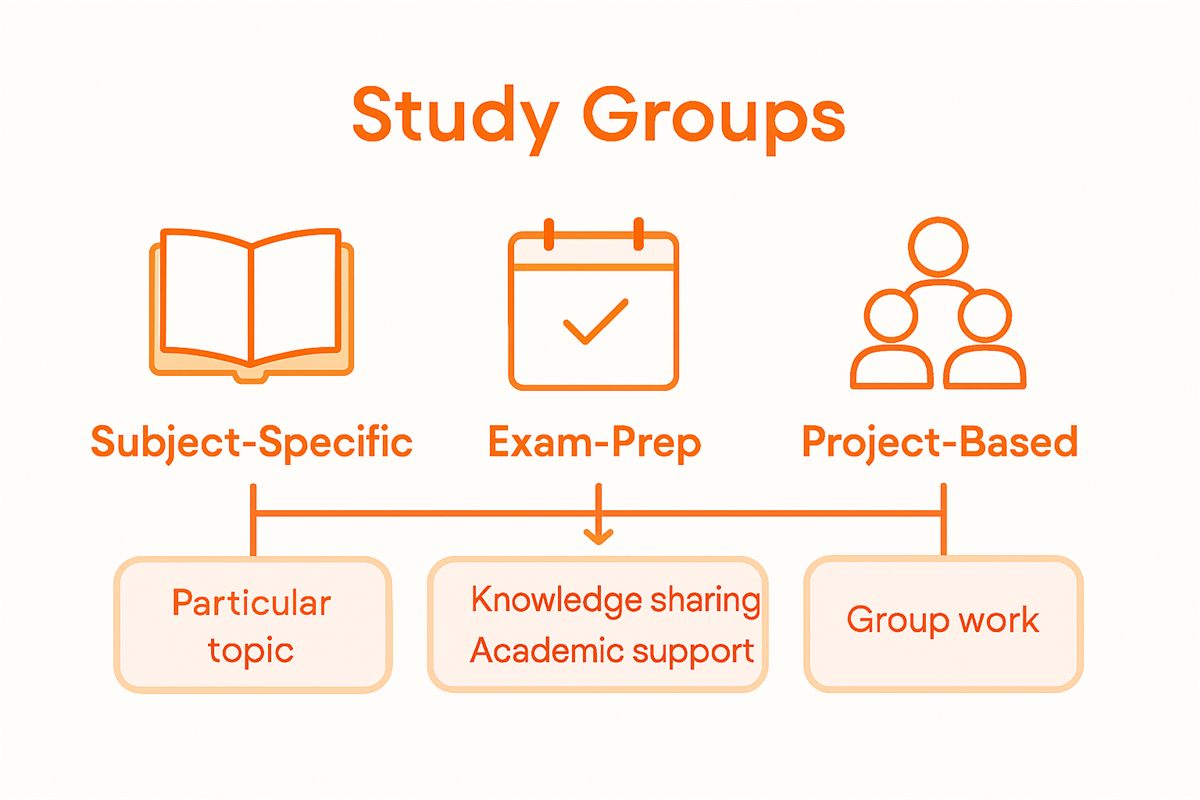
Study groups come in many shapes and sizes, each designed to meet different learning goals and academic needs. Study groups are small gatherings of individuals who meet regularly to discuss shared fields of study, offering students unique opportunities to enhance their understanding through collaborative learning.
Here are the primary types of study groups you might encounter:
- Subject-Specific Groups: Focused on mastering challenging course material like mathematics, sciences, or language studies
- Exam Preparation Groups: Dedicated to reviewing and practicing for upcoming tests
- Project Collaboration Teams: Working together on complex assignments or research projects
- Interdisciplinary Learning Circles: Exploring connections between different academic disciplines
Study circles represent another fascinating approach to collaborative learning, emphasizing a democratic and interactive approach to education. These groups typically gather multiple times to dive deep into specific topics, ranging from academic subjects to broader social issues. What makes them unique is their focus on open dialogue and shared learning experiences.
The purpose of each study group varies, but the core goals remain consistent: supporting mutual learning, building academic confidence, and creating a supportive environment where students can share knowledge. Some groups might prioritize problem-solving, while others focus on discussion and theoretical exploration. The key is finding a group that matches your learning style and academic objectives.
When choosing a study group, consider your personal learning preferences, the group’s structure, and the specific academic challenges you’re facing. A well-organized study group can transform studying from a solitary task into an engaging, collaborative journey of intellectual growth.
Organizing Effective Group Study Environments
Creating the perfect group study environment is an art form that requires careful planning and intentional design. Spatial arrangement and atmosphere play critical roles in transforming a simple meeting space into a productive learning hub. Think of your study space like a laboratory for knowledge – every element matters.
Here are key components for designing an optimal group study environment:
- Physical Setup:
- Choose a location with minimal distractions
- Ensure comfortable seating for everyone
- Have sufficient table space for books, laptops, and materials
- Technology Considerations:
- Reliable internet connection
- Power outlets for charging devices
- Optional shared screen or whiteboard for collaborative work
- Environmental Factors:
- Good lighting
- Moderate temperature
- Quiet or low-background noise
The ideal study environment isn’t just about physical space – it’s about creating a psychological atmosphere that encourages learning. Each group member should feel comfortable asking questions, sharing insights, and admitting when they don’t understand something. This means establishing ground rules that promote respect, active listening, and constructive feedback.

Successful study groups often rotate their meeting locations to keep things fresh and accommodate different members’ preferences. A library study room one week, a quiet coffee shop the next, or even a well-organized home space can work wonders. The key is flexibility and finding what works best for your specific group’s dynamic and learning styles. Remember, the most effective study environment is one where everyone feels motivated, supported, and ready to learn together.
Roles, Responsibilities, and Ground Rules
Successful group study sessions aren’t magical – they’re strategic. Research examining collaborative problem-solving dynamics reveals that aligning group members’ perspectives is crucial for productive teamwork. This means establishing clear roles, expectations, and ground rules from the start.
Here are key roles to consider in your study group:
- Group Coordinator:
- Schedules meetings
- Communicates group updates
- Ensures everyone stays on track
- Note Taker:
- Captures key discussion points
- Shares notes after each session
- Helps track group progress
- Resource Manager:
- Collects and distributes study materials
- Tracks shared resources
- Ensures everyone has access to necessary documents
- Time Keeper:
- Manages session duration
- Monitors agenda and breaks
- Keeps discussions focused
Establishing ground rules is about creating a respectful, productive environment. These might include expectations around communication, preparation, participation, and handling conflicts. For instance, ground rules could specify that everyone comes prepared, actively listens, gives constructive feedback, and commits to regular attendance.
Rotating roles prevents burnout and helps everyone develop leadership and organizational skills. No single person should feel overwhelmed with responsibilities, and sharing tasks keeps the group dynamic and engaging. Remember, the ultimate goal is learning together – not creating additional stress. Your study group should feel like a supportive team where everyone contributes and grows.
Common Mistakes and How to Avoid Them
Group study sessions can quickly derail if you’re not careful. Modern study groups offer tremendous flexibility and connection opportunities, but they also come with potential pitfalls that can undermine learning and productivity.
Here are the most common mistakes students make in group study environments:
- Poor Communication:
- Failing to set clear expectations
- Not sharing contact information
- Inconsistent follow-up
- Lack of Preparation:
- Arriving without completing assigned readings
- Not bringing necessary study materials
- Skipping personal pre-study work
- Unequal Participation:
- Allowing dominant personalities to control discussions
- Letting some members do most of the work
- Not addressing free-riding behaviors
- Ineffective Time Management:
- Spending too much time socializing
- Losing focus during study sessions
- Not setting specific learning objectives
Avoiding these mistakes requires intentional strategies and mutual commitment. Establish clear communication channels, whether through group messaging apps, shared documents, or regular check-ins. Create a culture of accountability where everyone understands their responsibilities and feels comfortable speaking up if something isn’t working.
The most successful study groups view challenges as opportunities for growth. They’re flexible, willing to adapt their approach, and prioritize collective learning over individual egos. Remember, a great study group isn’t about perfection – it’s about creating a supportive environment where everyone can learn, improve, and achieve their academic goals together.
Enhance Your Group Study Sessions with Proven Strategies
Group study sessions can be a game-changer when they are well-organized and purposeful as highlighted in the article. If you find yourself struggling with poor communication, unequal participation, or difficulty in maintaining focus during study time, you are not alone. Creating an effective collaborative learning environment requires intentional planning, clear roles, and supportive tools.
Discover how to boost your productivity and master the art of learning by exploring our specialized College – Learning With Angie resources. Learn practical methods to manage time, set study goals, and optimize group dynamics. Ready to transform your study routine? Don’t wait to build the study habits that will help you succeed now.
Frequently Asked Questions
What are group study sessions?
Group study sessions are collaborative learning experiences where students come together to learn, review material, and support each other academically in an interactive environment.
How can I make my group study session more effective?
To make your group study session effective, ensure structured interaction, set clear learning objectives, include a mix of discussion and review activities, and have a commitment from all members to stay focused.
What are the common types of study groups?
Common types of study groups include subject-specific groups, exam preparation groups, project collaboration teams, and interdisciplinary learning circles, each with distinct purposes for enhancing academic understanding.
What mistakes should I avoid in group study sessions?
Common mistakes to avoid in group study sessions include poor communication, lack of preparation, unequal participation, and ineffective time management. Establish clear ground rules and accountability to enhance the overall experience.
Recommended
- What Tools and Apps Can Improve Productivity for Students?
- 7 Productivity Hacks for School: Boost Your Success
- Questions You’ll Find in a Study Style Quiz and Why They Matter
- 10 Productivity Hacks Every Student Should Know
- Role of Scheduling in Team Productivity Explained – WhenNOT Blog
- 7 Hybrid Team Building Activities for Stronger Teams – Blog
Want a head start? The Ultimate Student Planner in my shop was made for exactly this — it’ll save you a ton of time.