
What Is Personal Growth and Why It Matters
Over half of American students report that personal growth shapes who they become far beyond the classroom. As new experiences and challenges appear every semester, learning to improve yourself is just as important as academic grades. This article reveals how understanding personal growth can help American students develop powerful skills, boost resilience, and create habits that last a lifetime.
Key Takeaways
| Point | Details |
|---|---|
| Personal Growth is Intentional | It involves a strategic approach to developing skills and mindset for self-improvement. |
| Types of Personal Growth | Key areas include emotional, intellectual, professional, social, and spiritual growth. |
| Impact on Learning | A growth mindset transforms learning by enhancing resilience, self-awareness, and adaptability. |
| Common Pitfalls to Avoid | Recognizing mental roadblocks and behavioral barriers is crucial for effective personal growth. |
Defining Personal Growth for Students
Personal growth is more than just a buzzword – it’s a strategic approach to understanding and improving yourself. At its core, personal growth means intentionally developing your skills, mindset, and potential to become the best version of yourself. Think of it like leveling up in a video game, but for your real life.

Research highlights that personal growth involves deliberate self-directed development. According to a study on personal growth initiative among college students, this process encompasses several key elements: readiness for change, creating actionable plans, utilizing available resources, and taking intentional steps toward improvement. It’s not about being perfect, but about consistently working to enhance your capabilities.
For students, personal growth goes beyond academic achievements. It means developing critical life skills like emotional intelligence, resilience, and self-awareness. When students actively engage in personal development, research shows impressive benefits. A study found that students with higher personal growth initiative tend to achieve better academic performance and demonstrate stronger psychological well-being. This means the skills you develop aren’t just nice to have – they’re fundamental to your success.
Personal growth isn’t a destination, it’s a continuous journey. It involves:
- Setting meaningful personal goals
- Practicing self-reflection
- Learning from both successes and failures
- Stepping out of your comfort zone
- Continuously acquiring new skills and knowledge
Remember, your potential isn’t fixed. With the right mindset and consistent effort, you can shape your personal and professional trajectory in powerful ways.
Types of Personal Growth and Key Examples
Personal growth isn’t a one-size-fits-all journey. It encompasses multiple dimensions that help you develop as a complete individual. Understanding different types of personal growth through life stages reveals how our development is dynamic and multifaceted.
Typically, personal growth can be categorized into several key areas:
- Emotional Growth: Learning to understand, manage, and express emotions effectively
- Intellectual Growth: Continuously expanding knowledge and critical thinking skills
- Professional Growth: Developing career skills and advancing professional capabilities
- Social Growth: Improving communication, relationships, and interpersonal skills
- Spiritual Growth: Exploring personal values, meaning, and inner peace
Each type of growth represents a unique pathway to self-improvement. According to developmental theories, human beings progress through different cyclical levels of existence and adaptation, which means personal growth isn’t linear but rather a complex, evolving process.
What makes personal growth exciting is its individualized nature. For a college student, this might mean developing study skills, building confidence, or learning time management. For a working professional, it could involve leadership training, emotional intelligence, or career networking. The key is intentional, consistent effort toward becoming a better version of yourself.
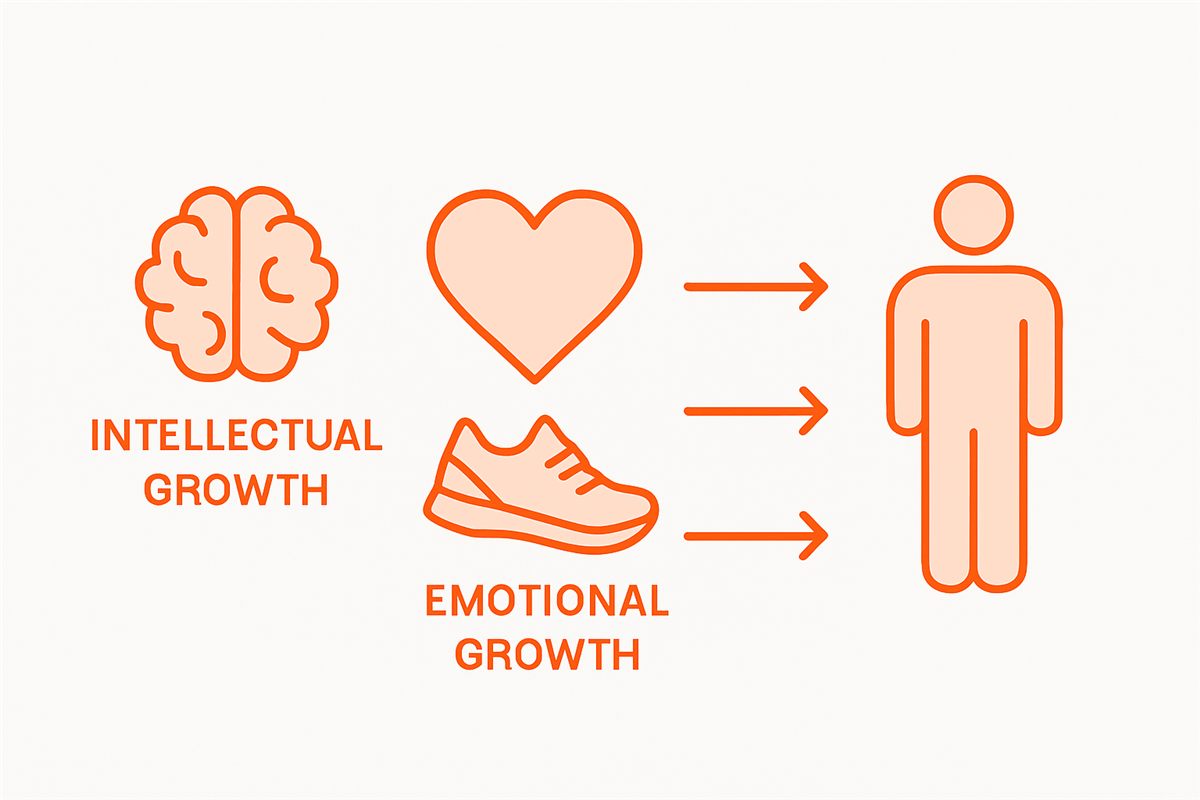
Remember, personal growth is about progress, not perfection. Small, consistent steps can lead to significant transformations over time. Whether you’re working on communication skills, pursuing academic goals, or exploring your inner world, every effort counts in your personal development journey.
How Personal Growth Impacts Learning
Learning isn’t just about memorizing facts – it’s about transforming your entire approach to knowledge and personal development. Research comparing U.S. and Chinese students reveals that a growth mindset can dramatically enhance academic outcomes, proving that how you think about learning matters as much as what you learn.
Personal growth fundamentally reshapes the learning experience through several key mechanisms:
- Mindset Transformation: Shifting from a fixed to a growth mindset
- Resilience Building: Developing mental toughness to overcome academic challenges
- Self-Awareness: Understanding personal learning strengths and weaknesses
- Motivation Enhancement: Creating intrinsic drive for continuous improvement
- Skill Adaptability: Learning how to learn more effectively
Teachers play a critical role in this process. Studies show that growth mindset supportive language in classrooms can significantly reduce academic achievement gaps and boost student performance. This means the way educators communicate can directly impact a student’s ability to grow and learn.
The most powerful aspect of personal growth in learning is its compounding effect. As you develop better study habits, emotional intelligence, and self-management skills, each small improvement builds upon the last. You’re not just learning information – you’re learning how to become a more effective, resilient, and adaptable learner. Whether you’re struggling with a difficult subject or aiming to excel, personal growth provides the mental framework to transform challenges into opportunities for development.
Practical Strategies for Everyday Development
Personal growth isn’t about grand, sweeping changes – it’s about consistent small steps that compound over time. Appreciative Advising demonstrates how identifying and leveraging personal strengths can transform your development journey, turning potential into meaningful progress.
Here are practical strategies you can implement daily:
- Reflection Practice
- Spend 10 minutes journaling each evening
- Ask yourself: What went well? What could improve?
- Track personal insights and growth patterns
- Skill Building
- Learn one new skill every month
- Take online courses or watch educational tutorials
- Practice deliberately and track your progress
- Mindset Cultivation
- Challenge negative self-talk
- Reframe obstacles as learning opportunities
- Embrace continuous learning attitude
Education works best when it connects deeply with your personal purpose. Purpose-guided education techniques show that intrinsic motivation dramatically increases when you align learning with your core goals and beliefs. This means understanding your ‘why’ – the deeper reasons behind your personal development efforts.
Remember, personal growth is a marathon, not a sprint. Small, consistent actions create massive transformation. Start with one strategy, be patient with yourself, and watch how incremental improvements can reshape your entire life trajectory.
Common Pitfalls and How to Avoid Them
Personal growth is a journey fraught with potential obstacles that can derail your progress. Understanding these challenges is the first step toward navigating them successfully. Research on student social networks reveals how students can unintentionally limit their development by sticking only to familiar academic circles.
Here are the most common pitfalls to watch out for:
Mental Roadblocks
- Comparison Trap: Constantly measuring yourself against others
- Perfectionism: Letting fear of failure prevent action
- Fixed Mindset: Believing your abilities are unchangeable
Behavioral Barriers
- Procrastination: Delaying personal development efforts
- Inconsistency: Starting strong but failing to maintain momentum
- Comfort Zone Addiction: Avoiding challenging experiences
Strategies to overcome these challenges require self-awareness and intentional action. Recognize that personal growth isn’t about being perfect, but about consistent improvement. Each setback is an opportunity to learn, not a reason to give up.
The key is developing resilience. Start small, be kind to yourself, and understand that growth is a nonlinear process. Surround yourself with diverse perspectives, challenge your existing beliefs, and remain open to learning. Your biggest enemy in personal development isn’t failure – it’s the fear of trying.
Take Charge of Your Personal Growth Journey Today
The article highlights the challenge of overcoming mental roadblocks like fixed mindsets and procrastination while building resilience and consistency. If you want to turn these insights into real progress, mastering key skills such as time management, productivity, and stress management is essential. These are the very skills that empower you to transform intentions into lasting personal growth and academic success.
Start elevating your journey now with resources designed specifically for students and lifelong learners. Explore practical tools for productivity and healthy habits at Learning with Angie to build the mindset and habits that sustain growth. Unlock your potential with actionable strategies you can apply every day and make your personal development a priority. Don’t wait to embrace change — your best self is waiting.
Frequently Asked Questions
What is personal growth?
Personal growth is the intentional process of developing your skills, mindset, and potential to become the best version of yourself. It involves setting personal goals, practicing self-reflection, and continually acquiring new skills.
Why is personal growth important for students?
Personal growth is vital for students as it contributes to enhancing life skills like emotional intelligence, resilience, and self-awareness, which are essential for academic success and overall well-being.
How can I start my personal growth journey?
You can begin your personal growth journey by setting meaningful goals, practicing daily self-reflection, and stepping out of your comfort zone by challenging yourself with new experiences and skills.
What are common pitfalls in the personal growth process?
Common pitfalls include mental roadblocks like perfectionism and comparison, as well as behavioral barriers like procrastination and inconsistency. Recognizing these challenges can help you navigate your growth journey more effectively.
Recommended
- 7 Sets of Inspirational Quotes to Enhance Your Personal Growth
- Fostering Uniqueness: A Guide to Personal Growth for Lifelong Learners
- 10 Unique College Essay Ideas to Stand Out in Applications
- What is Personal Development? Understanding Its Importance
- Hair and Skin Care: Expert Tips for Stronger Growth 2025 | MyHair
Want a head start? The Building Self-Confidence workbook in my shop was made for exactly this — it’ll save you a ton of time.