
The Art of the Apology: How to Say Sorry and Mean It Effectively
Most American students admit they feel awkward or unprepared when trying to fix relationships after a heated argument or misunderstanding. Conflicts happen all the time, but knowing how to apologize and reconnect can change everything. This guide breaks down proven steps—from reflecting honestly to making amends—so you can develop stronger communication skills and repair damaged connections with confidence.
Quick Summary
| Key Point | Explanation |
|---|---|
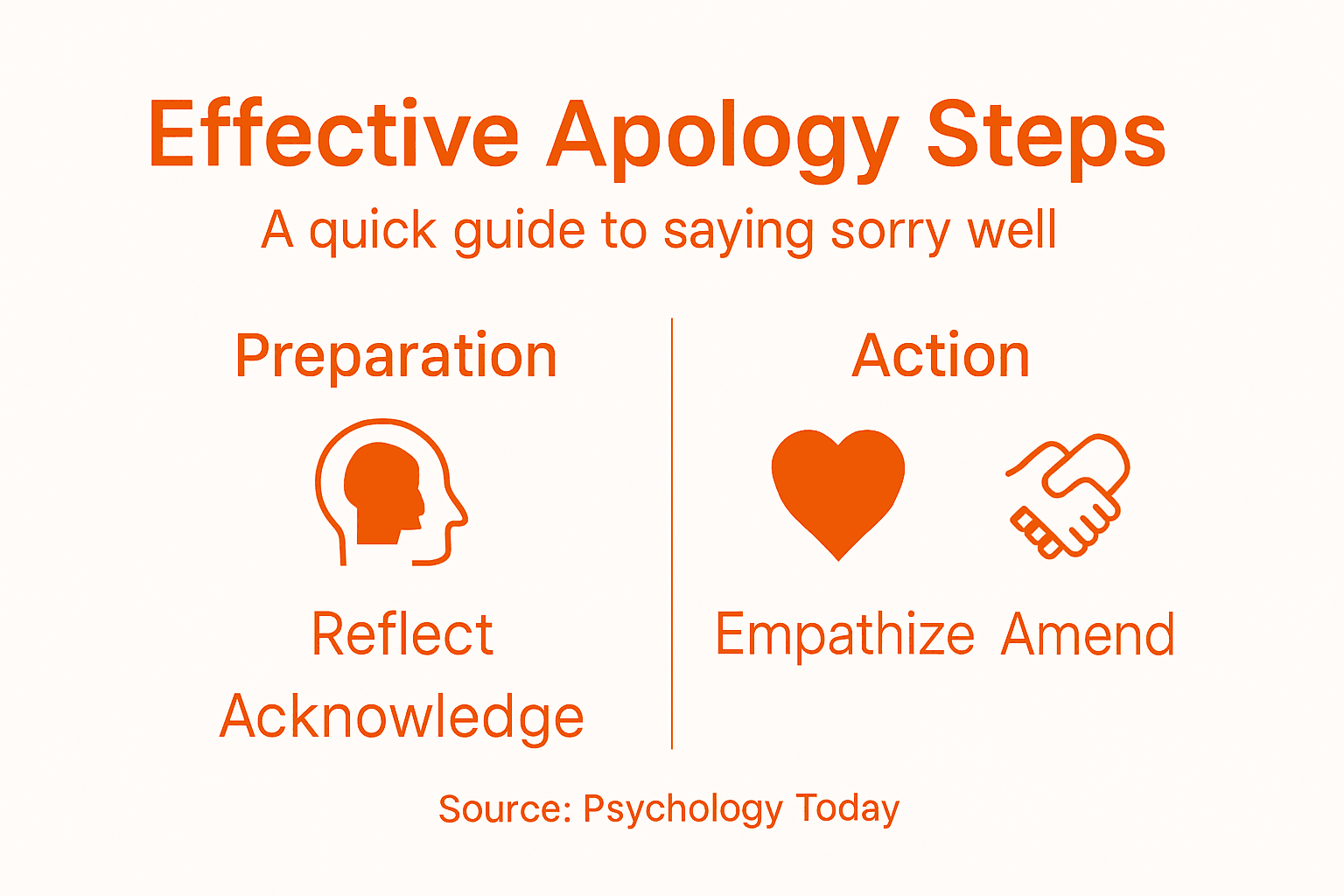
| 1. Reflect on the Conflict | Understand the root causes of the conflict by examining your behavior and considering the other person’s feelings. |
| 2. Acknowledge Your Responsibility | Take full ownership of your actions with clear, specific language to rebuild trust and show accountability. |
| 3. Express Genuine Regret | Show true empathy by addressing the emotional impact of your actions, demonstrating compassion and understanding. |
| 4. Offer to Make Amends | Take concrete steps to repair the harm caused, showing commitment to rebuilding trust and restoring the relationship. |
| 5. Verify the Impact of Your Apology | Listen carefully to the other person’s response to ensure your apology has been understood and is effective in healing. |
Step 1: Reflect on What Went Wrong
Reflecting on the root causes of a conflict is a critical first step in making a genuine apology. This process helps you understand exactly what happened and why your actions might have hurt someone else.

Start by taking a quiet moment to honestly examine your behavior. Systematic literature review of apology strategies suggests that understanding social dynamics and personal motivations is key to crafting an effective apology. Ask yourself some tough questions: What triggered the conflict? What role did you play in escalating the situation? Were there underlying emotions or misunderstandings that contributed to the problem?
Try writing down your thoughts to gain clarity. Be brutally honest with yourself but avoid harsh self judgment. The goal is understanding, not punishing yourself. Think about the other person’s perspective and how your actions might have impacted their feelings. This isn’t about making excuses it’s about developing genuine empathy and insight.
Pro tip: When reflecting, imagine the situation from the other person’s point of view and write down at least three specific ways your actions could have hurt them.
Step 2: Acknowledge Your Responsibility Clearly
Acknowledging your responsibility is a critical step in making a genuine apology. This means taking full ownership of your actions and their impact without making excuses or deflecting blame.
Research from Harvard Medical School emphasizes that clear accountability is essential for rebuilding trust. Start by using direct language that shows you understand exactly what you did wrong. Instead of saying “Mistakes were made,” say “I did this specific thing and I recognize it was hurtful.” Avoid phrases that sound like you are minimizing your actions or shifting responsibility.
Be specific about what you did and how it affected the other person. Show that you truly comprehend the consequences of your behavior. This means listening to their perspective and validating their feelings without becoming defensive. Your goal is to demonstrate genuine understanding and a commitment to doing better.
Pro tip: Practice saying your acknowledgment out loud beforehand to ensure you sound sincere and direct.
Step 3: Express Genuine Regret and Empathy
Expressing genuine regret means moving beyond a simple “I’m sorry” and showing you truly understand the emotional impact of your actions. This step is about connecting with the other person’s feelings and demonstrating real compassion.
Research on apology effectiveness reveals that empathy is the most critical factor in rebuilding trust. Start by putting yourself in the other person’s shoes. How did your actions make them feel? Use language that shows you comprehend their hurt. Instead of saying “I’m sorry you feel that way,” try “I understand that my actions hurt you deeply and I feel terrible about the pain I caused.”
Make your regret specific and sincere. Avoid generic statements that sound rehearsed or insincere. Your tone should be humble and vulnerable. Show that you are genuinely affected by the harm you caused. This means speaking from your heart and demonstrating that you are truly committed to understanding their perspective and making things right.
Pro tip: Pause and take a deep breath before expressing your regret to ensure your emotions and words come across as authentic and heartfelt.
This table distinguishes between superficial apologies and genuine apologies:
| Apology Type | Example Phrase | Outcome |
|---|---|---|
| Superficial | “I’m sorry you feel that way.” | Leaves hurt unresolved |
| Genuine | “I understand my actions hurt you.” | Promotes healing and trust |
Step 4: Offer to Make Amends
Making amends goes beyond just apologizing. It means taking concrete steps to repair the damage you caused and demonstrating your commitment to rebuilding trust and healing the relationship.
Restorative justice approaches highlight the importance of identifying specific actions to repair harm. Start by asking the person you hurt what would help make things right. This might mean different things in different situations. Sometimes it could be replacing something you broke, offering help with a project, or spending time making up for a betrayal of trust.
Be prepared to accept their suggestions and follow through without expecting immediate forgiveness. The goal is not to get instant absolution but to show genuine effort and care. Your offer should be specific practical and tailored to the actual harm you caused. Avoid generic gestures that feel like empty placation. Instead show that you have truly reflected on the impact of your actions and are willing to do real work to restore the relationship.
Pro tip: When offering to make amends, give the other person time to process your suggestion and be open to their feedback about what would truly help repair the damage.
Step 5: Verify the Impact of Your Apology
Verifying the impact of your apology means listening carefully and checking whether your words and actions have truly been received and understood by the person you hurt. This is about ensuring your apology creates genuine healing rather than just checking a box.
Research on apology effectiveness shows that the true measure of an apology lies in the recipient’s emotional response. After making your apology, listen carefully to their reaction. Pay attention to their tone of voice, body language, and actual words. Are they still feeling defensive? Do they seem genuinely heard? Ask open ended questions like “How are you feeling about what I shared?” or “What can I do to help make this right?”
Be patient and understand that healing takes time. Your goal is not to rush forgiveness but to demonstrate that you are committed to understanding their perspective and repairing the relationship. If they need space or seem hesitant, respect that. Show through your actions that you are willing to continue working on rebuilding trust over time.
Pro tip: Give the other person permission to be honest about how your apology landed and be prepared to listen without becoming defensive.
Here’s a summary of each apology step and the main goal it achieves:
| Step | Purpose | Key Benefit |
|---|---|---|
| Reflect | Understand root causes | Enables genuine empathy |
| Acknowledge Responsibility | Accept full accountability | Rebuilds trust |
| Express Regret | Show true empathy | Validates feelings |
| Make Amends | Repair the harm | Restores relationship |
| Verify Impact | Ensure healing | Confirms effectiveness |
Build Stronger Connections by Mastering Authentic Apologies
The art of making a genuine apology is essential not only for healing relationships but also for personal growth and emotional wellness. This article highlights key challenges such as reflecting on what went wrong, acknowledging responsibility, expressing real regret, and making amends. These steps require self-awareness, empathy, and communication skills—qualities that are vital for anyone aiming to improve their interpersonal effectiveness and manage conflicts thoughtfully.
If you are looking to enhance your emotional intelligence and develop habits that support both your academic and personal life, explore Learning with Angie. Here, you will find practical resources that help you build productivity, healthy habits, and self-awareness. These tools empower you to create meaningful connections and handle difficult conversations with confidence. Start transforming how you relate to others and discover how you can elevate your daily routine and achieve balanced success.
Frequently Asked Questions
How do I reflect on what went wrong before apologizing?
Start by taking a quiet moment to think about the situation and your role in it. Write down specific thoughts on your behavior and its impact on the other person to gain clarity and understanding.
What does it mean to acknowledge my responsibility in an apology?
Acknowledging your responsibility means taking full ownership of your actions without making excuses. Clearly state what you did wrong, how it affected the other person, and commit to doing better in the future.
How can I express genuine regret when apologizing?
To express genuine regret, move beyond a simple “I’m sorry” and detail how your actions hurt the other person. Use empathetic language, such as “I understand how deeply my actions hurt you,” to show sincere compassion for their feelings.
What are some ways I can make amends after an apology?
Making amends involves taking specific actions to repair the harm caused by your actions. Ask the person what would help make things right, and be prepared to follow through on their suggestions to demonstrate your commitment to rebuilding trust.
How can I verify the impact of my apology?
To verify the impact of your apology, listen carefully to the other person’s feedback as they respond to your apology. Ask open-ended questions like “How are you feeling about what I shared?” to confirm that your words and actions had the desired effect and to show that you are willing to engage in further conversation.
What steps can I take to ensure my apology is genuine?
Ensure your apology is genuine by reflecting on your actions, acknowledging responsibility, expressing empathy, making amends, and verifying the impact. Follow these steps thoughtfully, taking the time needed to consider the other person’s feelings throughout the process.
Recommended
- How to Take Notes in APUSH—Improve Speed, Memory, and Grades
- 5 Simple Steps to Annotate a Book for AP English Language
- How to Embrace Your Introversion—Powerful Benefits of Being an Introvert
- 12 Communication Skills Every Student Should Master
Want a head start? The Building Self-Confidence workbook in my shop was made for exactly this — it’ll save you a ton of time.