
How to Discover a Hobby You Actually Love (That Isn’t Your Phone)
Bold truth: The average American teenager spends more than seven hours a day looking at screens. With so much time absorbed by devices, finding offline hobbies can feel nearly impossible for students aiming to get more done and reconnect with their interests. Exploring new activities away from your phone is not just refreshing; it can actually unlock more creativity and improve your focus for school and life.
Quick Summary
| Key Insight | Explanation |
|---|---|
| 1. Reflect on Your Interests | Identify activities that energize you by reflecting on past experiences and current joys. |
| 2. Match Activities to Your Schedule | Choose hobbies that fit seamlessly into your daily routine to avoid stress and enhance enjoyment. |
| 3. Experiment with Hobbies | Try new activities through low-commitment options and community resources to discover hidden passions. |
| 4. Track Enjoyment and Progress | Keep a journal to monitor how much you enjoy each hobby and track improvement over time. |
| 5. Commit to Your Chosen Hobby | Dedicate time consistently to practice a hobby that excites you, making it a rewarding part of your routine. |
Step 1: Reflect on your personal interests
Understanding your personal interests is like creating a treasure map to your perfect hobby. This step helps you explore what genuinely excites and motivates you beyond scrolling through your phone screen.
Start by grabbing a notebook or opening a digital document and begin a self discovery journey. Deep personal reflection involves examining the activities that naturally draw your attention and make you lose track of time. Think about moments when you felt most engaged and energized. What were you doing? Were you sketching, playing an instrument, solving a puzzle, or building something with your hands?

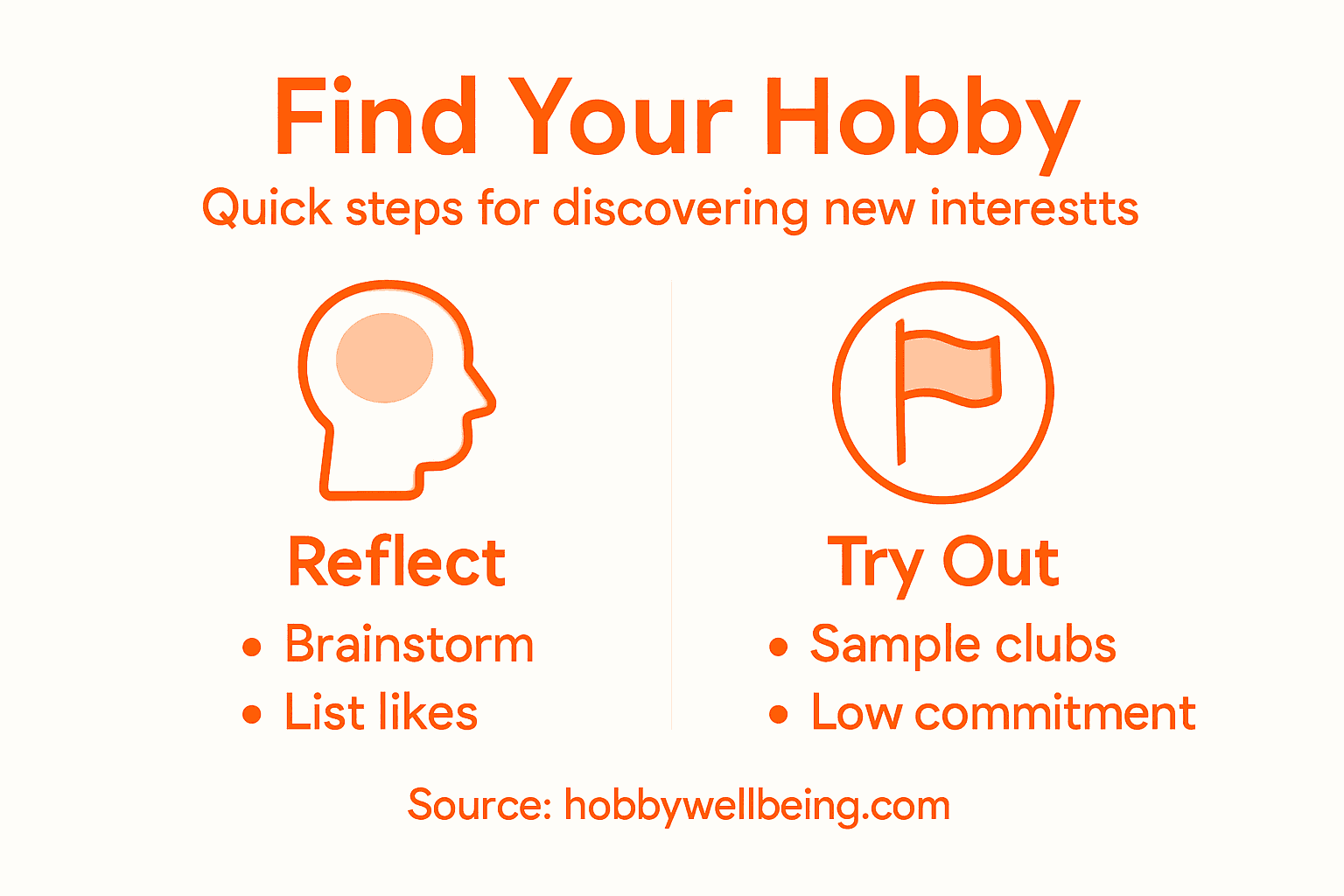
Consider creating a list of everything you enjoy doing think broadly and dont judge your initial ideas. Maybe you love watching cooking shows or find yourself constantly rearranging your room. Perhaps you get excited about photography or enjoy watching documentaries about space. Your interests can come from unexpected places. Hobbies provide stress relief and boost creativity by allowing you to explore parts of yourself that might get overlooked in daily routines.
Pro tip: Set aside 30 uninterrupted minutes to brainstorm your interests without self criticism or filtering your thoughts.
Step 2: Identify offline activities that fit your lifestyle
Now that you understand your interests, it’s time to match them with activities that truly complement your daily schedule and personal energy. Choosing offline hobbies means finding activities that seamlessly integrate into your life without creating additional stress.
Start by analyzing your current routine and available time. Are you a morning person with extra energy before classes? Maybe morning yoga or quick sketching sessions could work. Night owl? Consider activities like stargazing, late night reading, or learning a musical instrument that can be done quietly. Think about your living situation too some hobbies work better in dorm rooms while others require more space. Photography can happen anywhere while woodworking needs dedicated workspace. Consider your budget physical hobbies like running cost less than equipment heavy options like rock climbing.
Dont be afraid to experiment and mix different interests. Maybe you love music and technology could that translate into learning electronic music production? Or enjoy cooking and want to explore food photography? The goal is finding activities that excite you and fit naturally into your lifestyle.
Pro tip: Create a weekly schedule mapping out potential hobby time slots to see where new activities could realistically fit.
Here is a comparison of hobby types and how they fit various lifestyles:
| Hobby Type | Benefits | Best For |
|---|---|---|
| Active (e.g., jogging) | Boosts energy, low cost | Outdoor lovers, limited budget |
| Creative (e.g., painting) | Enhances imagination | Small or large living spaces |
| Social (e.g., team sports) | Builds community, motivation | Group settings, extroverts |
| Solo (e.g., reading) | Quiet, relaxing | Night owls, introverts |
Step 3: Experiment with different hobbies hands-on
Now comes the exciting part where you actually start trying out potential hobbies. Hands-on experimentation allows you to discover what truly sparks your passion beyond just thinking about activities.
Start small and low commitment. Check out community centers, college clubs, online tutorials, or free workshops where you can sample different activities without major investment. Want to try photography? Borrow a friend’s camera or use your smartphone. Interested in cooking? Watch YouTube tutorials and try one recipe a week. Many libraries and community spaces offer free classes or equipment trials. Some local art centers provide trial sessions for painting, pottery, or drawing. Consider swapping skills with friends too swap an hour of guitar lessons for cooking techniques.
Exploring hobby opportunities means being open to unexpected interests. Dont judge an activity before you genuinely try it. Maybe rock climbing seemed intimidating but turns out to be incredibly fun. Perhaps sketching felt boring in high school but could become meditative now. The key is approaching each potential hobby with curiosity and zero pressure to become an expert.
Pro tip: Set a personal challenge to try three completely different activities within the next month to expand your hobby horizons.
Step 4: Assess your enjoyment and progress
Now that youve started experimenting with different hobbies, its time to honestly evaluate what truly resonates with you. Tracking hobby satisfaction helps you understand which activities genuinely spark joy and personal growth.
Create a simple hobby journal or digital tracker to monitor your experiences. Note how you feel during and after each activity. Do you feel energized or drained? Are you looking forward to your next session? Pay attention to small improvements and moments of genuine excitement. Maybe youre learning guitar and suddenly played a chord progression smoothly or finished a sketch that actually looks like what you intended. These micro victories matter.
Evaluating hobby interests means being brutally honest with yourself. Not every activity you try will be a perfect match and thats totally okay. Some hobbies might feel interesting for a week but lose appeal quickly. Others might grow on you over time. The goal isnt to become an expert but to find something that consistently brings you joy and helps you disconnect from screen time.
Pro tip: Create a simple 1-10 enjoyment scale after each hobby session to objectively track your genuine interest levels.
The table below summarizes how to objectively assess your hobby enjoyment and progress:
| Tracking Method | What to Monitor | Signs of Success |
|---|---|---|
| Hobby Journal | Feelings and milestones | More engagement |
| Enjoyment Scale | Interest after sessions | Rising scores over time |
| Skill Log | Skills gained each week | Small, steady progress |
Step 5: Commit to the hobby that excites you
Now that youve explored different activities, its time to pick a hobby that genuinely lights you up. Finding purpose through hobbies means selecting an activity that feels less like work and more like an authentic extension of yourself.
Commitment doesnt mean becoming a world champion overnight. Start by setting realistic goals and creating a consistent practice routine. If youre into drawing, maybe that means sketching for 15 minutes every other day. For music, it could be practicing one new chord progression weekly. Find ways to make your chosen hobby accessible and enjoyable. Join online communities, follow YouTube tutorials, or connect with local groups who share your interest. These connections can provide motivation, learning resources, and a sense of belonging.
Remember that commitment is about enjoying the journey, not achieving perfection. Some days youll feel super inspired, other days youll just do the bare minimum. Thats totally normal. The key is showing up consistently and maintaining a playful, curious approach. Your hobby should feel like a breath of fresh air from your regular routine something that helps you disconnect from screens and reconnect with yourself.
Pro tip: Schedule your hobby time like you would any important appointment to build a sustainable practice.
Find a Hobby That Truly Fits Your Life and Boosts Your Wellbeing
Struggling to break free from the trap of phone scrolling and discover a hobby that genuinely excites you is a common challenge. This article highlights important steps like reflecting on your interests and experimenting with offline activities to uncover a fulfilling passion. If you feel overwhelmed by balancing study, time management, and building a healthier routine while seeking hobbies that fit your lifestyle, you are not alone.
Take control of your daily routine and unlock the joy of meaningful hobbies by exploring expert strategies designed especially for high school and college students. Our resources help you master productivity, budget your time wisely, and integrate hobbies seamlessly into your schedule. Ready to embrace a balanced life that fuels personal growth and reduces screen time?
Start your journey now by checking out stress relief and creativity boosting techniques and discover how to design a fulfilling lifestyle tailored to you. Don’t wait to transform your free time into moments of joy and accomplishment.
Frequently Asked Questions
How can I identify my personal interests for a hobby?
To identify your personal interests, start by reflecting on activities that make you feel engaged and energized. Spend 30 uninterrupted minutes brainstorming a list of things you enjoy, ranging from creative tasks like painting to physical activities like jogging.
What types of offline activities can I consider for a hobby?
Consider activities that fit your lifestyle and available time, such as yoga if you’re a morning person or stargazing if you’re a night owl. Map out potential time slots in your weekly schedule to realistically integrate these activities into your routine.
How should I experiment with different hobbies?
Begin by trying low-commitment activities that spark your interest, such as attending free workshops or using online tutorials. Challenge yourself to explore at least three different hobbies within the next month to discover what truly excites you.
How can I assess my enjoyment of each hobby I try?
Create a simple hobby journal to track your feelings and experiences after each session. Use a 1-10 enjoyment scale to objectively measure your interest and identify which activities you look forward to pursuing further.
What steps can I take to commit to a new hobby?
To commit to a new hobby, set realistic goals and create a consistent practice routine, such as dedicating 15 minutes every other day to sketching. Schedule your hobby time like any important appointment to ensure it becomes a regular part of your life.