
The Middle Schooler’s Guide to Making and Managing Your Own Money
Nearly half of American teens say they wish they had learned more about money skills before high school. For middle school students across North America, figuring out how to earn, save, and spend smartly is the first step toward real independence. This guide shows how you can set up your own earning opportunities, track your cash flow, and build simple budgets so you gain confidence and control over your money.
Quick Summary
| Key Insight | Explanation |
|---|---|
| 1. Identify Earning Opportunities | Explore interests like pet care or tutoring to earn money while developing useful skills. |
| 2. Track Income and Expenses | Use a notebook or app to log earnings and spending, which helps build financial literacy. |
| 3. Create a Simple Budget | List all income and expenses to understand spending habits and saving goals effectively. |
| 4. Monitor Financial Progress | Regular check-ins help you adjust budgets and celebrate financial achievements over time. |
| 5. Adjust Saving Strategies | Review saving habits and make small changes to improve your financial management skills. |
Step 1: Set up your earning opportunities
Ready to start making some cash? Let’s explore awesome ways middle schoolers can earn money and build cool skills. Youth employability programs suggest that starting early helps you develop financial confidence and independence.
First up, think about your interests and skills. Do you love pets? Offer dog walking or pet sitting services in your neighborhood. Good with younger kids? Babysitting or tutoring can be great options. Tech savvy? Consider helping older neighbors with computer tasks or setting up simple websites. Career exploration is all about matching what you enjoy with potential earning opportunities.
Check with your parents about local regulations and safety guidelines for young workers. Some potential money making ideas include yard work, car washing, helping at local farmers markets, or creating handmade crafts to sell online with parental supervision. The key is starting small, being responsible, and learning valuable work skills along the way.
Here’s a summary of common earning opportunities for middle schoolers, comparing their features:
| Opportunity Type | Skills Developed | Typical Start-Up Needs | Average Earnings Potential |
|---|---|---|---|
| Dog walking/pet care | Responsibility, communication | Flyers, pet supplies | $10-$20 per job |
| Babysitting/tutoring | Patience, teaching skills | Training, parental approval | $15-$30 per session |
| Yard work/car washing | Physical work, time management | Basic tools, cleaning supplies | $10-$25 per job |
| Crafts/online sales | Creativity, marketing | Materials, online setup | $20-$50 per sale |
Pro tip: Ask your parents or a trusted adult to help you create a simple tracking sheet to log your work hours and earnings, which will teach you basic financial record keeping.
Step 2: Track your income and expenses
Now that you are earning money, it is super important to keep track of where your cash is coming from and going to. Middle school financial literacy courses teach that tracking your money helps you understand your spending habits and build smart financial skills early.

Start by getting a simple notebook or using a spreadsheet to record every dollar you earn and spend. Create two columns one for income and another for expenses. Write down the date, amount, and source for each entry. For example, if you earn 20 dollars walking a neighbor’s dog, write that in your income column. If you buy a video game for 40 dollars, record that in your expenses column. Financial tracking tools can help you stay organized and see exactly how you are managing your money.
Check your records weekly with a parent or guardian. This helps you learn about budgeting and shows you where your money is going. Are you spending too much on snacks? Saving enough for a big purchase? Tracking helps you make smarter money decisions and understand the value of earning and saving.
Pro tip: Use a different color pen for income and expenses to make your tracking more visual and easier to understand at a glance.
This table breaks down different financial tracking methods for students, highlighting their benefits and drawbacks:
| Method | Ease of Use | Visual Appeal | Feedback Speed |
|---|---|---|---|
| Notebook | Very simple | Low (plain pages) | Slow (manual review) |
| Spreadsheet | Moderate | Moderate (charts) | Fast (automatic sums) |
| Mobile app | Easy to moderate | High (colorful UI) | Instant updates |
Step 3: Create your first simple budget
Budgeting might sound complicated, but it is actually super easy. Student budgeting worksheets are designed to help middle schoolers like you understand exactly how to manage your money.
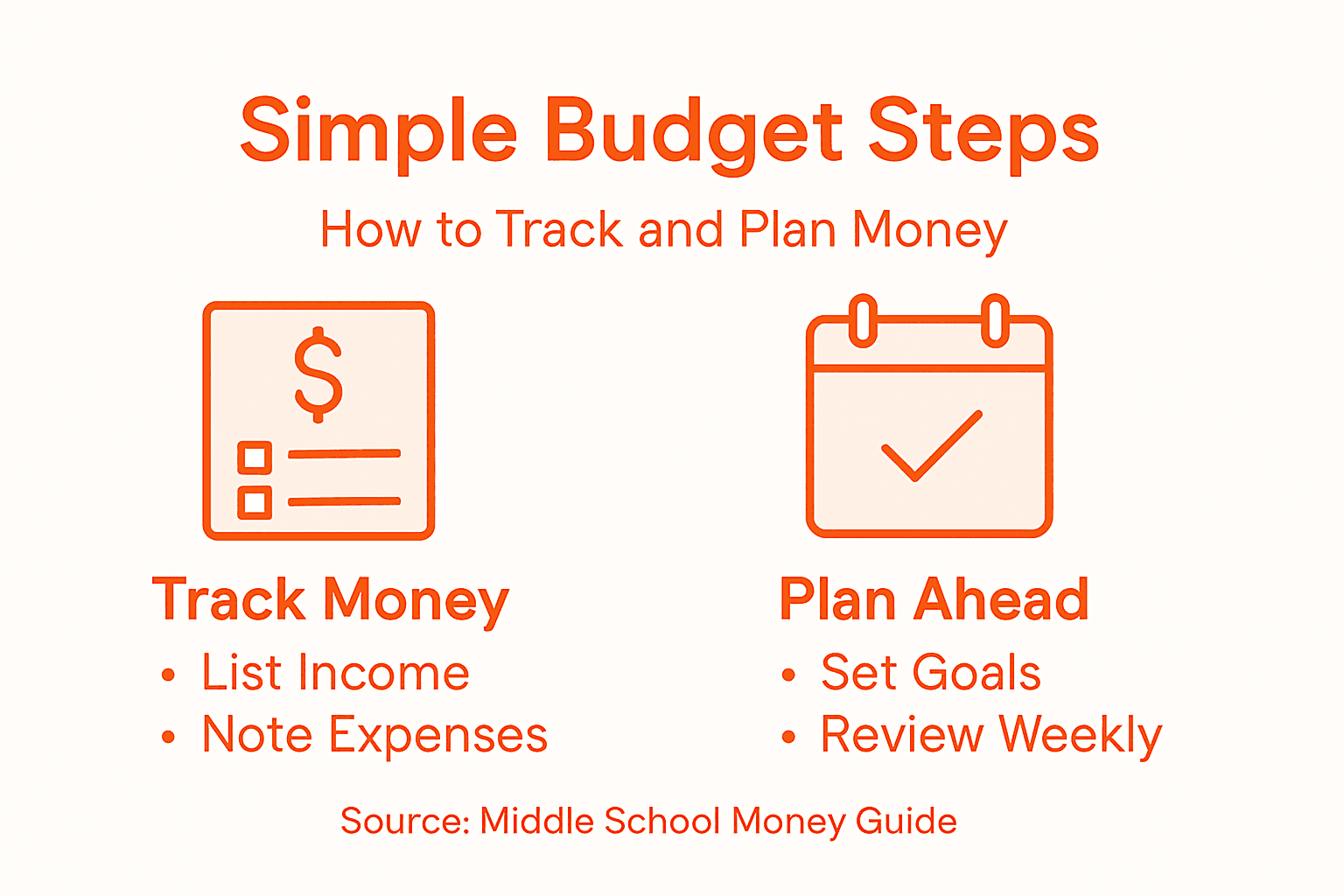
Start by listing all the money you earn from allowance, odd jobs, or gifts in one column. Then, in another column, write down everything you spend money on like snacks, games, or saving for something special. Creating a basic budget helps you see where your money goes and how much you can save. Subtract your total expenses from your total income to see if you have money left over or if you are spending more than you earn.
Work with your parents to set some financial goals. Maybe you want to save for a new video game or bike. Your budget can help you figure out how long it will take to save that money by tracking your income and expenses each week. The key is being honest about your spending and staying consistent with your tracking.
Pro tip: Use a bright highlighter to mark the goals in your budget so you can see them every time you review your finances.
Step 4: Monitor your progress regularly
Checking your financial progress is like being the captain of your money ship. Middle school financial courses teach that regular monitoring helps you stay on track and make smart decisions about your cash.
Set up a weekly check-in with yourself or your parents to review your budget. Look at how much money you earned, what you spent, and compare it to your original budget plan. Financial tracking tools can help you see patterns in your spending and saving. Are you spending more on snacks than you planned? Did you earn extra money from a special job? Make adjustments to your budget as needed.
Dont get discouraged if things dont go perfectly. Financial planning is a skill that takes practice. Each week you review your budget, youre learning more about managing money and getting better at making smart financial choices. Celebrate the small wins like saving a few extra dollars or staying under budget in a category.
Pro tip: Create a fun reward system for yourself when you meet your budget goals to keep yourself motivated and excited about tracking your finances.
Step 5: Adjust your plans for smarter saving
Saving money is like a game where you can always improve your strategy. Saving goals and strategies help you understand how to make your money work harder for you.
Start by reviewing your current saving habits. Are you putting away enough money each week? Look for small ways to cut expenses or earn extra cash. Maybe you can pack lunch instead of buying it or do an extra chore for your parents. Budgeting and saving techniques suggest finding creative ways to increase your savings. Think about splitting your money into three categories spending, saving, and sharing or donating.
Remember that saving is a skill you can get better at over time. If you dont meet your goal one week dont get discouraged. Look at what happened and make a small adjustment for next time. Maybe you can save an extra dollar or find a way to reduce an unnecessary expense. The more you practice, the smarter youll get at managing your money.
Pro tip: Create a visual savings tracker like a chart or jar where you can see your progress and get excited about watching your money grow.
Take Control of Your Money Journey Today
Middle school can be the perfect time to build smart money habits and develop confidence in managing your own cash flow just like the guide “The Middle Schooler’s Guide to Making and Managing Your Own Money” explains. Whether you are learning how to track income and expenses, create your first budget, or improve your saving strategies you might find it challenging to stay organized and motivated. This is where mastering productivity and budgeting skills becomes crucial for your long-term financial success.
Start turning your financial goals into action now by exploring helpful resources on enhancing your study routines, productivity, and especially budgeting. Discover practical tips tailored for students just like you. Need methods to manage time effectively while juggling school and money tasks? Find out how to do it the smart way with study and time management strategies. Ready to boost your budgeting skills and build a balanced routine? Learn more in our other articles.
Don’t wait until confusion sets in or your goals feel far away. Start today and become the captain of your own financial future.
Frequently Asked Questions
How can I start earning money as a middle schooler?
To start earning money, identify your interests and skills, then explore opportunities like dog walking, babysitting, or creating crafts to sell. Begin by offering your services to friends and neighbors, using flyers or social media for advertising.
What should I track in my income and expenses?
You should record all your earnings and spending in a simple notebook or spreadsheet, noting the date, amount, and source of each transaction. Make it a habit to update your records weekly to understand your financial habits and make informed decisions.
How can I create a simple budget?
To create a budget, list all your income sources in one column and your expected expenses in another. Subtract your total expenses from your total income to see how much money you can save or if you are exceeding your budget.
How often should I review my financial progress?
You should review your financial progress weekly to compare your earnings and spending against your budget. This regular check-in helps you identify spending patterns and make necessary adjustments to your budget.
What are some effective strategies for saving money?
Effective strategies include splitting your earnings into categories: spending, saving, and sharing. Look for small ways to cut expenses or add extra income, such as charging a small fee for a service, and aim to save a specific amount each week, even if it’s just one extra dollar.
Recommended
- Jobs You Can Have While You Are in School
- 12 Financial Moves to Start Planning Now that You’re 21
- How to Create a College Budget (Without Eating Ramen Every Night)
- Understanding Side Hustles Perfect for Students
Want a head start? The Ultimate Student Planner in my shop was made for exactly this — it’ll save you a ton of time.