Why Deliberate Practice Beats Counting Hours
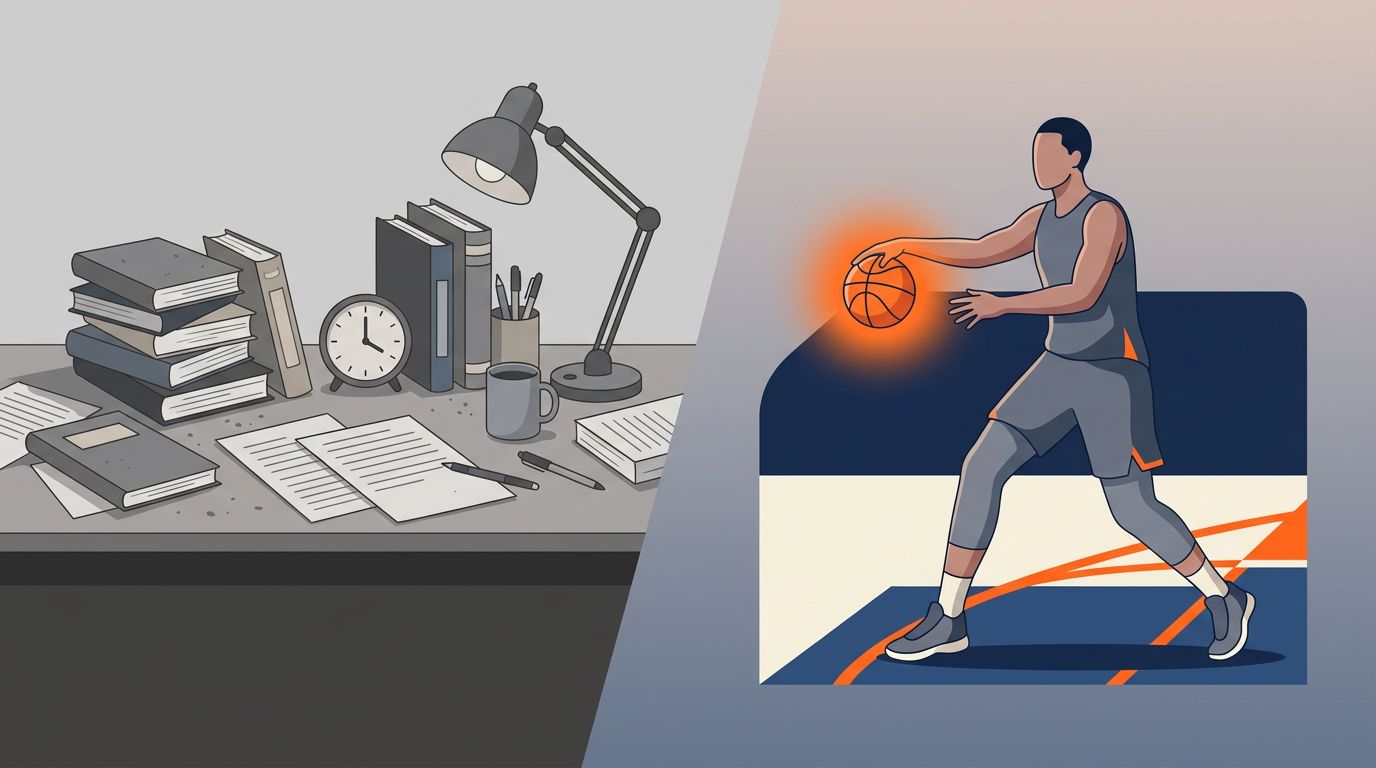
You can sit with a book open for three hours and leave with almost nothing new. Meanwhile, 30 focused minutes can fix a mistake that has held you back for weeks.
That is why time spent often fools you. It looks productive because it is easy to count, but it does not tell you whether your skill changed. If you want faster growth in school, sports, music, or writing, you need a better way to practice.
Why time spent is a vanity metric
A vanity metric is a number that looks good but says little about real progress. Time spent fits that description. It tells you how long you were present, not how much you improved.
That matters because school culture often rewards visible effort. You log study hours, keep streaks, fill planners, and feel proud of long sessions. Parents and teachers can fall into the same habit because hours are simple to track.
Still, simple does not mean useful.

You can spend an hour rereading history notes and remember little the next day. You can shoot 200 basketball shots with the same bad form and build the error deeper. You can play the same piano piece from the top every afternoon and keep crashing in the same measure.
In each case, the clock keeps moving, so the number grows. Your skill may not.
Time also hides weak attention. Ten minutes of full effort often beats 45 minutes of half-focus, phone checks, and easy review. Long sessions can feel serious while your brain stays on autopilot.
None of this means time is useless. You cannot learn algebra, violin, or coding in five minutes. Hours still matter. They are the raw material. But extra hours multiply the quality of your practice, they do not replace it.
That is the key point. If your method is sloppy, more time gives you more sloppy reps. If your method is sharp, time becomes fuel.
What deliberate practice looks like in real life
Psychologist K. Anders Ericsson made the term deliberate practice well known. He used it for practice that is purposeful, targeted, and built around feedback. A good short overview from James Clear on deliberate practice makes the same point: regular practice can become mindless, while deliberate practice stays specific and active.
In plain language, deliberate practice means you do not say, “I studied science tonight.” You say, “I worked on balancing chemical equations, and I kept missing oxygen counts, so I slowed down and corrected that error.”
That shift sounds small, but it changes everything.
Deliberate practice usually has four parts. First, you choose one skill that is slightly above your current level. Next, you give it full attention for a short stretch. Then, you get feedback, from a teacher, a coach, an answer key, a recording, or your own close review. After that, you adjust and repeat.
If you can’t name the exact skill you tried to improve today, your practice was probably too vague.
This is why deliberate practice feels harder than simple repetition. Repetition lets you stay comfortable. Deliberate practice puts you near the edge of what you can do well. You miss, correct, and try again. That can feel slow in the moment, yet it often speeds up growth over weeks.
Consistency still matters, of course. A strong method used once will not do much. But consistency only gets you to the desk. What you do there decides whether you grow.
You can also tell what deliberate practice is not. It is not passive review. It is not repeating whole assignments because that feels productive. It is not doing only what you already know. It is not multitasking with music, messages, and five browser tabs open.
How deliberate practice compresses growth across subjects
Growth speeds up when you stop paying for the same mistake again and again. That is why deliberate practice can compress progress that might otherwise drag on for years.
In math, many students say they are “bad at algebra” when the problem is narrower. Maybe you lose negative signs. Maybe you rush the last step. Maybe word problems fall apart because you cannot translate the sentence into an equation. Once you isolate that weak spot, you can do ten targeted problems, check each one, and track one error type. Progress gets visible fast.
In sports, random reps are often overrated. A basketball player who takes 100 casual free throws may improve less than a player who takes 25 with a strict routine, video feedback, and a single focus point. The second player notices form, timing, and follow-through. The first player mostly logs volume.
Music gives the same lesson. If you restart the piece every time you make a mistake, you spend most of your session on parts you already know. A better method is to loop the hard measure, slow it down, fix fingering, then reconnect it to the next phrase. Many teachers use this kind of practice strategy for musicians, because correction matters more than endless run-throughs.
Writing works the same way. If you draft entire essays without feedback, you may keep the same weak thesis, flat topic sentences, or vague evidence. But if you revise one paragraph three times with comments, you learn a pattern you can use in every paper after that.
Homeschoolers and parents can use this approach too. Instead of asking, “Did you finish your hour?” ask, “What got better today?” That question turns attention toward change, which is where real learning lives.
How to build a practice loop and track real progress
You do not need a perfect system. You need a repeatable one.
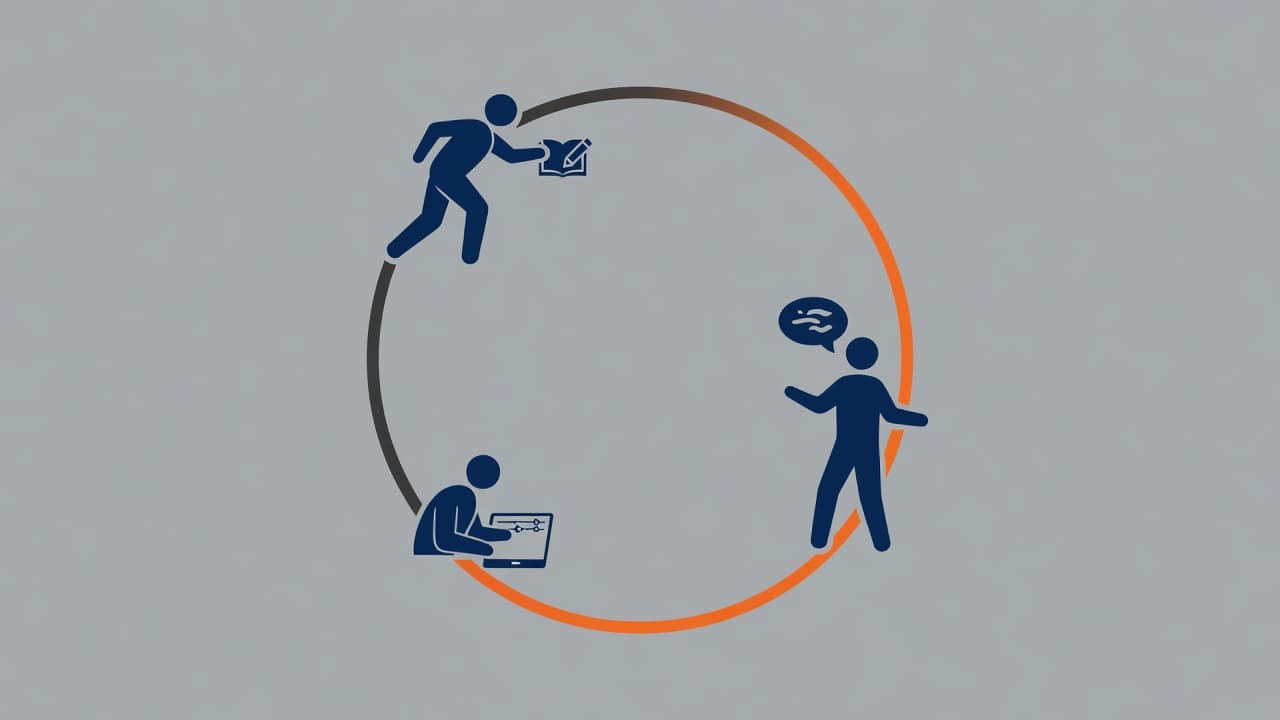
A short practice loop works well for most students:
- Pick one skill and one common mistake.
- Work on it for 20 to 30 minutes with full focus.
- Check your result right away, using feedback you trust.
- Write one adjustment for the next session.
That last step matters because memory is unreliable. If you do not write the fix down, you often relearn the same lesson tomorrow.
The same idea shows up in alternative grading and deliberate practice, where progress on clear skills matters more than seat time. That is a useful lens for students, parents, and teachers. Learning is not a timer. It is a series of corrected attempts.
These measures work better than hours because they show whether your skill changed:
| Instead of tracking | Track this | Example | | | | | | Minutes studied | Error rate on one skill | You missed 6 of 10 factoring signs on Monday, then 2 of 10 on Friday | | Pages read | Recall without notes | You explained the chapter from memory in two minutes | | Problems completed | Accuracy under the same conditions | You solved 8 of 10 correctly without hints | | Practice days | Recovery from mistakes | You needed five tries before, now you fix it in two |
These metrics are harder to fake. They also show you what to do next.
You can add one more useful question at the end of a session: “What still breaks under pressure?” If a skill falls apart on a quiz, in a game, or during a recital, it is not stable yet. That does not mean you failed. It means you found the next target.
Conclusion
Three hours can beat 30 minutes, but only when those hours have a target. Time can support growth. It cannot prove growth.
If you replace “How long did I work?” with “What improved, what feedback did I use, and what will I fix next?” your practice changes shape. That is when deliberate practice starts turning months of effort into visible progress, instead of letting another semester disappear into the timer.
This post may contain affiliate links. If you make a purchase through these links, I may earn a small commission at no extra cost to you.
Want a head start? The Feynman Study System is a Notion template built around practice loops: explain it, find the gaps, fix them, track the progress.