How to Use Metacognitive Monitoring in Real Time
You can spend 30 minutes on homework and still learn almost nothing if your mind is on autopilot. The problem usually is not effort. It is a lack of metacognitive monitoring, which means noticing how well your thinking is working while you are still in the task.
That skill matters in every grade. If you can catch confusion early, you can change course before frustration piles up. The good news is that you can train this skill in small, practical ways, starting with the next page, problem, or paragraph.
Become your own teacher while you study
When you study well, part of your attention stays on the work. Another small part watches the work. That inner observer notices when you are focused, when you are lost, and when your strategy stops helping.
That is the heart of metacognition and self-regulation. You are not only trying to finish. You are also checking whether your current approach makes sense.
Many students miss this because school often rewards completion. You read the chapter, fill in the worksheet, and turn in the draft. Yet finished work is not always understood work. Your eyes can move across a page while your brain is somewhere else. You can copy steps in math without knowing why they work. You can write a paragraph that sounds fine but says little.

Real-time monitoring changes that. While you read, you notice, “I can’t explain this part in my own words.” During math, you catch, “I got an answer, but I don’t trust my steps.” While writing, you realize, “This sentence repeats my notes instead of making a point.”
Those moments are useful, not embarrassing. They are your brain sending a dashboard warning. If you ignore them, the problem grows. If you respond, you learn faster.
You do not need a perfect system. You need short check-ins that fit normal schoolwork. If you’re a parent, you can model the same habit by asking, “How do you know that made sense?” instead of only asking whether the work is done.
Use a pause-and-check routine in the moment
Most students wait too long to check understanding. They review only after a bad quiz or a confusing class. A short pause during the task works better because you still have time to adjust.
Use this routine at natural stopping points, after one page, two problems, one video section, or one paragraph of writing:
- Stop for ten seconds and name the goal. Ask, “What am I trying to learn or do right now?”
- Check your level of clarity. Say “clear,” “shaky,” or “lost.”
- Find the reason. Was the problem your focus, your strategy, or the content itself?
- Make one small adjustment right away.
That last step matters most. If you are clear, keep going. If you are shaky, slow down and explain the step aloud. If you are lost, reread the directions, look at an example, or ask for help.
This routine works because it turns a vague feeling into a decision. Instead of thinking, “I hate this,” you can say, “I lost track during the second step, so I need to redo that part.” That is far more useful.
A 10-second check can save 20 minutes of confused work.
Try it during reading. Finish a paragraph, then cover the page and say the main point in your own words. If you cannot, your next move is clear. Go back, slow down, and pull out the key idea. Do the same in math. After solving one problem, ask whether you could solve a similar one without peeking.
At first, these pauses may feel awkward. Soon, they start to feel normal. You are teaching yourself to catch drift before it becomes a full shutdown.
Ask yourself questions that catch confusion early
Good self-questioning is like turning on a flashlight. It helps you see where your thinking is solid and where it is thin. The best questions are short, direct, and tied to the task in front of you.
When you read, ask, “What is the author saying here?” and “Which part is still fuzzy?” Those questions keep you from sliding through pages with only half attention. If a section feels dense, add, “Could I explain this to someone younger than me?” If the answer is no, you need another pass.
During math or science, use process questions. Ask, “Why does this step come next?” and “What would change if one number or condition changed?” That moves you past memorized steps. It also shows whether you understand the structure of the problem.
Writing needs a different set of prompts. Try, “What is my main point?” and “Does this sentence help prove it?” Many drafts get longer when they need to get clearer. When you ask focused questions, you cut what does not help.
Test taking also improves with real-time questions. If you freeze on a problem, ask, “What does the question want me to produce?” Then ask, “What do I know for sure?” This breaks panic into smaller parts.
You can even keep two or three go-to prompts on a sticky note or notebook cover. They do not need to be fancy. They need to be repeatable.
One useful pair is simple enough for any subject: “Do I understand this?” and “What will I do if I don’t?” Those two questions pull monitoring and action together. Without the second question, awareness stays passive. With it, you move into self-regulation.
Reframe unhelpful thoughts and adjust your next move
Your thoughts about learning can help or block you. If your brain says, “I’m terrible at this,” your attention often narrows. You stop looking for a strategy because the problem feels personal.
A better response is more accurate and more useful. You can say, “I don’t understand this part yet,” or “My current method isn’t working.” That small shift protects your focus. It also keeps the problem attached to the task, not your identity.
This is where cognitive reframing helps. You are not trying to fake confidence. You are trying to replace a broad, unhelpful thought with one that points to a next step.
For example, if you catch yourself thinking, “I studied for hours and still failed,” pause and get more precise. Maybe you spent most of that time rereading notes, which felt productive but did not test recall. Your new thought could be, “I need more active practice.” That leads to flash cards, practice questions, or teaching the idea out loud.
The same applies during a hard assignment. “I can’t do this” often means one of three things: you do not understand the directions, you do not know the concept, or you are mentally tired. Each problem needs a different fix.
When you notice stress rising, use this quick reset. Name the thought, rewrite it in plain terms, and choose one action. Then begin again. The point is not to feel calm first. The point is to make a better move while you feel unsettled.
Build simple feedback loops into daily schoolwork
Strong learners do not wait for final grades to tell them how things are going. They create short feedback loops during normal work. You try something, review the result, and adjust the next attempt.
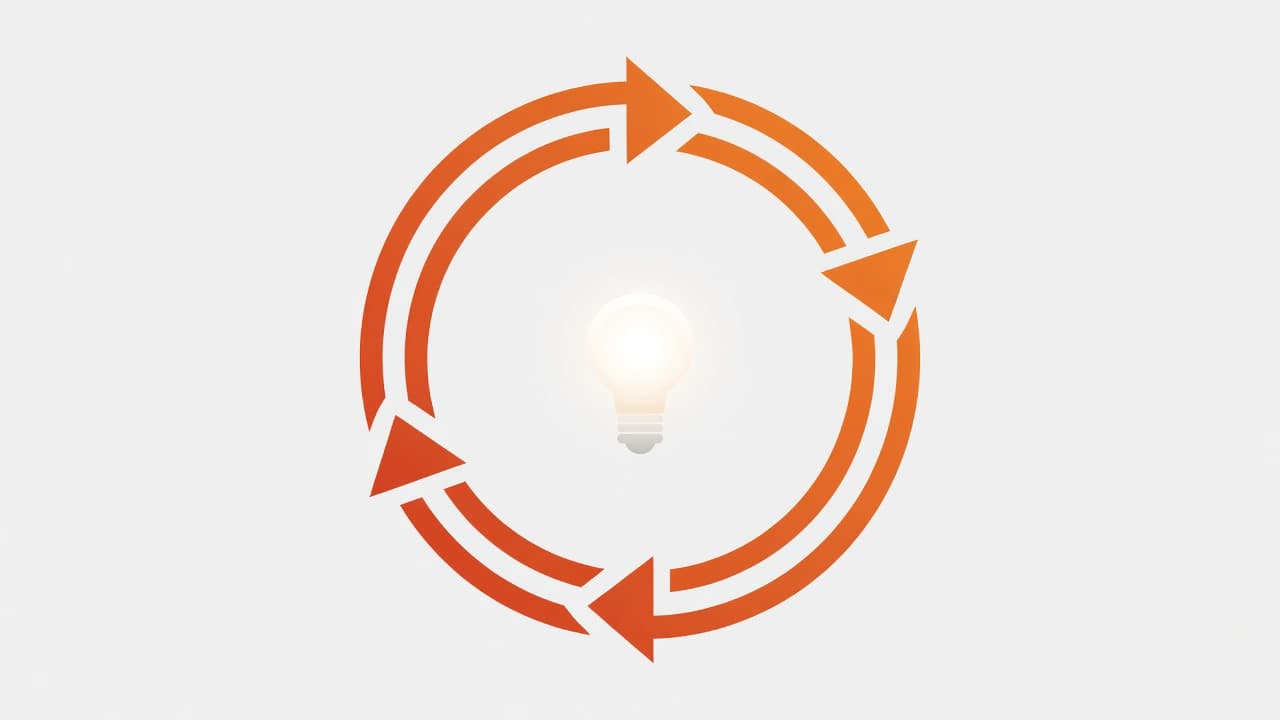
This can stay simple. You do not need a complex tracker or a long journal entry every night.
Here is a quick way to apply a feedback loop to common school tasks:
| Task | What to monitor | Quick adjustment |
|---|---|---|
| Reading | You cannot summarize the last section | Write a one-sentence paraphrase after each paragraph |
| Math practice | You get answers but forget the steps later | Redo one problem without notes and explain each step aloud |
| Essay writing | Your draft sounds okay but feels unfocused | Write your claim in one sentence and cut lines that do not support it |
| Test review | You keep missing the same kind of question | Group mistakes by cause and make one rule for next time |
The power of a feedback loop is speed. You do not collect information for its own sake. You use it while the work is still fresh.
That is also why metacognitive monitoring works so well for students. It turns learning into a series of small corrections. Over time, those corrections add up to stronger focus, better recall, and less wasted effort.
Keep catching your thinking early
When your mind starts to drift, confusion rarely announces itself in a big way. It usually shows up as a skipped step, a vague sentence, or a page you cannot explain. Metacognitive monitoring helps you catch those small signs before they turn into bigger problems.
You do not need to study harder every time you struggle. Often, you need to pause sooner, ask better questions, and change your method while you are still working. That is how you become more steady, more aware, and more in control of your own learning.
This post may contain affiliate links. If you make a purchase through these links, I may earn a small commission at no extra cost to you.
Want a head start? The Feynman Study System Notion Template builds that check-in into every study session: explain it simply, spot the gap, go back and fix it.