How to Talk to Your Teachers (Even When It’s Scary) Easily
The thought of asking for help can make any American high school student’s stomach twist, but you are not alone. Studies show that nearly half of teenagers hesitate to approach teachers, afraid of judgment or sounding unprepared. Learning how to communicate your needs can change everything, making it easier to understand classes and improve grades. This guide offers practical strategies for building confidence and getting the academic support you deserve.
Quick Summary
| Key Point | Explanation |
|---|---|
| 1. Understand Your Purpose | Clearly identify why you are reaching out to make your communication more focused and effective. |
| 2. Prepare Your Message | Organize your thoughts and key points to reduce anxiety and enhance clarity during conversations. |
| 3. Choose an Appropriate Time | Approach your teacher when they can give you their full attention to increase the chances of helpful feedback. |
| 4. Start with Confidence | Open the conversation clearly and respectfully to set a positive tone for the interaction. |
| 5. Follow-Up on Next Steps | Reflect on your discussion and follow up with any actions recommended by your teacher to demonstrate your commitment to improvement. |
Step 1: Identify Your Reason for Reaching Out
Before you walk up to your teacher or draft that email, take a moment to get crystal clear about why you’re reaching out. Understanding the specific purpose behind your communication helps you stay focused and make the conversation way more productive. Whether you need help understanding a tough assignment, want to discuss a grade, or need guidance on a project, knowing your exact reason is key.
Start by asking yourself some specific questions. Are you struggling to understand recent class material? Do you need extra support on an upcoming test? Are you looking for additional resources or clarification on an assignment? Targeted communication helps students establish meaningful connections with teachers and increases the chances of getting the help you need. Write down your specific concern or question before initiating contact. This helps you organize your thoughts and communicate more effectively.
Remember that teachers are human too. They want to help students succeed and appreciate when you approach them professionally and with a clear purpose. Think about what specific information or support you need so you can explain it succinctly and respectfully when you reach out.
Pro tip: Practice saying your reason out loud in a mirror to build confidence and clarity before your actual conversation.
Step 2: Prepare What You Want to Say
Once you know why you’re reaching out, it’s time to organize your thoughts and craft a clear message. Preparing what you want to say helps reduce anxiety and increases the chances of a productive conversation with your teacher. Think of this like creating a mini roadmap for your discussion.
Structuring your communication effectively helps you explain your purpose and goals with confidence. Start by writing down the key points you want to discuss. If you’re asking about a complicated assignment, jot down specific questions. If you need help understanding course material, note exactly which concepts are confusing you. Be as specific as possible. For in-person conversations, consider practicing your key points beforehand. For emails, draft a clear and concise message that explains your situation without overwhelming your teacher.
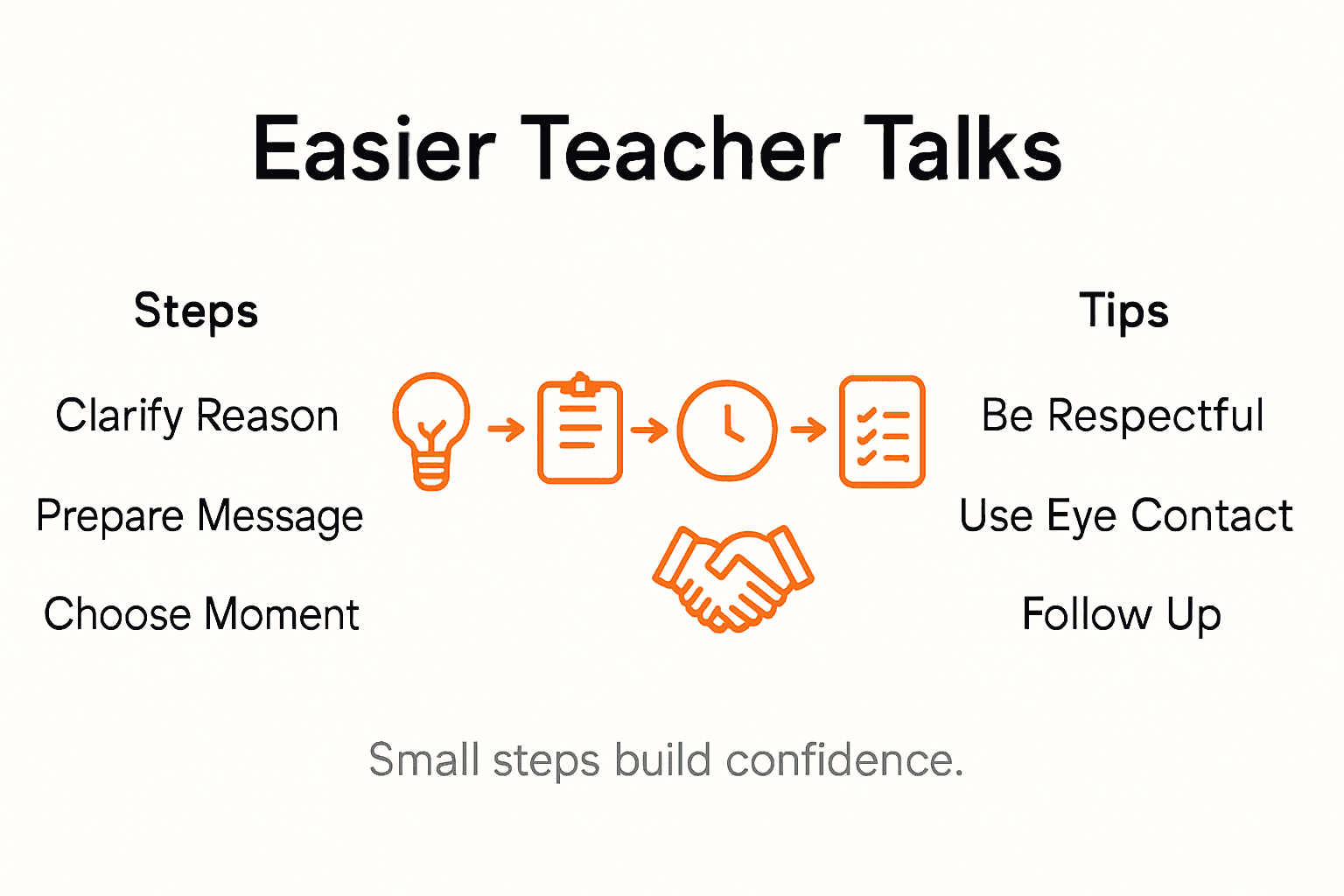
Remember to keep your tone respectful and professional. Teachers appreciate students who show they’ve thought through their questions and are genuinely interested in learning. Avoid rambling or getting off track. Stick to your main points and be direct about what you need help with or want to understand.
Pro tip: Create a quick outline or bullet points of your main conversation points to help you stay focused and calm during your interaction.
Step 3: Choose the Right Time and Place
Timing can make or break your conversation with a teacher. Picking the perfect moment shows respect for their schedule and increases the chances of getting the help you need. You want to catch your teacher when they are not rushed and can give you their full attention.
Professional communication research highlights the critical importance of selecting appropriate moments for teacher interactions. For in person conversations, look for opportunities like office hours, before or after class when other students are not waiting, or during designated help periods. Avoid approaching teachers right before a class starts or during their lunch break when they might be preparing or taking a needed break. If you want to email, send your message during regular school hours and give them reasonable time to respond.
Consider the environment as carefully as the timing. Choose a setting that allows for a private and focused discussion. If you are meeting in person, look for quiet spaces like an empty classroom or the teacher’s office. For online communication, use official school communication channels and maintain a professional tone. Always ask if it is a good time to talk and be prepared to reschedule if the moment does not seem right.
Pro tip: Schedule your conversation during the teacher’s office hours or send an email requesting a specific time to meet to ensure you get their undivided attention.
Here’s a quick summary of different ways to approach your teacher based on your needs:
| Situation | Recommended Approach | Best Time to Reach Out |
|---|---|---|
| Need assignment clarification | Email or in-person question | After class or office hours |
| Concerned about a grade | In-person meeting | Scheduled appointment |
| Struggling with class material | Office hours visit | During designated help time |
| Seeking project guidance | Email with details | Early in project timeline |
Step 4: Start the Conversation with Confidence
Opening a conversation with a teacher can feel nerve wracking, but the right approach can turn an intimidating moment into a productive discussion. Your first few words set the tone for the entire interaction, so take a deep breath and prepare to communicate clearly and respectfully.

Research on building strong teacher student relationships emphasizes the importance of positive interactions that begin with genuine interest and confidence. Start by greeting your teacher politely using their proper title like Mr., Ms., or Professor. Introduce yourself if needed, even if they already know you from class. Then clearly and concisely state the purpose of your conversation. For example, you might say something like I wanted to discuss the recent assignment or I am hoping to understand the material from last weeks lesson better.
Body language matters just as much as your words. Make eye contact, speak in a clear and steady voice, and maintain an open posture. If you feel nervous, that is completely normal. Remember that teachers want to help you succeed. They appreciate students who take initiative and communicate directly about their learning. Speak slowly, stay calm, and focus on your specific questions or concerns.
Pro tip: Practice your opening lines in a mirror beforehand to build confidence and reduce anxiety about starting the conversation.
Step 5: Address Concerns and Ask for Help
Now comes the most important part of your conversation talking through your specific concerns and asking for the help you need. This is where clarity and honesty become your best tools for getting support and understanding.
Effective communication guidelines for students emphasize planning ahead and being direct when requesting assistance from teachers. When addressing your concerns, be specific about what is challenging you. Instead of saying I do not understand anything, try explaining exactly where you are struggling. For instance, you might say I am having trouble understanding the concept of photosynthesis in chapter three or I am confused about how to solve these specific math problems. Provide concrete examples that show you have already tried to understand the material.
Approach your request for help with a positive and proactive attitude. Teachers appreciate students who demonstrate genuine effort and a willingness to learn. Ask questions like What additional resources can you recommend? or Would it be possible to review this concept together? Be open to their suggestions and show that you are committed to improving your understanding. Remember that asking for help is not a sign of weakness but a smart strategy for academic success.
Pro tip: Write down specific questions or problem areas before the conversation to ensure you cover everything and stay focused.
Step 6: Review Your Results and Follow Up
After having your conversation with your teacher, take time to reflect on what was discussed and ensure you understand the next steps. This final stage is crucial for turning your discussion into meaningful academic progress.
Reflective practices in educational settings emphasize reviewing interactions and creating action plans to support continuous improvement. Immediately after your conversation, write down the key points and recommendations your teacher shared. Did they suggest specific study strategies? Recommend additional resources? Outline a plan for catching up on missed work? Make sure you capture these details while they are fresh in your mind.
Follow up is just as important as the initial conversation. If your teacher suggested specific actions like completing extra practice problems or scheduling a future meeting, do those things promptly. Send a brief thank you email restating your understanding of the discussion and confirming the action steps. This demonstrates your commitment to learning and helps maintain a positive relationship with your teacher. Keep track of your progress and be prepared to circle back if you need further clarification or support.
The table below outlines key actions for effective follow-up after meeting with your teacher:
| Action Step | Purpose | Benefit to Student |
|---|---|---|
| Take notes post-meeting | Record advice and next steps | Ensures clear understanding |
| Complete suggested actions | Show commitment to improvement | Builds teacher trust |
| Send a thank you message | Confirm understanding and gratitude | Maintains positive rapport |
| Track your progress | Stay organized and accountable | Facilitates academic success |
Pro tip: Create a simple tracking document or digital note where you record your teacher’s recommendations and your progress to stay accountable and organized.
Build Confidence and Master Communication with Your Teachers Today
Feeling intimidated about talking to your teachers is a common challenge but it does not have to hold you back from academic success. This article highlights how clarity, preparation, and choosing the right time can transform scary conversations into productive ones. If you want to overcome nervousness, organize your thoughts, and express your concerns clearly you need strategies that go beyond just talking tips.
Discover how mastering these skills empowers you to approach your teachers confidently and make the most out of every interaction. Don’t wait until confusion or anxiety builds. Take action now and elevate your learning experience to get started on your path to success.
Frequently Asked Questions
What is the best way to prepare for a conversation with my teacher?
To prepare for a conversation with your teacher, identify the specific reason for reaching out and organize your thoughts. Write down key points and practice saying them aloud to build confidence before the discussion.
How can I approach my teacher respectfully during a conversation?
Start the conversation by greeting your teacher politely, using their proper title. Clearly state the purpose of your discussion and maintain open body language to facilitate positive engagement.
When is the most appropriate time to talk to my teacher?
The best times to talk to your teacher are during office hours, before or after class, or during designated help periods. Avoid approaching them when they are busy or about to start a class, ensuring you have their full attention.
How should I address my concerns during the conversation?
When addressing your concerns, be specific about what challenges you are facing. Instead of saying you don’t understand anything, pinpoint exact topics or examples that are causing confusion to make your request clearer.
What should I do after my conversation with my teacher?
After your conversation, take notes on what was discussed and follow up with any action steps recommended by your teacher. Sending a thank you email reinforces your commitment to learning and helps maintain a positive relationship.
How can I build confidence to talk to my teacher?
Practice your opening lines in front of a mirror to increase your confidence. Taking deep breaths before the conversation can help calm your nerves and set a positive tone for the discussion.
Recommended
- 15 Reasons the Feynman Technique Is a Game-Changer for Students
- 10 Unique College Essay Ideas to Stand Out in Applications
- 26 Essential Tips for Freshman Year of High School From a Graduate
- 12 Apps That’ll Stop Social Media From Destroying Your GPA (From Someone Who Almost Failed Because of TikTok)
Want a head start? The Building Self-Confidence workbook in my shop was made for exactly this — it’ll save you a ton of time.