Most American students struggle with self doubt at some point, and research shows that over 60 percent of college students report feeling overwhelming anxiety about their abilities. Facing group presentations, tough exams, or comparing yourself to others can make confidence feel out of reach. This practical guide gives you simple steps to understand your unique strengths, overcome self criticism, and transform setbacks into real growth, whether you are battling social anxiety or imposter syndrome.
Quick Summary
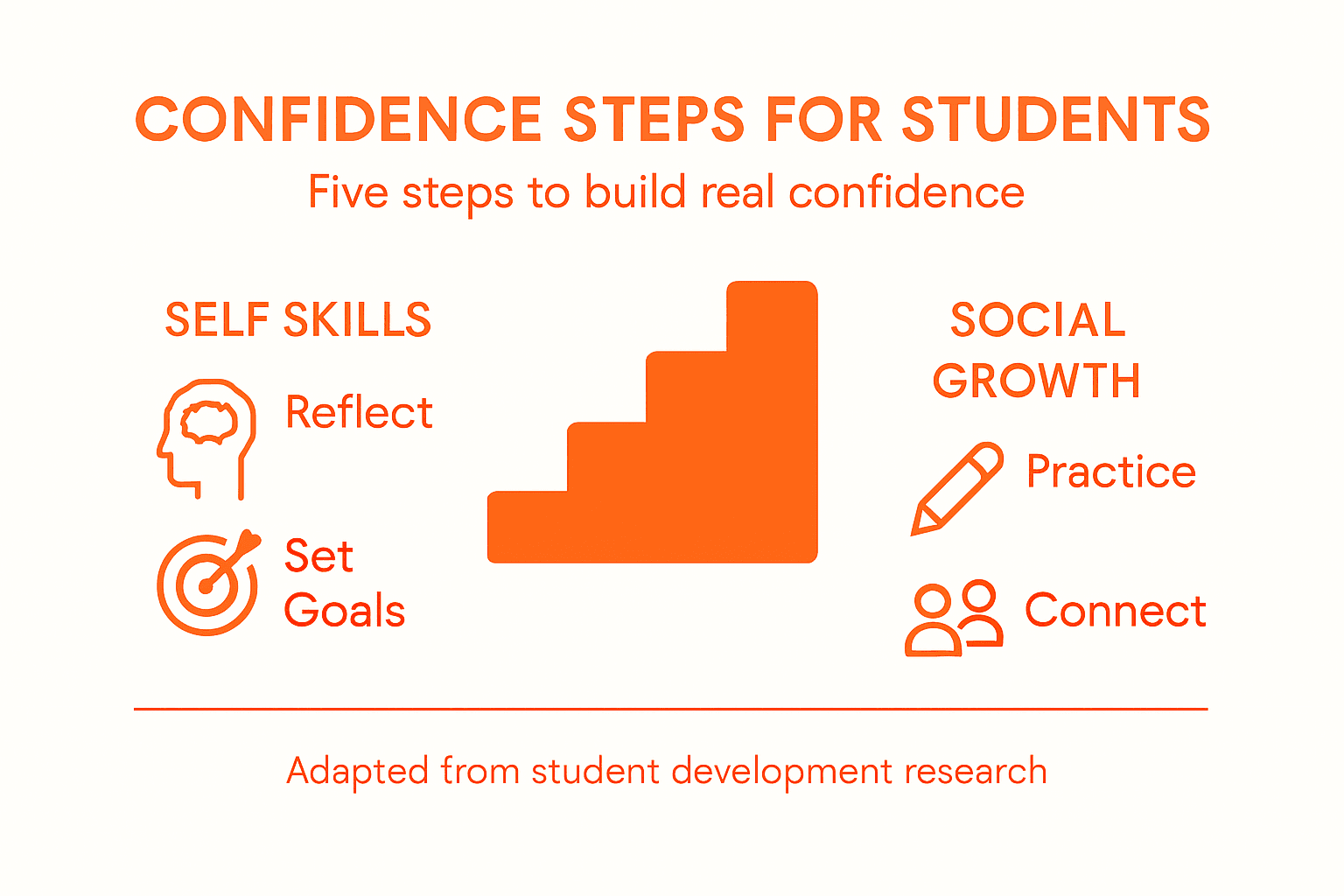
| Key Point | Explanation |
|---|---|
| 1. Assess Current Confidence Levels | Reflect on your confidence by identifying areas of doubt and barriers that hinder your self-esteem. |
| 2. Set Growth-Oriented Goals | Create personal goals focused on improvement rather than perfection to cultivate intrinsic motivation and self-worth. |
| 3. Practice Positive Self-Talk | Replace negative internal dialogue with positive affirmations to reframe your mindset and build resilience. |
| 4. Challenge Social Comfort Zones | Engage in small social challenges to develop communication skills in supportive environments and boost confidence. |
| 5. Track Progress and Celebrate Wins | Document your achievements and strategies regularly to recognize growth and maintain motivation throughout your confidence journey. |
Step 1: Assess Current Confidence and Identify Barriers
Building real confidence starts with honest self reflection. This step is about understanding where your current confidence levels stand and pinpointing the specific barriers holding you back from feeling truly empowered.
Begin by creating a personal confidence map. Grab a notebook and answer some key questions: When do you feel most unsure of yourself? Where do you consistently doubt your abilities? What situations make you feel small or inadequate? The goal is to uncover patterns. Low self esteem behaviors often include making self critical comments, avoiding new challenges, or immediately assuming you cannot succeed.
To dig deeper, rate your confidence on a scale from 1 to 10 in different areas: academic performance, social interactions, personal skills, and emotional resilience. Be brutally honest. Most students discover they have strengths in some areas and significant gaps in others. The strengths-based approach suggests focusing on recognizing your existing talents rather than dwelling on perceived weaknesses.
Analyze your confidence barriers by tracking specific triggers. Do presentations terrify you? Do group discussions make you nervous? Understanding these precise moments helps you create targeted strategies for improvement.
Here’s a summary of common confidence barriers and possible targeted strategies to overcome them:
| Barrier | Trigger Situation | Targeted Strategy |
|---|---|---|
| Low self-esteem | Receiving criticism | Practice positive self-talk |
| Fear of public speaking | Class presentations | Join a debate club |
| Social anxiety | Group discussions | Volunteer for small group tasks |
| Doubt in abilities | New challenges | Focus on past successes |
Pro tip: Create a “confidence journal” where you document moments of self doubt and gradually track your progress in overcoming them.
Step 2: Set Personal Growth Goals and Define Self-Worth
This step transforms your confidence journey by helping you create meaningful goals that reflect your true potential and value. You will learn how to establish objectives that go beyond external achievements and focus on personal growth and self understanding.
Personal learning goals are powerful tools for building intrinsic motivation. Start by creating goals that emphasize improvement rather than perfection. For example, instead of saying “I want to get straight As,” reframe your objective to “I will develop stronger study habits and learn from my mistakes.” This approach shifts your mindset from outcome to progress.
Defining self worth requires recognizing your value beyond grades or accomplishments. Goal setting focused on growth helps you understand that your abilities are not fixed but can expand with effort and learning. Break down your goals into specific measurable actions. Want to improve public speaking? Set a goal to join a debate club or practice one presentation per month.
Create a goal tracking system that celebrates small wins. Use a journal or digital app to record your progress, noting not just achievements but the effort and strategies you employed. This documentation helps you see your growth trajectory and builds confidence in your ability to improve.

Compare different types of growth-based goals and their impact on personal development:
| Goal Type | Example | Impact on Confidence |
|---|---|---|
| Skill-focused | Improve study habits | Builds trust in ability to learn |
| Social-focused | Engage in group talks | Strengthens communication skills |
| Emotional-focused | Practice resilience | Enhances ability to handle setbacks |
| Achievement-focused | Win writing contest | Increases motivation through recognition |
Pro tip: Write your goals using positive language that emphasizes potential and learning, not limitations.
Step 3: Practice Positive Self-Talk and Transform Mindset
This step is about rewiring your internal dialogue to build genuine confidence and resilience. You will learn how to replace negative thought patterns with empowering self talk that supports your growth and potential.
Positive self confidence strategies start with recognizing your current inner dialogue. Pay attention to how you speak to yourself when facing challenges. Do you immediately jump to self criticism? Catch those moments and consciously reframe them. Instead of thinking “I always mess up,” shift to “I am learning and improving with each attempt.”
Transforming your mindset requires consistent practice. Coping strategies in students demonstrate that positive cognitive reappraisal can dramatically improve self efficacy. Create a daily practice of positive affirmations that feel authentic to you. Write down statements that reflect your potential like “I am capable of growing and overcoming challenges” or “My effort matters more than perfection.”
Develop a habit of speaking to yourself with the same kindness you would offer a good friend. When you make a mistake, respond with compassion instead of judgment. Record these positive conversations in a journal to track your mental shift and reinforce your new empowering language.
Pro tip: Create a voice recording of your positive affirmations and listen to them during moments of self doubt.
Step 4: Develop Social Skills Through Safe Challenges
Boosting your social confidence requires strategic practice and intentional challenges. This step will help you build communication skills in supportive environments that feel safe and empowering.
Student engagement strategies emphasize creating opportunities for meaningful social interactions. Start small by volunteering for group discussions or taking on leadership roles in class projects. Pick scenarios where you feel slightly uncomfortable but not overwhelmed. For instance, raise your hand to answer a question or offer to lead a small team presentation.
Presentation confidence techniques suggest focusing on body language and vocal delivery to build social skills. Practice maintaining eye contact, speaking clearly, and using confident postures. Join clubs or student organizations where you can practice speaking in low stakes environments. Debate clubs, study groups, and campus events provide excellent platforms to gradually expand your social comfort zone.
Track your progress by keeping a social skills journal. Document each challenge you take on, how you felt beforehand, and what you learned. Celebrate small wins like speaking up in class or introducing yourself to a classmate. Remember that social confidence is a skill you can develop with consistent practice and self compassion.
Pro tip: Start with one small social challenge per week and gradually increase the difficulty as your confidence grows.
Step 5: Review Progress and Celebrate Achievements
This final step transforms your confidence journey from a process into a powerful personal narrative of growth. You will learn how to document your progress and honor every step of your transformation with meaningful recognition.
Student self assessment strategies reveal the importance of systematic progress tracking. Create a dedicated journal or digital spreadsheet where you record both small and significant milestones. Track not just achievements but also the strategies you used and obstacles you overcame. Divide your progress into categories like academic performance, social interactions, personal challenges, and emotional resilience.
Building student confidence requires intentional celebration. Design a reward system that acknowledges your efforts. This could mean treating yourself to something special after completing a challenging task or sharing your progress with a supportive friend. The key is making your achievements feel tangible and meaningful.
Reflect on your growth periodically. Look back at where you started and appreciate how far you have come. Your confidence is not about perfection but about consistent effort and willingness to learn. Recognize that every small step forward represents significant personal development.
Pro tip: Take a monthly progress photo or create a visual timeline to make your confidence journey more concrete and motivating.
Empower Your Confidence Journey with Practical Learning Tools
Struggling with low self-esteem and fearing social challenges can hold back any student’s true potential. This article highlights how identifying personal barriers like negative self-talk and fear of public speaking is essential to building real confidence from within. If you relate to feeling stuck or overwhelmed by doubts, you are not alone. Key steps such as setting growth-focused goals and practicing positive affirmations unlock your inner strength and resilience.
Take control of your learning experience and personal growth by accessing tailored resources designed to boost your study habits, time management, and productivity. We provide practical strategies that complement your confidence building journey, helping you embrace challenges with clarity and calm. Start today by exploring our insightful content and tools. Begin transforming your mindset and skills to achieve lasting academic and personal success.
Frequently Asked Questions
How can I assess my current confidence levels as a student?
Begin by creating a personal confidence map, where you reflect on situations that make you feel unsure. Take time to rate your confidence on a scale of 1 to 10 in various areas like academics and social skills to identify strengths and areas for improvement.
What are some effective strategies to overcome low self-esteem in school?
You can practice positive self-talk to counter self-critical thoughts. For instance, replace negative comments with affirmations like “I am capable of learning from my mistakes” to gradually enhance your self-worth.
How can I set personal growth goals that build my confidence?
Focus on creating goals that emphasize improvement rather than perfection, such as “I will practice my presentation skills once a month”. Make sure to break down these goals into measurable actions to track your progress.
What are safe challenges I can undertake to improve my social skills?
Start with small, manageable tasks like raising your hand to answer a question in class or joining a student organization. Aim to tackle one small social challenge each week to gradually expand your comfort zone.
How should I document my progress in building confidence?
Create a dedicated journal or digital document to record milestones and the strategies you used to achieve them. Regularly reflecting on your growth will help reinforce your journey and celebrate your achievements.
What are some healthy practices for maintaining a positive mindset?
Engage in daily positive affirmations and practice self-kindness, especially during challenges. For example, when you encounter a setback, remind yourself, “I am learning and improving,” to foster a growth-oriented mindset.
Recommended
- 10 Unique College Essay Ideas to Stand Out in Applications
- Understanding How to Build Confidence in College/High School
- Why Junior Year is Not Too Late to Start Extracurriculars
- 15 Reasons the Feynman Technique Is a Game-Changer for Students
Want a head start? The Building Self-Confidence workbook in my shop was made for exactly this — it’ll save you a ton of time.