
Does it feel like your child changed overnight? One day you’re helping them with basic addition and organizing their toy chest; the next, they’re navigating complex friendship dynamics and juggling six different teachers. Welcome to middle school, the years where the "social" and "academic" worlds collide in a way that can feel a bit like a rollercoaster for both of you.
As a parent, you want your child to succeed in the classroom, but you also know that their social development is just as vital for their long-term happiness. How do you ensure they get their math homework done without missing out on the foundational peer experiences that define these years?
Ready to become the supportive coach your middle schooler needs? Let's dive into how to strike that perfect balance with our comprehensive checklist and strategy guide.
The Great Middle School Shift: Why It Feels So Different
Middle school isn't just "elementary school with more lockers." It’s a fundamental shift in how your child learns and interacts. Academically, the workload increases, and the expectation for self-advocacy starts to take center stage. Socially, the "need to belong" becomes the primary driver for almost every decision they make.
When these two worlds pull in opposite directions, it’s easy for a student to feel overwhelmed. They might prioritize a group chat over a history project, or conversely, stay up so late studying that they’re too exhausted to engage with friends during lunch. Our goal is to help them realize that these two areas aren't enemies, they are two halves of a successful student life.
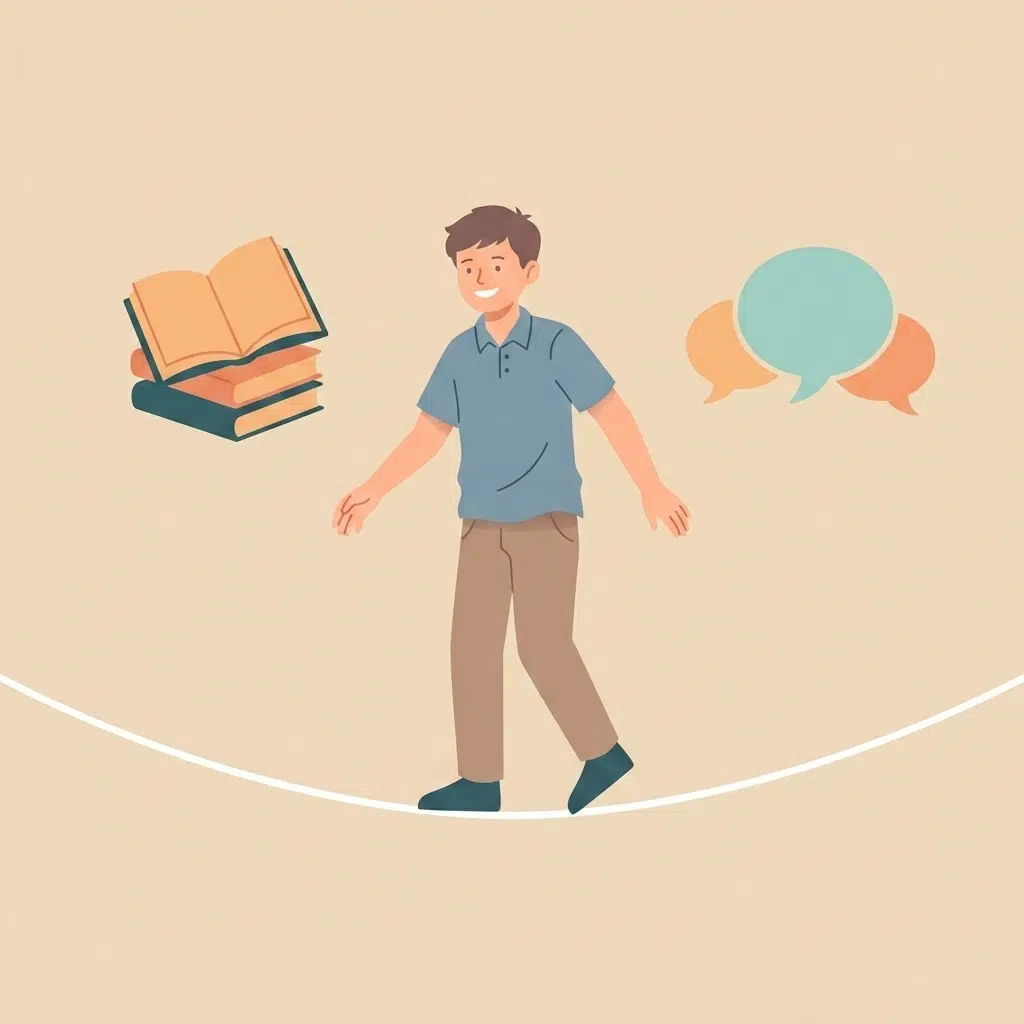
Your Essential Academic & Social Balance Checklist
Use this checklist as a starting point to assess where your child stands and where they might need a little extra "Learning With Angie" style support.
The Organization & Time Management Pillar
- The Planner Habit: Does your child have a physical or digital planner to track assignments?
- The "After-School" Flow: Have you established a consistent routine (e.g., 30 minutes of downtime, then 60 minutes of focused work)?
- Project Chunking: Can your child break a two-week science project into smaller, daily tasks?
- Visual Cues: Is there a shared family calendar where everyone can see upcoming social events and big exam dates?
The Academic Support Pillar
- Self-Advocacy Skills: Does your child know how to email a teacher or stay after class to ask for clarification?
- Study Sanctuary: Is their study environment free from digital distractions like gaming consoles or unmanaged smartphones?
- Digital Boundaries: Are there clear rules for screen time, such as "phones in the kitchen" during homework blocks?
- Review Cycles: Do you have a weekly "10-minute check-in" to look at upcoming priorities together?
The Social-Emotional Pillar
- Extracurricular Limits: Have you agreed on a "number of activities" limit to prevent total burnout?
- Emotional Check-ins: Do you regularly ask, "How are you feeling about your schedule?" rather than just "How was the test?"
- Downtime Protection: Is there scheduled time where your child is required to do nothing related to school or structured social groups?
- Problem-Solving Modeling: Do you share examples of how you balance your own work-life commitments to show them it's a lifelong skill?
The Academic Pillar: Building Independent Study Habits
In middle school, the "how" of studying is often more important than the "what." This is the time to introduce proven study techniques that maximize efficiency so they have more time for social activities.
One of the most effective tools we recommend is the Pomodoro Technique. By working in 25-minute bursts followed by a 5-minute break, students stay fresh and avoid the "marathon study session" that leads to burnout.
Essential Academic Action Items:
- Audit the backpack: Once a week, help them clear out the "black hole" of loose papers. Organization is the foundation of peace.
- Establish a "Submission Ritual": Encourage them to double-check their digital submission portals every Friday afternoon to ensure nothing was missed.
- Prioritize active recall: Move away from just "reading the notes." Encourage them to use flashcards or teach the concept back to you.

The Social Pillar: Navigating Friendships and Boundaries
In the middle school brain, a social "emergency" (like a fallout with a best friend) can feel just as significant as failing a grade. As a parent, validating these feelings while keeping the academic train on the tracks is your superpower.
How to Support Their Social Growth:
- Encourage "Low-Stakes" Clubs: Suggest they join a school club based on a hobby (like art, coding, or chess) rather than just "what the friends are doing." This builds a sense of identity outside of their main peer group.
- Master the "Soft No": Teach your child that it’s okay to say no to a social hangout if they are feeling overwhelmed. Use phrases like, "I'd love to go, but I've got a big week ahead. Can we do next Saturday?"
- Digital Citizenship: Social life happens on the phone. Work with them on personal growth habits that include putting the phone away when they need to be present or productive.

Tools to Streamline Success
You don't have to reinvent the wheel. We've built resources specifically designed to take the guesswork out of student organization and productivity.
- Digital Planners & Notion Templates: Use tools that resonate with their digital-native brains. A clean Notion setup can help them track homework, extracurriculars, and even their personal goals in one place.
- The Pomodoro Timer: Keep a physical timer (like our favorite tomato timer!) on their desk to make time feel tangible.
- Mandala Coloring Pages: For those high-stress weeks, having a creative outlet can be a game-changer for wellness and stress reduction.
Knowing When to Step In (and When to Let Go)
This is the hardest part for any parent: the transition from "manager" to "consultant."
When to Step In:
- If their grades drop significantly and suddenly.
- If you notice signs of chronic sleep deprivation or high anxiety.
- If they are being excluded or bullied in a way they cannot handle alone.
When to Let Go:
- When they forget a minor assignment. Let them feel the natural consequence of a lower grade; it’s a powerful teacher.
- When they choose an extracurricular activity you wouldn't have picked.
- When they are organizing their own study group (even if it looks a little disorganized to you).
By giving them the space to manage their own life skills, you are preparing them for the independence of high school and beyond.
Join The Community
Navigating the middle school years doesn't have to be a solo journey. At Learning With Angie, we’re dedicated to providing you and your student with the practical, tested advice you need to thrive.
Are you ready to stay ahead of the curve? Join our biweekly newsletter for fresh study hacks, productivity tools, and student success resources delivered straight to your inbox. We believe in covering the full student experience: because great grades are better when you have the life skills to enjoy them.
[Sign Up For The Learning With Angie Newsletter Here]
Want a head start? The All-in-One College Application Organizer in my shop was made for exactly this — it’ll save you a ton of time.