Homeschooling Without Burnout: Tips for Student Autonomy

Do you ever feel like you’re more of a "taskmaster" than a teacher? If your homeschooling days feel like a constant cycle of "did you finish your math?" and "stop looking at the window," you aren't alone. Many homeschooling parents find themselves on the fast track to burnout because they are carrying the entire mental load of their child's education.
The secret to a sustainable, joy-filled home classroom isn't a more complex curriculum or a stricter schedule. It’s student autonomy. When you shift the responsibility of "doing the work" from your shoulders to theirs, you don't just free up your time: you give your child the essential executive function skills they need for life.
Ready to stop the nagging and start seeing your student take the lead? Here is how to build autonomy and banish burnout for good.
Shift The Load: Why Autonomy is Your Best Friend
Burnout happens when the "teacher" is doing more work than the "student." If you are the one tracking every deadline, finding every pencil, and initiating every single task, you will eventually run out of steam.
By prioritizing autonomy, you are teaching your child how to manage themselves. This isn't about leaving them to fend for themselves; it’s about scaffolding their independence. Think of yourself as a coach rather than a manager. You provide the tools and the strategy, but they are the ones on the field.
- Empowerment: Students who have a say in their schedule are more motivated to follow it.
- Skill Building: Planning and prioritizing are "muscles" that only grow when they are used.
- Parental Relief: You can finally enjoy a cup of coffee while it's still hot, knowing the work is getting done.
Master The Art of Micro-Routines

One of the biggest hurdles to autonomy is task initiation: knowing where and how to start. You can eliminate this friction by implementing micro-routines. These are small, repeatable sequences of actions that signal to the brain it’s time to work.
Instead of a vague instruction like "start your schoolwork," help your student develop a 5-minute "Launch Routine." This might look like:
- Clear the desk of anything not related to the first subject.
- Refill a water bottle.
- Open the daily healthy habits checklist to see what needs to be tackled first.
- Set a timer for 25 minutes.
When these small steps become automatic, your child no longer needs you to tell them what to do next. They just follow the routine.
Visual Systems for Independent Learners
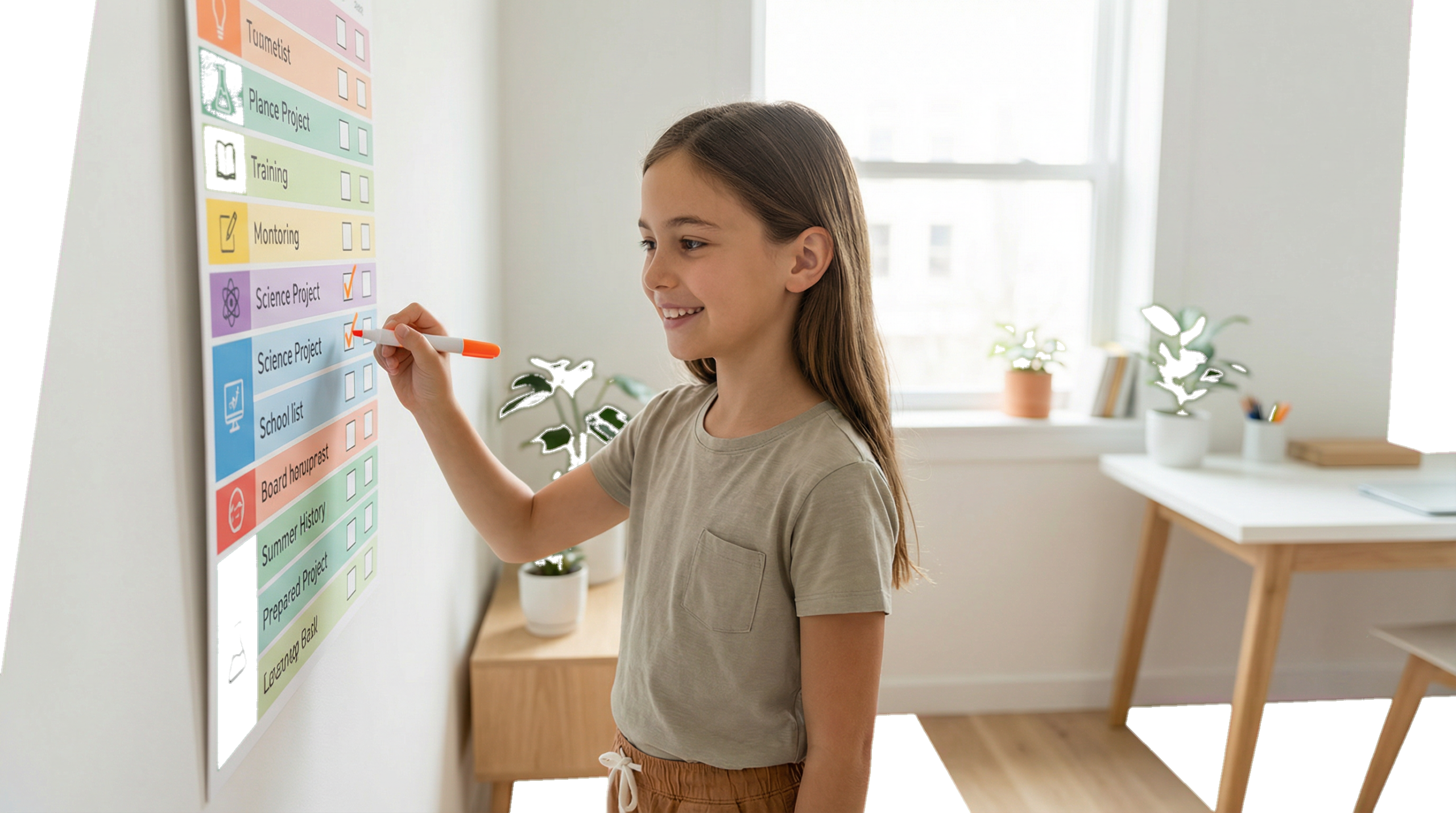
If a task isn't visible, it often doesn't exist in a student's mind. To foster autonomy, you need to move the "to-do list" out of your head and onto a physical or digital surface.
Using a high school four-year plan template can help older students see the "big picture" of their education, which makes the daily grind feel more meaningful. For daily management, an undated monthly planner allows them to track deadlines and extracurriculars independently.
To make sure you keep everything in order, try these visual tools:
- Wall Checklists: Use a dry-erase board for "must-do" tasks.
- Color-Coded Folders: One color for each subject so they never lose their work.
- The "Done" Bin: A physical place to put completed work so they feel the satisfaction of finishing.
Use Timers to Build Focus
Burnout often stems from "time blindness": the feeling that a task will last forever. This leads to procrastination and parental frustration. One of the most effective tools in our student success kit is the Pomodoro Technique.
Encourage your student to work in focused blocks (usually 25 minutes) followed by a short break. This teaches them to manage their own energy levels rather than waiting for you to tell them when they've worked enough.

Why this works for autonomy:
- It provides a clear endpoint for work.
- It builds self-regulation skills.
- It allows for guilt-free breaks that keep the brain fresh.
The Power of Reflective Goal-Setting
Autonomy isn't just about doing work; it's about understanding how you work. At the end of each day or week, have a "Sync Meeting" with your student. Instead of critiquing their output, ask them to self-assess.
You can use Learning With Angie’s self-assessments to guide these conversations. Ask questions like:
- "What was the hardest task today, and why?"
- "What tool helped you stay focused?"
- "What is one thing you want to do differently tomorrow?"
This builds metacognition: the ability to think about one's own thinking. When a student realizes why they struggled with a math assignment (e.g., "I was too hungry" or "The room was too loud"), they can solve the problem themselves next time.

Create a Dedicated Success Space
Finally, the physical environment plays a massive role in student autonomy. If your child has to hunt for a charger or clear off the dining table every time they want to work, they are likely to give up before they even start.
Designate a specific "success space" that is stocked with everything they need. It doesn't have to be a whole room: a dedicated corner of a desk works perfectly.
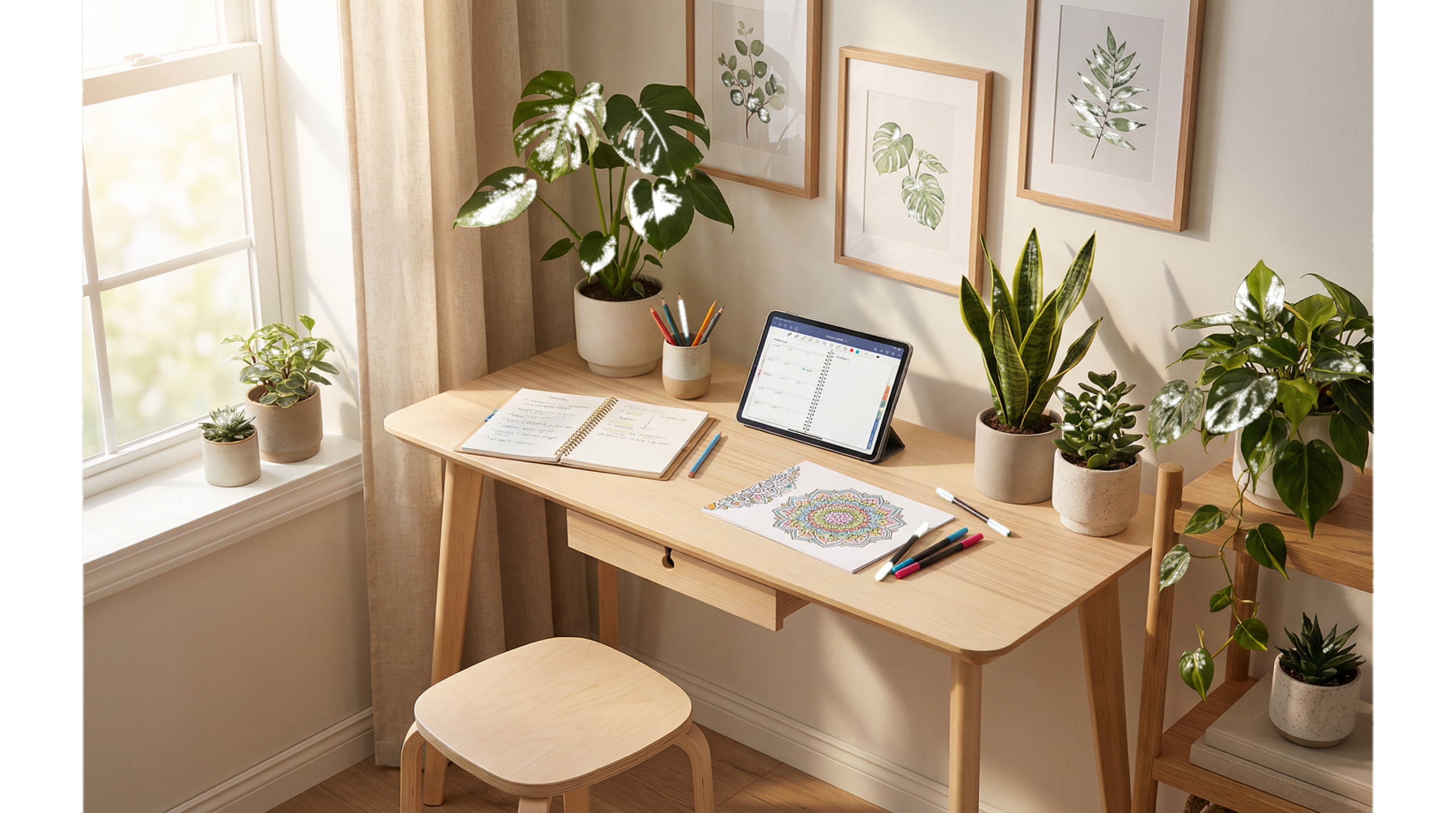
Essential elements for an autonomous workspace:
- Natural Light: To keep energy levels high.
- Zero-Friction Supplies: Pencils, paper, and tech chargers within arm's reach.
- Low Distractions: A space away from the TV or high-traffic kitchen areas.
Join The Community
Homeschooling is a marathon, not a sprint. To avoid burnout, you need a steady stream of fresh ideas and a community that understands the unique challenges of student life.
At Learning With Angie, we believe that education is about the full student experience: academics, life skills, and personal growth. Whether you are looking for Notion templates for college prep or simple study hacks, we’ve got your back.
Ready to streamline your homeschool and boost your student's confidence? Sign up for our biweekly newsletter to receive actionable resources and tips delivered straight to your inbox. Let's make this your most productive and stress-free year yet!