Dealing with Roommate Conflicts and Drama
Roommate drama is more common than most people expect. More than 60 percent of college students report experiencing some kind of conflict with roommates each year. That might sound like a warning sign about shared living. But knowing why these tensions happen can actually unlock surprising opportunities for growth, better communication, and real friendships.
Quick Summary
| Takeaway | Explanation |
|---|---|
| Understand the root causes of conflicts | Conflicts arise from personal space, cleanliness, financial responsibilities, and differing habits among roommates. |
| Address conflicts early to prevent escalation | Unresolved tensions can lead to stress, anxiety, and potentially harmful living conditions. |
| Practice effective communication | Use ‘I’ statements, active listening, and non-defensive dialogue to resolve disagreements constructively. |
| Develop conflict resolution skills | Skills like empathy, negotiation, and perspective-taking can enhance roommate relationships and personal growth. |
| Recognize environmental stress impacts | Academic pressures, limited space, and competing schedules can exacerbate conflicts, necessitating proactive approaches. |
What Are Roommate Conflicts and Drama?
Living with roommates can feel like navigating a complex social maze where unexpected tensions and disagreements can pop up at any moment. Roommate conflicts and drama refer to interpersonal challenges and negative interactions that emerge when people share living spaces, often triggered by differences in personalities, habits, expectations, and communication styles.
Understanding the Root Causes
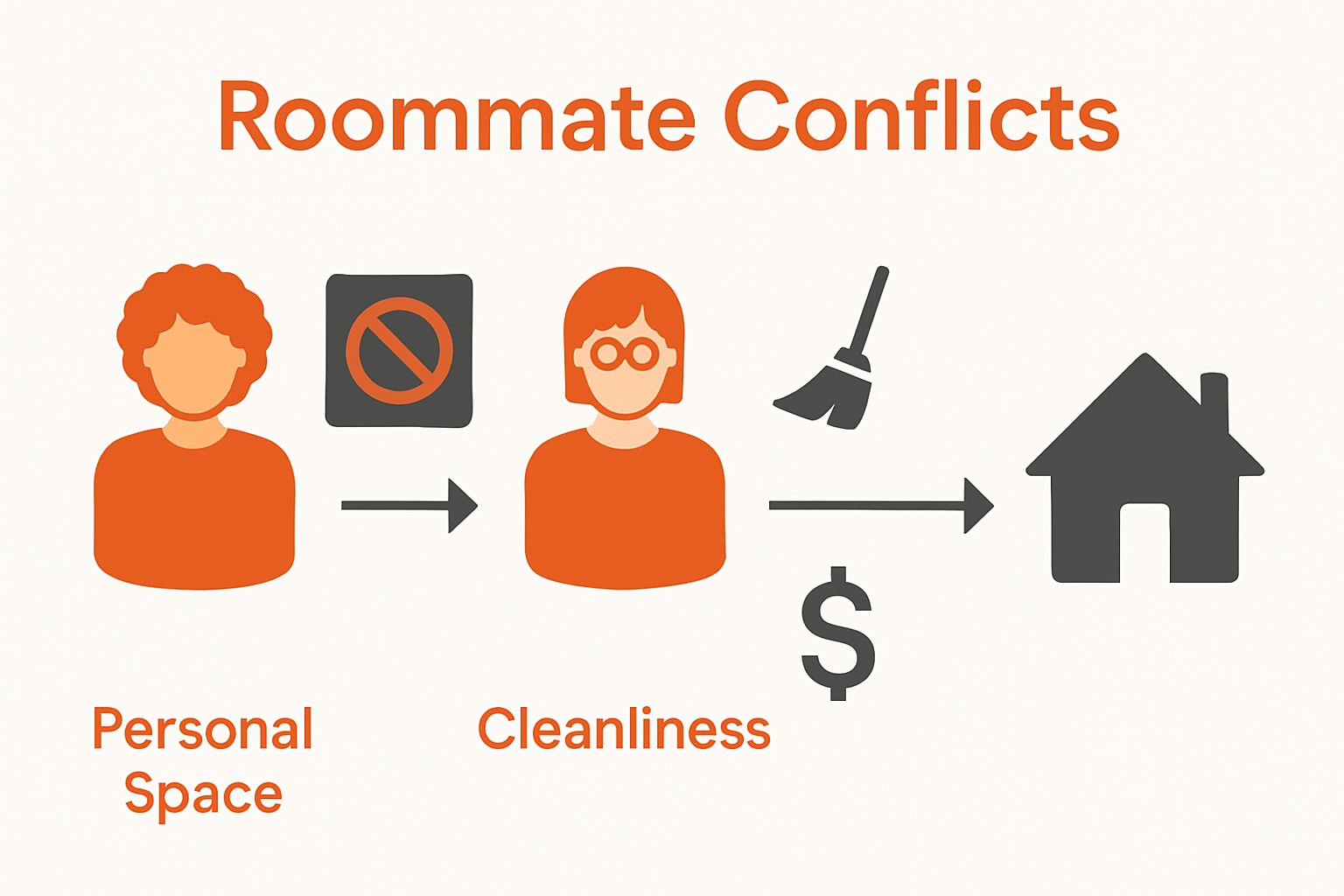
Roommate conflicts typically stem from several fundamental issues that can create friction in shared living environments. These challenges often include:
- Personal space boundaries and privacy concerns
- Differences in cleanliness and organization standards
- Financial responsibilities like rent and utility payments
- Noise levels and sleep schedules
- Shared resource management
- Conflicting social habits and lifestyle preferences
According to Psychology Today, these conflicts are normal and almost unavoidable when individuals from different backgrounds live together. The key is understanding that conflict itself is not inherently negative – it’s how people choose to address and resolve these challenges that determines the outcome.
Below is a table that summarizes the core causes of roommate conflicts and drama, organizing the root issues for easier reference and comprehension.
| Root Cause | Description |
|---|---|
| Personal Space Boundaries | Disagreements about privacy and respect for individual areas within shared living spaces. |
| Cleanliness and Organization Standards | Differences in expectations about tidiness, chores, and overall room organization. |
| Financial Responsibilities | Conflicts over rent payments, utility sharing, and other shared expenses. |
| Noise Levels and Sleep Schedules | Disputes about acceptable noise levels and differing activity or sleeping patterns. |
| Shared Resource Management | Trouble dividing the use of communal items, kitchenware, or shared storage space. |
| Social Habits and Lifestyle Preferences | Clashes due to visitors, parties, and differing social behaviors or routines. |
The Impact of Unresolved Roommate Drama
When roommate conflicts go unaddressed, they can escalate quickly and create toxic living environments. Unresolved tensions can lead to:
- Increased stress and anxiety
- Emotional exhaustion
- Potential breakdown of living arrangements
- Negative impacts on academic or professional performance
- Damaged personal relationships
Research from American College Health Association indicates that interpersonal conflicts significantly contribute to student stress levels, underscoring the importance of developing effective communication and conflict resolution skills.
Recognizing and understanding roommate conflicts is the first step toward creating a more harmonious living situation. By approaching these challenges with empathy, respect, and open communication, students can transform potential drama into opportunities for personal growth and mutual understanding.
Why Do Roommate Conflicts Happen?
Roommate conflicts are complex social interactions rooted in human diversity, personal experiences, and individual expectations. Understanding the underlying reasons for these conflicts helps students develop better strategies for managing shared living spaces and maintaining positive relationships.
Psychological and Personal Differences
Individuals bring unique backgrounds, communication styles, and personal habits into shared living environments. These differences create natural friction points that can escalate into conflicts. Research from Stanford University suggests that personal psychology plays a significant role in how people interact and resolve disputes.
Key psychological factors contributing to roommate conflicts include:
- Different comfort levels with personal space
- Varied communication and conflict resolution skills
- Unique stress management approaches
- Individual expectations about shared living arrangements
- Contrasting cultural or family backgrounds
- Diverse emotional intelligence levels
Environmental and Situational Triggers
Beyond individual differences, external factors significantly impact roommate relationships. Stressful environments and challenging life circumstances can amplify potential conflicts. College students often experience multiple simultaneous pressures that contribute to interpersonal tensions.
Common situational triggers include:
- Academic stress and exam periods
- Financial strain
- Limited living space
- Competing schedules
- Unexpected life transitions
- Personal relationship challenges
According to Journal of College Student Development, environmental stressors can dramatically increase the likelihood of interpersonal conflicts among young adults sharing living spaces.
Developmental Stage and Social Learning
College and young adult years represent critical periods of social skill development. Many students are experiencing independent living for the first time, lacking prior experience in negotiating shared spaces and resolving interpersonal challenges.
This developmental stage means roommates are simultaneously learning about:
- Personal boundaries
- Conflict resolution
- Compromise
- Effective communication
- Mutual respect
By recognizing these complex dynamics, students can approach roommate relationships with greater empathy, understanding, and proactive communication strategies.

The Impact of Conflicts on Roommate Relationships
Roommate conflicts can significantly transform living dynamics, creating ripple effects that extend far beyond shared physical spaces. Understanding these impacts helps students recognize the deeper psychological and social consequences of unresolved interpersonal challenges.
Emotional and Psychological Consequences
Conflicts create substantial emotional strain that can negatively affect personal well-being and mental health. American Psychological Association research indicates that persistent interpersonal tensions can lead to increased anxiety, depression, and emotional exhaustion among college students.
Emotional impacts typically include:
- Heightened stress levels
- Reduced sense of personal safety
- Decreased motivation
- Increased feelings of isolation
- Lowered self-esteem
- Emotional burnout
Academic and Performance Implications
Roommate conflicts do not remain confined to living spaces – they can substantially disrupt academic performance and overall student experience. Persistent interpersonal tensions create cognitive distractions that compromise learning and personal development.
Academic consequences may involve:
- Reduced concentration
- Lower academic engagement
- Increased absenteeism
- Diminished classroom participation
- Potential grade deterioration
- Compromised study environment
According to National Center for Education Statistics, students experiencing significant roommate conflicts are more likely to experience academic challenges and potential institutional withdrawal.
Long-Term Social and Interpersonal Effects
Beyond immediate experiences, roommate conflicts can shape future relationship patterns and social interaction skills. These early living experiences serve as critical learning opportunities for developing conflict resolution, communication, and empathy skills.
Potential long-term impacts include:
- Developing negative relationship patterns
- Reduced trust in future shared living arrangements
- Improved conflict management skills
- Enhanced emotional intelligence
- More nuanced understanding of personal boundaries
By recognizing these multifaceted consequences, students can approach roommate relationships with greater intentionality, empathy, and proactive communication strategies.
The following table highlights the main emotional, academic, and long-term effects of unresolved roommate conflicts, providing a quick reference to the potential impacts discussed.
| Impact Area | Specific Consequences |
|---|---|
| Emotional/Psychological | Heightened stress, anxiety, isolation, emotional exhaustion |
| Academic/Performance | Reduced concentration, absenteeism, lower grades, disengagement |
| Long-Term Social Skills | Negative relationship patterns, trust issues, improved conflict management, emotional growth |

Key Concepts in Conflict Resolution
Conflict resolution is a critical skill that transforms potentially destructive interactions into opportunities for mutual understanding and personal growth. Understanding these foundational concepts helps students navigate complex roommate relationships with greater emotional intelligence and communication effectiveness.
Communication and Active Listening
Effective communication serves as the cornerstone of resolving interpersonal conflicts. Harvard Negotiation Project research highlights that active listening goes beyond merely hearing words, requiring genuine engagement and empathetic understanding.
Key communication strategies include:
- Practicing non-defensive communication
- Using “I” statements to express feelings
- Avoiding blame or accusatory language
- Maintaining open and respectful dialogue
- Validating each other’s perspectives
- Demonstrating genuine interest in understanding
Emotional Intelligence and Empathy
Emotional intelligence plays a pivotal role in conflict resolution. Understanding and managing emotions helps roommates navigate disagreements more constructively. Yale Center for Emotional Intelligence emphasizes that emotional awareness is crucial for developing healthy interpersonal relationships.
Important emotional intelligence components involve:
- Recognizing personal emotional triggers
- Managing emotional responses
- Understanding different emotional perspectives
- Developing emotional self-regulation
- Practicing genuine empathy
- Maintaining composure during tense interactions
Negotiation and Compromise
Successful conflict resolution requires sophisticated negotiation skills that balance individual needs with collective harmony. Compromise does not mean losing but finding mutually beneficial solutions that respect everyone’s boundaries and preferences.
Effective negotiation principles include:
- Identifying shared goals
- Separating people from problems
- Generating multiple solution options
- Focusing on interests, not positions
- Creating win-win scenarios
- Establishing clear agreements
By mastering these key conflict resolution concepts, students can transform potential roommate conflicts into opportunities for personal growth, mutual understanding, and stronger interpersonal relationships.
Practical Approaches to Understanding Conflicts
Understanding conflicts requires more than theoretical knowledge – it demands practical skills and strategic approaches that help transform potential confrontations into constructive dialogues. By developing intentional strategies, students can navigate roommate relationships with greater emotional intelligence and communication effectiveness.
Recognizing Conflict Patterns
Identifying conflict patterns allows students to anticipate and address potential tensions before they escalate. Journal of Social Psychology research suggests that recognizing recurring interaction dynamics can significantly improve interpersonal conflict management.
Common conflict pattern indicators include:
- Repetitive argumentative communication styles
- Consistent emotional triggers
- Predictable reaction sequences
- Unresolved background tensions
- Systemic communication breakdowns
- Habitual defensive mechanisms
Perspective-Taking and Contextual Understanding
Effective conflict resolution requires moving beyond personal perspectives and developing comprehensive contextual understanding. UC Berkeley Greater Good Science Center emphasizes the importance of empathetic perspective-taking in resolving interpersonal challenges.
Strategies for developing broader perspectives involve:
- Suspending immediate judgments
- Asking clarifying questions
- Seeking to understand underlying motivations
- Recognizing individual life experiences
- Acknowledging emotional complexities
- Exploring multiple interpretations
Developing Personal Conflict Resolution Frameworks
Creating personalized conflict resolution frameworks empowers students to approach disagreements systematically and constructively. Self-awareness becomes a powerful conflict management tool when combined with intentional communication strategies.
Key framework development elements include:
- Establishing personal boundaries
- Creating personal emotional regulation techniques
- Developing consistent communication protocols
- Identifying personal conflict resolution strengths
- Understanding personal emotional triggers
- Cultivating adaptable response mechanisms
By implementing these practical approaches, students can transform potential roommate conflicts from sources of stress into opportunities for personal growth and mutual understanding.

Transform Roommate Conflicts into Personal Growth with the Right Strategies
Living with roommates brings challenges like unmet expectations, emotional stress, and unresolved drama. You have learned in the article about common sources of conflict and the lasting effects of poor communication or compromise. These pain points can spill over into your studies and personal life, leading to anxiety, burnout, and declining performance. But you do not have to navigate these pressures alone or let negative energy take over your living space.
Harness what you learned about conflict resolution and take it a step further. Access practical strategies crafted for students who want real solutions. Find resources and techniques to not only defuse tension but also improve your productivity and well-being. Do not wait for stress to build. Start refining your communication, organization, and time management skills on our main website now. Embrace a healthier, more balanced student lifestyle beginning today.
Frequently Asked Questions
What are common causes of roommate conflicts?
Common causes of roommate conflicts include differences in personal space boundaries, cleanliness standards, financial responsibilities, noise levels, and sharing resources. To address these, schedule a time to discuss expectations and establish guidelines within the first few weeks of living together.
How can I effectively communicate with my roommate to resolve conflicts?
To effectively communicate with your roommate, practice active listening and use
Recommended
- Why Your Messy Room is Literally Costing You Money (And How to Fix It Without Going Broke)
- 10 Simple Dorm Room Hacks for Every Student
- How to Create a Study Space That Actually Helps You Focus
- How to Cook in Your Dorm Without Losing Your Mind …Or Your Money
Want a head start? The Building Self-Confidence workbook in my shop was made for exactly this — it’ll save you a ton of time.