
How to Start Your Own Club (for Homeschoolers and Everyone Else!)
Every homeschooling family has faced the challenge of meeting both academic and social needs for their teens. Helping middle and high school students connect, grow, and learn together is at the heart of building a successful club. With a clear sense of purpose and audience as your starting point, you can create vibrant learning spaces that parents and kids genuinely value. Whether your focus is academic enrichment or building strong friendships, the right foundation ensures your club will have a real impact.
Quick Summary
| Key Point | Explanation |
|---|---|
| 1. Define Your Club’s Purpose | Clearly articulate your club’s mission to guide activities and attract the right members. Without a defined purpose, the club may become disorganized and ineffective. |
| 2. Plan Engaging Activities | Choose varied activities that align with your club’s purpose and interests to keep members engaged and motivated to return. Monotony can cause disinterest. |
| 3. Recruit Members Effectively | Focus on inviting the right families through personal connections and community channels rather than relying solely on marketing. Personal invitations build trust. |
| 4. Establish Clear Leadership Roles | Define roles for club leaders to maintain organization and ensure responsibilities are shared, preventing burnout and confusion among members. |
| 5. Evaluate and Adapt After Launch | After meetings, gather feedback and adjust activities and schedules based on member input to enhance engagement and meet members’ needs better. |
Step 1: Identify your club’s purpose and audience
Before you send out the first email or post about your club, you need to figure out why it exists in the first place. Think about what your club will actually do and who it’s meant to help. This clarity becomes your foundation. Are you building a club where kids can dive deeper into advanced math? Do you want a place where teenagers can develop public speaking skills? Maybe you’re creating a creative writing group or a science exploration club. The purpose shapes everything else you’ll do, from how you structure meetings to what activities you plan. Without knowing your “why,” you’ll end up with a group that feels scattered, and honestly, that frustration spreads fast.
Identifying your audience means understanding who you’re inviting into your club and what they actually need. Are you targeting middle schoolers, high schoolers, or mixed ages? Some families want academic enrichment beyond their curriculum, while others are searching for social connection and teamwork opportunities. You might discover that parents need a support network for sharing resources and advice. The clearer you are about your audience’s ages, interests, and what they’re hoping to gain, the easier it becomes to design activities that genuinely matter to them. This focus also helps you attract the right people from the start instead of ending up with a room full of folks who don’t mesh well together.
Take time to think about what success looks like for your club. If your purpose is academic growth, that looks different than if you’re building a space for artistic exploration or leadership development. Consider what members might want to walk away with after a meeting or a semester. What problem does your club solve? For the homeschooling family you’re trying to reach, maybe it’s isolation, maybe it’s needing peer mentorship, or maybe it’s accessing expertise they can’t get at home. Once you lock in on your real purpose and audience, everything else becomes clearer. The club becomes magnetic because it actually serves real needs instead of just existing for the sake of existing.
Here is a breakdown of possible club purposes and their impact:
| Club Type | Main Purpose | Typical Outcomes |
|---|---|---|
| Academic Enrichment | Deepen subject knowledge | Improved skills, higher scores |
| Social Connection | Build friendships/support | Stronger peer bonds |
| Creative Exploration | Foster imagination | Enhanced creativity |
| Leadership Development | Encourage responsibility | Improved confidence, teamwork |
Pro tip: Write down your club’s purpose in one or two clear sentences right now, then share them with a friend to see if they immediately understand what your club is about. If they have to ask questions, simplify your purpose statement until a middle schooler could explain it to someone else.
Step 2: Plan engaging club activities and schedules
Now that you know your club’s purpose and who you’re serving, it’s time to figure out what you’ll actually do when you meet. This is where your club goes from a great idea to something your members genuinely look forward to. The activities you choose are the heart of everything. They’re what keeps people coming back, what makes friendships happen, and what actually delivers on the promises your club made.

Think about what kinds of activities match your purpose and your audience’s interests. If your club is about academic growth, you might host guest speakers, run workshops on specific topics, or organize study sessions where members teach each other. For a club focused on social connection, social activities for homeschoolers like game nights, creative projects, volunteer work, or field trips create real memories and bonds. Maybe your club does a mix of things—a monthly meeting focused on learning, plus occasional outings or special events. The variety keeps things fresh and accommodates different learning styles and personalities. Some kids thrive during hands-on activities, while others prefer discussions or creative work. By mixing it up, nobody gets bored, and everyone finds something that clicks for them.
Scheduling matters just as much as the activities themselves. You want to meet often enough that your club stays alive and members stay connected, but not so often that homeschooling families feel overwhelmed by yet another commitment. Most successful clubs meet weekly or monthly, depending on their format and what families can actually handle. Weekly meetings work great if you’re meeting for just an hour, while monthly works if you’re planning bigger events. Be realistic about what you and your members can commit to. If parents are juggling multiple kids with different schedules, a rigid commitment might kill your club before it even gets started. Build in flexibility so people can attend sometimes without guilt if life gets chaotic. When you balance meaningful activities with a schedule that respects family time, your club becomes something people protect on their calendars instead of something they apologize for missing.
Pro tip: Start with one solid activity per meeting and one special event per quarter, then adjust based on what your members actually show up for and enjoy. You’ll learn fast what works for your specific group, and that real-world feedback is way more valuable than any plan you make right now.
Step 3: Recruit members and gain interest
You’ve got your club’s purpose locked in and activities planned out. Now comes the part where you actually get people to show up. Recruiting members isn’t about fancy marketing or aggressive sales pitches. It’s about reaching the right families and making them feel genuinely welcome. The families you’re looking for are already out there, and they’re probably wondering if a group like yours exists.
Start by thinking about where homeschooling families in your area spend their time and connect. Post flyers at local libraries, coffee shops, community centers, and homeschool resource centers. Jump into local homeschool Facebook groups and online forums where parents are asking for community recommendations. Talk to people at park days or co-ops you already know about. Personal invitations go way further than any flyer ever will because you’re lending your credibility and enthusiasm to the club. When someone who already trusts you invites them, they’re much more likely to actually come. Host an open house or parent meetup where curious families can see what your club is about without committing to anything big. Let them ask questions, meet other people, and get a feel for the vibe you’re creating. This low-pressure approach helps families understand that your club is genuinely inclusive and responsive to different needs, whether they’re looking for academics, social connection, or both.
Remember that homeschooling families are incredibly diverse. Some are deeply religious, others are secular. Some follow structured curriculums, others unschool. Some families want their kids in activities constantly, others prefer more flexibility. The families you attract will include different age ranges, learning styles, and needs. When you make it clear that your club welcomes this variety instead of expecting everyone to fit one mold, you become magnetic to more people. Clear communication about what your club actually does, how often it meets, and what to expect removes confusion and builds trust. People want to join something real and welcoming, not something that feels exclusive or unclear. When you show up as an authentic, organized leader who actually cares about the experience you’re creating, recruitment becomes easier because families can tell you’re not just starting a club for yourself.
Pro tip: Ask your first five members to bring one friend to the next meeting, and offer a small incentive or recognition for successful invites. Word of mouth from actual members is your best recruitment tool, so make it easy for them to become your club’s ambassadors.
Step 4: Organize your club’s structure and leadership
Your club is growing and people are showing up. That’s awesome. But here’s the reality: without some basic structure and clear leadership, your club will eventually fall apart or burn you out. You need to figure out who’s responsible for what, how decisions get made, and what keeps everything running smoothly when life gets messy. This doesn’t mean creating a massive bureaucracy. It means being intentional about who leads and how the club operates.
Start by defining the core leadership roles your club actually needs. Most successful clubs have a president who keeps the overall vision alive and makes final decisions, a secretary who handles communication and record keeping, and a treasurer who manages money if you’re collecting dues or event fees. Beyond that, you can add event coordinators, curriculum planners, or committee heads depending on what your club does. The key is keeping the core team small enough to move fast but large enough that nobody burns out. Defining clear leadership responsibilities prevents one person from shouldering all the work and makes it possible for other parents to step up and contribute. When you set term limits, people know their commitment isn’t forever. When you define specific jobs, people understand what they’re actually signing up for. This clarity turns volunteering from something terrifying into something manageable.
Think about writing down basic bylaws or operating agreements. This sounds formal and boring, but it’s actually your friend. Write down what membership means, how often you meet, what meetings you hold, how decisions get made, and what happens if conflict shows up. You don’t need pages of legalese. A simple one or two page document answering basic questions prevents confusion later. It also gives you something to point to when tough conversations happen. Beyond structure, choose leaders who care about your club’s mission and have the organizational chops to make things happen. Look for people with integrity, commitment to your club’s goals, and a willingness to serve. The best leaders aren’t always the loudest voices in the room. They’re the ones who follow through, who communicate well, and who bring people together instead of creating drama. When your leadership team is solid, your members feel that stability and trust, and your club becomes something sustainable instead of something held together by your sheer determination and coffee consumption.
Compare common club leadership roles and their functions:
| Role | Primary Responsibility | Essential Skills |
|---|---|---|
| President | Guide vision, make decisions | Organization, communication |
| Secretary | Manage records, communication | Attention to detail |
| Treasurer | Handle finances and dues | Accuracy, trustworthiness |
| Coordinator | Plan events or workshops | Planning, multitasking |
Pro tip: Start with yourself in the president role and recruit just one secretary and one treasurer to get going. You can expand leadership roles once your club proves it’s going to stick around and you actually understand what needs doing.
Step 5: Launch your club and evaluate progress
You’ve done the planning, built your leadership team, and recruited members who actually want to be there. Now it’s time to actually launch and see what happens in the real world. Your first event is your club’s introduction to itself. Host a kickoff event that lets people experience what you’ve been promising. Make it welcoming, keep it focused, and make sure everyone leaves knowing when and where you’re meeting next. This is where theory meets reality, and honestly, you’ll learn more from actually running your club than from any amount of planning beforehand.
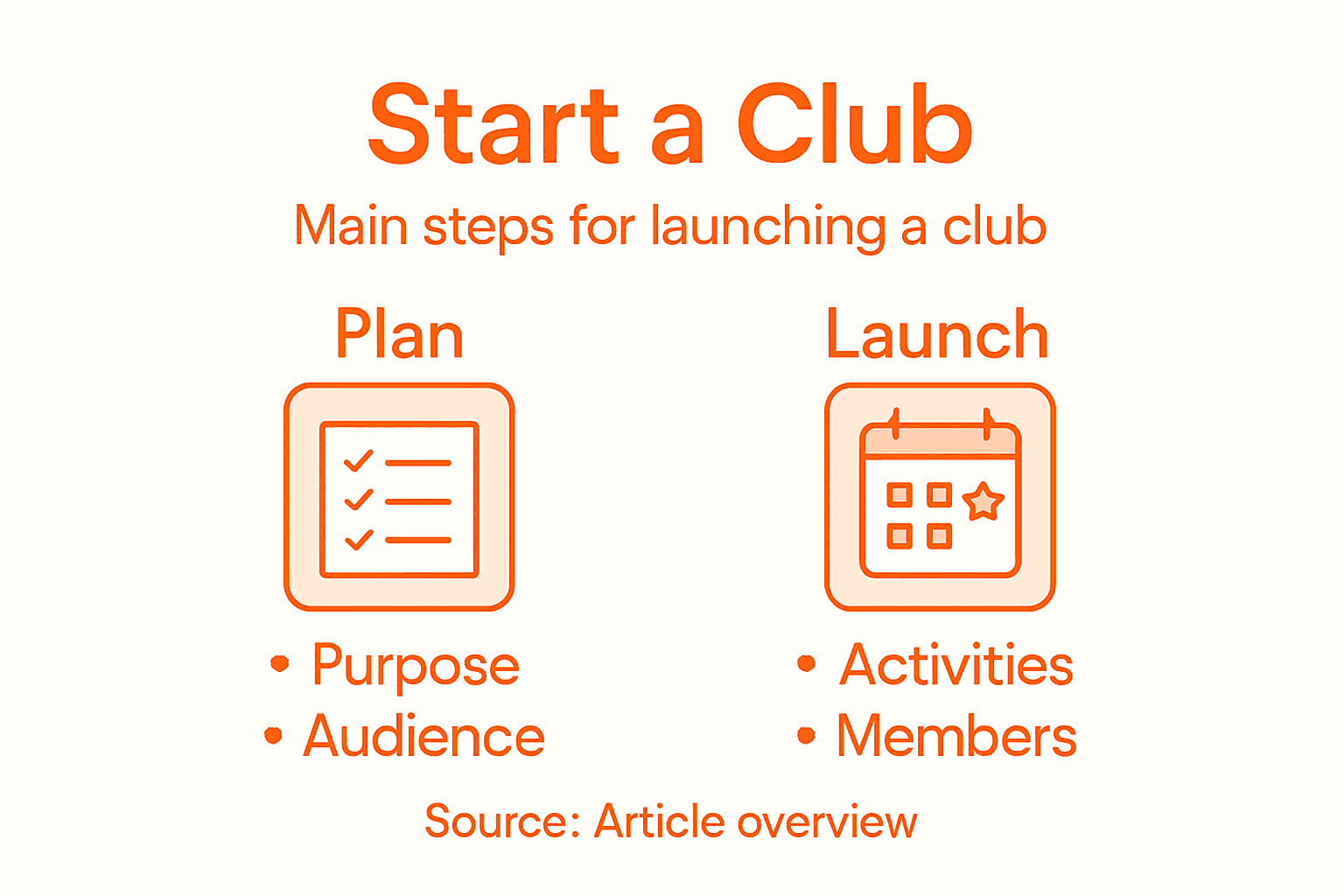
Once you’ve launched, the real work begins. You need to pay attention to what’s working and what isn’t. Track attendance to see if people are actually showing up or if they’re dropping off after the first meeting. Ask for feedback from members and parents about what they enjoyed and what felt off. Notice which activities sparked genuine excitement and which ones fell flat. Evaluating progress through member feedback and tracking participation helps you spot patterns early. You might discover that your Tuesday evening time doesn’t work for families with multiple kids in different activities, or that your hour long meetings need to be shorter to keep everyone engaged. You might realize that members are hungry for a different type of activity than you originally planned. This isn’t failure. This is your club finding its actual identity instead of being stuck to your original vision. Keep notes about what happens at each meeting, who attended, what you did, and what people said afterward. These simple records become your roadmap for improvement.
Be willing to adjust. Your bylaws aren’t sacred. Your meeting schedule can change. Your activities can evolve. The families in your club are real people with real lives, and flexibility is what keeps them coming back. After your first few meetings, sit down with your leadership team and talk honestly about what’s working. Are members engaged or just showing up? Are you achieving your club’s stated purpose? Is the vibe inclusive and welcoming, or does it feel cliquey? Use what you learn to make changes for the next season. Maybe you need different activities. Maybe you need to meet at a different time or location. Maybe you need to do more to make new members feel included. The clubs that thrive aren’t the ones that got everything right on day one. They’re the ones that listened, learned, and had the courage to change direction when they needed to.
Pro tip: Send out a simple five question survey after your second or third meeting asking members what they enjoyed, what they’d change, and what activities they’d like to try. Use their answers to guide your decisions for the next few months, and watch how much more engaged your members become when they feel heard.
Empower Your Homeschool Club with Proven Skills and Tools
Starting and managing a homeschool club can feel overwhelming when faced with challenges like planning engaging activities, organizing leadership, and maintaining member enthusiasm. The article outlines key pain points such as balancing schedules, creating meaningful events, and fostering a welcoming environment that connects and supports diverse families. These are exactly the stressors that can drain your energy and cloud your vision.
That is why mastering essential skills like time management, effective communication, and productivity is crucial to your club’s success. Our resource hub at Learning with Angie offers practical tools to help you design a schedule your members will love, manage your leadership roles with confidence, and sustain your club’s momentum. Don’t let logistical worries undermine your excitement. Explore actionable strategies for organization and focus that perfectly complement your club’s purpose. Start transforming your club journey today and see how mastering these skills can turn your vision into a thriving homeschool community. Take the first step now and unlock your club’s full potential.
Frequently Asked Questions
How do I decide on the purpose of my club?
To determine your club’s purpose, reflect on what activities you want to offer and the needs of your potential members. Spend some time brainstorming and write down your club’s purpose in one or two clear sentences, then share these with others to ensure clarity.
What types of activities should I include in my club meetings?
Choose activities that align with your club’s purpose and cater to your members’ interests. For instance, if your club focuses on academic enrichment, arrange workshops or study sessions; aim to mix in various activity types at each meeting for broader engagement.
How can I effectively recruit members for my club?
Recruit members by connecting with local homeschooling families and engaging them through personal invitations or community events. Create informative flyers, post in local online groups, and host an open house to build interest and welcome new families with no commitment required.
What leadership structure should I establish for my club?
Start with a basic leadership structure that includes a president, a secretary, and a treasurer to manage club operations. Define roles clearly and ensure responsibilities are balanced to prevent burnout while increasing efficiency in club management.
How can I evaluate my club’s progress after launching?
After launching, track attendance and solicit feedback from members to evaluate your club’s effectiveness. Conduct short surveys after a few meetings and analyze the results to identify strengths and areas for improvement, adjusting your activities accordingly.
What should I do if my club’s initial plan isn’t working?
Be open to making adjustments based on member feedback and attendance patterns. Regularly review your club’s activities and structure to find better alignment with your members’ interests, which may involve changing meeting times, locations, or types of activities.
Recommended
- Create Your Success: Ultimate Goal Setting Checklist
- Why Junior Year is Not Too Late to Start Extracurriculars
- How to Promote a School Club—11 Easy Ways to Attract Members
- 10 Unique College Essay Ideas to Stand Out in Applications
Want a head start? The Ultimate ‘To College & Beyond’ Bundle in my shop was made for exactly this — it’ll save you a ton of time.