
Volunteering as a Homeschooler: How to Get Involved in Your Community Easily
Every parent faces that moment when supporting their teenager’s social growth feels challenging outside the traditional classroom. The search for meaningful community engagement is more than just filling free time—it is about building character and real-world skills. By connecting with local homeschool groups and exploring organizations like animal shelters and food banks, you gain access to flexible volunteering opportunities perfectly suited to homeschool schedules, opening doors for your student to contribute, learn, and form lasting connections.
Quick Summary
| Key Point | Explanation |
|---|---|
| 1. Connect with local homeschool groups | These groups provide valuable insights into vetted volunteer opportunities compatible with homeschooling schedules. |
| 2. Communicate with organizations about eligibility | Discuss roles, age requirements, and responsibilities to ensure a good fit and set clear expectations for your teen. |
| 3. Organize necessary documentation | Collect forms and requirements ahead of time to streamline the process and integrate volunteering into your homeschool schedule. |
| 4. Track volunteer hours and experiences | Maintain records of hours worked and reflections on experiences to highlight skill development and learning outcomes. |
| 5. Reflect on growth and skill development | Engage in discussions about what your teen learned, fostering self-awareness and connecting to future educational goals. |
Step 1: Identify local volunteering opportunities for homeschoolers
Finding the right volunteer opportunity for your teenager doesn’t have to be complicated. You’re looking for something that fits your family’s schedule, matches your student’s interests, and actually teaches real-world skills. The good news? Your community is already full of organizations that need help and actively welcome homeschool students.
Start by tapping into your local homeschool network. Connecting with local homeschool groups gives you insider access to volunteer opportunities that other homeschoolers have already vetted. These groups know which organizations are flexible with scheduling and genuinely appreciate student volunteers. They can point you toward projects that work well with a homeschool rhythm instead of a traditional school calendar.
Next, explore the obvious places in your community. Animal shelters, food banks, libraries, and nursing homes consistently need volunteers and have flexible scheduling. You can also look into conservation projects or neighborhood assistance initiatives. The key is starting with places you already know exist, then expanding from there. Think about what your teen is interested in, then find an organization doing that work.
Don’t overlook online directories and community event listings. Many areas have volunteer databases where you can filter by cause, time commitment, and age requirements. Your local community center often has bulletin boards with volunteer postings. You can also reach out directly to organizations that align with your family’s values and ask what they need.
Respect the fact that different states regulate homeschooling differently, so what works in one area might need adjustment elsewhere. This makes connecting with your local homeschool community even more valuable because they understand your specific regional landscape and requirements.
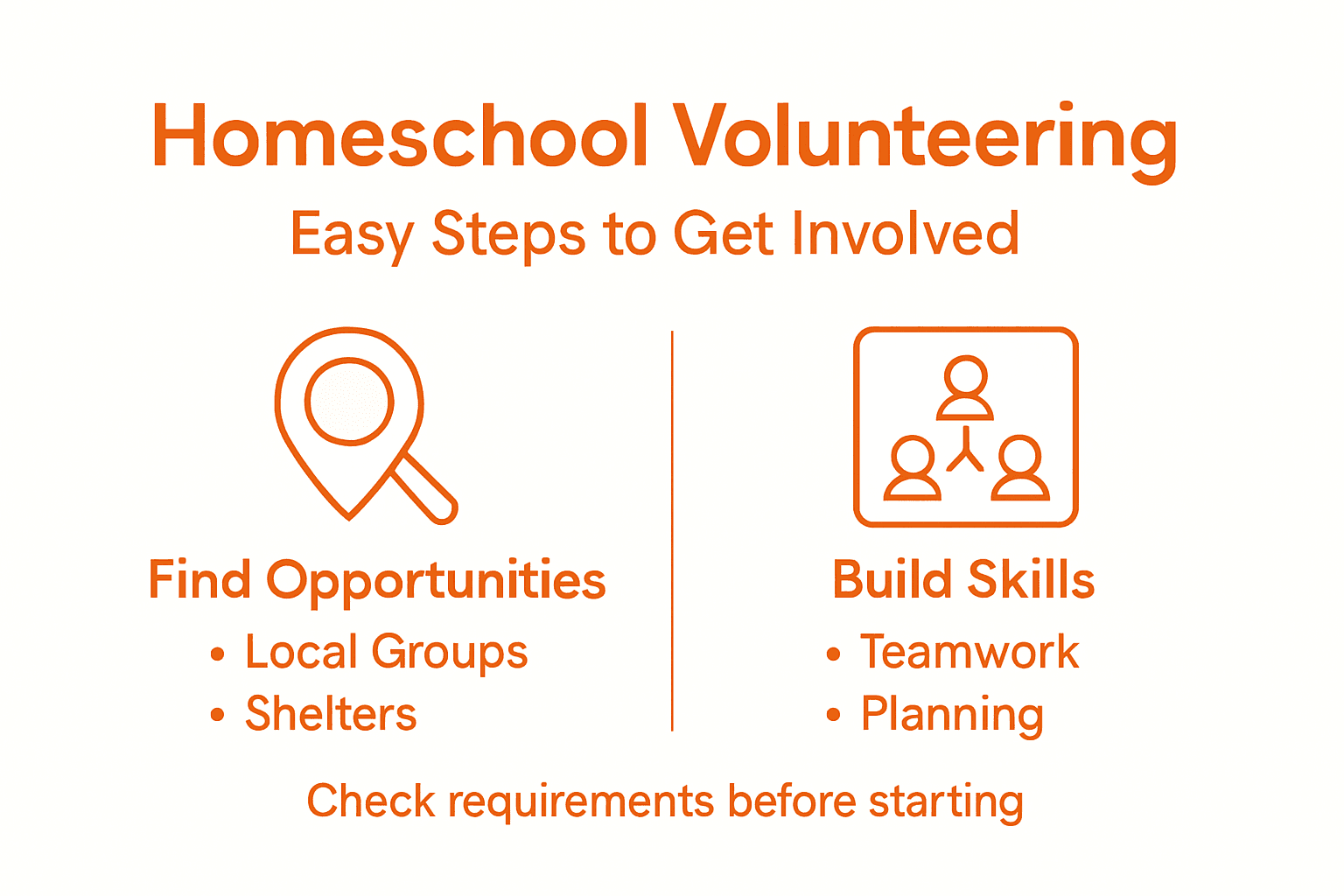
Here’s a summary of types of organizations and what homeschool volunteers might gain from each:
| Organization Type | Example Activities | Skills Developed |
|---|---|---|
| Animal Shelter | Animal care, cleaning | Responsibility, empathy |
| Food Bank | Sorting, distribution | Teamwork, organization |
| Library | Shelving, event support | Communication, time management |
| Conservation Group | Cleanups, planting trees | Environmental awareness, leadership |
| Nursing Home | Assisting residents | Patience, social skills |
Pro tip: Start with organizations your family already uses or cares about (your library, your favorite animal shelter, or a cause you support) because existing relationships make the conversation easier and your teen will feel more motivated volunteering somewhere meaningful.
Step 2: Communicate with organizations to confirm eligibility
Before your teen shows up ready to volunteer, you need to have a real conversation with the organization. This step protects both your student and the volunteer coordinator by making sure everyone’s on the same page about what the role involves, what’s expected, and whether your homeschooler is a good fit.
Reach out directly to the organization by phone or email. A quick call is usually your best bet because you can ask questions and get immediate answers. Ask about the volunteer roles they have available, what age groups they typically accept, and what the time commitment looks like. Be upfront about your student’s age and experience level. Organizations appreciate honesty because it helps them place volunteers where they’ll actually succeed.
Confirm the specific tasks your teen would be doing. Volunteering tasks vary widely depending on age and ability, so you want to know exactly what to expect. Will they be working directly with animals, sorting donated items, or helping with administrative work? Are there physical demands or safety protocols you need to understand? This clarity helps your student feel confident and prepared on day one.
Ask about any requirements or restrictions. Some organizations require background checks, vaccinations, or parental permission forms. Others have specific dress codes or safety training. Find out if there are minimum hour commitments or scheduling flexibility. Knowing these details upfront prevents surprises and disappointment later.
Mention that your student is homeschooled and confirm that the schedule works for your family. Many organizations have regular volunteer days or shifts, and you want to make sure they align with your homeschool rhythm. If the organization seems hesitant about homeschoolers, that’s actually valuable information. You want to work with places that genuinely welcome and support your student.
Pro tip: Write down the key details from your conversation (contact person’s name, required documents, start date, and schedule) so you have everything in one place and can refer back to it before your teen’s first day.
Step 3: Prepare necessary documentation and scheduling plans
Getting your paperwork and schedule organized before your teen starts volunteering makes everything run smoothly. You’ll need to handle permission forms, background check requirements, and documentation for tracking volunteer hours. This step also helps integrate volunteering into your homeschool schedule without creating chaos.
First, collect any documentation the organization requires. Most places ask for parental consent forms, and some want emergency contact information or proof of age. A few organizations might ask for background checks or health clearance forms. Contact the volunteer coordinator again to ask for a complete list of what you need to submit before your student’s first day. Having this done early prevents last-minute scrambling.
Set up a system for tracking volunteer hours. Creating a flexible homeschool schedule that includes volunteer engagements helps you document community service as part of practical learning. You can use a simple notebook, spreadsheet, or calendar app to record when your student volunteers, how many hours they worked, and what they did. Organizations often need this documentation too, so keeping accurate records saves time later.
Here is a comparison of volunteer hour tracking methods homeschool families can use:
| Tracking Method | Pros | Cons |
|---|---|---|
| Paper Notebook | Simple, tangible record | Easy to lose, less shareable |
| Spreadsheet | Organized, easy calculations | Requires some setup |
| Calendar App | Reminders, integrates schedules | Limited detail for reflections |
Now think about how volunteering fits into your family’s weekly routine. Look at your current homeschool schedule and find open time slots that work for both the organization’s needs and your family’s rhythm. Maybe your teen volunteers on Tuesday afternoons while you teach another student, or Saturday mornings work better. Be realistic about how often you can commit. Starting with one shift per week is better than overcommitting and burning out.
Create a backup plan for scheduling conflicts. Life happens. Your student might get sick, or an unexpected family obligation comes up. Talk with the organization about what notice they need if your teen can’t make a scheduled shift. Understanding their flexibility policy before it becomes an issue keeps things positive.
Pro tip: Create a simple one-page document with all the volunteer details (organization name, contact person, shift times, location, and what to bring) and post it where your family can see it so everyone stays on track.
Step 4: Participate in community projects and track engagement
This is where the real learning happens. Your teen shows up, does the work, and starts discovering what it feels like to make a tangible difference in their community. The volunteering itself is the experience, but tracking it transforms that experience into something your student can reflect on and learn from.

On your student’s first day, make sure they understand what they’re doing and why it matters. Whether they’re sorting donations at a food bank, helping at a neighborhood cleanup, or working with animals at a shelter, help them see beyond the task. They’re not just moving boxes or picking up trash. They’re solving real problems and helping real people. That mindset shift makes volunteering feel meaningful instead of like a chore.
As your teen participates in community projects that teach empathy and leadership skills, encourage them to pay attention to what they’re learning. Are they developing new skills? Are they meeting different kinds of people? How does this work connect to what they care about? These observations become the richest part of their educational experience.
Keep that tracking system you set up working. Record the hours, the date, and what your student actually did that day. But go one step further. Ask your teen to write down a few sentences about their experience. What surprised them? What was challenging? What did they accomplish? This reflection transforms volunteer hours into real learning that you can document for your homeschool records.
Notice patterns over time. After a few weeks, you’ll see whether your teen is genuinely engaged or just going through the motions. If they’re excited to go back, that’s your sign you found the right fit. If they’re dreading it, have a conversation about what’s not working and be willing to try something different.
Pro tip: Ask your teen to take a photo or two during volunteering (if the organization allows it) and pair it with their written reflection so you create a visual record of their community involvement that brings their experience to life.
Step 5: Evaluate experiences and reflect on skill development
Reflection is where volunteering transforms from just showing up into real personal growth. Taking time to think about what your teen learned, how they changed, and what skills they developed turns hours of service into genuine education. This is the step that makes volunteering count for both character building and your homeschool transcript.
Start by having regular conversations with your student about their experience. Not the surface level “how was it” but deeper questions. What was something they did that surprised them? Did they learn anything about themselves? How did they interact with people different from them? Volunteering develops real-world skills like communication, responsibility, empathy, teamwork, and leadership that deserve reflection and recognition.
Ask your teen to identify specific skills they’re building. Maybe they discovered they’re good at organizing and planning. Perhaps they realized they can stay calm under pressure or that they genuinely enjoy helping others face to face. Some students find leadership abilities they didn’t know they had. Help them see the connection between the work they’re doing and skills employers and colleges care about.
Create a simple reflection document that captures their growth over time. This doesn’t need to be fancy. A few paragraphs every month where your student describes what they learned, how they felt, and what they’ll do differently next time works perfectly. These reflections become powerful additions to college applications because they show self awareness and genuine learning.
Consider how the volunteering connects to your student’s overall education and future plans. Is this work related to a potential career path? Does it strengthen their understanding of a social issue they’re studying? The more intentional connections you make, the more meaningful the experience becomes.
Pro tip: Keep a simple spreadsheet tracking your teen’s skill development across volunteering experiences, noting specific examples of when they used communication, problem solving, or leadership so you have concrete evidence of growth to reference later.
Elevate Your Homeschool Volunteering Experience with Expert Learning Tools
Volunteering as a homeschooler offers incredible opportunities to develop real-world skills like responsibility, communication, and leadership. Yet managing schedules, tracking volunteer hours, and reflecting on personal growth can feel overwhelming. If you want to seamlessly integrate these community experiences into your homeschool journey without stress, you are not alone. Many families struggle to balance effective time management, productivity, and purposeful learning while fulfilling volunteer commitments.
Take control of your educational path by exploring proven strategies that help you master these challenges. At Learning With Angie, you will find resources crafted to boost time management, productivity, and organization skills. These tools unlock the full potential of your volunteering by helping you stay on track and deepen your learning reflection process. Start transforming your community service into meaningful personal and academic growth today and discover how to create a balanced and empowered homeschool lifestyle.
Frequently Asked Questions
How can I find local volunteering opportunities for my homeschooler?
Start by connecting with local homeschool groups to get recommendations for organizations that welcome student volunteers. Additionally, explore community centers, animal shelters, and libraries, as these places often have flexible volunteering options suitable for homeschoolers.
What steps should I take to confirm my teen’s eligibility to volunteer?
Communicate directly with the organization to discuss available roles, age requirements, and any necessary paperwork. Clarify what tasks your teen will be doing to ensure they are fit for the role and that the schedule aligns with your homeschooling routine.
What documentation do I need before my homeschooler can start volunteering?
You will typically need parental consent forms, emergency contact information, and possibly background check documents. Collect this information early and reach out to the organization for a complete list of required paperwork.
How can I effectively track my homeschooler’s volunteer hours?
Set up a simple tracking system using a notebook, spreadsheet, or calendar app to record volunteer hours and activities. For example, log each volunteer session by noting the date, hours worked, and key tasks completed right after each experience.
What should my teen focus on during their volunteering experience?
Encourage your teen to reflect on what they are learning and how the work impacts the community. Suggest they take notes or discuss their experiences with you to identify skills they develop, such as communication or problem-solving, following each volunteer session.
How can I evaluate my homeschooler’s volunteering impact and growth?
Schedule regular discussions with your teen about their experiences, focusing on challenges and skills gained. Create a simple reflection document that captures their thoughts over time, helping them recognize their growth and the personal significance of their community service.
Recommended
- Create Your Success: Ultimate Goal Setting Checklist
- Why Junior Year is Not Too Late to Start Extracurriculars
- 10 Unique College Essay Ideas to Stand Out in Applications
- Jobs You Can Have While You Are in School
- 7 Best Educational Things To Do In Hawaii For All Ages | Flight Of Aloha
Want a head start? The Ultimate ‘To College & Beyond’ Bundle in my shop was made for exactly this — it’ll save you a ton of time.