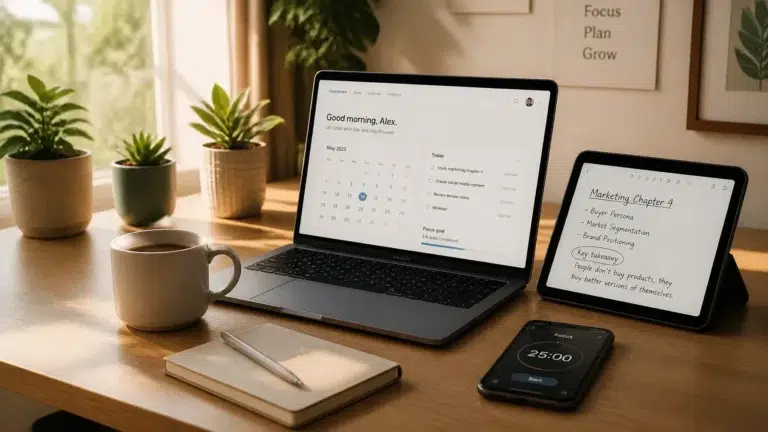
7 Proven Exam Tips for Students to Reduce Stress and Succeed
Studying for exams can feel overwhelming when deadlines, assignments, and expectations start piling up. Figuring out how to manage your time and actually retain what you learn often seems out of reach. The good news is that there are proven strategies you can use to turn exam prep from a stressful scramble into a confident routine.
This listicle lays out practical, research-backed methods that help you organize your schedule, break down tough subjects, and use active learning techniques for stronger recall. You’re about to unlock actionable tips that will make your study sessions more effective and leave you feeling prepared for anything your exams throw at you.
Quick Summary

| Takeaway | Explanation |
|---|---|
| 1. Start studying early with a schedule | Creating a strategic study schedule allows for time management, reducing stress and improving retention. Map deadlines and productive times to enhance effectiveness. |
| 2. Break material into smaller chunks | Dividing subjects into manageable parts helps maintain motivation, confidence, and focus. Set mini-goals to tackle each section systematically. |
| 3. Engage with active learning techniques | Active learning methods, like teaching concepts and summarizing, enhance information retention. Interaction with material improves comprehension far more than passive study methods. |
| 4. Utilize practice exams and mock tests | Simulating exam conditions with practice tests identifies strengths and weaknesses. Reviewing mistakes is crucial for learning and improving future performance. |
| 5. Prioritize self-care and adequate sleep | Maintaining mental health through self-care practices and sufficient sleep is vital for cognitive function and academic success. Treat these as essential components of study preparation. |
1. Start Early and Create a Realistic Study Schedule
Preparing for exams doesn’t have to be a nightmare. The key to reducing stress and boosting your academic performance is creating a strategic study schedule well before your tests.
Time management is critical for student success. By developing a comprehensive study plan early, you give yourself a significant advantage. Most students struggle with procrastination and last-minute cramming, which dramatically increases anxiety and reduces information retention.
Here are some practical steps to build an effective study schedule:
- Map out all upcoming deadlines and exam dates
- Identify your most productive study times
- Break large topics into smaller manageable chunks
- Schedule consistent study blocks
- Include short breaks to maintain focus
- Review and adjust your plan weekly
A well-planned study schedule transforms overwhelming academic challenges into achievable goals.
Digital tools can supercharge your planning. Use apps like Google Calendar or Outlook to track commitments, set reminders, and create color-coded study blocks that match your personal energy levels and learning style.
Pro tip: Color-code your study schedule with different colors for subjects, prioritizing challenging topics during your peak energy hours.
2. Break Down Material Into Manageable Chunks
Feeling overwhelmed by complex study material? The secret to conquering challenging subjects is learning how to break big tasks into smaller parts.
Dividing larger assignments into incremental steps helps you build confidence and stay motivated throughout your learning journey. When you transform intimidating subjects into bite-sized pieces, studying becomes less stressful and more achievable.
Here are effective strategies for chunking your study material:
- Identify the overall topic or subject area
- Divide the material into logical subsections
- Create mini-goals for each study session
- Set specific time limits for each chunk
- Track your progress as you complete each section
- Reward yourself after finishing each study chunk
Breaking complex material into smaller segments transforms overwhelming challenges into conquerable tasks.
Important techniques for effective material chunking include creating a structured outline, using visual mind maps, and establishing clear learning objectives for each study segment. This approach helps your brain process information more efficiently and reduces cognitive overload.
Remember that each small victory builds momentum. By approaching your studies systematically, you’ll maintain focus and prevent burnout.
Pro tip: Use a timer to work in 25-minute focused chunks with 5-minute breaks to maintain maximum concentration and prevent mental fatigue.
3. Use Active Learning Techniques for Better Recall
Traditional study methods like passive reading and highlighting just won’t cut it. Active learning transforms how you absorb and retain information by turning you from a passive receiver into an engaged learner.
Proven learning techniques require you to interact deeply with your study material, dramatically improving comprehension and memory retention.
Here are powerful active learning strategies to supercharge your studying:
- Teach the material to an imaginary student or study buddy
- Create mind maps and visual diagrams
- Ask yourself questions about the content
- Summarize key points in your own words
- Practice retrieving information without looking at notes
- Develop explanatory flowcharts
- Connect new information to existing knowledge
Active learning turns studying from a passive experience into an interactive learning adventure.
Visualization and self-explanation are particularly potent techniques. When you force your brain to process information actively by explaining concepts out loud or drawing connections, you create stronger neural pathways that enhance long-term memory.
Additional active reading strategies include making marginal notes, questioning the text, and creating comprehensive outlines that help organize complex information.
Pro tip: Record yourself explaining complex topics and listen back while doing chores to reinforce learning through multiple sensory channels.
4. Practice With Past Exams and Mock Tests
Want to know the ultimate secret weapon for exam success? Practicing with past exams and mock tests can transform your preparation strategy and boost your confidence.
Full-length practice tests are more than just practice runs. They’re strategic tools that help you understand exam patterns, manage time effectively, and identify your strengths and weaknesses.
Here are key strategies for using mock tests effectively:
- Simulate real exam conditions exactly
- Use strict time limits
- Practice in a quiet environment
- Turn off all electronic devices
- Review answers thoroughly after each test
- Analyze mistakes and learning gaps
- Track your progress over multiple attempts
Mock tests are your personal training ground for academic success.
Specimen papers and mark schemes provide invaluable insights into exam expectations. By understanding how examiners grade and what they look for, you can fine-tune your answering technique and maximize your potential score.
Most students make the mistake of only reviewing correct answers. The real learning happens when you deeply examine why you got something wrong and how to improve.
Pro tip: Create a detailed error log after each practice test, categorizing mistakes by topic to systematically address your weak areas.
5. Stay Organized With Notes and Study Tools
Chaotic notes are a recipe for academic disaster. Digital organization transforms how you learn and retain information by bringing structure to your study process.
Digital note-taking tools have revolutionized how students capture and manage study materials. These powerful platforms go far beyond traditional notebook methods.
Key strategies for effective note organization include:
- Choose a consistent digital note-taking system
- Use color coding for different subjects
- Create clear folder structures
- Tag and categorize your notes
- Utilize search functions
- Integrate multimedia elements
- Sync across multiple devices
Organization isn’t about perfection. It’s about creating a system that works for you.
The best digital tools offer features like searchability, cross-platform support, and multimedia integration. By centralizing your study materials, you eliminate the stress of lost notes and scattered information.
Consider exploring study material organization techniques that align with your personal learning style. The goal is to create a system that feels natural and enhances your study efficiency.
Pro tip: Set up your digital note system at the start of each semester, establishing folders and tags before assignments begin to create an immediate organizational framework.
6. Prioritize Self-Care and Healthy Study Breaks
Burning out is not a badge of honor. Prioritizing your mental and physical health is the secret weapon for academic success.
Self-care practices are far more than trendy buzzwords. They’re essential strategies that help students maintain peak performance and emotional balance during stressful academic periods.
Key self-care strategies for students include:
- Establish a consistent sleep schedule
- Exercise for at least 30 minutes daily
- Practice mindfulness or meditation
- Eat nutritious whole foods
- Stay hydrated
- Take regular short breaks
- Connect with friends and support networks
Your body and mind are your most important academic tools. Treat them with respect.
Study breaks are not wasted time. They’re critical moments that help your brain process information, prevent mental fatigue, and maintain long-term focus. Finding work-life balance isn’t a luxury it’s a necessity for sustainable academic performance.
Consider using techniques like the Pomodoro method. Work intensely for 25 minutes, then take a 5-minute break. This approach keeps your brain fresh and engaged.
Pro tip: Schedule self-care activities in your calendar just like study sessions. Treat them with the same level of commitment and importance.
7. Get Enough Sleep Before and During Exams
Skipping sleep is not a study strategy. Sleep is your brain’s secret weapon for academic success.
Adequate sleep dramatically impacts academic performance. Research shows that consistent sleep deprivation can impair your cognitive functioning as severely as 48 hours of total sleep loss.
Critical sleep strategies for students include:
- Maintain a consistent sleep schedule
- Aim for 7-9 hours of sleep nightly
- Create a calm bedtime routine
- Avoid screens one hour before sleeping
- Keep your bedroom cool and dark
- Use white noise or calming sounds
- Practice relaxation techniques
Sleep is not a luxury. It’s a biological necessity for learning and memory.
Exam night sleep preparation is especially crucial. Avoid last-minute cramming and focus on relaxation techniques that help your brain consolidate information and reduce stress.
Your brain processes and stores information during sleep. Each hour of quality rest improves concentration memory retrieval and emotional regulation.
Pro tip: Create a consistent pre-sleep ritual like light stretching or reading to signal to your body that it’s time to wind down and prepare for restful sleep.
Below is a comprehensive table summarizing strategies and practices for effective study habits as detailed in the article.
| Study Aspect | Recommended Strategies | Benefits |
|---|---|---|
| Early Planning | Develop a realistic study schedule, track deadlines, and set consistent study blocks. | Provides structure, reduces stress, and enhances productivity. |
| Task Chunking | Divide larger topics into smaller sections, set mini-goals, and use timers like the Pomodoro technique. | Simplifies complex topics, reduces overwhelm, and maintains focus throughout study sessions. |
| Active Learning | Teach material aloud, create mind maps, and practice self-recall tasks. | Improves retention, comprehension, and long-term memory. |
| Mock Tests | Practice under exam conditions; analyze and review errors systematically. | Builds confidence, sharpens test-taking skills, and identifies knowledge gaps. |
| Note Organization | Utilize digital noting tools with clear organization, color coding, and searchable features. | Enhances accessibility, efficiency in studying, and ensures materials are centralized. |
| Self-Care During Studies | Maintain a sleep schedule, practice mindfulness, eat healthily, exercise, and socialize. | Supports mental and physical well-being, prevents burnout, and sustains academic performance. |
| Importance of Sleep Before Exams | Aim for 7-9 hours of sleep, establish pre-sleep rituals, and avoid last-minute cramming. | Boosts cognitive function, emotional regulation, and memory consolidation during examinations. |
Master Your Exam Success With Tools That Work
The challenge of managing stress and boosting exam performance is real. This article highlights key strategies like creating a strategic study schedule, breaking down material into manageable chunks, and practicing with mock tests. If you are feeling overwhelmed by time management, information overload, or staying organized, you are not alone. Many students struggle with procrastination, burnout, and ineffective study habits.
Imagine having a proven system to help you stay on track while prioritizing your well-being. At Learning with Angie, you can discover resources tailored to mastering studying aesthetics, productivity techniques, and healthy routines that directly address these pain points. Start implementing smart planning, active learning, and self-care with tools designed to make academic success less stressful and more achievable.
Ready to take control of your study habits and reduce exam anxiety today Learn more about how you can build a personalized, effective study routine and live a balanced student life by visiting Learning with Angie. Your smarter, calmer path to exam success starts now.
Frequently Asked Questions
How can I create an effective study schedule to prepare for exams?
Creating an effective study schedule involves mapping out all upcoming deadlines and exam dates, identifying your most productive study times, and breaking large topics into manageable chunks. Start by listing your important dates and then allocate consistent study blocks with short breaks to keep yourself focused.
What are some active learning techniques I can use to improve my study sessions?
Active learning techniques include teaching the material to someone else, creating mind maps, summarizing key points, and practicing retrieval of information without looking at notes. Engage with your study material by asking yourself questions and making connections to existing knowledge to enhance retention.
Why is it important to practice with past exams and mock tests?
Practicing with past exams and mock tests helps you understand exam patterns, manage your time effectively, and identify your strengths and weaknesses. Simulate real exam conditions by timing yourself and analyzing your mistakes to improve your answering techniques for actual exams.
How can I stay organized with my notes and study materials?
To stay organized, choose a consistent digital note-taking system, utilize color coding for different subjects, and create a clear folder structure for your materials. Regularly tag and categorize your notes to make important information easily searchable, enhancing your study efficiency.
What self-care practices should I prioritize during exam preparations?
Prioritize self-care practices such as maintaining a consistent sleep schedule, exercising daily, and practicing mindfulness or meditation. Incorporate short breaks during study sessions to recharge your mind and body, which will help maintain your overall performance and emotional balance while studying.
Recommended
- Create Your Success: Ultimate Goal Setting Checklist
- 16 Essential College Care Package Ideas to Support and Inspire Students
- Prioritizing Self Care During Academic Challenges
- 7 Key Studying Don’ts for Student Success
- Understanding How Stress Can Cause Hair Loss | MyHair
Want a head start? The Exam Season Survival Kit has the full study plan, the schedule and the stress reset in one download.