
Making Friends Remotely: Building Real Connections
Scrolling through group chats can sometimes feel less real than hanging out after school, yet online friendships are often just as meaningful as those formed in person. Many American teens find that virtual connections offer important social and emotional support, especially when physical meetups are limited. This article clears up common misconceptions about remote friendships by unpacking their genuine value, showing how digital bonds can be flexible, deeply personal, and a real source of connection for anyone navigating high school life online.
Key Takeaways
| Point | Details |
|---|---|
| Meaningful Remote Friendships | Remote friendships are valid connections that provide emotional depth and support, similar to traditional friendships. |
| Types of Digital Connections | Long-distance friendships vary, including casual social media interactions and deep gaming partnerships, reflecting diverse communication styles. |
| Effective Communication Strategies | Regular, intentional communication through various digital platforms enhances the quality and emotional connection in remote friendships. |
| Pitfalls to Avoid | Miscommunication and overreliance on digital platforms can undermine the authenticity of remote friendships; addressing these challenges is essential for deeper connections. |
Defining Remote Friendships and Common Misconceptions
Remote friendships represent social connections established and maintained through digital platforms, challenging traditional notions of interpersonal relationships. Unlike past assumptions, these connections are not mere digital substitutes but meaningful social interactions with genuine emotional depth.
Research from academic scholars reveals that virtual friendships share critical characteristics with traditional relationships, including personalized interest and sincere emotional investment. While digital connections might seem superficial, they actually provide significant social and emotional support systems for many individuals navigating complex social landscapes.
Common misconceptions about remote friendships often stem from outdated perspectives that prioritize physical proximity. Many people incorrectly assume that online connections lack authenticity or meaningful interaction. However, modern research demonstrates these friendships can be just as profound and supportive as in-person relationships, particularly for younger generations comfortable with digital communication technologies.
Friendship Categories in Digital Spaces:
Here’s a comparison of remote and traditional friendships highlighting their key characteristics:
| Attribute | Remote Friendships | Traditional Friendships |
|---|---|---|
| Typical Communication | Text, video, digital platforms | Face-to-face, phone, in-person |
| Emotional Depth | Can achieve high emotional intimacy | Often deeply personal and visible |
| Flexibility | Time zone and scheduling adaptable | Limited by physical proximity |
| Support Systems | Immediate, globally accessible | Local, sometimes less immediate |
- Casual online acquaintances
- Deep digital connections with shared interests
- Professional networking relationships
- Geographically distributed friend groups
Pro tip: Be intentional about communication frequency and quality when building remote friendships to transform casual interactions into meaningful connections.
Types of Long-Distance Friendships Today
Long-distance friendships have evolved dramatically with digital communication technologies, creating diverse connection models that transcend traditional geographic boundaries. These relationships are no longer defined by physical proximity but by shared interests, emotional resonance, and communication strategies.

Relatedness technologies now facilitate unique friendship dynamics, allowing friends to maintain social bonds through innovative digital platforms. These connections range from casual online interactions to deeply committed relationships that require intentional maintenance and creative communication approaches.
Modern long-distance friendships can be categorized into several distinct types:
Digital Friendship Categories:
- Social Media Connections: Casual interactions through platforms like Instagram or Twitter
- Gaming Friendships: Relationships formed through multiplayer online games
- Professional Network Connections: Career-oriented digital relationships
- International Pen Pal Relationships: Deep connections across different countries and cultures
- Academic/Study Group Friendships: Collaborative connections through educational platforms
Research reveals that long-distance friendships are flexible rather than fragile, adapting to challenges and maintaining emotional depth through consistent communication and shared experiences.
Pro tip: Invest in multiple communication channels to keep your long-distance friendships vibrant and engaging, mixing video calls, text messages, and shared digital activities.
How Digital Tools Help Maintain Friendships
Digital communication technologies have revolutionized the way we connect, providing unprecedented opportunities to maintain and nurture friendships across geographical boundaries.
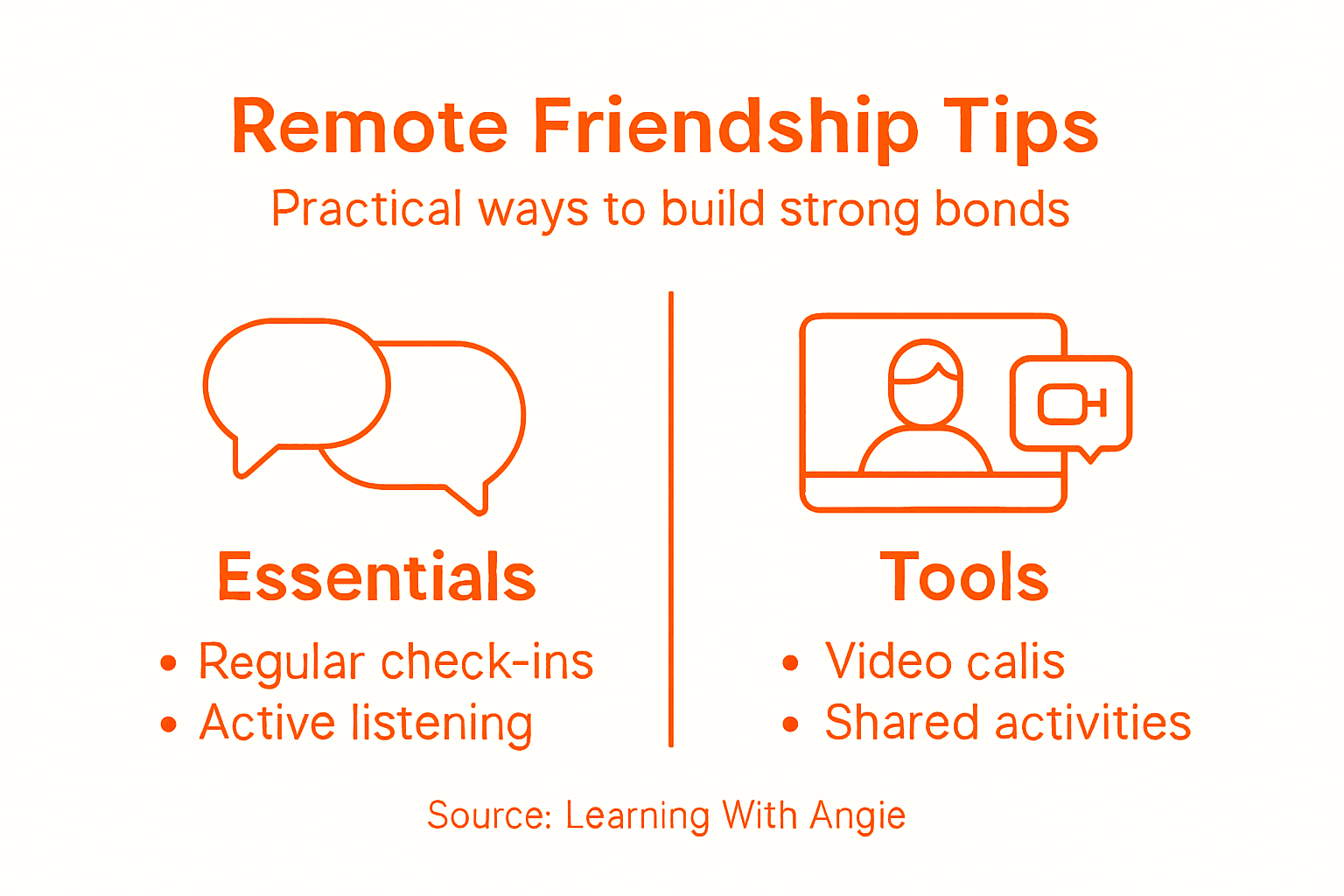
Modern friendship maintenance relies on a diverse array of digital tools that facilitate different types of interactions. Messaging apps, video call platforms, shared digital experiences, and collaborative online spaces allow friends to create meaningful connections despite physical distance. These technologies provide multiple communication channels, ensuring that friendships can adapt and thrive in an increasingly digital world.
Key Digital Friendship Tools:
- Instant messaging applications
- Video conferencing platforms
- Social media networks
- Collaborative online gaming environments
- Shared digital activity platforms
While digital tools offer incredible connectivity, they also present unique challenges. Privacy concerns, potential miscommunication, and the risk of superficial interactions require intentional and mindful digital communication strategies. Friends must balance technological convenience with genuine, emotionally authentic engagement.
The following summary shows how different digital friendship tools impact friendship quality and connection depth:
| Digital Tool | Unique Benefit | Potential Challenge |
|---|---|---|
| Messaging Apps | Quick, frequent check-ins | Risk of misinterpretation |
| Video Calls | Build emotional connection | Scheduling barriers |
| Social Media | Share life updates instantly | Comparison pressure |
| Online Gaming | Shared fun and achievement | Overemphasis on competition |
Pro tip: Create a consistent communication rhythm with digital friends by scheduling regular check-ins and exploring shared online activities that foster deeper connections.
Balancing Online and Offline Social Skills
Social interactions have become increasingly complex, requiring individuals to develop nuanced skills across digital and physical environments. Social competence spans multiple contexts, demanding adaptability and intentional communication strategies that work both online and offline.
The core challenge lies in recognizing that online and offline social skills, while interconnected, are not identical. Digital communication requires different emotional intelligence and communication techniques compared to face-to-face interactions. Successful social navigation means understanding the unique dynamics of each platform and knowing how to translate core interpersonal skills across different mediums.
Key Skills for Balanced Social Interaction:
- Active listening in both digital and physical conversations
- Reading nonverbal cues across different communication platforms
- Maintaining authenticity and emotional transparency
- Adapting communication style to specific contexts
- Respecting digital and physical personal boundaries
Psychological research demonstrates that developing integrated social competencies is crucial for healthy peer relationships. Adolescents and young adults must learn to navigate complex social landscapes that blend digital and in-person interactions, requiring continuous learning and emotional adaptability.
Pro tip: Practice code-switching between online and offline communication styles by consciously reflecting on your interactions and adjusting your approach based on the specific social context.
Common Pitfalls of Remote Friendship Building
Informal interactions present significant challenges in remote friendship building, creating unexpected obstacles that can derail potential connections. Digital communication platforms, while offering unprecedented connectivity, also introduce complex dynamics that require strategic navigation and emotional intelligence.
Technological limitations and communication barriers can compromise the depth and authenticity of remote friendships. Without intentional effort, digital interactions may become superficial, lacking the spontaneity and organic development characteristic of in-person relationships. Research highlights critical social interaction pitfalls that can undermine meaningful connection attempts.
Key Remote Friendship Pitfalls:
- Miscommunication due to lack of nonverbal cues
- Inconsistent communication patterns
- Overreliance on digital platforms
- Difficulty establishing genuine emotional intimacy
- Assumptions about shared experiences
- Digital fatigue and interaction burnout
Successful remote friendship requires recognizing and proactively addressing these potential barriers. Understanding that digital connections demand different skills and approaches helps individuals create more meaningful and sustainable relationships across virtual spaces.
Pro tip: Develop a consistent communication rhythm and practice active, intentional listening to overcome digital interaction challenges and build deeper remote connections.
Proven Strategies for Stronger Distant Bonds
Quality communication strategies are fundamental to maintaining meaningful connections across physical distances. Building strong distant friendships requires intentional effort, creativity, and a commitment to genuine emotional engagement beyond surface-level interactions.
Successful distant relationships thrive on consistent, meaningful communication that goes beyond occasional check-ins. This means creating structured yet flexible interaction patterns that allow for spontaneity while maintaining predictability. Academic research suggests developing strategies that promote vulnerability, understanding, and intentional connection moments.
Effective Distant Friendship Strategies:
- Schedule regular video conversations
- Share daily experiences and personal stories
- Create shared digital experiences
- Develop mutual future plans and goals
- Practice active and empathetic listening
- Maintain transparency and emotional authenticity
- Use varied communication platforms
Technology offers unprecedented opportunities to bridge geographical gaps, but successful distant friendships require human touch. Balancing digital communication with genuine emotional investment transforms potential connections into deep, meaningful relationships that transcend physical limitations.
Pro tip: Develop a personalized communication ritual that combines structured check-ins with spontaneous, heartfelt interactions to keep your distant friendships vibrant and authentic.
Strengthen Your Remote Friendships with Practical Skills and Tools
Building genuine connections remotely comes with challenges like maintaining consistent communication and balancing online and offline social skills. This article highlights the importance of intentional effort, emotional authenticity, and diverse digital communication methods to turn casual digital interactions into meaningful friendships. If you find yourself struggling with remote social skills or managing your time and productivity to connect better, you are not alone.
Discover strategies tailored for students and lifelong learners at Learning With Angie. Our resources help you master time management, productivity, and creating healthy routines that empower you to nurture remote friendships effectively. Start transforming your remote social life now and explore ways to build stronger bonds while balancing your academic and personal goals.
Frequently Asked Questions
How can I maintain a meaningful remote friendship?
To maintain a meaningful remote friendship, prioritize intentional communication by scheduling regular check-ins, sharing personal experiences, and engaging in shared digital activities.
What are the different types of remote friendships?
Remote friendships include social media connections, gaming friendships, professional networks, international pen pals, and academic study group friendships, each defined by their unique dynamics and communication styles.
What digital tools are best for maintaining long-distance friendships?
The best digital tools for maintaining long-distance friendships include instant messaging apps, video conferencing platforms, social media networks, and collaborative online gaming environments, which offer various ways to connect and interact.
What common pitfalls should I avoid when building remote friendships?
Common pitfalls to avoid when building remote friendships include miscommunication due to lack of nonverbal cues, inconsistent communication patterns, and becoming overly reliant on digital interactions without making genuine emotional connections.
Recommended
- How to Make Friends in College: Your Guide to Building Lasting Connections
- 7 Effective Tips on How to Make Friends in College or a New School
- 15 Reasons the Feynman Technique Is a Game-Changer for Students
- 12 Communication Skills Every Student Should Master
Want a head start? The Building Self-Confidence workbook in my shop was made for exactly this — it’ll save you a ton of time.