You walk into your first week of classes feeling prepared. You have the pens, the notebooks, and the color-coded syllabus. But by week three, the mountain of readings and "small" assignments starts to crumble on top of you. Why does it feel like there aren't enough hours in the day?
The problem isn't your motivation; it's your math. Most students fail to estimate their time accurately, leading to the "all-nighter cycle" and inevitable burnout. To master time management for students, you need to stop guessing and start calculating.
Ready to become the most organized version of yourself? This guide will teach you the exact formulas for "workload math" so you can reclaim your weekends and actually enjoy your college experience.
Calculate Your Baseline Study Hours
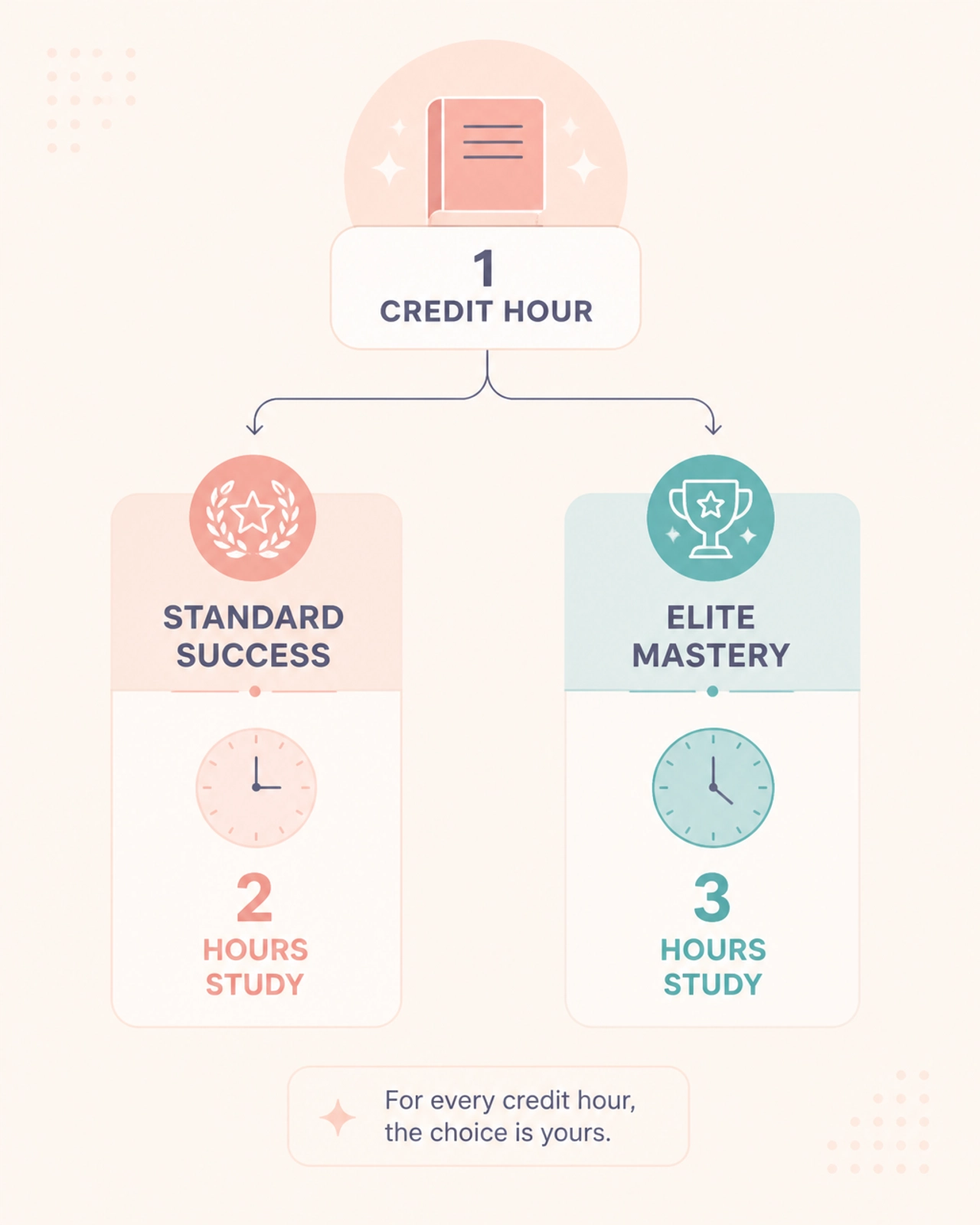
The most foundational step in student productivity hacks is understanding the "Credit Hour Rule." In college, a 3-credit course doesn't just mean 3 hours of class time; it represents a specific total time commitment.
To calculate your baseline, use the 2:1 or 3:1 Rule:
- The 2:1 Ratio (Standard Success): For every 1 hour you spend in a lecture, you should plan for 2 hours of independent study.
- The 3:1 Ratio (Elite Mastery): If you are aiming for a 4.0 GPA or taking a particularly dense course (like Organic Chemistry), plan for 3 hours of study per class hour.
- The Weekly Formula: (Total Credit Hours) × (Ratio) = Your Weekly Study Hours.
For a student taking 15 credits at a 2:1 ratio, that is 30 hours of study per week outside of the classroom. Combined with class time, your "job" as a student is a 45-hour work week. Knowing this number immediately changes how you view your free time.
Use Complexity Multipliers for Accuracy
Not every class is created equal. A "Intro to Film" elective usually requires less brainpower than "Advanced Calculus." If you treat them the same in your planner, you will fall behind. Use complexity multipliers to refine your workload math:
- Low Complexity (Multiplier 1.0x): These are introductory courses or subjects that come naturally to you. Stick to the standard 1:1 or 2:1 ratio.
- Medium Complexity (Multiplier 1.3x): Use this for core major requirements that involve heavy reading or weekly problem sets.
- High Complexity (Multiplier 1.6x): This is for your "struggle subjects." If a 3-credit class is notoriously difficult, you might actually need 7–8 hours per week just for that one course.
By adjusting your math based on difficulty, you ensure that your undated monthly planner reflects reality, not just wishful thinking.
Break Down Specific Task Math
Calculations shouldn't stop at the course level. You can use data-backed estimates to figure out how long specific assignments will take. This prevents the "I'll just do this reading before class" trap that rarely ends well.
- Reading Math: On average, a student can read and deeply comprehend 5–10 pages of a dense textbook per hour. If you have 50 pages to read, that is a 5-hour commitment, not a 1-hour skim.
- Writing Math: For a standard argumentative research paper, plan for 3–5 hours per page. This includes research, drafting, and citations.
- Review Math: Set aside 15 minutes daily for every class to review your notes. This small "maintenance math" prevents the need for massive cram sessions later.
When you see a syllabus with a 10-page paper due in two weeks, your brain should immediately translate that to 40 hours of work. When you break it down, it’s much easier to slot those hours into your schedule.

Audit Your Total Weekly Hours
There are 168 hours in a week. To avoid burnout, your workload math must account for the "non-negotiables." If you don't schedule your health, your grades will eventually suffer anyway.
Use this checklist to audit your time:
- Sleep (56 hours): Aim for 8 hours a night. This is non-negotiable for memory retention.
- Class Time (15 hours): Based on a standard full-time load.
- Calculated Study Time (30–45 hours): Using the formulas above.
- Self-Care & Meals (21 hours): 3 hours a day for eating, showering, and a daily healthy habit checklist.
- Work/Extracurriculars (10–20 hours): Be honest about your commitments.
What is left? If your math results in a negative number, you are over-scheduled. This is the moment to decide which extracurriculars to drop or if you need to adjust your course load. You cannot negotiate with the laws of time.
Streamline Your Workflow with the Right Tools
Once you have the math, you need a place to put it. You can't keep these numbers in your head and expect to stay productive.
- Notion Templates: Use a digital system to track every assignment and its estimated "Time Cost." Our Notion College Search Template is a great example of how digital organization can keep your timeline clear.
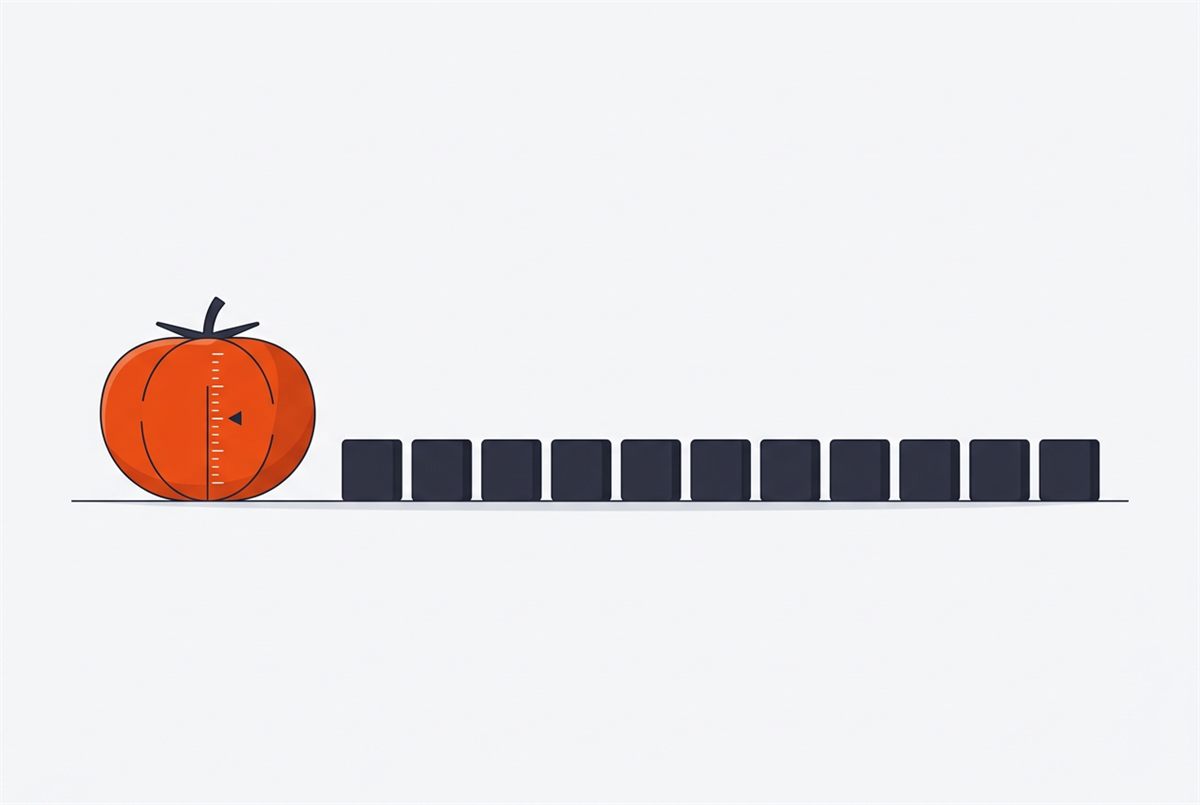
- The Pomodoro Technique: Use the "Workload Math" to decide how many Pomodoro sessions you need. If a reading takes 2 hours, that is four 25-minute sessions.
- Physical Planners: For many, writing down the math helps it "stick." Ensure you have the essential college school supplies to keep your physical workspace as organized as your digital one.
Join The Community
Mastering your workload is the first step toward a successful college career, but you don't have to do it alone. Learning how to study, manage money, and grow as a person is easier when you have a roadmap.
How many hours are you actually missing? Use this Workload Math Calculator to find your hidden study hours and block your week like a pro. Available now for only $9! Find My Hours
Ready to level up your student life? Sign up for our newsletter to receive biweekly tips, free resources, and honest advice delivered straight to your inbox.

By applying "workload math" to your schedule, you aren't just managing time: you are managing your energy and your future. Start your calculations today and watch your stress levels drop as your productivity soars.
Want a head start? The Ultimate Student Planner in my shop was made for exactly this — it’ll save you a ton of time.