7 Mistakes You’re Making With AI Study Tools (and How to Fix Them)
Is your study routine feeling a bit more… automated lately?
With the explosion of ChatGPT, Claude, and Gemini, it’s easier than ever to get through a massive pile of homework in record time. But are you actually learning, or are you just becoming a professional copy-paster? Using AI for school is one of the best study productivity hacks of the decade, but if you do it wrong, you’re setting yourself up for lower grades and a serious lack of real-world skills.
Ready to become a master of your digital tools rather than a slave to them? Here are the seven biggest mistakes students make with AI and the actionable steps you can take to fix them right now.
1. Treating AI Like a Google Search
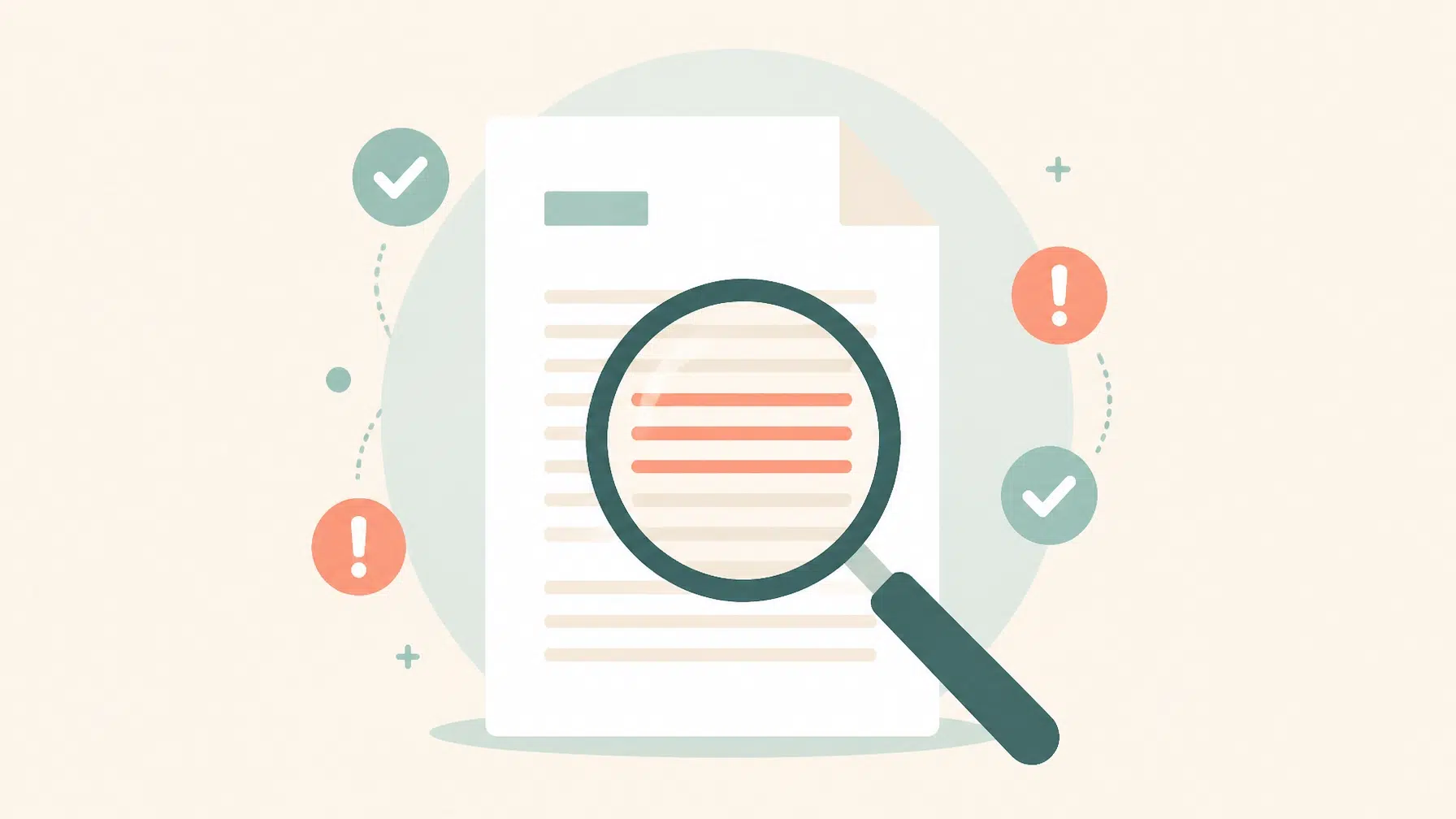
One of the most dangerous mistakes you can make is assuming that because an AI sounds confident, it is actually correct. AI models don't "know" facts; they predict the next most likely word in a sentence. This leads to "hallucinations": confidently stated facts that are completely made up.
How to Fix It:
- Verify, don't just trust. Always cross-reference dates, historical figures, and scientific formulas with a textbook or a reliable site like Britannica.
- Ask for sources. If an AI gives you a claim, ask it: "Where can I find this information in a primary source?" (Note: It might even hallucinate the source, so you still have to check!)
- Use AI for explanation, not retrieval. AI is brilliant at explaining how something works (like photosynthesis) but can be shaky on who did what in 1924.
2. Falling Into the "Copy-Paste" Trap
We've all seen it: a paragraph that uses words like "delve," "meticulously," and "intricate" in every other sentence. It sounds smart, but it doesn't sound like you. When you copy and paste AI output directly into your essays or AI for note-taking sessions, your teachers can spot it from a mile away.
How to Fix It:
- Use the 50/50 Rule. Never let AI write more than 50% of any sentence. Use its output as a "rough-rough" draft, then rewrite it in your own voice.
- Personalize your tone. Add specific details from your class lectures or personal experiences that an AI couldn't possibly know.
- Join the Community. If you want to learn how to keep your academic voice while staying productive, check out our AI University Sign-up for deeper dives into ethical AI use.
3. Using Vague, "One-Liner" Prompts
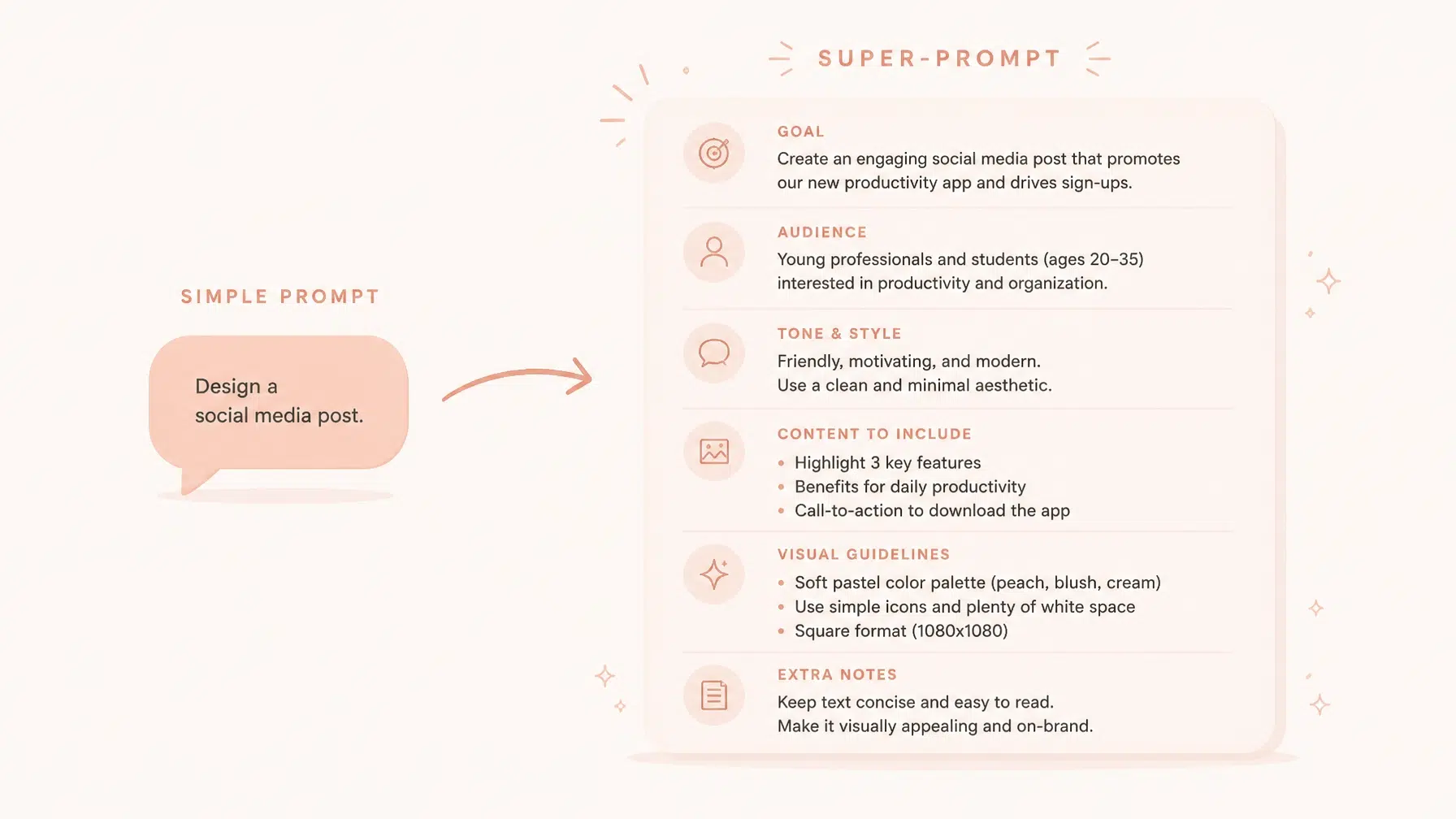
If you’re asking AI to "write an essay about the Great Gatsby," you’re going to get a generic, C-level response. This is the result of poor prompt engineering. The quality of your output is directly tied to the quality of your input.
How to Fix It:
- Give Deep Context. Tell the AI who you are, what the assignment is, and what the grading rubric says.
- The "ACT" Framework. Tell the AI to Act like a specific persona (e.g., "Act like a PhD literature professor"), give it a Context (e.g., "I am writing for a 10th-grade honors class"), and define the Task clearly.
- Iterate. Don’t settle for the first response. Ask the AI to "make the second paragraph more concise" or "add a counter-argument to point three."
4. Outsourcing Your Logical Reasoning
AI is great at summarizing, but it’s not so great at thinking. Many students ask AI to "draw a conclusion" about a complex set of data. If you let the AI do the thinking, you’re not building the "mental muscle" needed for exams where you won't have a chatbot to help you.
How to Fix It:
- Brainstorm first, AI second. Spend 10 minutes jotting down your own ideas before you ever open an AI tool. Use the AI to expand on your logic, not create it.
- Ask for critique. Instead of asking AI to write the conclusion, paste your own conclusion and ask: "What are the logical flaws in my argument?" This keeps you in the driver's seat.
- Check your workflow. Make sure your Daily Healthy Habits Checklist includes "Deep Work" sessions where the AI is turned off entirely.
5. Ignoring Your School’s AI Policy

Every school and every teacher has a different stance on AI. Some encourage it for brainstorming; others consider any use of it to be plagiarism. Using AI without checking the rules is a fast track to an academic misconduct hearing, but learning how to use GenAI ethically can keep you on the right side of the line.
How to Fix It:
- Read the syllabus. It’s the boring document you usually ignore, but it likely contains the "AI Statement" for the semester.
- Ask for permission. If you want to use AI for note-taking or to summarize a long PDF, ask your teacher: "Is it okay if I use ChatGPT to help me organize my lecture notes?"
- Be transparent. Some students include an "AI Disclosure" at the end of their papers, stating exactly how the tool was used. This builds trust and shows integrity.
6. Forgetting to Use AI for Organization
Most students only use AI to generate content, but its real power lies in organization. If you're struggling to stay on top of your schedule, AI can be your best assistant.
How to Fix It:
- Syllabus to Schedule. Upload your course syllabus and ask the AI to: "Create a 15-week study schedule based on these deadlines and my High School Four-Year Plan Template."
- Priority Matrix. Paste your to-do list and ask: "Categorize these using the Eisenhower Matrix so I know what to focus on first."
- Active Recall Prep. Use AI to turn your notes into a set of practice quiz questions. This is one of the most effective study productivity hacks because it forces you to practice retrieving information.
7. Letting "Efficiency" Replace "Learning"
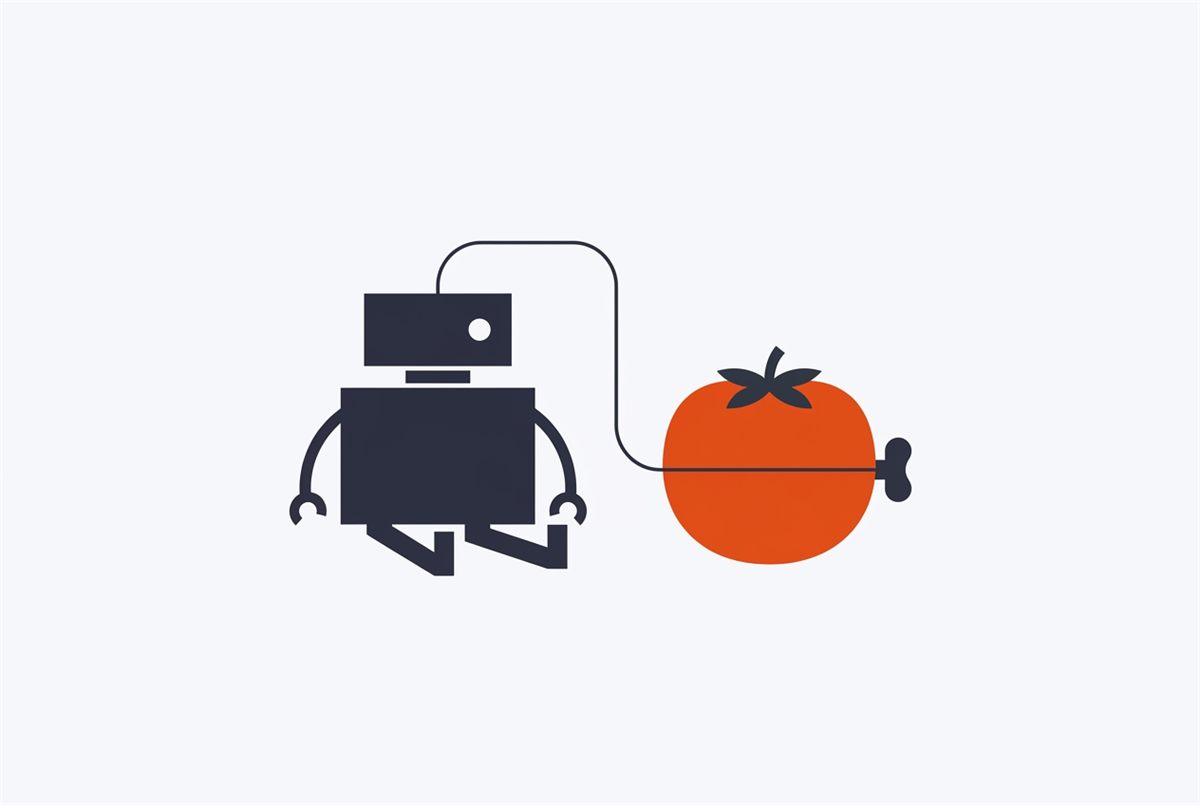
The biggest mistake is thinking that finishing faster means you’ve learned more. If you use AI to summarize every reading, you might finish your homework in 20 minutes, but your brain hasn't engaged with the material. On exam day, you’ll realize you don't actually know the subject.
How to Fix It:
- The Pomodoro Method. Use a timer (like our favorite Pomodoro Technique tools) to dedicate blocks of time to unassisted reading.
- The Feynman Technique. After using AI to explain a concept, close the laptop and try to explain that concept to a friend (or your cat) in simple terms. If you can’t, you don't know it yet.
- Synthesize, don't just summarize. Use AI to find connections between different subjects, but make sure you’re the one connecting the dots in your head.
Ready to Level Up Your Study Game?
AI is a tool, not a crutch. When used correctly, it can streamline your workflow and help you achieve the grades you’ve always wanted. When used poorly, it can cost you your academic reputation and your ability to think for yourself.
To recap: how to fix your AI mistakes:
- Verify every fact with a second source.
- Rewrite AI output to maintain your unique voice.
- Master the art of detailed, contextual prompting.
- Lead the logical thinking; let the AI follow.
- Communicate with your teachers about your AI use.
- Organize your life using AI, not just your essays.
- Prioritize real learning over simple speed.
Stop using AI to replace your brain. Get 50+ prompts designed to quiz you, explain complex topics, and build your critical thinking skills. Grab The Responsible AI Prompt Bank ($11) today! Get the Prompts
Ready to stay ahead of the curve and get more tips on student success? Join The Community and sign up for our biweekly newsletter. We’ll send you the latest hacks, free planners, and honest advice to help you crush your goals without burning out.
What’s your biggest AI "oops" moment? Let us know in the comments!
Want a head start? The Ultimate Student Planner in my shop was made for exactly this — it’ll save you a ton of time.