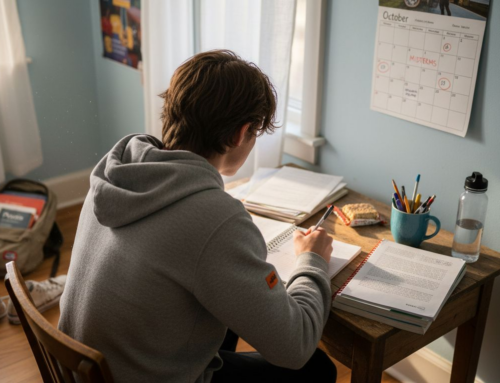
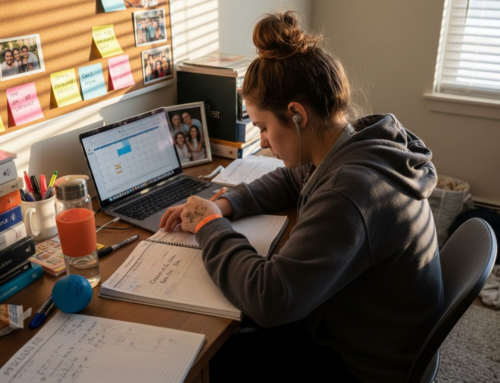
Middle school is often seen as a middle ground: a bridge between the simple days of elementary school and the high-stakes environment of high school. But if you treat these years as just a "waiting room," you’re missing a massive opportunity. The habits you build right now are the exact tools that will either make high school a breeze or a total nightmare.
Ready to become the most organized and effective version of yourself? Most students are making at least three of these common mistakes without even realizing it. By fixing them today, you aren't just getting better grades; you're mastering study tips for high schoolers before you even step foot in the building.
1. Diving Into Work Without a Strategy
One of the biggest mistakes you can make in middle school is opening your backpack and just "starting" on whatever is on top. This leads to decision fatigue, where you spend more time wondering what to do next than actually doing it.
When you work without a plan, you’re likely to forget smaller assignments or run out of energy before you get to the hard stuff.
How to fix it:
- Spend five minutes planning. Before you touch a pen, list everything due this week.
- Prioritize by energy level. Do your hardest math problems when your brain is fresh, and save the easy vocabulary coloring for later.
- Use a visual tracker. Use an undated monthly planner to see your deadlines at a glance so nothing surprises you on Sunday night.

2. Falling into the "Passive Reading" Trap
Have you ever read a whole chapter in your textbook only to realize you don’t remember a single word? That’s passive learning. Many students think that highlighting or rereading notes counts as "studying," but it’s actually one of the least effective ways to learn.
High school requires you to apply knowledge, not just repeat it. If you only memorize for the test, you’ll struggle when the material gets more complex next year.
How to fix it:
- Use Active Recall. Close the book and try to write down everything you just read from memory.
- Teach someone else. Explain the concept of photosynthesis to your dog or your younger sibling. If you can’t explain it simply, you don’t know it well enough yet.
- Self-quiz often. Use flashcards or blurting sessions to force your brain to work.
3. Believing the Myth of Multitasking
You might think you can finish your history essay while watching Netflix and replying to group chats, but science says otherwise. Every time you look at your phone, it takes your brain an average of 23 minutes to fully refocus on your original task.
In middle school, you might get away with this because the work is lighter. In high school, this habit will result in four-hour homework sessions that should have only taken one.
How to fix it:
- Implement the Pomodoro Technique. Set a timer for 25 minutes of deep focus, followed by a 5-minute break. This keeps your brain sharp without burnout.
- Create a "No-Phone Zone." Put your phone in another room until your focus block is finished.
- Use a physical timer. Sometimes seeing the time tick down on a Pomodoro timer is the visual cue you need to stay on task.
4. Relying on Others to Manage Your Schedule
In elementary school, your parents or teachers probably told you exactly what to do and when to do it. If you’re still waiting for a "reminder" from your mom to start your science project, you’re setting yourself up for failure.
Personal responsibility is the #1 trait of successful students. High school teachers expect you to track your own deadlines and manage your own time.
How to fix it:
- Take ownership today. Start checking your school portal daily without being asked.
- Map out your future. Use a high school four-year plan template to start thinking about where you want to go. It makes today's work feel more meaningful.
- Build a routine. Use a daily healthy habits checklist to automate your morning and evening routines so you don't have to "remember" to be productive.
5. Overlooking Digital Organization
Your "desk" isn't just the wooden surface in your room anymore; it’s also your Google Drive, your desktop, and your school email. Many middle school students have hundreds of "Untitled Documents" and a cluttered inbox.
A messy digital space leads to a messy mind. Finding that one specific rubric becomes a 10-minute hunt that breaks your focus.
How to fix it:
- Folder everything. Create a folder for every subject. Inside those, create folders for "Notes," "Assignments," and "Resources."
- Use a Digital Hub. Tools like Notion can act as an all-in-one workspace for your life. Check out our Notion templates for student organization to see how to streamline your workflow.
- The "One-In, One-Out" Rule. Every Friday, delete any duplicate files or screenshots you no longer need.

6. Waiting Until the Last Minute (The Cramming Cycle)
Cramming is the enemy of long-term memory. When you stay up late the night before an exam to "learn" everything, you’re only putting it into your short-term memory. You’ll forget it by the time the final exam rolls around.
High school courses build on each other. If you don't actually learn the foundations in middle school, you’ll find yourself constantly playing catch-up.
How to fix it:
- Use Spaced Repetition. Review your notes for 10 minutes on the day you take them, then again two days later, and again a week later.
- Break down big projects. If you have a research paper due in two weeks, set a deadline to finish the outline by Wednesday.
- Reset your life. If you’re already feeling behind, use a life reset checklist to clear the clutter and start fresh.
7. Forgetting to Reflect on How You Learn
Most students just "do" school. They don't stop to think about how they are doing it. If you failed a math quiz, did you ask yourself why? Was it a lack of study time, or did you not understand the concept?
Without reflection, you’re doomed to repeat the same mistakes. Developing a "growth mindset" is one of the most essential study tips for high schoolers.
How to fix it:
- Keep a reflection journal. Even just writing for two minutes at the end of the day can help you spot patterns in your behavior.
- Use a template. Grab a printable daily reflection journal to make this habit easy and aesthetic.
- Analyze your wins. When you do well, figure out what worked so you can do it again!

Essential Skills for the Next Level
Transitioning to high school is about more than just harder classes; it’s about having a system that supports you. If you start implementing these changes now, you’ll enter freshman year with a massive advantage. You won't just be surviving; you'll be thriving.
[FUTURE-PROOF SUCCESS] The High School Ready Habit Kit ($15)
High school success starts now. This parent-approved kit includes our Daily Healthy Habits Checklist and a simplified Middle School Weekly Planner to build autonomy before freshman year.
[Start Building Habits Now]
Ready to take your organization to the next level?
- Streamline your planning with our student-focused digital products.
- Enhance your productivity by joining our community for biweekly tips and resources.
- Stay effective by mastering your workflow before the workload increases.
Join The Community
Don't navigate the student experience alone. Sign up for our newsletter to receive actionable resources, study hacks, and life skills education delivered straight to your inbox. Let’s make your student life organized, aesthetic, and incredibly successful.
Want a head start? The Accountability Workbook in my shop was made for exactly this — it’ll save you a ton of time.