
Understanding Study Music: Benefits and Science Explained
Study music promises more than just pleasant background sound while you work. Research shows that certain types of study music can actually improve your memory and help you focus for longer periods. This surprises a lot of people since most assume music is nothing but a distraction when you have to concentrate. The real shock is that with the right playlist, music becomes a secret weapon for shaping your brain into a learning powerhouse.
Quick Summary
| Takeaway | Explanation |
|---|---|
| Study music enhances concentration | Background sounds tailored for studying help improve focus and cognitive performance. |
| Ideal music features steady tempo and no lyrics | Opt for instrumental music with a consistent beat and minimal distractions for better retention. |
| Match music to study tasks | Different tasks require different music styles; select accordingly for optimal effectiveness. |
| Personalize your study music experience | Experiment with genres and tempos to find what uniquely supports your learning and productivity. |
| Music aids stress reduction during study | The right study music can help lower anxiety and create a calming environment for effective learning. |
What is Study Music and Its Purpose?
Study music is a special type of background sound designed to help students focus better while learning. Unlike regular music that might distract you, study music creates an environment that boosts your concentration and helps your brain process information more effectively.
The Science Behind Study Music
Research from Frontiers in Psychology shows that certain types of music can improve cognitive performance. When you listen to the right kind of study music, your brain enters a state of calm alertness. This means you can:
- Reduce stress levels
- Improve information retention
- Enhance overall learning capacity
The key is selecting music with specific characteristics. Ideal study music typically has:
- A steady, consistent tempo
- Minimal or no lyrics
- Soft instrumental sounds
- Rhythms that match your natural brain wave patterns
Types of Study Music
Study music comes in various forms, each targeting different learning needs. Some popular types include:
- Classical music (especially compositions by Mozart)
- Ambient electronic soundscapes
- Nature sounds like rainfall or gentle ocean waves
- Lo-fi hip hop instrumental tracks
While individual preferences vary, the goal remains the same: creating a sonic environment that supports mental focus and academic performance. Your brain responds differently to background sounds, and the right music can transform your study sessions from frustrating to productive.
Here is a table outlining common types of study music and their typical cognitive effects, helping you quickly compare which genre might best suit your learning style.
| Study Music Type | Description | Common Cognitive Effects |
|---|---|---|
| Classical Music | Orchestral or piano pieces, often instrumental | Enhances memory, improves spatial reasoning |
| Ambient Electronic | Soft electronic soundscapes, no lyrics | Reduces stress, sustains attention |
| Nature Sounds | Rainfall, ocean waves, forest ambiance | Calms anxiety, blocks distractions |
| Lo-fi Hip Hop | Instrumental hip hop beats, mellow and consistent | Improves mood, creates relaxed focus |
| Instrumental Jazz | Jazz compositions without vocals | Encourages creative thinking, lifts mood |
| Minimalist Acoustic | Simple, repetitive acoustic melodies | Promotes sustained concentration, soothes |
Why Study Music Matters for Learning and Focus
Study music has a profound impact on how our brains process information and manage cognitive tasks. It is not just background noise, but a strategic tool that can transform your learning experience and mental performance.
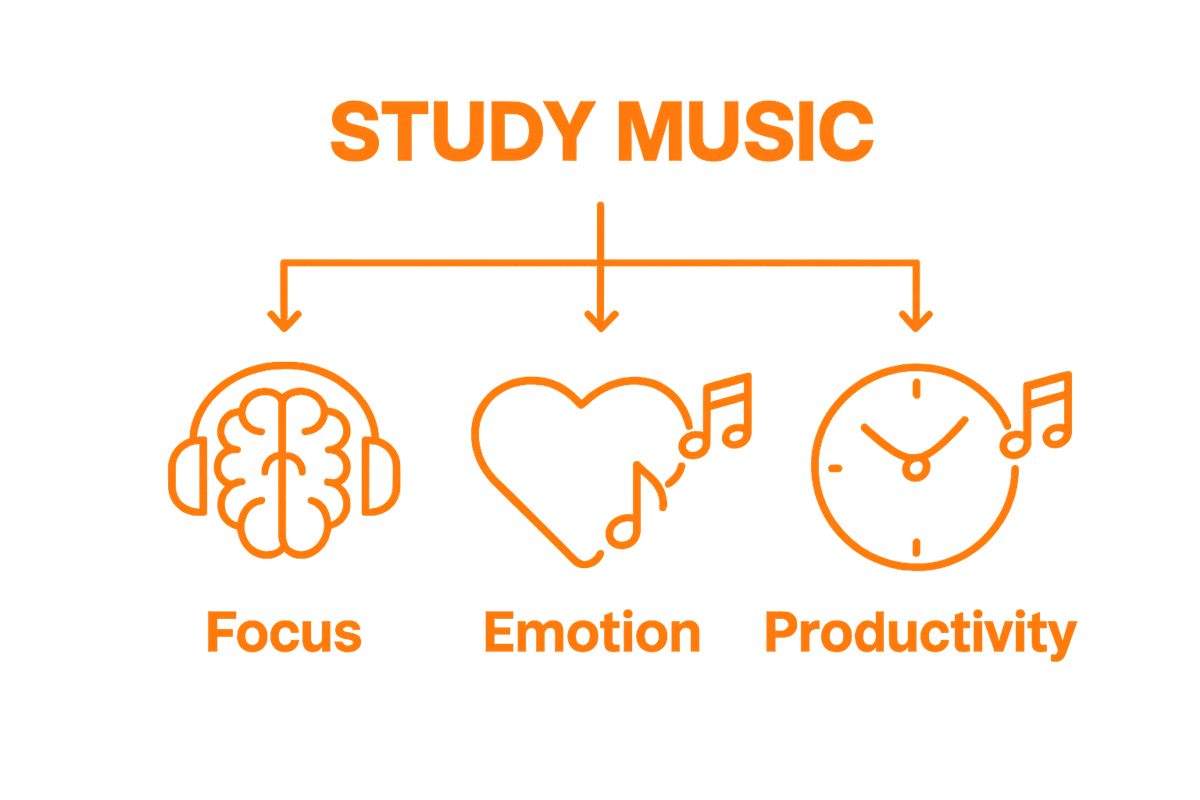
Cognitive Performance Boost
Research from Stanford University School of Medicine reveals that music engages critical brain regions responsible for attention, memory prediction, and event tracking. When you listen to the right kind of music, your brain becomes more receptive to learning, creating an optimal environment for studying.
By engaging multiple cognitive processes simultaneously, study music helps your brain:
- Maintain sustained attention
- Process complex information more efficiently
- Reduce mental fatigue
- Create a more enjoyable learning experience
Stress Reduction and Emotional Regulation
Study music does more than just support cognitive function. It plays a crucial role in managing emotional states that directly impact learning. The rhythmic patterns and harmonies can help regulate stress levels, creating a calm mental state conducive to focused studying.
For auditory learners, music becomes an even more powerful tool. These learners process information most effectively through sound, making study music an essential strategy for enhanced comprehension and retention.
Key emotional benefits of study music include:
- Lowering anxiety levels
- Improving mood
- Creating a consistent mental environment
- Blocking out distracting background noises
Understanding and leveraging study music is not about finding a universal solution, but discovering what works best for your unique learning style and cognitive needs.
How Study Music Affects the Brain and Productivity
Study music does more than simply play in the background. It interacts with your brain in complex ways that can dramatically enhance or hinder your learning and productivity. Understanding these neural mechanisms helps you make smarter choices about your study soundtrack.
Neural Processing and Music Interaction
Research from PubMed demonstrates that music triggers intricate brain responses that go beyond passive listening. When you hear music during study sessions, your brain actively processes multiple layers of information simultaneously.
Specifically, music influences your brain by:
- Activating multiple neural networks
- Stimulating neurotransmitter release
- Modulating attention and concentration mechanisms
- Creating predictive cognitive patterns

Impact on Cognitive Performance
Different types of music produce varying cognitive effects. Instrumental music without lyrics tends to be most effective for maintaining focus. Background music can help your brain enter a state of optimal performance, often referred to as the “flow state” where concentration becomes effortless.
Interestingly, music’s impact varies based on individual preferences and brain chemistry. Some students find classical compositions enhance their learning, while others prefer ambient electronic sounds. The key is finding a soundtrack that helps your unique brain function more efficiently.
Important cognitive benefits include:
- Enhanced working memory performance
- Improved information processing speed
- Reduced mental fatigue
- Better emotional regulation during study sessions
By understanding how study music interacts with your brain, you can transform your learning experience from mundane to extraordinary. Choose your study music wisely, and watch your productivity soar.

Key Concepts: Genres, Tempo, and Effects of Study Music
Not all music is created equal when it comes to studying. Understanding the nuanced relationship between musical characteristics and cognitive performance can help you craft the perfect study playlist.
Musical Genres and Cognitive Impact
Research from Queen Margaret University reveals that personal music preferences play a significant role in cognitive performance. Different musical genres interact with our brains in unique ways, influencing concentration and mental processing.
Common study music genres include:
- Classical music
- Ambient electronic soundscapes
- Instrumental jazz
- Lo-fi hip hop
- Minimalist acoustic compositions
Understanding Musical Tempo
Tempo significantly influences how music affects your brain. Fast and slow tempos produce distinctly different cognitive responses. Generally, music between 60-70 beats per minute creates an optimal environment for focus and information processing.
The ideal study music characteristics involve:
- Consistent rhythm
- Minimal lyrical distractions
- Moderate tempo
- Soft instrumental sounds
Some students might find that certain tempos help them maintain energy and concentration, while others might feel overwhelmed.
Experimenting with different musical styles helps you discover what works best for your unique learning style.
Remember, the goal of study music is not entertainment, but creating a sonic environment that supports your cognitive performance and helps you achieve your academic goals.
Practical Applications: Choosing the Right Study Music
Selecting the perfect study music is a personalized journey that requires understanding your learning style, cognitive needs, and the specific tasks you are undertaking. Not all music will enhance your study experience equally.
Matching Music to Study Tasks
Harvard Medical School recommends different music strategies based on your specific study activities. The key is matching the music complexity to your cognitive load.
This table explains how different study tasks pair with specific types of study music, giving you at-a-glance guidance for choosing the best soundtrack for your activities.
| Study Task | Recommended Music Style | Reason for Effectiveness |
|---|---|---|
| Reading complex texts | Minimal instrumental | Reduces distractions, supports comprehension |
| Mathematical problem solving | Low-tempo classical compositions | Maintains focus, matches logical rhythms |
| Creative writing | Ambient or nature sounds | Inspires creativity, keeps anxiety low |
| Memorization tasks | Consistent, rhythmic instrumental | Reinforces repetition, aids memory |
| Repetitive administrative work | Energetic background music | Keeps energy up, prevents monotony |
Consider these task-specific music guidelines:
- Reading complex texts: Choose minimal instrumental music
- Mathematical problem solving: Select low-tempo classical compositions
- Creative writing: Use ambient or nature sounds
- Memorization tasks: Pick consistent, rhythmic instrumental tracks
- Repetitive administrative work: Allow for more energetic background music
Personal Preferences and Neurological Responses
Your individual brain chemistry plays a significant role in how music impacts your concentration. Some students find certain genres more conducive to learning, while others might experience complete distraction.
Important personal considerations include:
- Your natural attention span
- Comfort with background noise
- Emotional response to different musical styles
- Previous positive study experiences with music
The ultimate goal is creating a sonic environment that supports your cognitive performance without becoming a distraction. Experiment, track your productivity, and develop a personalized study music strategy that works uniquely for you.
Turn Your Study Sessions Into Results With Learning With Angie
Are you tired of feeling unfocused or overwhelmed while studying, even after applying tips from science-backed articles like “Understanding Study Music: Benefits and Science Explained”? Many learners struggle with maintaining concentration and managing stress, especially when trying to integrate study music or new productivity techniques. If you recognize the challenges of choosing the right music for cognitive performance or balancing your mental well-being with demanding academic goals, you are not alone.
Take actionable steps now to elevate your study experience. Dive into our expert guidance on mastering study aesthetics and time management or explore proven resources to help you find your ideal study routine and boost productivity. Do not just read about the benefits of focused study environments—transform your habits today.
Frequently Asked Questions
What is study music?
Study music is a type of background sound designed to enhance focus and concentration while learning, creating an environment that supports better information processing.
How does study music improve cognitive performance?
Study music can improve cognitive performance by engaging critical brain regions, helping maintain attention, and reducing mental fatigue, thereby creating an optimal studying environment.
What types of music are considered effective for studying?
Effective study music types include classical compositions, ambient electronic soundscapes, nature sounds, and lo-fi hip hop instrumental tracks, as they provide a calming and focused listening experience.
How do I choose the right study music for my needs?
Choosing the right study music involves matching the music complexity to your study tasks, considering your personal preferences, and experimenting with different genres and tempos to find what enhances your cognitive performance.
Recommended
- Study Techniques for Auditory Learners
- What Are the Most Effective Study Strategies for High School Students?
- The Role of Color Psychology in Study Materials
- 15 Aesthetic Study Websites to Instantly Motivate You
- Why is Music Important in Schools – Academic Entertainment
Want a head start? The Ultimate Student Planner in my shop was made for exactly this — it’ll save you a ton of time.