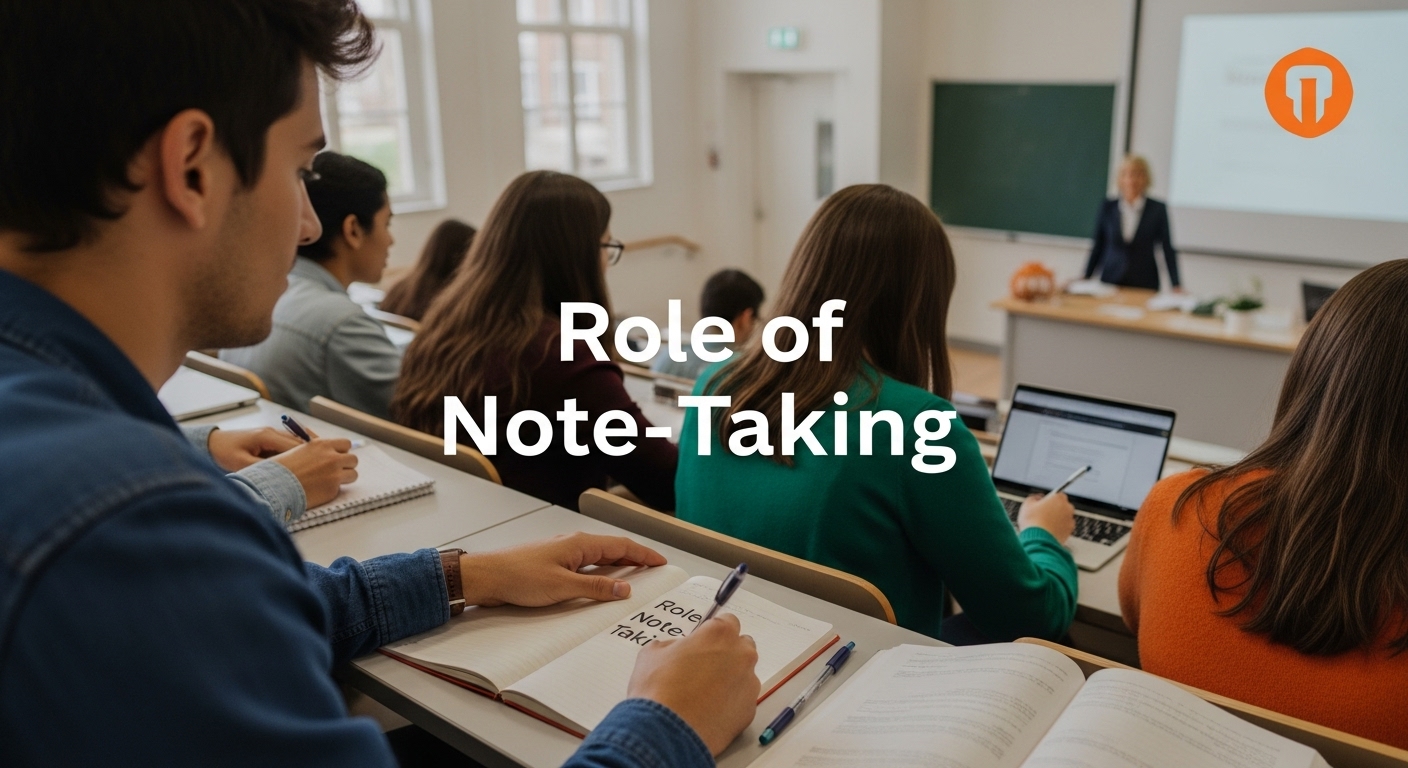
Why Note-Taking Is Your Secret Weapon for Academic Success
Ever wonder why some students seem to ace every exam while others struggle to remember what happened in yesterday’s lecture? The answer might be simpler than you think: effective note-taking.
Here’s the amazing part – when you take good notes, you can double your memory retention compared to just sitting and listening. Plus, you’ll develop better critical thinking skills without even trying!
Quick Summary
| Takeaway | Explanation |
|---|---|
| Note-taking enhances comprehension. | Actively writing information helps deepen understanding of complex concepts through engagement. |
| Organized notes improve memory retention. | Well-structured notes facilitate the transfer of information from short-term to long-term memory. |
| Personalized notes aid exam preparation. | Customized notes become essential study resources, helping identify knowledge gaps and focus on key areas. |
| Handwritten notes enhance critical thinking. | The cognitive effort involved in writing by hand promotes deeper processing of information compared to typing. |
| Note-taking benefits life management. | Beyond academics, effective note-taking supports personal goal tracking, memory, and emotional processing in everyday life. |
What is Note-Taking and Its Purpose?
Think of note-taking as your brain’s way of having a conversation with new information. Instead of letting facts and ideas float in one ear and out the other, you’re actively grabbing the important stuff and making it stick.
It’s NOT just copying down everything the teacher says.
It IS about:
- Understanding what you’re learning
- Remembering it for tests (and life!)
- Having something useful to study from later
How Note-Taking Works in Learning
When you take notes, your brain performs multiple cognitive tasks simultaneously. You listen or read, identify important information, summarize key points, and record them in a way that makes sense to you. According to Cornell University, this systematic method helps students not just record information, but also reflect and review content critically.
The magic of note-taking lies in its ability to transform passive learning into an interactive experience. Instead of simply absorbing information, you actively process, filter, and reconstruct knowledge in a format that resonates with your personal understanding. This active engagement significantly improves learning outcomes and helps you develop stronger critical thinking skills.

Why Note-Taking Matters in Education
Note-taking isn’t just a classroom skill – it’s a powerful learning tool that transforms how you process and retain information. Explore efficient note-taking methods to maximize your academic performance.
Cognitive Benefits of Note-Taking
When students take notes, they engage multiple brain functions simultaneously. According to research from the European Journal of Educational Research, note-taking significantly improves academic achievement by requiring students to:
- Actively Listen: Pay close attention to key information during lectures
- Process Information: Synthesize and summarize complex concepts
- Create Personal Knowledge Maps: Translate external information into personalized understanding
Academic Performance and Learning Outcomes
The impact of effective note-taking extends far beyond simple information recording. By transforming passive listening into an active learning process, students develop critical thinking skills and improve knowledge retention. Handwritten notes are particularly powerful – they require more cognitive processing than typing, forcing students to think critically about the material rather than transcribing verbatim.
This table compares the impact of handwritten versus typed note-taking, highlighting the advantages of each method based on information from the article.
| Note-Taking Method | Cognitive Effort Required | Depth of Processing | Impact on Retention |
|---|---|---|---|
| Handwritten | High | Promotes deeper critical thinking | Strong improvement in retention |
| Typed | Lower | Tends towards verbatim copying | Less effective for retention |

Well-organized notes serve as personalized study guides. They help you review material more efficiently, identify knowledge gaps, and prepare more effectively for exams. The act of creating notes becomes a learning experience in itself, helping you internalize and connect complex academic concepts.
How Note-Taking Enhances Learning Processes
Note-taking is more than just writing down information – it’s a complex cognitive process that fundamentally transforms how we learn and understand new concepts. Discover creative note-taking techniques to revolutionize your study approach.
Neurological Mechanisms of Note-Taking
When you take notes, your brain engages in sophisticated processing activities. By converting spoken or written information into personal shorthand, you activate multiple cognitive regions simultaneously. This process involves:
- Selective Attention: Identifying and filtering critical information
- Working Memory: Temporarily holding and manipulating new information
- Long-Term Memory Encoding: Transferring processed information into permanent storage
Encoding and Information Processing
The act of note-taking creates powerful neural connections that enhance learning. Instead of passively receiving information, students actively reconstruct knowledge. This means translating complex ideas into personal language, creating mental frameworks that make abstract concepts more understandable and memorable.
Research suggests that the physical or digital act of note-taking triggers deeper information processing. When students summarize, paraphrase, and organize information, they’re not just recording facts – they’re building comprehensive understanding. This active engagement transforms learning from a passive reception of data to an interactive, personalized experience that significantly improves comprehension and retention.
Key Concepts of Effective Note-Taking
Effective note-taking goes beyond simply writing down information – it requires strategic thinking and deliberate learning techniques. Learn about the sentence method of note-taking to enhance your study skills.
Core Principles of Note-Taking
Successful note-taking is built on fundamental principles that transform the learning experience. According to research from the National Institutes of Health, effective note-taking involves more than mechanical recording. The key principles include:
- Generative Processing: Converting information into your own words
- Selective Filtering: Identifying and capturing most important concepts
- Personal Interpretation: Creating meaningful connections between new and existing knowledge

Strategies for Meaningful Note-Taking
Meaningful note-taking is an active learning process that requires intentional strategies. Students who master these techniques can significantly improve their understanding and retention of complex information. The goal is not to transcribe every word, but to create a personalized knowledge map that reflects individual understanding.
This approach transforms notes from simple transcriptions into powerful learning tools. By focusing on comprehension rather than verbatim copying, students engage more deeply with the material. The most effective notes are those that require critical thinking, synthesis, and personal reflection – turning passive information absorption into an interactive learning experience.
Practical Applications of Note-Taking in Everyday Life
Note-taking extends far beyond academic settings, becoming a powerful tool for personal and professional organization. Explore creative note-taking techniques to enhance your daily productivity.
Personal Life Management
In personal contexts, note-taking helps individuals track goals, manage daily responsibilities, and maintain mental clarity. According to research in Frontiers in Psychology, effective note-taking serves multiple life management functions:
- Goal Tracking: Recording personal objectives and monitoring progress
- Memory Support: Capturing important details from conversations and experiences
- Emotional Processing: Journaling thoughts and reflecting on personal experiences
Professional and Creative Applications
Professional environments demand constant information processing and strategic thinking. Note-taking becomes a critical skill for professionals across various fields. Researchers, managers, writers, and creative professionals use notes to capture insights, brainstorm ideas, and develop complex projects.
The true power of note-taking lies in its versatility. Whether you’re planning a weekend trip, preparing for a work presentation, or sketching out a creative project, notes help transform abstract thoughts into actionable plans. By systematically capturing and organizing information, individuals can reduce mental clutter, improve decision-making, and maintain a clear, focused approach to both personal and professional challenges.

Transform Your Learning with Personalized Note-Taking Tools
Struggling to turn your notes into true learning aids? Many students and lifelong learners find it difficult to move beyond simple transcription and actually create meaningful, organized notes that drive real results. If you often ask yourself how to process information more deeply and retain knowledge for the long-term, you are not alone. Our platform is designed for you if you want to actively engage with your materials, boost memory retention, and make your study sessions more productive and enjoyable.
Ready to upgrade your note-taking routine? Take control of your academic journey today by exploring tailored strategies that help you master studying, time management, and overall productivity. Begin your transformation now so each study session leaves you feeling confident and prepared for success.
Frequently Asked Questions
What is the main purpose of note-taking in learning?
Note-taking serves multiple essential functions, including comprehension, memory retention, and providing future reference for studying and assignments.
How does note-taking improve memory retention?
The act of taking notes helps transfer information from short-term to long-term memory by actively engaging the brain in processing and organizing information.
The following table summarizes key cognitive mechanisms activated during the note-taking process, providing a clearer understanding of how each function contributes to effective learning.
| Cognitive Mechanism | Description |
|---|---|
| Selective Attention | Focusing on and filtering critical information |
| Working Memory | Temporarily holding and manipulating new information |
| Long-Term Memory Encoding | Transferring processed information into permanent storage |
| Generative Processing | Converting information into your own words |
| Selective Filtering | Identifying and capturing the most important concepts |
| Personal Interpretation | Creating meaningful connections between new and existing knowledge |
What are effective strategies for note-taking?
Effective strategies include generative processing (putting information into your own words), selective filtering (capturing key concepts), and personal interpretation (making connections between new and existing knowledge).
Why is handwritten note-taking often more effective than typing?
Handwritten notes require more cognitive processing than typing, encouraging students to think critically about the material and helping improve understanding and retention.
Recommended
- The Sentence Method of Note-Taking in 4 Simple Steps
- 14 Note Taking Methods That Are Efficient & Effective
- The Outline Note-Taking Method in 6 Simple Steps
- How to Take Cornell Notes