Understanding the Exam Preparation Guide for Success
{
“@type”: “Article”,
“author”: {
“url”: “https://learningwithangie.com”,
“name”: “Learningwithangie”,
“@type”: “Organization”
},
“@context”: “https://schema.org”,
“headline”: “Understanding the Exam Preparation Guide for Success”,
“publisher”: {
“url”: “https://learningwithangie.com”,
“name”: “Learningwithangie”,
“@type”: “Organization”
},
“inLanguage”: “en”,
“articleBody”: “Explore this exam preparation guide for students to understand effective strategies, importance, and concepts of successful study habits.”,
“description”: “Explore this exam preparation guide for students to understand effective strategies, importance, and concepts of successful study habits.”,
“datePublished”: “2025-09-26T05:00:41.403Z”
}
People often think exam preparation just means reading textbooks or pulling all nighters before a test. But fewer realize that strategic preparation can boost test scores by as much as one third of a letter grade, according to Stanford research. Here’s the real surprise: the true benefits stretch far beyond grades and create habits that transform how students think, remember, and solve problems for life.
Quick Summary
| Takeaway | Explanation |
|---|---|
| Strategic planning enhances study effectiveness. | Create a structured study schedule that prioritizes subjects based on complexity for maximal learning efficiency. |
| Engage in active learning techniques. | Utilize methods like self-testing and group discussions to transform passive study into interactive and memorable sessions. |
| Mental and physical well-being matter. | Maintain a balanced lifestyle with proper nutrition, sleep, and exercise to support cognitive performance during exams. |
| Active recall strengthens memory. | Challenge yourself to remember information without notes, reinforcing neural pathways and improving retention of knowledge. |
| Preparation skills build lifelong benefits. | Develop critical thinking and self-directed learning abilities that enhance adaptability in both academic and professional settings. |
What is Exam Preparation and Why is it Important?
Exam preparation is a strategic process of systematically organizing, reviewing, and mastering academic material to maximize performance during tests and assessments. It goes far beyond simply reading textbooks or cramming information the night before an exam. Effective exam preparation involves developing comprehensive learning strategies that help students understand, retain, and confidently apply knowledge.
Understanding the Core of Exam Preparation
At its heart, exam preparation is about creating a structured approach to learning that transforms passive information absorption into active knowledge retention. Students who invest time in thoughtful preparation don’t just memorize facts they develop deep comprehension of subject matter. This approach helps learners:
- Build confidence by reducing test anxiety
- Improve long term memory retention
- Develop critical thinking and problem solving skills
Learn more about comprehensive test preparation strategies that can transform your academic performance.
The Science Behind Effective Preparation
According to research from the National Institutes of Health, strategic exam preparation significantly enhances academic achievement. The key is moving beyond passive study techniques like simple re-reading to more active engagement methods such as self-testing, spaced repetition, and metacognitive learning strategies.
Successful exam preparation is not about working harder but working smarter. By understanding your personal learning style, creating targeted study plans, and utilizing proven techniques, you can dramatically improve your academic performance and reduce the stress typically associated with exams.
Students who master exam preparation learn to view tests not as intimidating obstacles but as opportunities to demonstrate their understanding and knowledge. This mindset shift is crucial in transforming exam preparation from a dreaded task into an empowering academic experience.

Key Elements of Effective Exam Preparation
Effective exam preparation is a multifaceted approach that requires strategic planning, mental preparation, and targeted learning techniques. Success in exams isn’t about innate intelligence but about developing smart study habits and implementing systematic preparation strategies. Students who understand and apply these key elements can significantly improve their academic performance and reduce test anxiety.
Strategic Study Planning
Planning is the foundation of successful exam preparation. This involves creating a structured study schedule that allocates time efficiently across different subjects and topics. Prioritizing subjects based on complexity and personal understanding helps students focus their energy where it’s most needed.
Key components of strategic study planning include:
- Creating a realistic and flexible study timeline
- Breaking down complex subjects into manageable chunks
- Identifying personal peak learning hours
- Setting specific and achievable study goals
Learn more about time management strategies for exam preparation to optimize your study schedule.
Active Learning and Knowledge Retention
According to research from Study Guides and Strategies, active learning techniques dramatically improve knowledge retention and exam performance.
These techniques transform passive reading into engaging, interactive study sessions that help embed information more deeply in memory.
Active learning methods include:
- Practice testing and self-quizzing
- Explaining concepts out loud
- Creating mind maps and visual summaries
- Engaging in group study discussions
- Using mnemonic devices for complex information
Mental and Physical Preparation
Exam preparation isn’t just about academic strategies. Mental and physical well-being play crucial roles in academic success. This means maintaining a balanced lifestyle that supports cognitive function through proper nutrition, adequate sleep, regular exercise, and stress management techniques.
By integrating these key elements into their study approach, students can build a comprehensive exam preparation strategy that goes beyond simple memorization.
To clarify the main building blocks of effective exam preparation, the table below summarizes key elements and provides a brief description for each.
| Key Element | Description |
|---|---|
| Strategic Study Planning | Developing a structured study schedule that prioritizes subjects and breaks material into manageable parts. |
| Active Learning Techniques | Employing interactive methods like self-quizzing, group discussions, and mind maps for better retention. |
| Mental and Physical Preparation | Maintaining a balanced lifestyle with proper nutrition, sleep, and exercise to support brain function. |
| Knowledge Retention Strategies | Using methods such as spaced repetition, mnemonics, and active recall to strengthen memory and recall. |
| Metacognitive Skills | Self-monitoring learning progress to identify strengths and address weaknesses during study sessions. |

How Exam Preparation Affects Learning and Performance
Exam preparation is not just a temporary academic exercise but a transformative process that fundamentally impacts learning outcomes and cognitive development. By systematically engaging with study materials, students do more than prepare for tests they actually reshape their brain’s capacity to absorb, process, and retain complex information.
Cognitive Mechanisms of Learning
When students invest time in structured exam preparation, they trigger sophisticated neurological processes that enhance memory formation and knowledge retention. This isn’t about memorization but about creating robust neural connections that facilitate deeper understanding. Different study techniques activate various cognitive mechanisms that help transform short term information into long term knowledge.
Key cognitive benefits of effective exam preparation include:
- Enhanced neural pathway development
- Improved information processing speed
- Better context based understanding
- Increased ability to connect complex concepts
- Reduced cognitive load during actual exams
Discover insights about your unique learning style and how it impacts your exam performance.
Performance and Psychological Impact
According to research from Stanford University, students who employ strategic study methods can improve their exam scores by an average of one-third of a letter grade.
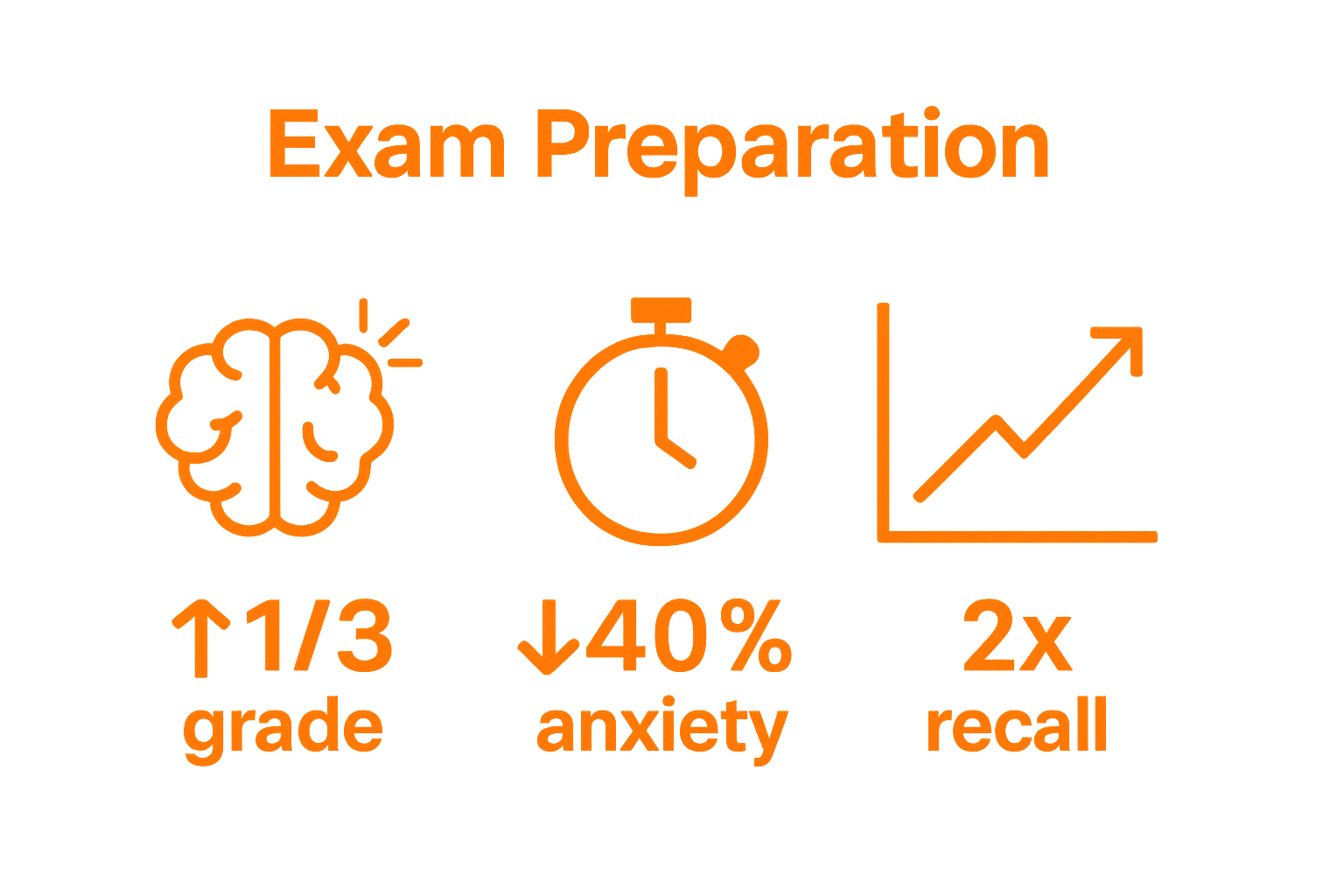 This improvement isn’t just about academic performance but also significantly reduces test anxiety and boosts overall confidence.
The psychological benefits extend beyond immediate academic achievements. Students who develop strong exam preparation skills learn valuable life skills such as discipline, time management, and systematic problem solving. These skills become transferable assets that benefit them in academic and professional environments.
Long Term Learning Transformation
Exam preparation is more than a short term strategy it’s a long term learning approach that rewires how students interact with educational content. By consistently applying effective preparation techniques, students develop a growth mindset that views challenges as opportunities for learning and personal development.
Ultimately, effective exam preparation transforms the learning experience from a potentially stressful obligation into an empowering journey of intellectual growth and self discovery.
Strategies to Enhance Understanding and Retention
Effective learning is not about how much time you spend studying, but how strategically you approach knowledge absorption and recall. Understanding and retention are complex cognitive processes that require deliberate, scientifically informed techniques to maximize learning potential. Students who master these strategies can transform their academic performance and develop lifelong learning skills.
Active Recall and Retrieval Practice
Active recall is a powerful learning technique that goes beyond passive reading or highlighting. Instead of simply reviewing material, students actively challenge themselves to remember information without looking at their notes. This method forces the brain to strengthen neural pathways and creates more robust memory connections.
Key active recall strategies include:
- Creating self-quizzes
- Using flashcards with questions on one side
- Explaining concepts out loud without reference materials
- Teaching learned material to someone else
- Reconstructing complex processes from memory
Explore memorization techniques that can supercharge your study sessions and improve your retention.
Cognitive Encoding and Information Processing
According to research from the National Institutes of Health, effective learning strategies like spaced repetition and elaborative interrogation significantly enhance long-term retention. Cognitive encoding involves transforming abstract information into meaningful, memorable mental representations.
Successful information processing requires students to:
- Connect new information with existing knowledge
- Create visual mind maps
- Use mnemonic devices
- Break complex concepts into smaller, manageable chunks
- Apply contextual learning techniques
Metacognitive Learning Approaches
Metacognition involves understanding and monitoring one’s own learning process. Students who develop strong metacognitive skills become more self-aware learners, capable of identifying their strengths and addressing knowledge gaps. This approach transforms studying from a passive activity into an active, dynamic process of continuous improvement.
By implementing these sophisticated learning strategies, students can move beyond traditional memorization techniques and develop a nuanced, deep understanding of academic material.
The following table compares three powerful learning strategies—Active Recall, Spaced Repetition, and Metacognitive Learning—highlighting their definitions, techniques, and cognitive benefits.
| Strategy | Definition | Example Techniques | Cognitive Benefit |
|---|---|---|---|
| Active Recall | Actively retrieving information from memory without notes | Self-quizzing, teaching others, oral explanations | Strengthens neural connections and memory retention |
| Spaced Repetition | Reviewing material at increasing intervals over time | Flashcards, scheduled review sessions | Enhances long-term retention and reduces forgetting |
| Metacognitive Learning | Monitoring and regulating one’s own learning strategies and progress | Self-assessment, reflection, adjusting study plans | Builds self-awareness and adaptive learning skills |

Real-World Applications of Exam Preparation Skills
Exam preparation skills are far more than academic tools they are life skills that shape professional success and personal development. The cognitive strategies learned during exam preparation become fundamental capabilities that extend well beyond classroom settings, transforming how individuals approach challenges, learn new information, and adapt to complex environments.
Professional Performance and Skill Transfer
Professional environments demand similar cognitive skills that students develop during exam preparation. Critical thinking, systematic problem solving, and information processing are universal competencies that employers consistently seek. The ability to quickly understand complex information, retain key details, and apply knowledge strategically becomes a significant professional advantage.
Key professional skills developed through exam preparation include:
- Rapid information absorption
- Structured analytical thinking
- Effective time management
- Self directed learning capabilities
- Strategic problem resolution
Discover motivational insights that can inspire your academic and professional journey and help you leverage your preparation skills.
Continuous Learning and Adaptability
According to research from the American Psychological Association, exam preparation techniques directly contribute to lifelong learning capabilities. These skills create a foundation for continuous personal and professional development, enabling individuals to navigate rapidly changing knowledge landscapes.
Personal growth applications of exam preparation skills encompass:
- Learning new professional certifications
- Mastering technical skills
- Adapting to technological changes
- Developing personal hobbies and interests
- Maintaining cognitive flexibility
Psychological Resilience and Confidence Building
Beyond tangible skills, exam preparation cultivates profound psychological attributes. Students learn to manage stress, overcome challenges, and build self confidence through systematic approach to complex tasks. These psychological mechanisms become powerful tools for navigating personal and professional uncertainties.
The true power of exam preparation lies not in academic achievements but in developing a growth mindset that views challenges as opportunities for learning and self improvement. By mastering these skills, individuals transform their approach to knowledge acquisition, making continuous learning a natural and enjoyable part of their life journey.

Turn Exam Preparation Obstacles into Academic Success
Are you struggling to make your hard work in exam preparation actually pay off? Many students face challenges like test anxiety, information overload, and frustration that comes from ineffective study habits. As discussed in this article, true success is built on structured planning, active learning, and developing long-term retention rather than relying exclusively on last-minute cramming. If you want to move beyond memorization and finally build strategies that work, there are resources designed specifically for your needs. Discover practical advice, science-backed methods, and detailed guides in the Studying section to start transforming your preparation routine today.
Do not wait until your next big test feels overwhelming. Find step-by-step study guides, productivity tools, and inspiring educational content that supports both your academic goals and your overall well-being. Start your journey toward smarter study habits and see the difference this exam season.
Recommended
- Understanding Effective Test Preparation Strategies
- 10 Time Management Strategies for Exam Preparation
- Why Are Exam Quotes Important for Students?
- From Classroom to Career: Student Success Strategies that Work
- Top ATPL Tips and Tricks – VictorOne
- Top Study Techniques for Exams: Pilot Success Guide 2025