7 Mistakes You’re Making with Your College Application Checklist (and How to Avoid Sticker Shock)
You’ve spent years prepping for this moment. The late-night study sessions, the extracurriculars, and the constant pressure to "be involved" have all led to one thing: the college application season. But here’s a question for you: Is your current college application checklist actually helping you, or is it just a list of things you’re stressed about?
Applying to college isn’t just about getting that "Congratulations!" email. It’s about making sure you don't end up with a financial headache four years from now. Many students (and parents!) focus so much on the admission that they completely ignore the affordability.
Ready to streamline your process and protect your bank account? Let's dive into the seven most common mistakes you're likely making and how to fix them before you hit "submit."
1. Using a Fragmented Tracking System
If your application details are scattered across sticky notes, random emails, and five different Google Docs, you’re setting yourself up for a meltdown. A disorganized process leads to missed deadlines and forgotten requirements.
To stay on top of everything, you need a centralized dashboard. This is where student productivity hacks come into play. Instead of reinventing the wheel, use a dedicated system to track every school, essay prompt, and login credential in one place.
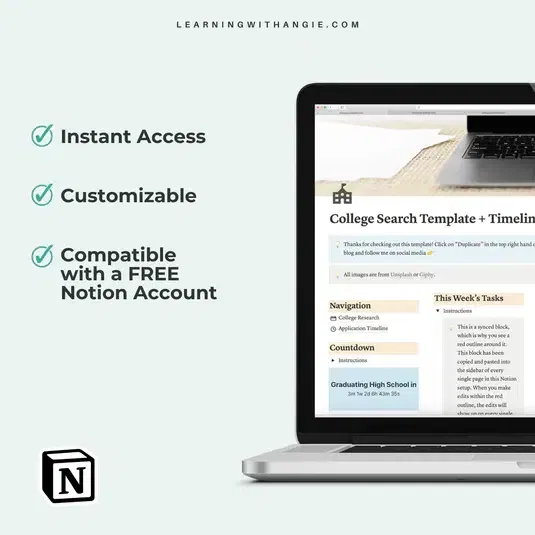
- Centralize your data: Use a tool like our Notion College Search Template to keep your timeline and research organized.
- Track every requirement: Don't just list "Apply." List the transcripts, test scores, and letters of recommendation separately.
- Visual progress: Seeing a progress bar for each application can drastically reduce your anxiety.

2. Falling for the "Sticker Price" Trap
This is the biggest mistake you can make regarding money management for students. You look at a university's website, see a $70,000 price tag, and immediately cross it off your list. Or worse, you don't cross it off and assume you’ll just figure it out later.
The "sticker price" is the published tuition and fees, but almost nobody actually pays that. What matters is the Net Price: the amount you pay after grants and scholarships are deducted.
- Use Net Price Calculators: Every college is required to have one on their website. Use it now, not after you’re accepted.
- Don't ignore private schools: Often, private colleges have more endowment money to give away, making them cheaper than "affordable" state schools once aid is factored in.
- Ready to compare?: Make sure you are looking at the bottom line for all four years, not just the first semester.

3. Treating the Personal Statement Like a Resume
Admissions officers already have your transcript and your activities list. They don't need a three-page essay that repeats that you were the captain of the debate team. They want to know who you are, not just what you’ve done.
- Find your unique voice: Avoid using "thesaurus words" to sound more academic. Write like yourself: just the most polished version of yourself.
- Show, don't tell: Instead of saying you are a leader, tell a story about a specific moment where you had to make a hard decision.
- Proofread manually: Spellcheck won't catch it if you accidentally write the name of a different college in your "Why Us?" essay. It happens more often than you think!
4. Missing the "Hidden" Financial Deadlines
Your college application checklist isn't complete if it only has admission deadlines. The financial aid office often has much earlier dates for priority funding. If you miss the FAFSA or CSS Profile deadline for your school, you could be leaving thousands of dollars on the table.
- Set reminders early: Financial aid forms often open in December or January. Mark these as "High Priority" in your planner.
- Gather documents now: You’ll need tax returns, bank statements, and investment records. Don't wait until the night before the deadline to ask your parents where they keep the 1040s.
- Check institutional forms: Some schools have their own internal scholarship applications that are separate from the standard financial aid forms.

5. Overlooking Application and Enrollment Fees
Most people budget for tuition, but they forget that the act of applying itself is expensive. Between application fees (which can be $75+ each), CSS Profile fees, and testing report fees, you could easily spend $500 to $1,000 before you even get an acceptance letter.
- Request fee waivers: if you qualify for free or reduced lunch, or if the cost is a significant burden, ask your guidance counselor for fee waivers.
- Budget for deposits: Once you’re accepted, you’ll likely need to pay a non-refundable enrollment deposit and a housing deposit to "hold your spot."
- Plan your school list wisely: Don't apply to 20 schools just because you can. Focus on a balanced list of reach, target, and likely schools to keep costs manageable.
6. Burying Your Most Impactful Activities
When you fill out the Common App activities section, the order matters. Admissions officers spend only a few minutes on each application. If your most significant achievement: like a part-time job that taught you money management for students or a long-term volunteer project: is listed at number ten, they might miss it.
- Lead with impact: Put the activities where you had the most responsibility or spent the most time at the top.
- Quantify your success: Instead of "Helped with a fundraiser," try "Organized a community event that raised $2,000 for local shelters."
- Include "non-traditional" activities: Do you babysit your siblings every day after school? That shows incredible responsibility and should absolutely be on your list.
7. Ignoring Your Productivity and Mental Health
The "grind" culture of college applications is real, but it’s also a recipe for burnout. If you’re exhausted, your writing will suffer, and you’re more likely to make careless mistakes.
Implementing student productivity hacks isn't just about doing more; it's about doing things better so you have time to breathe.
- The Pomodoro Technique: Use a study timer to work in focused 25-minute sprints. It prevents the "blank screen stare" and keeps your brain fresh.
- Batch your tasks: Spend one day just on research, another just on drafting essays, and another on filling out the boring data fields.
- Take real breaks: Walking away from your computer for 15 minutes is more productive than scrolling TikTok for an hour while feeling guilty about not working.

Ready to Streamline Your Journey?
The college application process is a marathon, not a sprint. By avoiding these seven mistakes, you aren’t just increasing your chances of getting in: you’re ensuring that you transition into adulthood with your finances and sanity intact.
Ready to become the most organized version of yourself? Join the Learning With Angie community to receive biweekly tips, fresh resources, and the honest advice you need to navigate student life.
Sign up for our newsletter today and grab your free resources to start your semester off right.