Financially Savvy Parent: Raising Money-Wise Kids
Every parent faces that moment when a simple question about money leaves their child puzzled or overwhelmed. Teaching financial literacy goes beyond counting coins or setting up a savings jar. In a country where just a fraction of Americans can handle unexpected expenses and credit card debt is rising, building money management skills early becomes even more important. This guide highlights practical strategies to help you raise financially confident kids who understand budgeting, saving, and smart spending for lasting success.
Key Takeaways
| Point | Details |
|---|---|
| Financial Literacy is Essential | Teaching kids about money management fosters responsible financial decisions that benefit them throughout their lives. |
| Effective Allowance Strategies | Use both free and wage allowances to instill lessons about work and budgeting in children. |
| Importance of Budgeting and Saving | Encourage children to track spending, distinguish between needs and wants, and set realistic savings goals. |
| Understanding Credit and Investments Early | Educating young people about credit, debt, and basic investment strategies prepares them for future financial challenges and opportunities. |
What Financial Literacy Means for Kids
Financial literacy isn’t just about counting coins or understanding bank statements. It’s a critical life skill that empowers young people to make smart money decisions and build a secure future.
According to recent educational research, financial education is becoming increasingly important. States across America are recognizing this need, with the number of states requiring high school personal finance courses jumping from 7 in 2019 to 26 today.
What exactly does financial literacy look like for kids? Here are the key components:
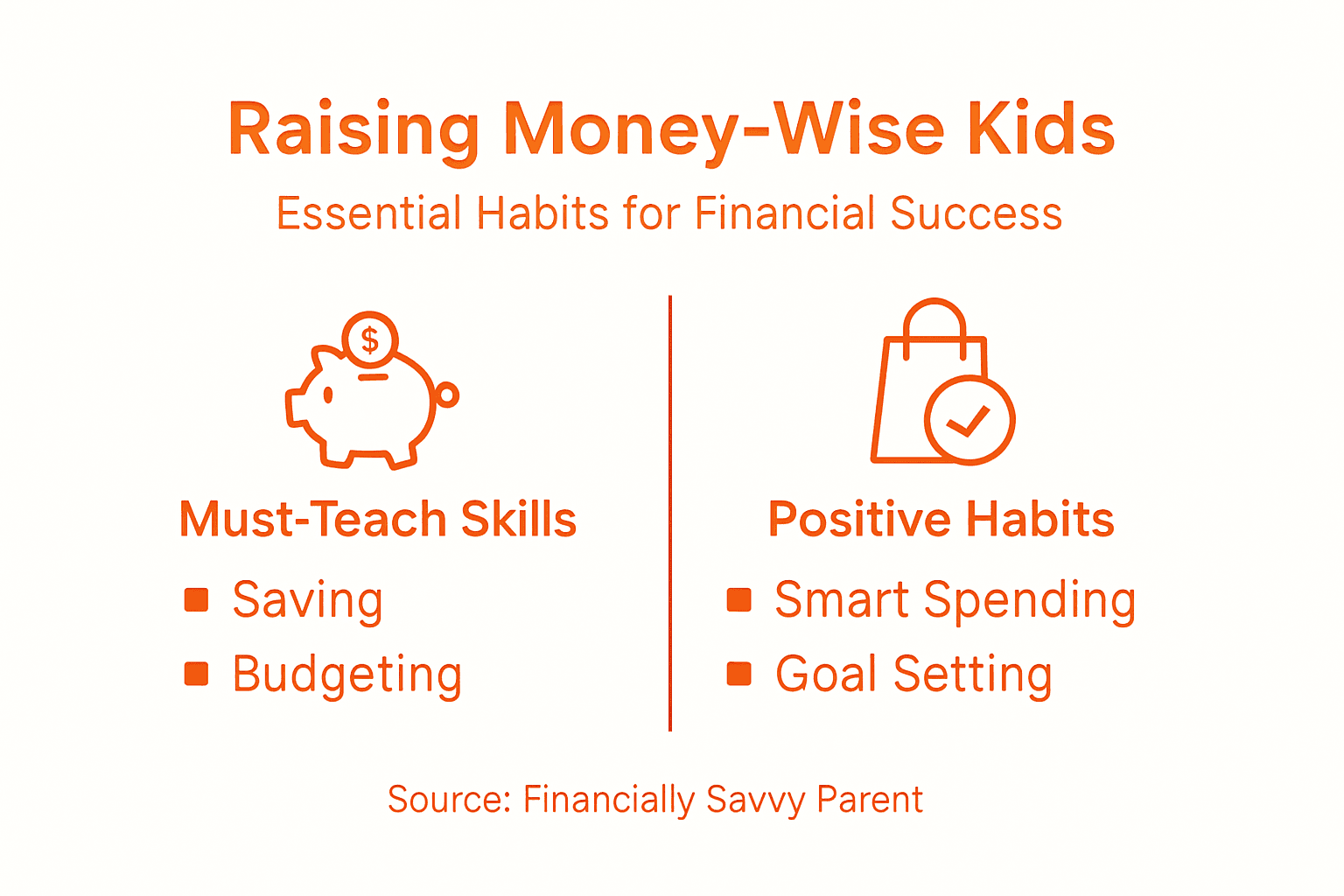
- Budgeting basics: Learning to track income and expenses
- Saving skills: Understanding how to set aside money for goals
- Smart spending: Differentiating between needs and wants
- Investment knowledge: Learning simple concepts about growing money
- Credit awareness: Understanding how borrowing works
The importance of these skills cannot be overstated. National financial literacy assessments reveal that many young adults struggle with basic financial concepts, leading to challenges like unmanaged debt and insufficient savings.
Teaching kids about money isn’t about creating miniature accountants. It’s about helping them develop a healthy, responsible relationship with finances that will serve them throughout their lives. By introducing these concepts early, parents can help their children avoid common financial pitfalls and set them up for long-term success.
Pro tip: Start teaching financial literacy through fun, hands-on activities like budgeting games or savings challenges that make learning about money engaging and interactive.
Teaching Allowances, Chores, and Earning
Learning about money isn’t just theoretical – it’s a hands-on experience that starts right at home. Research from Brigham Young University shows that parents can effectively shape children’s financial attitudes through strategic allowance and chore systems.
There are two primary approaches to allowances that parents typically use:
- Free Allowance: A regular stipend given without conditional requirements
- Wage Allowance: Money earned by completing specific household tasks
Both systems teach valuable lessons about work, responsibility, and the connection between effort and financial rewards.
According to Cornell University’s family research, children are typically ready to understand money management around ages six or seven. At this stage, they begin comprehending the basic exchange of money for goods and services.
When designing an allowance system, consider these key strategies:
Here’s a comparison of the two main allowance methods and their impact on financial skills:
| Allowance Type | Teaches About Work | Reinforces Budgeting | Encourages Saving |
|---|---|---|---|
| Free Allowance | Value of money | Basic planning | Moderate |
| Wage Allowance | Earnings for effort | Active money tracking | Strong |
- Set clear expectations about chore requirements
- Establish consistent payment amounts
- Create opportunities for additional earning potential
- Teach division of earnings (spending, saving, giving)
- Use allowances as a learning tool, not just compensation
Teaching kids about earning isn’t just about giving them money – it’s about helping them develop a mature, responsible relationship with finances. By connecting work, responsibility, and financial rewards, parents can instill critical money management skills that will serve their children throughout their lives.

Pro tip: Create a visual chore chart with monetary values attached to different tasks, allowing kids to see direct connections between work and financial rewards.
Budgeting, Saving, and Smart Spending Skills
Financial literacy begins with understanding how to manage money effectively. Interactive financial education programs offer powerful tools for teaching young people critical money management skills that last a lifetime.
Budgeting is the foundation of smart financial planning. Here are key strategies for developing robust money management skills:
- Track every dollar: Record all income and expenses
- Distinguish needs from wants: Prioritize essential spending
- Set realistic savings goals: Start small and build consistently
- Create emergency funds: Prepare for unexpected expenses
- Practice delayed gratification: Wait before making big purchases
Budgeting isn’t about restricting yourself – it’s about understanding where your money goes and making intentional choices.
According to Harvard’s financial literacy guide, creating a flexible budget allows individuals to control spending while maintaining financial freedom. This means developing a plan that adapts to changing circumstances while keeping long-term financial goals in focus.
Teenagers and young adults can start building financial skills through practical exercises:
- Create a monthly spending journal
- Use budgeting apps to track expenses
- Set up separate savings accounts
- Practice comparison shopping
- Learn to negotiate prices
Smart spending isn’t about never spending money – it’s about spending wisely and intentionally. By teaching children to be mindful of their financial choices, parents can help them develop lifelong money management skills that create financial stability and opportunities.
The following table summarizes smart spending habits and their long-term benefits for kids:
| Habit | Description | Long-Term Benefit |
|---|---|---|
| Tracking Expenses | Write down every purchase | Prevents overspending |
| Comparing Prices | Check alternatives before buying | Increases savings |
| Delaying Purchases | Wait before buying non-essentials | Reduces impulse buying |
Pro tip: Introduce a 24-hour waiting period for any non-essential purchase over $50, helping kids develop critical thinking about spending and avoiding impulse buying.
Explaining Credit, Debt, and Student Loans
Financial literacy becomes critical when understanding complex topics like credit, debt, and student loans. Youth financial research reveals that young people face significant challenges navigating these financial landscapes, with average student loan debt exceeding $37,000 for 2022 graduates.
Understanding credit fundamentals is the first step to financial empowerment. Key concepts include:
- Credit scores: Numerical representation of financial trustworthiness
- Interest rates: Cost of borrowing money
- Credit limits: Maximum amount you can borrow
- Payment history: Track record of meeting financial obligations
- Credit utilization: Percentage of available credit being used
Credit is a tool – not free money. Use it wisely and strategically.
Consumer protection resources offer comprehensive guidance for understanding student loan complexities. Important considerations for student loans include:
- Compare financial aid offers carefully
- Understand different loan types
- Research repayment options
- Know your borrower rights
- Explore potential forgiveness programs
Debt management requires proactive strategies and critical thinking. Young adults must learn to distinguish between good debt (investments in education or career) and bad debt (high-interest consumer spending). By developing financial awareness early, students can make informed decisions that protect their long-term financial health.
Pro tip: Always calculate the total cost of a loan, including interest, before signing any financial agreement.
Common Mistakes Parents Should Avoid
Youth financial literacy research reveals parents often unintentionally sabotage their children’s financial education through common misconceptions and ineffective teaching approaches. Understanding these pitfalls is crucial for developing a comprehensive money management strategy for young people.
Common mistakes parents frequently make include:
- Avoiding money conversations: Treating finances as a taboo topic
- Inconsistent financial messaging: Saying one thing, doing another
- Lack of practical experiences: Not providing real-world financial opportunities
- Shielding kids from financial realities: Protecting children from understanding economic challenges
- Failing to lead by example: Not demonstrating responsible financial behaviors
Children learn more from what you do than what you say about money.
Financial education experts emphasize the importance of interactive and consistent financial teaching. Parents should focus on creating meaningful learning experiences by:
- Involving children in family financial discussions
- Allowing controlled financial decision-making
- Sharing personal financial stories and lessons
- Using age-appropriate teaching methods
- Demonstrating transparent money management
Parents often mistakenly believe children will automatically absorb financial skills through osmosis. In reality, intentional, structured financial education is essential. By actively engaging children and creating open, honest conversations about money, parents can help their kids develop critical financial literacy skills.
Pro tip: Create a family financial game night where kids can practice budgeting, saving, and making financial decisions in a supportive, educational environment.
Growing Investments and Building Wealth Early
Early investment research demonstrates that strategic financial planning during youth can create substantial long-term economic advantages. Understanding investment fundamentals early transforms financial trajectories and empowers young people to build sustainable wealth.
Key investment strategies for young people include:
- Start small: Begin investing with minimal amounts
- Diversify investments: Spread risk across different assets
- Leverage compound interest: Let money grow over time
- Learn risk management: Understand investment principles
- Explore low-cost index funds: Minimize investment expenses
Time is the most powerful tool in your investment portfolio.
Financial literacy data reveals that early education significantly impacts investment behaviors. Young adults who understand financial products and investment strategies are more likely to:
- Make informed investment decisions
- Build emergency savings
- Understand retirement planning
- Manage financial risks effectively
- Create long-term wealth strategies
Investing isn’t about getting rich quickly – it’s about consistent, disciplined financial growth. By introducing investment concepts early, parents can help children develop a sophisticated understanding of money management that extends far beyond simple saving.
Pro tip: Open a custodial investment account for your child and involve them in tracking and understanding investment performance.
Empower Your Children to Become Financially Confident Adults
Raising money-wise kids means tackling the challenge of teaching financial literacy early and effectively. From understanding budgeting basics to making smart spending choices and grasping credit fundamentals, parents face the crucial task of shaping healthy financial habits in their children. If you want to avoid common pitfalls like inconsistent money messages or missed teaching moments, focusing on practical strategies like allowances, saving, and investing is key.
At Finances – Learning With Angie, we provide resources tailored to help parents and students master these essential money skills. Discover clear, actionable guidance that turns financial concepts into engaging lessons your family can embrace today. Don’t wait to empower your children with the tools that lead to lifelong wealth and financial independence.
Equip your family with effective strategies and actionable tips that bridge knowledge with real-life money management. Begin your journey toward raising financially savvy kids who are ready to succeed.
Frequently Asked Questions
How can I teach my child the basics of budgeting?
To teach your child budgeting, start by showing them how to track their income and expenses. Use simple budgeting tools or apps, and encourage them to distinguish between needs and wants. Setting realistic savings goals and discussing essential spending will also help them understand budgeting.
What is the best way to introduce the concept of saving to my kids?
Introduce saving through specific goals, like saving for a toy or a game. Start with a savings chart or a piggy bank where they can see their savings grow. Encourage them to save a portion of their allowance and explain the importance of setting aside money for future needs.
How can I explain the importance of credit to my children?
Explain credit by discussing its role in buying items and making investments. Teach them about credit scores, interest rates, and responsible credit usage. Use real-life examples, such as how loans affect purchasing power, and emphasize that credit should be managed wisely.
What common mistakes should I avoid when teaching my kids about money?
Avoid making money a taboo topic; have open conversations about finances. Be consistent in the financial messages you share, and provide practical experiences rather than shielding them from financial realities. Lastly, model responsible financial behavior, as children learn a lot from observing their parents.
Recommended
- Create Your Success: Ultimate Goal Setting Checklist
- 12 Financial Moves to Start Planning Now that You’re 21
- Why Your Messy Room is Literally Costing You Money (And How to Fix It Without Going Broke)
- 10 Creative Ways to Stretch Your Financial Aid (and Your Budget) for College!
- 8 Essential Tips for Camping with Children – Hazli Collection
- Cozee Bay – 10 Essential Sustainable Living Tips for Every Homeowner
Want a head start? The Ultimate Student Planner in my shop was made for exactly this — it’ll save you a ton of time.