
How to Create Study Groups for Academic Success
Studying alone can feel isolating and unproductive, leaving you frustrated when grades don’t reflect your effort. Many students struggle to stay motivated or grasp complex material without peer support. Forming an effective study group transforms learning into a collaborative experience that boosts understanding, accountability, and performance. This guide walks you through selecting the right members, structuring productive sessions, and avoiding common pitfalls. You’ll discover actionable strategies to build study groups that genuinely enhance your academic success and develop collaboration skills that last beyond the classroom.
Key takeaways
| Point | Details |
|---|---|
| Optimal group size | Keep groups between 3-5 members to maintain focus and equal participation without excessive socializing. |
| Member diversity matters | Select members with complementary strengths and similar commitment levels to foster engagement and mutual support. |
| Structure drives results | Use consistent agendas with review, teaching, problem-solving, and summary segments to maximize learning outcomes. |
| Clear roles prevent chaos | Assign facilitators and divide teaching responsibilities to keep sessions organized and productive. |
| Preparation beats selection | How you run sessions matters more than how you form groups, emphasizing facilitation and preparation over member selection methods. |
Preparing to form your study group
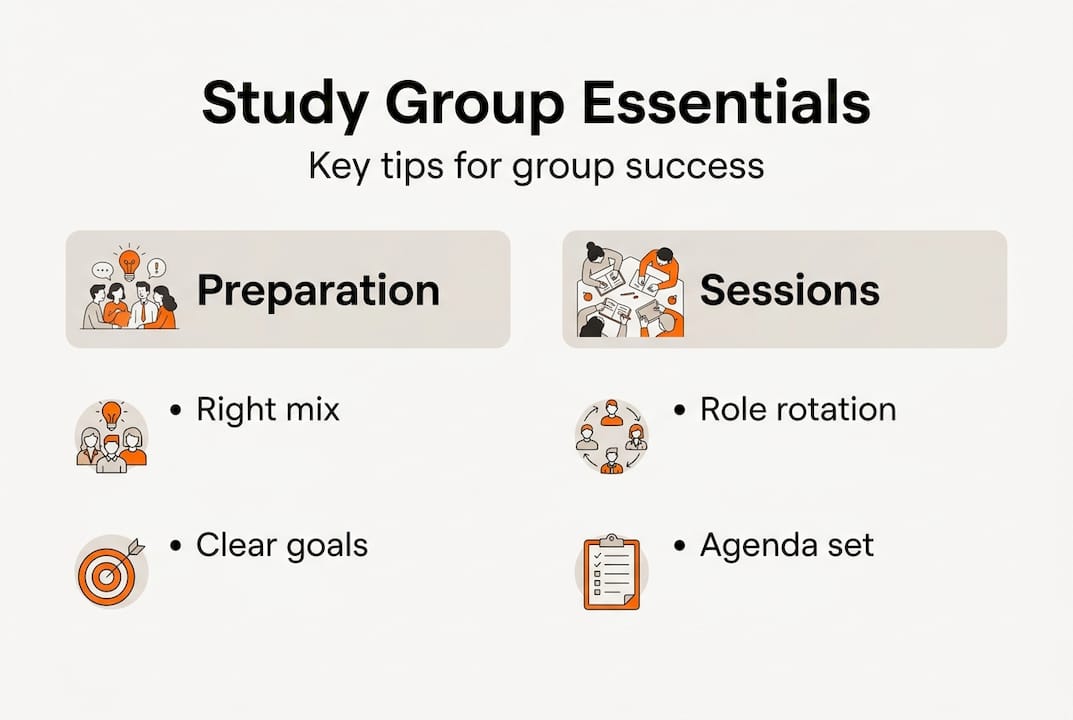
Before you send that first group text, invest time in thoughtful preparation. The difference between a productive study group and a social hangout comes down to intentional planning. Keeping groups small (3-5 members) prevents unproductive socializing and uneven work distribution. Larger groups fragment into side conversations, leaving some members disengaged while others dominate discussions.

Member selection requires balancing similarity and diversity. You want peers who share your commitment level and academic goals, but bring different strengths to the table. Research shows that heterogeneous groups support lower-achieving students without harming higher performers, though extremely large ability gaps can create friction. Look for classmates who attend regularly, participate actively, and demonstrate genuine interest in mastering the material. Avoid inviting friends purely for social reasons if their study habits don’t align with serious academic work.
Establishing clear expectations from day one prevents future conflicts. Schedule a brief planning meeting before your first study session to discuss goal setting steps for achieving success and define what everyone hopes to accomplish. Will you focus on homework completion, exam preparation, or concept clarification? How often will you meet, and what happens if someone consistently arrives unprepared? Document these agreements so everyone understands their responsibilities.
Leadership shouldn’t rest on one person’s shoulders. Studies indicate that diverse leadership traits enhance engagement within groups. Rotate facilitator roles so different members guide discussions each week. This distributes responsibility and prevents burnout. Some students excel at keeping conversations on track, while others shine at explaining difficult concepts or organizing materials. Tap into these varied strengths.
Pro Tip: Create a shared document outlining group norms for effective communication strategies, attendance policies, and conflict resolution before your first meeting. Reference this document whenever questions arise about expectations.
Consider these factors when determining group composition:
| Factor | Considerations |
|---|---|
| Group size | 3 members minimum for diverse perspectives, 5 maximum to prevent fragmentation and maintain focus. |
| Ability mix | Moderate diversity supports learning, but avoid pairing students with vastly different skill levels or motivation. |
| Schedules | Ensure all members can commit to consistent meeting times without frequent cancellations. |
| Learning styles | Mix visual, auditory, and kinesthetic learners to create richer explanations and varied study approaches. |
| Course sections | Same professor and syllabus alignment helps groups stay synchronized with assignments and exams. |
How to organize productive study sessions
Structure transforms good intentions into measurable results. Without a clear framework, study sessions drift into unfocused conversations that waste everyone’s time. Effective session structure includes review, teaching subsections, problem-solving, and summary to maximize learning outcomes. This proven format keeps meetings purposeful and ensures comprehensive coverage of material.
Follow these steps for every study session:
- Begin with a five-minute review of the previous session’s material to activate prior knowledge and identify lingering questions.
- Divide the current topic into subsections, assigning each member responsibility for teaching one segment to the group.
- Take turns presenting your assigned subsection, encouraging questions and discussion to deepen understanding.
- Work through practice problems or case studies together, talking through your reasoning process aloud.
- Conclude with a ten-minute summary where someone recaps key concepts and the group identifies areas needing further study.
- Set specific goals and assignments for the next meeting so everyone arrives prepared.
Role assignment keeps sessions running smoothly. Research confirms that setting clear agendas and assigning roles like facilitator improves meeting productivity from the first session onward. Rotate these responsibilities weekly so everyone develops leadership skills. The facilitator watches the clock, redirects off-topic conversations, and ensures quieter members contribute. The note-taker captures key insights and action items in a shared document. The question master prepares discussion prompts and practice problems ahead of time.
The teaching component deserves special attention because explaining concepts to peers strengthens your own understanding. When you prepare to teach a subsection, you identify gaps in your knowledge and develop clearer explanations. This active learning approach proves far more effective than passive review. Divide chapters or units so each member becomes the resident expert on specific topics, then share that expertise during sessions.
Timing matters as much as content. Schedule sessions for 90 minutes to two hours maximum. Shorter meetings feel rushed and incomplete, while longer ones lead to diminishing returns as concentration fades. Meet consistently on the same day and time each week to build routine and accountability. Choose locations with minimal distractions, whether that’s a quiet library study room, an empty classroom, or someone’s apartment with phones silenced.
Pro Tip: Create a rotating agenda template in a shared document where the upcoming facilitator fills in specific topics, problems, and goals 24 hours before each meeting. This ensures everyone arrives prepared and maximizes your limited time together.
Preparation separates productive groups from time wasters. Establish a firm rule that members complete assigned readings and attempt homework problems before meetings. Group study sessions deliver maximum benefits when participants arrive ready to discuss challenges rather than starting from scratch. Use your collective time for synthesis, clarification, and application instead of initial content consumption.
Adapt your structure based on upcoming deadlines and exam schedules. Regular meetings might focus on weekly material, but shift to intensive review sessions before major tests. Create study guides together, quiz each other on key terms, and work through old exams if available. Flexibility within your established framework keeps the group responsive to changing academic demands.
Common challenges and tips for success
Even well-intentioned study groups encounter obstacles that threaten their effectiveness. Recognizing common pitfalls helps you address problems before they derail your collaborative learning. Poorly formed groups with unclear expectations lead to uneven work distribution, poor communication, and unproductivity. The good news is that most challenges have straightforward solutions when you address them promptly.
Group size creep represents a frequent problem. You start with four committed members, then someone asks to bring a friend, and suddenly you’re managing seven people with varying commitment levels. Remember that groups larger than 5 become social rather than academic. Politely but firmly maintain your size limit. If demand exceeds capacity, help interested students form a separate group rather than diluting your existing one.
Uneven participation frustrates everyone involved. Some members dominate discussions while others coast on collective effort. Combat this by implementing structured turn-taking where everyone must contribute during each segment. The facilitator’s job includes drawing out quieter members with direct questions and tactfully redirecting verbose ones. If someone consistently fails to prepare or participate, have a private conversation addressing the behavior before resentment builds.
Scheduling conflicts inevitably arise, but chronic absenteeism kills group momentum. Establish a minimum attendance requirement, perhaps allowing one excused absence per month. When someone misses a session, they’re responsible for reviewing notes and catching up independently rather than derailing the next meeting with catch-up requests. This policy respects everyone’s time and reinforces the importance of commitment.
Research reveals that empirical data shows no significant difference by formation method, emphasizing facilitation and preparation over how you select members. Your success depends more on how you run sessions than who’s in the room.
Overcome common challenges with these strategies:
- Address problems immediately rather than letting frustration simmer, using effective communication strategies to discuss concerns constructively.
- Revisit and revise group norms if initial agreements aren’t working, treating them as living documents rather than unchangeable rules.
- Celebrate progress and wins together to maintain motivation, whether that’s acing a difficult exam or finally mastering a challenging concept.
- Schedule periodic check-ins where members provide anonymous feedback on what’s working and what needs adjustment.
- Be willing to respectfully part ways with members whose commitment doesn’t match the group’s standards, prioritizing collective success over individual feelings.
- Recognize that not every course or topic requires group study, giving yourself permission to study solo when that serves you better.
Personality clashes occasionally emerge despite careful member selection. Some students prefer methodical, linear approaches while others think in creative, non-linear ways. Rather than viewing these differences as obstacles, leverage them as strengths. The systematic thinker creates organized study guides while the creative thinker generates memorable mnemonics and analogies. Explicitly discuss learning style differences and find ways to accommodate various approaches.
Technology can either enhance or distract from group work. Establish clear phone policies, perhaps using apps that reward staying focused or simply agreeing to keep devices face-down except when accessing course materials. Share resources through cloud-based folders, but resist the temptation to constantly message between meetings. Respect boundaries and personal study time.
Maintaining momentum through semester lulls requires intentionality. Mid-semester fatigue tempts members to skip sessions when no immediate deadlines loom. Counter this by connecting weekly topics to broader course themes and long-term academic goals. Remind each other why you formed the group initially and how consistent effort compounds over time. Improving study habits requires sustained commitment, not just pre-exam cramming.
Discover tools to boost your study skills
You’ve learned how to create and maintain effective study groups, but your academic success toolkit shouldn’t stop there. Our comprehensive study skills guide for 2026 offers detailed strategies for note-taking, memory techniques, and exam preparation that complement your group work. Explore proven methods that hundreds of students use to transform their academic performance.
Maximize your collaborative learning by understanding the benefits and setup of group study sessions in greater depth. This resource walks you through selecting ideal meeting locations, creating effective study materials together, and measuring your group’s progress over time. Combine these insights with time management step-by-step strategies to balance group commitments with individual study needs and personal responsibilities. When you integrate structured collaboration with personal productivity systems, you create a powerful framework for academic excellence.
How do I find the right members for a study group?
Start by observing classmates who demonstrate consistent engagement during lectures and discussions. Look for students who ask thoughtful questions, complete assignments on time, and show genuine interest in understanding material rather than just earning grades. Approach potential members after class or during office hours, explaining your vision for a focused study group and asking about their availability and commitment level. Focus on complementary strengths rather than identical abilities, seeking members who bring different perspectives and skills to discussions.
What’s the ideal size for a study group?
Maintain groups between three and five members for optimal productivity and engagement. Three provides enough diversity for rich discussions while preventing anyone from hiding in the background. Five represents the upper limit before groups become social rather than productive. Larger groups fragment into side conversations and make scheduling nearly impossible. If more students want to join, help them form a separate group rather than expanding beyond five members.
How can we keep study group sessions productive?
Implement a consistent agenda structure for every meeting, starting with review and ending with summary. Structured agendas and assigning roles like facilitator dramatically improve meeting productivity by keeping discussions focused and time-bound. Rotate responsibilities so different members lead each week, preventing burnout and distributing leadership experience. Begin sessions with a quick review of previous material, divide topics for peer teaching, work through problems together, and conclude by identifying next steps and assignments.
Does mixed ability in groups affect performance?
Mixed ability groups generally benefit all members when differences remain moderate. Research confirms that heterogeneous groups support lower-achieving students without harming higher performers, though extremely large ability gaps can create challenges. The key lies in how you facilitate rather than who you select, since no significant difference in performance emerges based solely on formation method. Focus on creating an environment where everyone feels comfortable asking questions and contributing their unique strengths, regardless of current grade levels.
Recommended
- How to Create a Study Schedule for Academic Success
- Group Study Sessions: Boosting Learning and Productivity
- How to Build Study Routine for Better Grades and Focus
- How to Manage Study Time for Better Grades and Less Stress
Want a head start? The Ultimate Student Planner in my shop was made for exactly this — it’ll save you a ton of time.