How to Make a Resume That Opens Doors
Most American job seekers underestimate the true impact of a resume, even though over 90 percent of employers treat it as the deciding factor for interview selection. In today’s competitive job market, your resume is more than just a summary of past roles. It is a powerful tool that shapes your professional story and can open doors to new opportunities. Discover what sets standout resumes apart and learn strategies to make yours impossible to ignore.
Key Takeaways
| Point | Details |
|---|---|
| Resumes Are Essential Marketing Tools | A resume is a strategic document that highlights your professional story and unique value to potential employers. |
| Customize for Each Application | Tailoring your resume with relevant keywords and achievements increases the chances of catching an employer’s attention. |
| Select the Right Format | Choose a resume type (chronological, functional, or combination) that aligns with your career stage and effectively showcases your strengths. |
| Avoid Common Mistakes | Proofread carefully to eliminate errors, and ensure your resume is concise and targeted to avoid appearing generic and unprofessional. |
What a Resume Is and Why It Matters
A resume is your personal marketing document – a strategic snapshot that tells your professional story in just one or two pages. Think of it like your professional business card, but way more detailed. When done right, it’s your golden ticket to catching a recruiter’s eye and landing interviews.
At its core, a resume is an honest summary of your occupational self, highlighting your education, work experience, skills, and achievements. It’s not just a list of past jobs – it’s a carefully crafted document designed to showcase how you can add unique value to potential employers. Each section works like a puzzle piece, creating a compelling picture of who you are professionally.
Resumes serve multiple critical purposes beyond job hunting. They’re essential for scholarship applications, internship opportunities, graduate school admissions, and professional networking. By presenting your background strategically, you transform a simple document into a powerful tool that can open doors to exciting opportunities. A well-constructed resume communicates not just what you’ve done, but what you’re capable of achieving.
Pro Tip – Resume Power Move: Customize your resume for each application by using keywords from the job description and highlighting achievements that directly match the role’s requirements. Tailoring shows employers you’re not just looking for any job – you’re looking for their specific job.
The goal isn’t to list every single thing you’ve ever done. It’s about creating a focused, compelling narrative that makes employers think, “We absolutely need to talk to this person.” Your resume is your first impression – make it count.
Common Resume Types and Key Differences
When creating a resume, you’re not stuck with a one-size-fits-all approach. Different situations call for different resume styles, each designed to highlight your strengths in unique ways. Employers recognize three primary resume types: chronological, functional, and combination resumes.
The chronological resume is the most traditional format, presenting your work history in reverse order with your most recent job first. It’s perfect for students and professionals with a steady career progression, showing a clear timeline of professional growth. This style works best when you have a consistent work history without major gaps and want to showcase your steady advancement in a specific field.
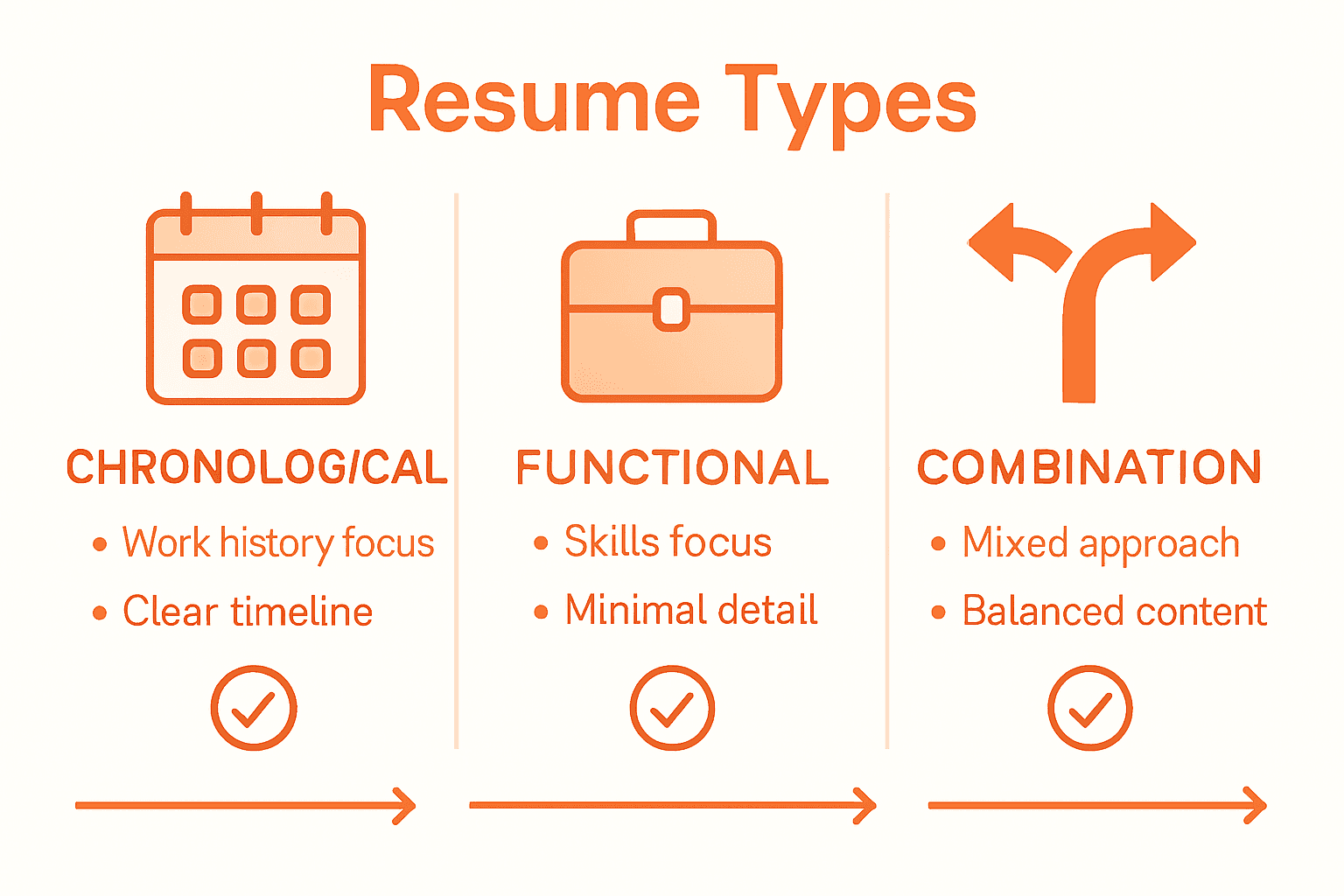
A functional resume takes a different approach, focusing on your skills and achievements rather than job history. This format is ideal for career changers, recent graduates, or individuals with employment gaps. Instead of listing jobs chronologically, you group your experiences by skill categories like “Marketing Skills” or “Technical Expertise.” This approach lets you shine a spotlight on your capabilities, even if your work history isn’t perfectly linear.
The combination resume blends the best of both worlds, mixing chronological work history with a skills-focused section. This hybrid approach allows you to showcase both your professional progression and your specific skill sets. It’s particularly powerful for professionals transitioning between careers or those with diverse skill sets that don’t fit neatly into a traditional format.
Pro Tip – Resume Type Selection: Match your resume type to your career stage and goals. If you’re a student or recent graduate with limited work experience, a functional or combination resume can help you highlight your potential. Experienced professionals typically benefit most from a chronological layout that demonstrates career progression.
Remember, your resume is a living document. As your career evolves, don’t be afraid to adjust your format to best represent your professional journey.
Here’s how major resume types align with different candidate situations:
| Resume Type | Best For | Focus Area |
|---|---|---|
| Chronological | Professionals with steady work history | Employment timeline |
| Functional | Career changers or recent graduates | Skills and achievements |
| Combination | Diverse backgrounds or career transitions | Work history and skills |
Essential Resume Sections for Students
Creating a standout student resume requires strategic organization. Unlike professional resumes, student resumes need to highlight potential, academic achievements, and transferable skills. The key is crafting a document that tells your unique story through carefully selected sections that showcase your strengths and future potential.
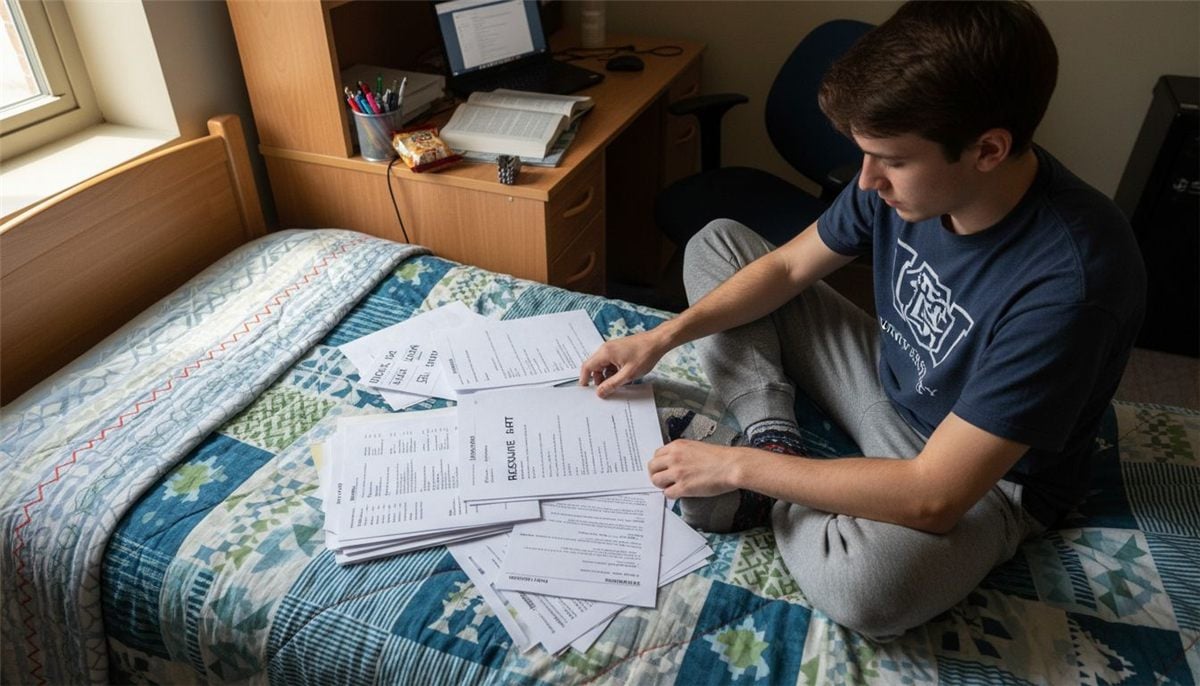
Every student resume should start with a contact header featuring your full name, phone number, professional email address, and location. Next comes the education section, which is typically the most prominent part of a student’s resume. Here, you’ll list your current or completed degree, major, university name, anticipated graduation date, and any academic honors. If your GPA is strong (3.5 or higher), include it to demonstrate academic excellence.
The skills section is crucial for students, allowing you to highlight both hard and soft skills relevant to your career goals. Hard skills might include technical abilities like programming languages, design software, or laboratory techniques. Soft skills could encompass communication, leadership, teamwork, and problem-solving abilities. Wherever possible, tie these skills to specific experiences or achievements that demonstrate how you’ve applied them.
Additional powerful sections for students include extracurricular activities, volunteer work, internships, and academic projects. These areas allow you to showcase leadership, initiative, and practical experience beyond the classroom. If you’ve participated in research, led student organizations, completed significant class projects, or engaged in community service, these experiences can dramatically enhance your resume’s impact.
Pro Tip – Experience Packaging: Even if you lack traditional work experience, reframe your academic and extracurricular activities as professional experiences. Describe your roles using action verbs and quantify your achievements wherever possible to make your experiences sound more substantial and impressive.
Remember, your student resume is a living document designed to open doors to opportunities. Each section should strategically position you as a motivated, capable candidate with exciting potential.
Tailoring Your Resume for Each Application
Customizing your resume for each application is like being a professional chameleon – you’re adapting your professional story to match exactly what each potential employer wants to hear. It’s not about changing who you are, but about highlighting the most relevant parts of your experience that align perfectly with the job’s specific requirements.
The first step in tailoring your resume is deep research. Carefully analyze the job description, breaking down the required skills, qualifications, and responsibilities. Look for specific keywords and phrases used in the posting. These are like secret codes that tell you precisely what the employer values. Pay special attention to the skills section, required qualifications, and the language used to describe ideal candidates.
Once you’ve decoded the job description, strategically adjust your resume’s content. This doesn’t mean inventing experiences you don’t have – it means reframing your existing achievements to speak directly to the employer’s needs. If a marketing job emphasizes social media skills, highlight your relevant projects or coursework. If a technical role stresses project management, showcase your experiences leading team projects or coordinating complex assignments. Each bullet point should feel like a direct response to what the employer is seeking.
Remember that tailoring isn’t just about content – it’s also about presentation. The order of your sections, the language you use, and the specific achievements you highlight can change based on the job. For a creative role, you might emphasize your design projects. For a research position, your academic projects and technical skills might take center stage. Your resume should feel like a precision instrument, carefully calibrated to the specific opportunity.
Pro Tip – Keyword Matching: Create a side-by-side comparison of the job description and your resume, highlighting matching skills and experiences. This visual exercise helps you identify exactly how to align your professional narrative with the employer’s requirements.
Tailoring takes time, but it dramatically increases your chances of landing an interview. Think of it as translating your professional story into the specific language each employer wants to hear.
The table below summarizes strategies for tailoring your resume to specific opportunities:
| Tailoring Strategy | Why It Matters | Implementation Tip |
|---|---|---|
| Use job-specific keywords | Increases chance of passing screening | Match wording from job description |
| Highlight relevant skills | Shows immediate value to employers | Reorder and adjust bullet points |
| Emphasize fitting projects | Demonstrates hands-on experience | Prioritize relevant achievements |
Frequent Resume Mistakes and How to Avoid Them
Common resume mistakes can seriously undermine your job application efforts. Think of your resume as your professional first impression – one small error could mean the difference between landing an interview or getting overlooked. Understanding these pitfalls is crucial for creating a document that truly represents your potential.
One of the most critical mistakes is using a generic, one-size-fits-all resume. Copy-paste templates might seem convenient, but they scream ‘lazy’ to potential employers. Instead, craft a unique document that highlights your specific skills and experiences. Another major red flag is poor proofreading. Spelling errors, grammatical mistakes, and inconsistent formatting instantly signal unprofessionalism. Always have someone else review your resume – a fresh set of eyes can catch mistakes you might have missed.
Length and content are also key considerations. Many students make the mistake of either writing a resume that’s too long or too vague. For most entry-level positions, aim for a one-page document that’s packed with meaningful information. Each bullet point should demonstrate a specific achievement, not just list job responsibilities. Quantify your accomplishments wherever possible – instead of saying “managed social media,” say “increased social media engagement by 40% through targeted content strategy.”
Formatting plays a crucial role in resume effectiveness. Stick to a clean, professional design with consistent fonts, margins, and spacing. Avoid using wild colors, fancy graphics, or unconventional layouts that might distract from your actual content. Choose a readable font like Arial or Calibri, use a font size between 10-12 points, and maintain consistent formatting throughout the document.
Pro Tip – Resume Reality Check: Create a “resume review panel” of 2-3 trusted friends, professors, or career center professionals who can provide honest, constructive feedback. Their diverse perspectives will help you identify and eliminate potential mistakes before submission.
Remember, your resume is a living document. Treat it like a work in progress, continuously refining and improving to showcase your best self.
Unlock Your Dream Job by Mastering Your Resume
Struggling to create a resume that truly opens doors? This article highlights the critical challenge of transforming your resume from a simple list of jobs into a powerful personal marketing document tailored to each opportunity. Many learners face the pain of not knowing how to showcase their skills effectively or how to customize their resume to fit specific roles and keywords. The goal is to craft a focused, compelling narrative that grabs employers’ attention immediately.
At Learning With Angie, we understand how essential it is to balance mastering study habits and personal growth with practical career skills like resume building. With proven strategies on productivity, time management, and self-presentation, you can gain the confidence to tailor your resume, highlight your achievements, and avoid common mistakes that hold you back. Start elevating your academic and professional journey today by exploring our resources designed to help you take control of your future. Visit Learning With Angie now and take the first step toward crafting a resume that truly opens doors.
Frequently Asked Questions
What is the purpose of a resume?
A resume serves as a personal marketing document that summarizes your education, work experience, skills, and achievements, helping you to showcase your value to potential employers.
What are the main types of resumes?
The three main types of resumes are chronological, functional, and combination resumes. Each format highlights different aspects of your experience and is suited for various career stages and goals.
How can I tailor my resume for specific job applications?
To tailor your resume, research the job description and identify important keywords and skills. Adjust your resume’s content and presentation to emphasize experiences and abilities that align with the employer’s requirements.
What common mistakes should I avoid when creating my resume?
Common mistakes include using a generic template, having spelling or grammatical errors, making the resume too long or vague, and using inconsistent formatting. Focus on creating a unique, concise, and professionally formatted document.
Recommended
- 10 Unique College Essay Ideas to Stand Out in Applications
- From Classroom to Career: Student Success Strategies that Work
- Ultimate College Application Planner + 14 Must-Do Tasks
- Jobs You Can Have While You Are in School
Want a head start? The College-to-Career Blueprint picks up where your resume leaves off: a journal and app that walk you from figuring out what you want to landing the offer.